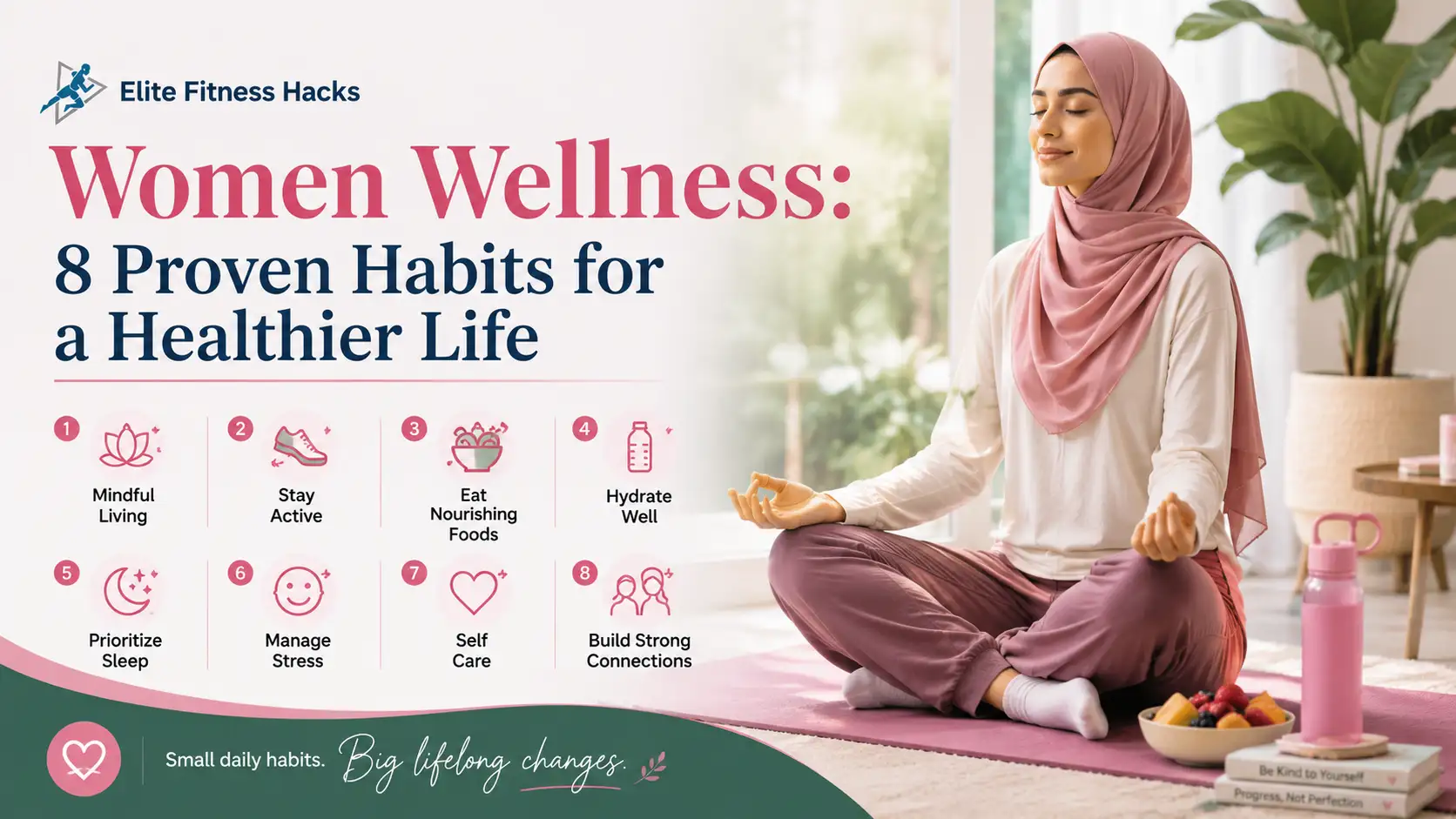
Women wellness gets treated like a checklist online. Drink water. Take a walk. Practice gratitude. None of that is wrong. But none of it explains why, or how to actually build the habit.
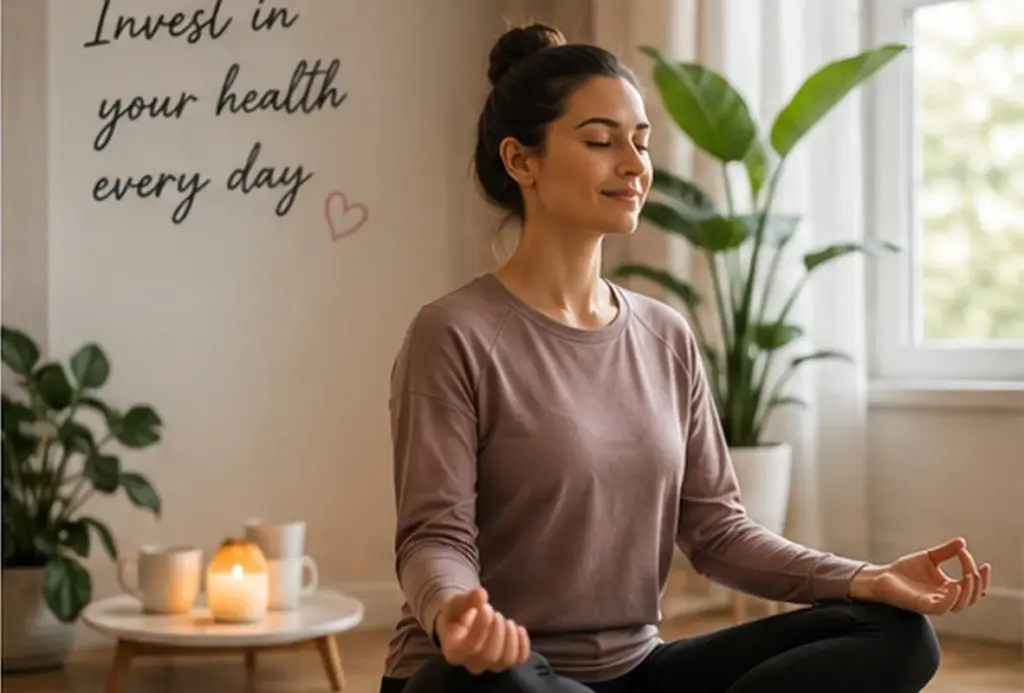
In my coaching work, the women who see real results are not the ones with the longest list of tips. They build two or three solid habits instead. Then they keep those habits going through a busy month, not just a good week.
This guide covers women wellness across nutrition, movement, mental health, and the life-stage topics that deserve more care than a bullet point. Where something needs a doctor instead of a blog post, I will say so directly.
Table of Contents
Nutrition Across Life Stages
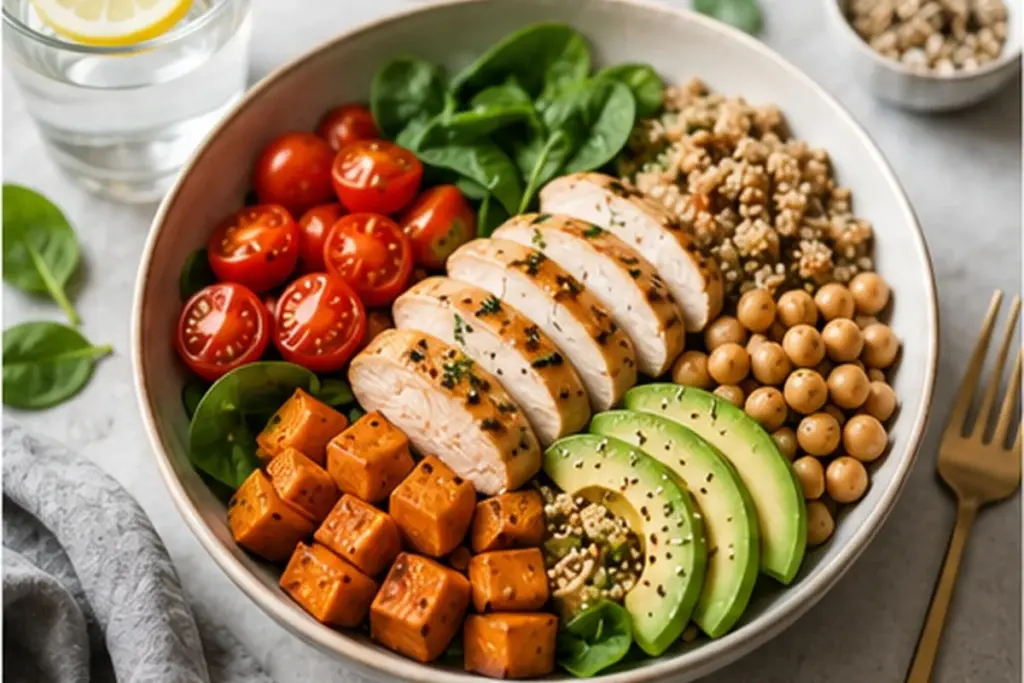
Women wellness starts with food. But the target moves as you age. A woman in her 20s, a woman who is pregnant, and a woman past menopause all need different things from the same plate.
Iron needs go up during your period years. Monthly blood loss adds up over time. Lean red meat, beans, and leafy greens all help close that gap. Pair plant sources of iron with vitamin C. Citrus and bell peppers both work well. That combination helps your body absorb more of it.
Calcium and vitamin D matter more with age. Bone density peaks in your 20s and 30s. It slowly declines after that. Dairy, fortified plant milk, and leafy greens all help here too. Strength training helps even more. That part comes up in the next section.
Protein matters at every single stage. It preserves muscle. It keeps you full. It supports you whether you are training, pregnant, or well past menopause. Not sure how much you need? Our macro calculator works it out fast. It uses your actual numbers, not a generic chart.
Fiber and water are the two most overlooked basics. Most women fall short on both. Fruit, vegetables, and whole grains cover the fiber gap. Plain water covers the rest. Neither one is exciting. Both make a real difference in energy and digestion within a week or two.
Building a full week of meals around these targets gets easier with a real plan. Our nutrition strategy guide and high protein meal prep ideas both cover real ways to hit your numbers. Neither one means changing your whole kitchen in one weekend.
Movement and Strength
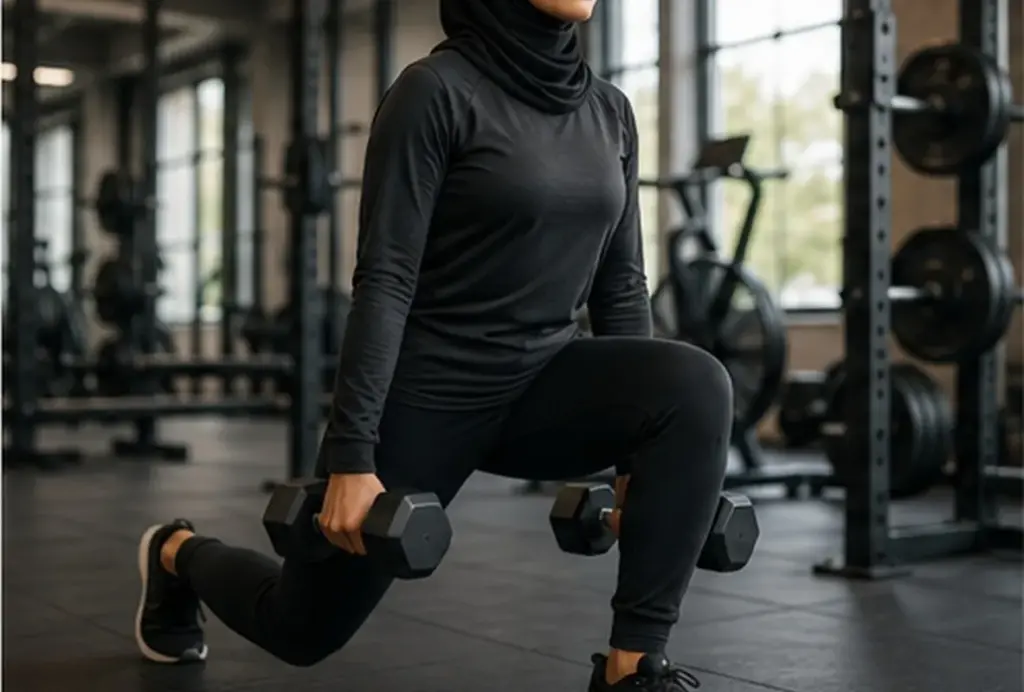
Cardio gets most of the attention in women wellness content, more than it should. Strength training does more for long-term health than people realize. It builds bone density. That protects against osteoporosis later in life. It also keeps you burning more energy at rest, not just during the workout.
Two to three strength sessions a week is enough to see real change. You do not need an hour. Twenty to thirty focused minutes beats one long session now and then, as long as you keep showing up. Our strength training guide breaks down how to structure that time well.
Training hard and want to fuel it properly? Our pre-workout strategies for women guide covers what really helps with energy and recovery. Hormonal shifts are part of that guide too, since they change how you respond to training from one week to the next.
Movement outside the gym counts as well. A daily walk. Stretching. A dance class. All of it supports the same goals: better mood, steadier blood sugar, and a body that holds up over decades, not just this season.
Starting from zero? Walk first. Ten minutes a day, most days, builds a habit before it builds fitness. Add strength training once that walk feels automatic, not optional.
Mental Well-Being and Stress
Women report anxiety and depression at higher rates than men. Stress shows up physically too, in sleep, appetite, and energy. Women wellness has to include this. It cannot be treated as an afterthought.
Sleep is the foundation most people skip. Seven to nine hours is the real target. Most people settle for six and wonder why they feel off. Poor sleep raises stress hormones. It also makes every other habit on this list harder to keep.
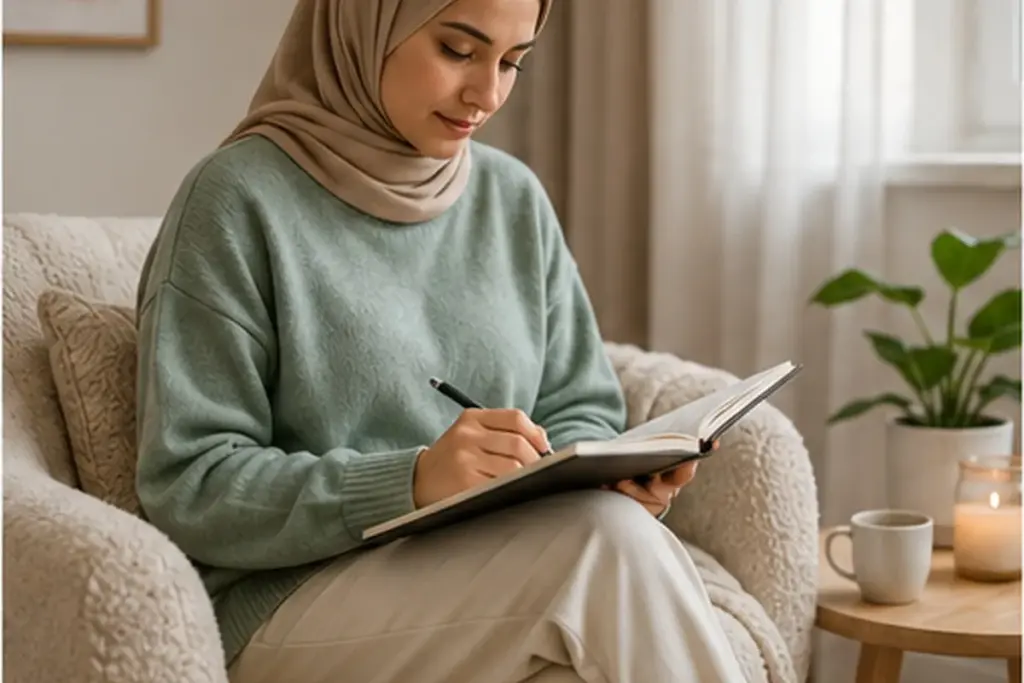
A few small daily practices help more than people expect. Write down three things you are grateful for. Take five quiet minutes before your day starts. Simply name what you are feeling instead of pushing through it. None of these replace professional support if you actually need it.
Is stress or low mood affecting your daily life? That is worth a real conversation with a therapist or doctor. It is not just a lifestyle tweak at that point. Our mental health and wellbeing guide goes deeper into daily habits that support this, alongside a clearer sense of when to seek more help.
Menstrual and Reproductive Health
This part of women wellness gets skipped most often, usually out of habit rather than choice. A typical cycle runs about 21 to 35 days. Tracking yours is one of the simplest ways to understand your own body. Apps make this easy. Patterns in energy, mood, and appetite often line up with where you are in your cycle, once you start paying attention.
Reproductive health covers more than the cycle itself. Contraception choices. Fertility questions. Cycle irregularities. These are genuinely personal decisions. They depend on your health history. This is an area where a doctor or OB-GYN is the right resource, not a generic list. Women’s Health.gov is a solid, free place to start before that talk.
A few things are always worth mentioning to a doctor: severe pain, very heavy bleeding, or a cycle that suddenly changes. Do not assume something is normal just because it is common.
Pregnancy, Postpartum, and Menopause
These three life stages bring real hormonal shifts. Each one deserves more depth than a bullet point can give. I will stay in my lane here. Food and movement basics, not medical advice.
Pregnancy raises your need for protein, folate, iron, and calcium. Your care team will guide the exact targets based on you. Movement is usually encouraged. But the type and how hard you push should be cleared by your doctor first, especially if you were not active before.
Postpartum recovery takes longer than the six-week mark most people assume. Not sleeping enough, healing, and easing back into exercise all take time. None of it should be rushed. Mood changes after birth are common enough to take seriously. Silence is not the answer here.
Menopause usually starts between ages 45 and 55. It brings hot flashes, sleep trouble, and shifts in bone density, says Mayo Clinic. Strength training and enough protein both help offset those changes. Hormone therapy is also a real option. It is worth discussing with your doctor if symptoms are hard to live with, rather than something to push through alone.
Preventive Care Worth Prioritizing
Most preventive care in women wellness comes down to a short list. Annual check-ups. Recommended screenings for your age group. Staying current on vaccinations. The CDC’s Office of Women’s Health keeps updated screening guidelines by age. That is a better source than a generic countdown of “10 tests every woman needs.”
Sexual health and chronic condition management both fall under this umbrella too. Both deserve a real conversation with your doctor, not generic tips. The right plan depends on your own health history. What a wellness routine can actually do is cover the basics: real sleep, real food, and movement. All of it makes chronic conditions easier to manage, alongside real medical care.
Self-Care and Relationships
Self-care gets reduced to bubble baths online. The version that actually holds up over time looks different. It looks more like boundaries, real rest, and relationships that give back as much as they take.
Setting a boundary protects the time you need for everything else on this list. Not checking work email after 7 p.m. is a simple example. Strong relationships work the same way protein does for muscle. They are not optional extras. They are part of the structure.
Time outdoors counts as real self-care. So does a hobby that has nothing to do with productivity. So do regular check-ins with people who matter to you. All three do more for you than most products marketed under the self-care label.
Even ten minutes counts. A short walk without your phone. A real conversation instead of a text. A book instead of another scroll through social media. Small and steady beats big and rare, every single time.
Healthy Aging
Women wellness in your 50s and beyond looks less about adding new habits. It is more about not letting the ones that matter slip. Strength training, protein intake, and social connection all become more protective as you get older, not less.
Cognitive engagement matters too. Learning something new keeps your brain sharp too. It works alongside exercise, not instead of it. A language. An instrument. A new sport. Any of it counts. Staying close to friends and community does the same job for your mood that exercise does for your body.
Quick Wins to Start This Week
Big changes feel hard to start. These do not.
- Add one glass of water when you wake up, before coffee.
- Take a 10-minute walk after lunch or dinner.
- Write down one thing you are grateful for before bed.
- Add a source of protein to breakfast, even something small.
- Set one boundary this week. Turn off work notifications by 7 p.m.
- Book one screening or check-up you have been putting off.
None of these take more than a few minutes. Do two or three this week, and women wellness stops being an abstract idea. It becomes something you actually did today, not just something you read about.
Building Your Own Routine
Eight sections is a lot to take in at once. You do not need all of them today. Pick the one area where you are furthest behind, and start there.
If nutrition feels shaky, start with protein at every meal for two weeks. If movement is the gap, two strength sessions a week is enough to begin. If sleep is wrecking everything else, fix that first before adding anything new. One solid habit beats five half-finished ones, every time.
Revisit this guide every few months, not just once. Your needs shift as your life does. A routine that worked last year may need a small adjustment now, not a complete overhaul.
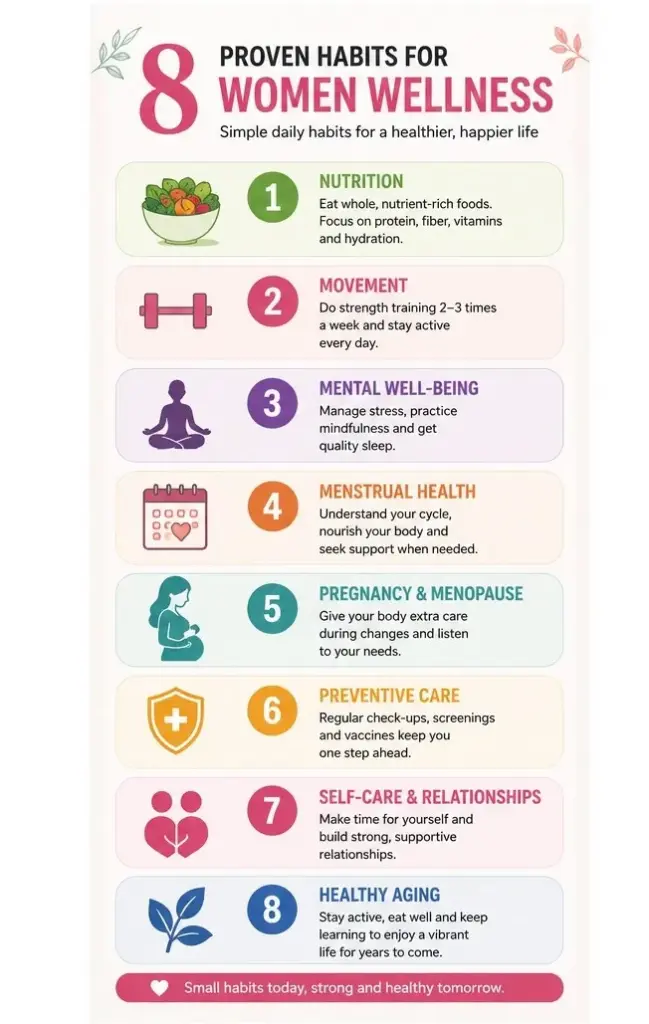
Frequently Asked Questions
What is women wellness, really? It mixes physical health, mental health, and care that changes with your life stage. Women wellness is not one routine that stays the same from your 20s to your 60s.
What is the single highest-impact habit for women wellness? Strength training, if you had to pick just one. It supports bone strength, weight, mood, and staying independent later in life, all at once. Few other habits do that much at the same time.
How is women wellness different from general wellness advice? Your period, pregnancy, and menopause all bring hormone shifts. Each one changes what your body needs. Generic advice tends to ignore that. Women wellness accounts for it directly.
Do I need to see a doctor for things covered in this guide? For nutrition and movement basics, no. Yes for anything tied to your cycle, pregnancy, menopause symptoms, chronic conditions, or a mood that is affecting your daily life. This guide points you toward professional care. It does not replace it.
How often should I get preventive screenings? It depends on your age and health history. That is exactly why a doctor’s guidance beats a generic list. The CDC’s Office of Women’s Health keeps current, age-based screening advice if you want a good place to start.
Can I improve women wellness without a total lifestyle overhaul? Yes, and that is usually the better way to go. One new habit, held for a month, beats a big change that fades out by week two. Small, steady changes are what actually stick.
Conclusion
Women wellness is not a checklist you finish once. It is nutrition, movement, and mental health working together. All of it adjusted for whatever stage of life you are actually in right now.
Pick one section from this guide, not all eight, and build that habit for a month before adding another. That approach beats a 30-item list every time. It is also how women wellness that actually lasts gets built.
Not medical advice: This content, and any calculator results on this site, are for general informational purposes only and are not a substitute for professional medical advice, diagnosis, or treatment. Always talk to a qualified healthcare provider before starting a new diet, exercise routine, or health program.
Related Articles You May Like