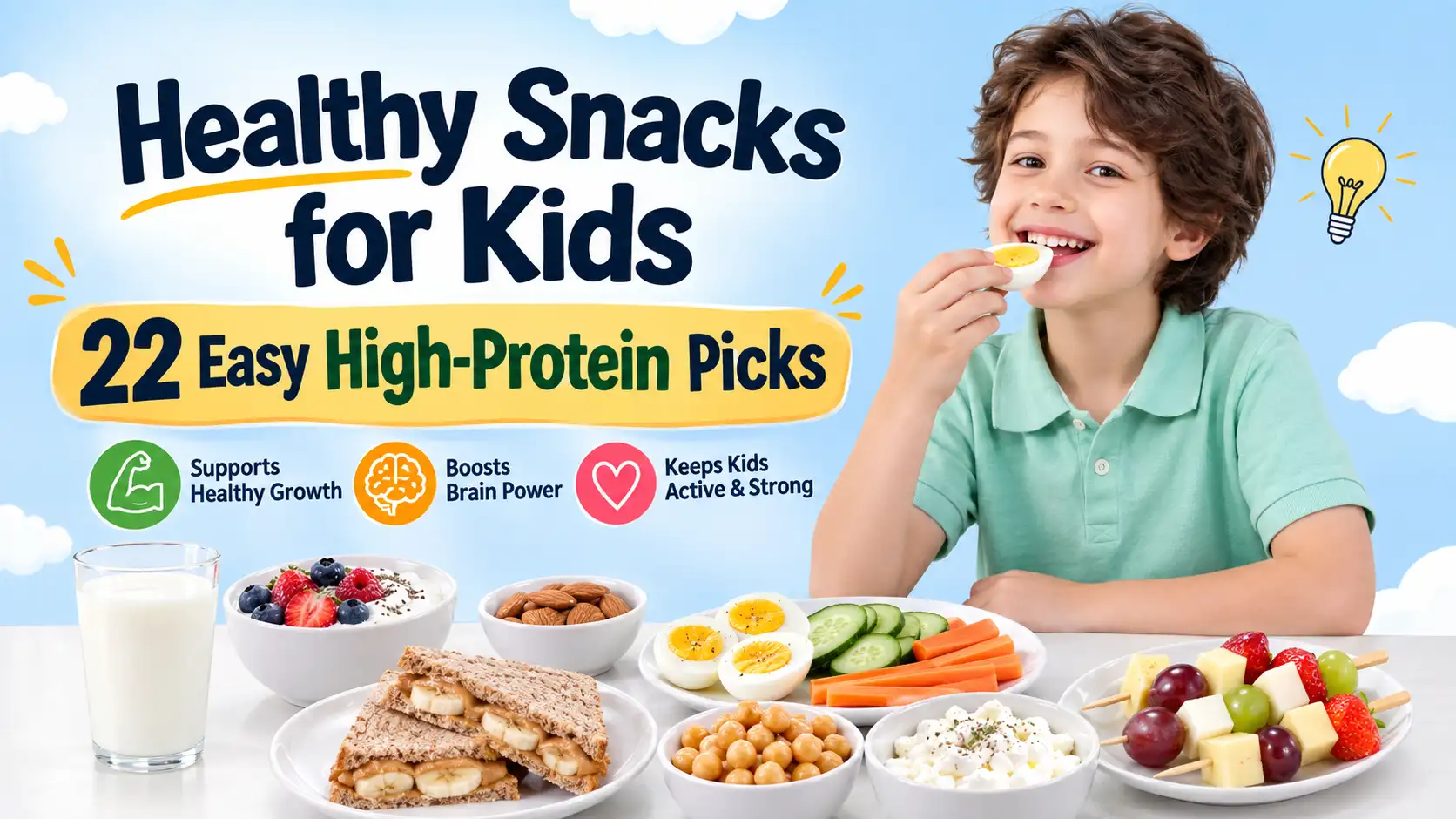
If you’ve ever handed your child a bag of crackers at 3 p.m. and watched them ask for more food twenty minutes later, you already know the problem. Most packaged snacks disappear fast and leave kids hungry again just as fast. The fix isn’t complicated. Healthy snacks for kids that include a real source of protein keep blood sugar steadier, curb the between-meal meltdowns, and give growing bodies the raw material they need for muscle, bone, and brain development.
I’ve spent years coaching clients on how to build meals and snacks that actually hold up during a busy day, and the same logic applies to kids’ lunchboxes and after-school routines. A snack built around protein, alongside some fiber or healthy fat, does more work than a snack built around sugar alone. Below are 22 healthy snacks for kids that I’d actually put in front of a child, organized so you can find something that fits your morning rush, your picky eater, or your Sunday meal-prep session. If you’re batching food for the whole week, these pair well with our High Protein Meal Prep Ideas.
Table of Contents
Why Protein Matters in Healthy Snacks for Kids
Kids run on a different fuel schedule than adults. Their stomachs are small, their energy needs are high, and their bodies are constantly building new tissue. A snack made only of refined carbohydrates (think pretzels, fruit snacks, or plain crackers) spikes blood sugar and then drops it just as quickly, which is a big part of why kids get cranky or foggy an hour after eating them.
Protein slows that whole process down. It takes longer to digest, so it keeps kids satisfied between meals instead of hunting for more food thirty minutes later. According to the American Academy of Pediatrics, snacks should support a child’s overall eating pattern rather than just fill time, and pairing a protein source with produce or whole grains is one of the simplest ways to do that. It’s exactly why protein-forward options are worth prioritizing when you’re choosing healthy snacks for kids over whatever’s easiest to grab.
This doesn’t mean every snack needs to look like a protein shake. A slice of cheese, a spoonful of nut butter, or a handful of edamame is enough to make a real difference in how a child feels an hour later. If you want to get precise about targets for your own diet alongside your kids’, our macro calculator can help you work out a reasonable daily protein range.
Snack Safety by Age: What to Skip
Not every snack on this list is right for every age. Whole nuts, popcorn, raw hard vegetables, whole grapes, and large chunks of food are common choking hazards for children under 4, a point echoed by both Mayo Clinic and child health researchers who study early feeding. Before you settle on a rotation of healthy snacks for kids under 4, chop, slice, or swap these ingredients (nut butter spread thin instead of whole nuts, quartered grapes instead of whole ones) before serving.
I’ve flagged a few of these below so you’re not caught off guard, but if you’re feeding a child under 4, it’s worth a quick scan of any new snack before it lands on their plate.
22 Healthy Snacks for Kids That Are High in Protein
1. Greek Yogurt Bowl with Berries and Chopped Nuts
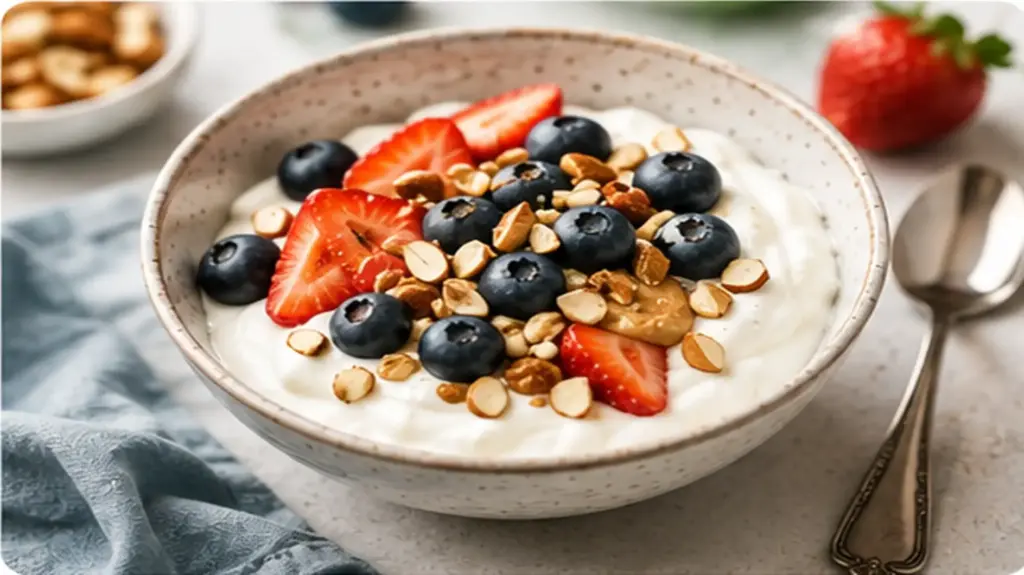
Plain Greek yogurt carries roughly 15 to 20 grams of protein per cup, which is more than double what you’d get from regular yogurt. Top it with fresh or frozen berries and a small handful of chopped walnuts or almonds for texture. Skip the flavored, sugar-loaded cups at the store and sweeten it yourself with a drizzle of honey (for kids over 1 year old) instead. It’s one of the easiest healthy snacks for kids to keep in weekly rotation, since the base rarely gets boring.
2. Apple Slices with Cheddar and a Swipe of Almond Butter
This one covers three food groups in under two minutes. The apple brings fiber, the cheese brings roughly 6 to 7 grams of protein per ounce, and the almond butter adds staying power through healthy fat. It travels well in a lunchbox if you toss the apple slices in a little lemon juice first to stop browning.
3. Turkey and Cheese Roll-Ups
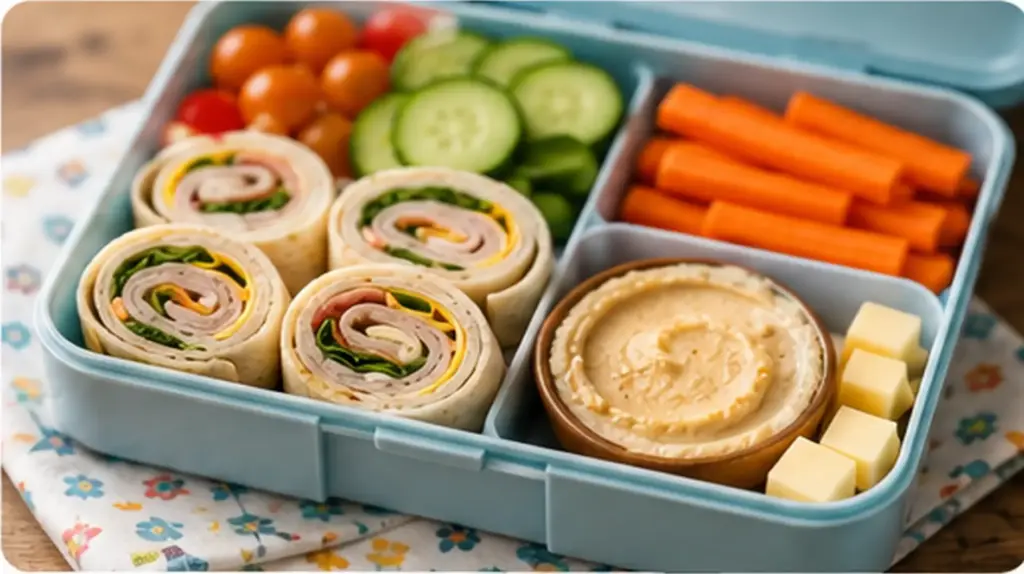
Roll a slice of turkey breast around a stick of cheese, or layer turkey, cheese, and a lettuce leaf and roll the whole thing up. Two roll-ups deliver close to 15 grams of protein. Among healthy snacks for kids, this is one of the few that genuinely takes less time to make than to explain, which makes it a solid pick for mornings when you’re already running late.
4. Hard-Boiled Eggs with Everything Bagel Seasoning
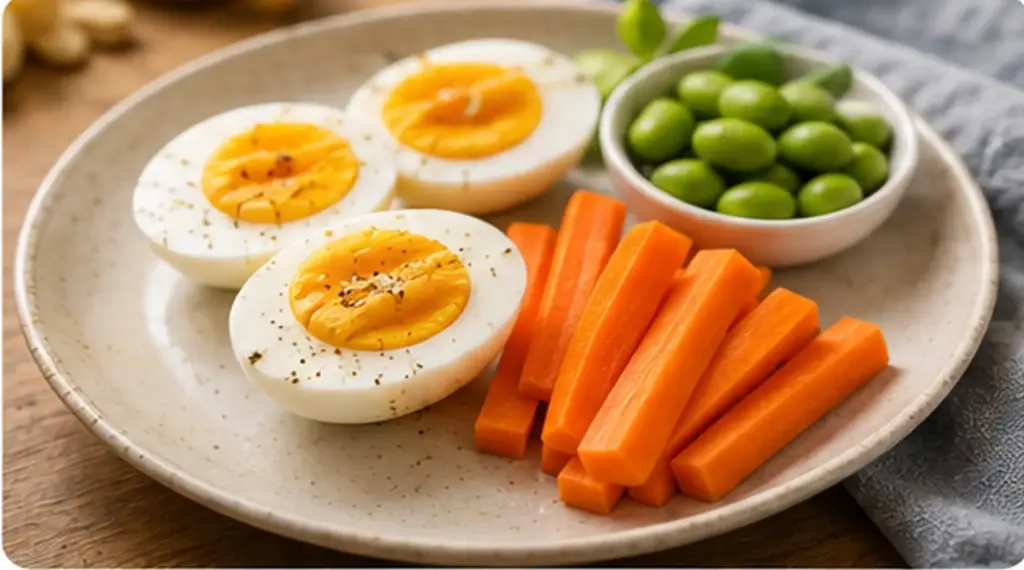
Boil a batch of six eggs on Sunday and you’ve got snacks for most of the week. One large egg has about 6 grams of protein and a good dose of choline, which supports brain development. A light sprinkle of everything bagel seasoning turns a plain egg into something kids actually ask for again.
5. Cottage Cheese with Pineapple and Cinnamon
Cottage cheese is an underrated snack, largely because of its texture, which some kids need a minute to get used to. A cup delivers around 24 grams of protein. Mixing in pineapple chunks and a pinch of cinnamon softens the flavor and makes it more approachable for picky eaters who are trying it for the first time.
6. Rainbow Veggie Sticks with Hummus
Cut carrots, bell peppers, and cucumber into sticks and serve with hummus for dipping. Two tablespoons of hummus adds around 3 grams of protein along with fiber from the chickpeas. For children under 4, cut raw carrots into thin matchsticks rather than round coins or thick sticks, since firm, round pieces are a known choking risk.
7. Steamed Edamame with Sea Salt
Edamame is one of the highest-protein plant snacks on this list, with about 17 grams per cooked cup. Steam the pods for 5 minutes, sprinkle with sea salt, and let kids pop the beans out themselves. The hands-on nature of eating it tends to hold a kid’s attention longer than most snacks.
8. Whole-Grain Peanut Butter and Banana Sandwich
A classic for a reason. Two tablespoons of peanut butter contribute roughly 7 grams of protein, and whole-grain bread adds fiber that white bread doesn’t. If your child’s school or daycare is nut-free, sunflower seed butter is a reasonable swap that keeps most of the nutritional profile intact.
9. Warm Oatmeal with Nut Butter and Banana
This one works best on cold mornings or after an outdoor practice, when a cold snack doesn’t feel as satisfying. Stir a spoonful of nut butter into warm oatmeal and top with banana slices. It’s closer to a mini-meal than a snack, which makes it a good option before a longer stretch without food, like a school day. For the base itself, our guide on how to make healthy organic oatmeal covers the cooking details.
10. Black Bean and Cheese Quesadilla
Adding black beans to a basic cheese quesadilla roughly doubles the protein and adds fiber the cheese alone doesn’t provide. Mash a few tablespoons of beans onto the tortilla before adding cheese, fold, and cook until golden. Cut into wedges so younger kids can pick them up easily. If beans are a hit, our kidney bean recipes roundup has more ways to work them into meals, not just healthy snacks for kids.
11. Mediterranean Quinoa Salad with Feta and Cucumber
Quinoa is one of the few plant foods that contains all nine essential amino acids, which is worth knowing if your child eats a lot of plant-based meals. Toss cooked quinoa with diced cucumber, cherry tomatoes, and crumbled feta for a snack that holds up well in the fridge for meal prep. It works cold, which makes it a strong lunchbox option.
12. Build-Your-Own Trail Mix
Let kids assemble their own mix from bowls of nuts, seeds, dried fruit, and a few dark chocolate chips. This is a fun one for weekend prep, and one of the more customizable healthy snacks for kids on this list, but it comes with a caution: whole nuts are a choking hazard for children under 4, so for that age group, swap in roasted chickpeas or crushed nuts instead of whole ones.
13. Avocado Toast with a Soft-Boiled Egg
Mash avocado onto whole-grain toast and top with a sliced soft-boiled egg. The combination of healthy fat from the avocado and protein from the egg makes this filling enough to bridge a long gap between breakfast and lunch. A pinch of salt and pepper is usually all it needs.
14. Spinach and Berry Protein Smoothie
Blend a cup of milk (or a fortified plant milk), a handful of spinach, frozen berries, and a banana. The spinach flavor essentially disappears once it’s blended with fruit, and a cup of milk alone brings about 8 grams of protein to the mix. This is a practical way to get vegetables into a kid who won’t touch them on a plate. Our banana protein shake recipe works as a simpler base if you want to skip the spinach for a first try.
15. No-Bake Peanut Butter Oat Energy Balls
Mix rolled oats, peanut butter, a little honey, and mini chocolate chips, then roll into bite-sized balls and chill. Kids can help with this one, which tends to make them more willing to eat the final product among healthy snacks for kids. Keep a batch in the fridge for up to a week for grab-and-go mornings, or browse our Vitality Bites post for more no-bake variations.
16. Chia Seed Pudding with Berries
Stir chia seeds into milk with a little honey and let it sit in the fridge overnight. Chia seeds thicken into a pudding-like texture and add around 4 to 5 grams of protein per two tablespoons, along with omega-3 fats. Top with berries in the morning for a snack that’s essentially ready before your child wakes up.
17. Baked Sweet Potato Fries with Yogurt Dip
Slice sweet potatoes into fries, toss with a little olive oil, and bake until crisp at the edges. Serve with a dip made from plain Greek yogurt and a squeeze of lime. It’s a reasonable swap for the drive-through version, with more fiber and none of the deep-fried oil.
18. Rice Cakes with Almond Butter and Banana
A simple, gluten-free option for kids who need or prefer to avoid wheat. Spread almond butter on a rice cake and top with banana slices for natural sweetness. It’s light enough to work as one of the lower-calorie healthy snacks for kids without spoiling dinner.
19. Homemade Fruit and Nut Bars
Blend mixed nuts, dried fruit, and oats in a food processor, press into a pan, and chill until firm. These hold up well in a backpack without refrigeration for a few hours, which makes them useful for field trips or long car rides. As with trail mix, use crushed rather than whole nuts if you’re making these for a child under 4.
20. Mini Whole-Wheat Pita with Chicken Salad
Mix shredded rotisserie chicken with a spoonful of Greek yogurt instead of mayonnaise, and stuff into a mini whole-wheat pita. Using yogurt in place of mayo cuts the fat and adds extra protein, and leftover chicken makes this one of the faster options on this list if you already have some on hand.
21. Popcorn with Parmesan and Nutritional Yeast
Air-popped popcorn tossed with grated Parmesan and a spoonful of nutritional yeast turns into a savory, cheesy-tasting snack, and nutritional yeast happens to be a genuinely good source of protein for its size. Popcorn is not appropriate for children under 4 due to choking risk, so save this one for older kids.
22. Zucchini Chips with Greek Yogurt Ranch Dip
Thinly slice zucchini, toss with olive oil and seasoning, and bake at a low temperature until crisp (an air fryer works even faster). Serve with a dip made from Greek yogurt, herbs, and a little garlic powder. It’s a good way to close out this list of healthy snacks for kids with a vegetable a lot of kids otherwise ignore. For more fiber-forward ideas beyond this one, see our High Fiber Snacks guide.
How to Build Your Own Healthy Snacks for Kids
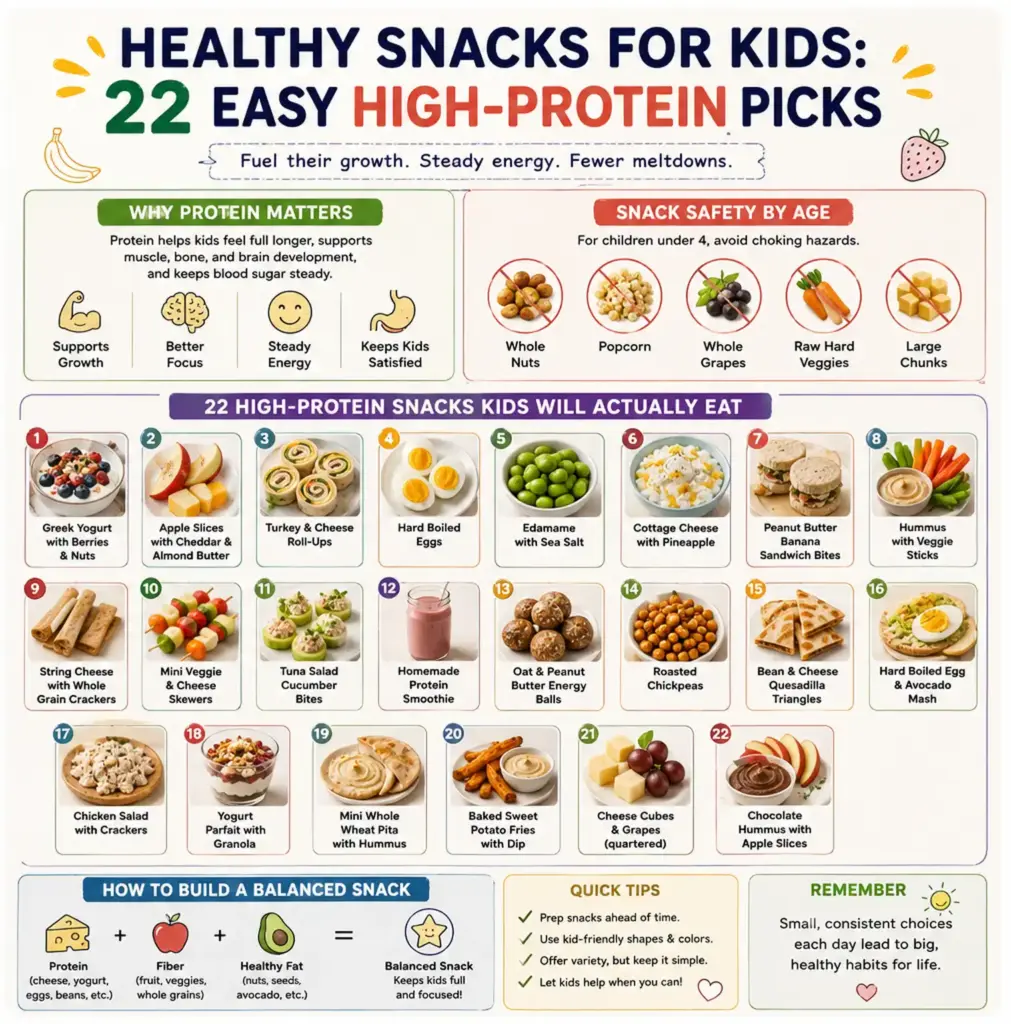
If none of the above quite fits what’s in your fridge, here’s the formula I give clients: pick one protein source (dairy, eggs, beans, nuts, or lean meat), pair it with one piece of produce, and add a whole grain if your child needs something more filling. That structure alone will beat most packaged snacks on the shelf, and it’s the same logic behind every one of the healthy snacks for kids listed above. If you’re also meal-prepping for yourself, our macro calculator and meal prep ideas post can help you scale the same formula up.
Frequently Asked Questions
How much protein does my child actually need from a snack? There’s no single magic number, since it depends on age, activity level, and what the rest of their day looks like. As a rough guide, healthy snacks for kids with 5 to 10 grams of protein are usually enough to hold a child over between meals without being so filling it ruins their appetite for dinner.
Are any of these snacks unsafe for toddlers? A few, as noted above. Whole nuts, popcorn, and firm raw vegetables cut into rounds are choking hazards for children under 4. Chop, crush, or thin these ingredients before serving to that age group.
What if my child has a nut allergy? Swap peanut or almond butter for sunflower seed butter, and skip the trail mix and fruit-and-nut bars unless you make them with seeds instead of nuts. Most of the dairy, egg, and bean-based healthy snacks for kids on this list are naturally nut-free to begin with.
How many snacks should a child eat in a day? Most kids do well with one to two snacks a day between meals, timed so they’re hungry but not starving by the next mealtime. Grazing all day on small bites tends to blunt appetite at actual meals, so a set snack time works better than open access to the pantry.
Can a high-protein snack really help with focus at school? Indirectly, yes. A snack that includes protein keeps blood sugar more stable than a sugar-only snack, and stable blood sugar is linked to steadier energy and attention. It’s not a substitute for sleep or a balanced diet, but it’s one lever that’s easy to pull.
Final Thoughts
None of these healthy snacks for kids require a special trip to a specialty grocery store or an hour in the kitchen. Most of them come together with ingredients you probably already buy. Start with two or three that match your family’s routine, whether that’s a grab-and-go option for school mornings or a slower, kid-assisted recipe for a weekend afternoon, and build from there. The goal isn’t a perfect pantry. It’s a handful of go-to healthy snacks for kids that keep your child fed, focused, and asking for seconds of the right thing. For more ideas along the same lines, browse the rest of our healthy recipes collection.
Not medical advice: This content, and any calculator results on this site, are for general informational purposes only and are not a substitute for professional medical advice, diagnosis, or treatment. Always talk to a qualified healthcare provider before starting a new diet, exercise routine, or health program.
Related Articles You May Like