Most nutrition strategy advice falls into one of two traps. It is either too generic to help. Or it is too complex to survive a busy day.
A real nutrition strategy is not a rulebook. It is a small set of habits you pick on purpose. Good habits hold up even on days that do not go as planned.
The 18 tips below go deeper than most lists. Each one explains why it works. Each one also covers when it might not fit you. Some popular advice has moved past what the research shows.
You do not need all 18 tips at once. Most people do best with three or four habits at a time. Pick the ones that fix your biggest gaps. Give them a few months to feel automatic. Then add more.
Table of Contents
What Is a Nutrition Strategy, and Why Beat “Going on a Diet”?
A diet is often a short-term set of rules. It aims at one goal, like losing weight before an event. A nutrition strategy works differently.
It is a system of habits and choices. You adjust it as your life changes. There is no fixed start date or end date.
This matters because most diets fail by design. It is not about weak willpower. A plan built to last eight weeks was never meant to survive year nine. A nutrition strategy expects your life to change. It flexes around travel, illness, stress, and busy weeks.
The tips below build in layers. First comes what you eat. Then how much. Then when. Then the small habits around eating, like sleep and movement. These quiet habits often decide if the first three actually stick.
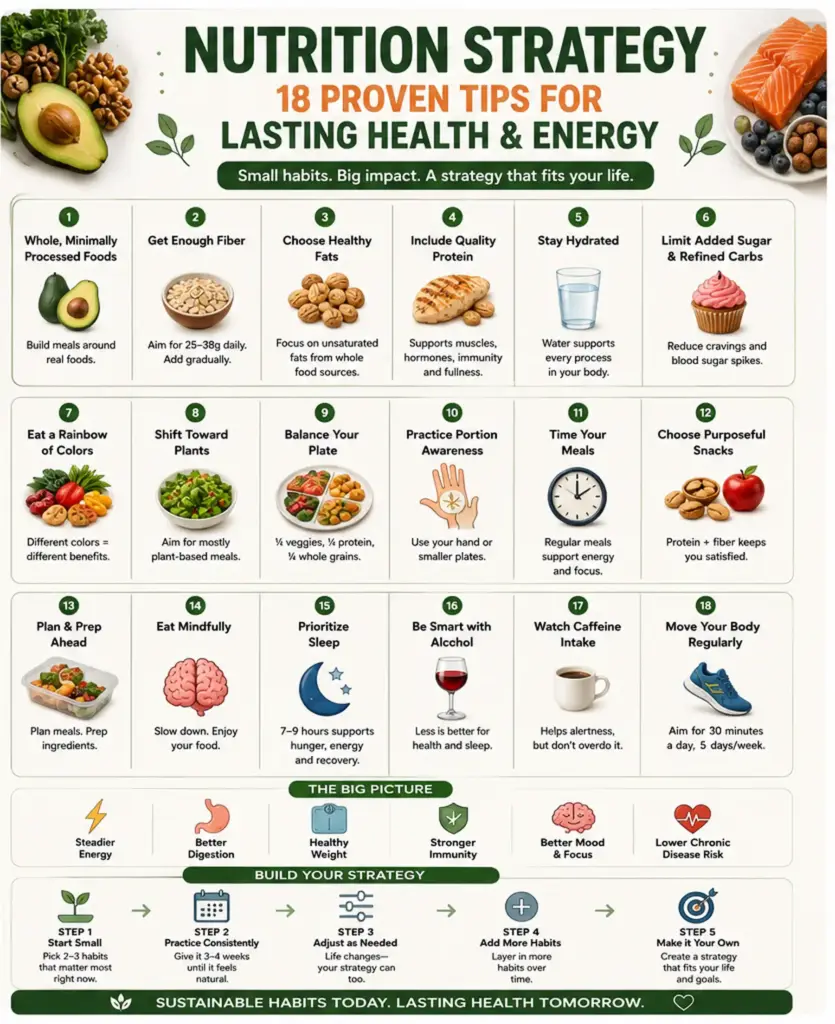
18 Practical Nutrition Strategy Tips for Better Energy and Long-Term Health
1. Build Most Meals Around Whole, Minimally Processed Foods
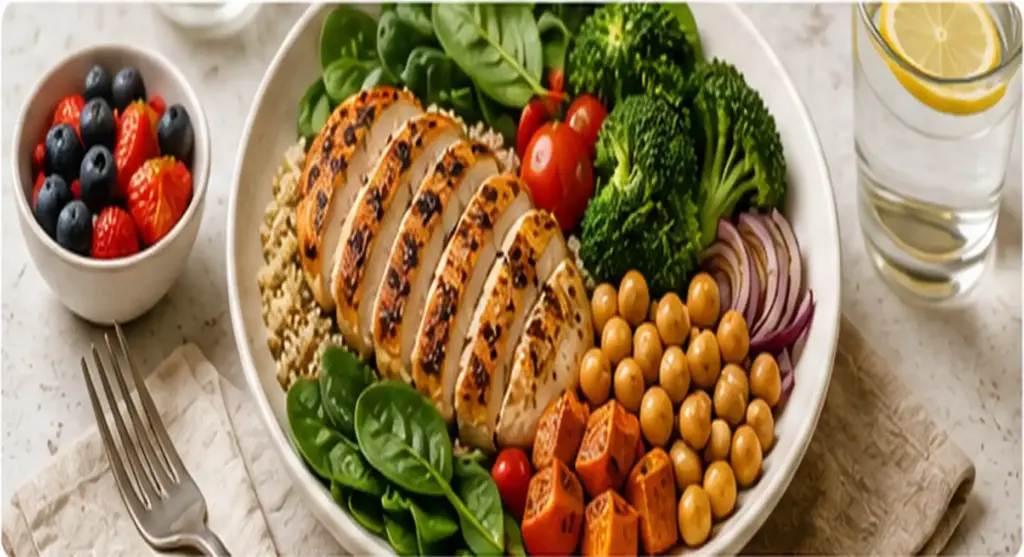
Whole foods include vegetables, fruits, whole grains, beans, nuts, and plain proteins. They give your body nutrients as a natural package, and they are usually the first thing worth fixing in any nutrition strategy. Fiber, water, and vitamins all come bundled together, the way your body evolved to use them.
This does not mean every processed food is bad. Plain frozen vegetables count as processed. So do canned beans, rolled oats, and plain yogurt. All of these are still smart picks.
The real gap is between light processing and heavy processing. Freezing or canning is light. Heavy processing strips out fiber. Then it adds back sugar, salt, and refined starch. That mix is easy to overeat.
Try this simple rule. Build each meal around one whole food first. Then decide what else goes on the plate. Keeping smart frozen meal choices on hand still fits this plan. Just check the ingredient list, not only the calorie count.
2. Get Enough Fiber, Since Most People Fall Well Short
Most adults in the U.S. eat about half the fiber they need, which makes fiber one of the biggest gaps in the average nutrition strategy. Mayo Clinic sets clear daily targets. Women under 50 should aim for 25 grams. Men under 50 should aim for 38 grams. After age 50, those targets drop to 21 and 30 grams.
Fiber works two ways. Soluble fiber slows digestion. It helps keep blood sugar steady. It can also lower bad cholesterol. Find it in oats, beans, and apples.
Insoluble fiber adds bulk instead. It keeps things moving along. Find it in vegetable skins and whole grains.
One warning matters here. Too much fiber too fast causes gas and bloating. Add it slowly, over a few weeks. Drink more water as you do. Fiber needs water to do its job.
Keep high-fiber snacks that actually keep you full on hand. This beats trying to overhaul every meal at once (Mayo Clinic).
3. Choose Healthy Fats on Purpose, Not Out of Fear
The low-fat trend of the 1990s left behind a myth. Many people still think all fat leads to weight gain. Fat is calorie-dense, it’s true. It packs nine calories per gram. Protein and carbs only pack four. But your body still needs fat to work right.
Fat helps you absorb vitamins A, D, E, and K. It also builds healthy cells. You cannot skip it completely.
The type of fat matters more than the total amount. Unsaturated fats support heart health. Find them in olive oil, nuts, seeds, avocado, and fatty fish. Saturated fat, mostly from animal foods, is fine in smaller amounts. Trans fat is the one to truly avoid. It shows up in some fried and packaged foods. No safe amount has ever been found.
Try one easy swap. Use olive oil instead of butter when you cook. Eat fatty fish, like salmon or sardines, once or twice a week. That covers the omega-3 fats your body cannot make on its own.
4. Anchor Every Meal With a Protein Source
Protein is not just for people trying to build muscle. It slows digestion. It curbs hunger. It is the nutrient most linked to feeling full after a meal, which makes it one of the most useful pieces of any nutrition strategy.
The government’s basic target is 0.36 grams per pound of body weight. That amount is just enough to avoid deficiency. It was never built for feeling your best.
Harvard Health points to a higher range. Many adults, especially those over 50, do better closer to 0.5 to 0.7 grams per pound. For a 150-pound person, that is 75 to 105 grams a day. That is well above the bare minimum of 54 grams.
Eating mostly plant protein? You do not need to combine specific proteins at the same meal. That old rule dates back to the 1970s. It does not hold up. A mix of plant proteins across the day covers your needs just fine.
For structured ideas, try these high-protein meal prep ideas. They work for animal or plant proteins alike (Harvard Health).
5. Match Your Hydration to What Your Body Actually Needs
The advice to drink eight glasses a day is easy to remember. It is not really based on your own needs, though.
The National Academies set a broader target. Men need about 15.5 cups of fluid a day. Women need about 11.5 cups. That includes fluid from food, not just drinks. Food, especially fruit and soup, covers about a fifth of your daily fluid.
Your real need shifts with a few things. Body size, hot weather, and exercise all raise it. So does a high-fiber diet. Caffeine and alcohol raise fluid loss a little too.
Skip the glass-counting. Check your urine color instead. Pale yellow often means you are well hydrated. Dark yellow means you need more fluid through the day, not just at meals (Mayo Clinic).
6. Rethink Added Sugar and Artificial Sweeteners Together
People often treat these as opposites. One is bad, one is fine. The better question, and the more useful one for your nutrition strategy, is what role sweetness plays in your diet at all.
On added sugar, aim to stay under 10% of daily calories. On a 2,000-calorie diet, that is about 50 grams. The American Heart Association sets a tighter limit. Most women should stay under 25 grams. Most men should stay under 36 grams. Sugar from whole fruit does not count here. Fiber in the fruit changes how your body absorbs it.
Swapping sugar for sweeteners is not an automatic fix. In 2023, the World Health Organization spoke out against using them for weight control. Long studies show no clear weight benefit. That advice is rated low-certainty, though. Not every food scientist agrees with how it was worded. Treat it as a reason for some caution, not alarm.
The steadier goal is different. Try to want less sweetness, from any source, not just sugar (Harvard Health, WHO).
7. Eat for Color and Variety, Not Just “Healthy”
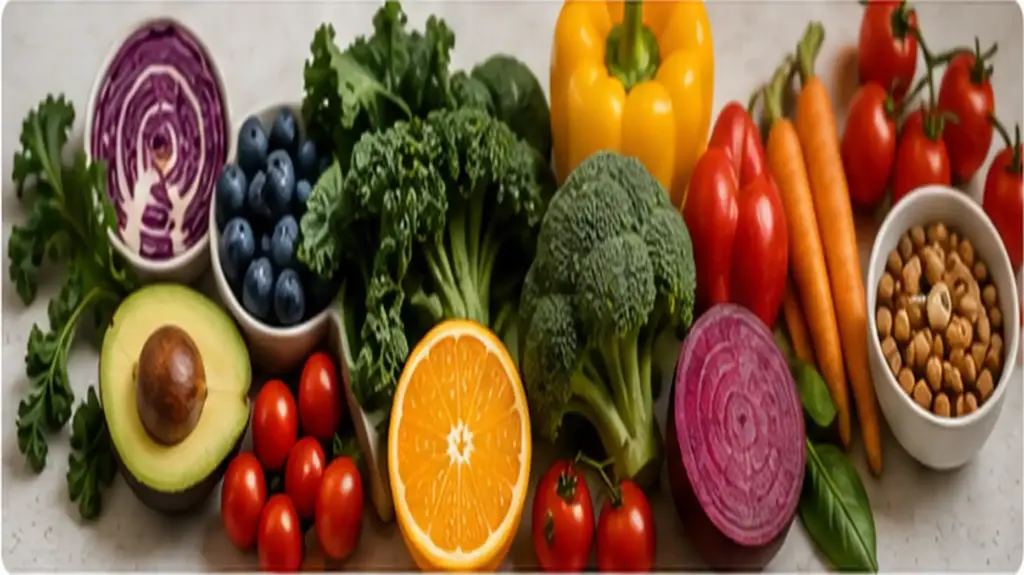
Plant colors are not just for looks. Each one signals a different plant compound. Red tomatoes get their color mostly from lycopene. Orange carrots and sweet potatoes get theirs from beta-carotene. Dark greens like spinach and kale bring lutein and folate. No single pill copies that full mix.
Still, “eat the rainbow” is a shortcut, not a strict rule. White foods matter too. Garlic, onions, mushrooms, and cauliflower carry their own useful compounds. Do not skip them just because they lack bright color.
Here is a low-effort way to build variety. At each grocery trip, pick one vegetable you have not bought in a month. Over a few months, this slowly widens what you eat. No meal plan overhaul required.
8. Shift the Ratio Toward Plants Without Going All-or-Nothing
Plant-forward eating is not the same as vegan or vegetarian eating. It just means plants take up more of your plate than they do now. Meat and dairy stay optional. Nothing gets banned.
The evidence here is less about one nutrient. It is more about your whole eating pattern. Diets built around vegetables, beans, whole grains, and nuts link to lower rates of heart disease. They also link to lower rates of type 2 diabetes. This holds true in long studies, even when meat stays part of the mix, just a smaller part.
Try one simple shift. Make one dinner a week fully plant-based. Build it around beans, lentils, or tofu instead of meat. Treat that as a floor, not a ceiling. Plant-based recipes worth keeping in rotation can make this feel like an upgrade, not a restriction.
9. Use a Simple Plate-Balance Guide Instead of Counting Everything
The USDA plate model gives you a fast visual guide, and it is a solid default for anyone building a nutrition strategy from scratch. Fill half your plate with vegetables and fruit. Fill one quarter with protein. Fill the last quarter with grains, ideally at least half whole grains. Add a side of dairy or a dairy alternative.
This guide is not exact enough for every case. Athletes training hard often need more carbs. A quarter plate does not always cover it. People managing diabetes also need to count carbs closely. A visual guide alone is not precise enough for that. Treat this as a starting point, not a medical plan.
Want an exact number instead? A macro calculator gives you gram targets. It uses your weight, goals, and how active you are (Oklahoma State University Extension).
10. Build Real Portion Awareness, Not Just a Smaller Plate
You have probably heard this tip before. Use a smaller plate. The research behind it is weaker than most people think.
A 2021 review pooled many studies together. Smaller plates alone showed no real effect on how much people ate. Smaller bowls and serving spoons showed a bigger effect. That effect held up more consistently too.
Portion awareness works better as a set of light habits. Serve food onto a plate. Do not eat straight from the bag or box. Use a smaller spoon for rich, calorie-dense foods. Every so often, measure a meal you eat a lot. This resets your sense of what a real serving looks like.
Want a solid number to anchor around? A calorie calculator gives you a daily range. It is based on your own stats and goals. That beats guessing from plate size alone.
11. Keep Meal Timing Steady
Skipping meals by accident tends to backfire. Maybe you just got too busy. You often overeat later. Often it is whatever convenience food sits closest. Blood sugar swings get harder to ignore too.
This is different from intermittent fasting. That is a planned, structured choice some people manage well. The problem is not skipping food on purpose, within a real plan. The problem is skipping meals by accident. Then hunger ends up picking your food for you.
If your schedule changes a lot, keep a backup meal or snack within reach. That protects you from the worst version of this: getting home starving, with no plan at all.
12. Choose Snacks With a Purpose
Snacking is not good or bad by itself. What matters is the reason behind it. Are you bridging a long gap between lunch and a late dinner? Or are you eating out of boredom or stress?
A good snack pairs protein or fiber with something you enjoy. This slows digestion. It keeps you full longer than sugar or plain carbs alone. A handful of nuts with fruit works well. So does yogurt with berries. Both beat crackers or chips for staying power.
Keep a few quick, easy snack options ready ahead of time. This cuts out tired decision-making. A tired mind just grabs whatever is fastest. That is rarely the choice you actually wanted.
13. Plan Meals Ahead, Even Loosely
Meal planning does not mean prepping every ingredient every Sunday. A lighter version works just as well for most people. It is sometimes called template planning.
Pick your usual protein, vegetable, and carb options for the week. Then mix and match daily. Skip the fixed dishes.
The real benefit is not the food itself. It is less decision fatigue. Choosing what to eat, over and over, wears you down. This is where a nutrition strategy actually turns into a habit, instead of staying a good intention.
Start small. Keep one reliable prep-ahead breakfast in rotation. Try overnight oats you can prepare the night before. That way, one meal a day needs zero same-day decisions.
14. Practice Mindful Eating, and Ease Up on Emotional Eating
Fullness signals take about 20 minutes to kick in. That is after you start eating. This is part of why eating fast leads to overeating. Slow down. Chew your food well. Put your phone away for at least one meal a day. Give those signals time to catch up.
Emotional eating now and then is normal. Reaching for comfort food after a hard day is not a failure. It matters more when food becomes your only coping tool.
Build in other outlets too. A short walk. A call with a friend. Use these alongside food, not instead of it. This tends to work better than trying to fight cravings through willpower alone.
If stress eating shows up a lot, pair your food changes with practical habits for managing stress and mental load.
15. Rethink Late-Night Eating and Protect Your Sleep
You have likely heard the popular version of this story. Sleep is easy to leave out of a nutrition strategy, yet it quietly shapes almost everything else on this list. Less sleep raises the hunger hormone ghrelin. It lowers the fullness hormone leptin. This makes you hungrier. A well-known 2004 study found exactly that.
Newer research tells a more mixed story, though. Recent reviews found weaker hormone effects. They were also less consistent than that first study suggested. Treat the hormone story as likely true, but not fully settled.
One thing is more consistent: behavior. People who sleep poorly tend to make worse food choices the next day. They also find it harder to stop at a normal portion. This holds true no matter what any single hormone is doing.
Do not focus too much on a cutoff time for your last meal. Instead, protect your sleep window itself. Keep late meals lighter if eating close to bedtime hurts your sleep or causes discomfort. These two habits support each other more than either one does alone.
16. Moderate Alcohol Using Current, Not Outdated, Guidance
Federal alcohol guidance changed in a real way. New Dietary Guidelines came out in January 2026. They cover 2025 through 2030. The old rule set exact limits. Women were told to stay under one drink a day. Men were told to stay under two. Those exact numbers are gone now.
The new guidance is simpler. It just says: drink less, for better health. There is no specific number attached anymore.
New evidence drove this change. Even light drinking carries some risk. There is no clear safe floor. Some groups should skip alcohol fully: pregnant women, people healing from alcohol use disorder, and anyone on medicine that reacts badly with alcohol.
If you drink, the point still stands without a number. Less is better than more. A few alcohol-free days each week is a fair default for most adults (Dietary Guidelines for Americans).
17. Know Your Real Caffeine Ceiling
The FDA and Mayo Clinic both point to 400 milligrams a day. That is roughly four 8-ounce cups of brewed coffee. This number is a ceiling, not a target. Plenty of people feel great on far less.
Your own limit depends on genetics and habit. Two people can drink the same amount and feel totally different. Pregnant or breastfeeding? Stay closer to 200 milligrams a day.
Timing matters as much as total amount. Caffeine has a half-life of five to six hours. An afternoon coffee can still affect you at bedtime, even under your daily limit.
Chocolate counts too. If chocolate and caffeine sources are part of your day, add them to your running total. Coffee and tea are not the only sources (Mayo Clinic).
18. Pair Your Nutrition Strategy With Regular Movement
Food and movement are not substitutes for each other. Each one does something the other cannot. A strong nutrition strategy still needs movement. Skip it, and you are working with one hand tied behind your back.
The CDC sets a clear weekly target. Aim for 150 minutes of moderate exercise. Or aim for 75 minutes of hard exercise instead. Add strength work for major muscles too, at least twice a week.
Movement helps in ways food alone cannot reach. It improves how your body handles blood sugar. It improves sleep quality and mood too, no matter what the scale shows.
You do not need a gym membership to hit this target. A brisk walk counts as moderate activity. Just 30 minutes a day, five days a week, covers your full weekly goal (CDC).
Common Nutrition Strategy Mistakes That Undo Good Intentions
Even a well-built nutrition strategy can stall out. The reason often has nothing to do with which tips you pick. A few patterns show up again and again:
- Chasing a perfect plan instead of a repeatable one. A strategy you follow 80% of the time for a year beats a perfect plan you quit after three weeks.
- Treating all calories as the same. Source and context matter. 200 calories of almonds and 200 calories of soda hit your body very differently, even with matching numbers.
- Copying someone else’s exact plan. Your activity, health history, age, and food likes all shift what works for you. Treat someone else’s plan as a starting point, not a script to follow exactly.
- Under-eating protein and fiber, while leaning on convenience snacks instead. This combination drives hunger and low energy more than almost any other habit, even when your total calories look fine on paper.
- Changing everything at once. Overhauling ten habits in one week rarely survives the first rough day at work. Take changes one at a time.
- Treating sleep and stress as unrelated to food. They are not separate. Poor sleep and chronic stress both shift your appetite, cravings, and food choices directly.
How to Build Your Own Nutrition Strategy, Step by Step
- Track your current pattern for three to five days. Do this honestly. The goal is not to judge yourself, just to see your real starting point.
- Find your one or two biggest gaps. Common ones: low protein, low fiber, messy meal timing, or poor sleep. Trying to fix everything at once often fixes nothing.
- Pick two or three tips from this guide. Choose ones that target those specific gaps. Ignore the rest for now. You can circle back later.
- Give each change three to four weeks. Do not judge results or add more too soon. Habits need repeats to feel automatic.
- Check in as your life changes. A nutrition strategy is not fixed. What works during a calm stretch may not work during travel. It may need to shift for a new job or an illness too.
Frequently Asked Questions
How long does it take to see results from a new nutrition strategy? Energy and digestion often improve within one to two weeks. Bigger changes, like weight or lab results, often take six to twelve weeks of steady habits.
Do I need to follow all 18 tips at once? No. Trying to adopt all of them at once is one of the most common reasons changes do not stick. Start with two or three that fix your biggest gaps.
Can a nutrition strategy help with weight loss specifically? Yes, but not directly. None of these tips are weight-loss tricks on their own. Portion awareness, steady protein, and regular meal timing work as a team, though. Together, they build the habits most tied to real, lasting weight loss.
If I could only pick one tip to start, which matters most? For most people, protein and fiber at each meal bring the fastest change in hunger and energy. That makes every other change easier to keep up.
How should my nutrition strategy change if I train or exercise regularly? Active people often need more total calories. They also need more carbs around workouts, for fuel and repair. Protein needs tend to rise too, above the basic plate guide. A macro calculator gets more useful as you train more.
Is it normal to have setbacks within a nutrition strategy? Yes. Wanting a perfect plan is one of the mistakes covered above. A strategy that survives a bad week, without falling apart, beats one that only works when everything goes right.
Do I need to count calories or macros for a good nutrition strategy? No. Many people do well with the plate-balance guide and portion awareness alone. Counting helps for some goals, like competitive sports or a named health condition. It is not needed for general health.
When should I get professional guidance instead of relying on general tips? Talk to a doctor or dietitian if you have a health condition, are pregnant, or have a history of disordered eating. The same goes if you see no real progress after months of honest effort. An expert can build a plan around your exact case. A general guide like this one cannot.
Final Thoughts
A good nutrition strategy is boring, in the best way. It does not need willpower theatrics. It does not need expensive supplements. It does not need to cut out entire food groups. It just needs a handful of habits that fit your real life, given enough time to become automatic.
Start with whichever tip fixes your biggest current gap. Skip the one that just sounds most impressive. Come back to this guide in a few months, once your first changes feel easy. Then add one or two more habits.
That slow approach is the real difference. A nutrition strategy either lasts. Or it fades out by February.
Not medical advice: This content, and any calculator results on this site, are for general informational purposes only and are not a substitute for professional medical advice, diagnosis, or treatment. Always talk to a qualified healthcare provider before starting a new diet, exercise routine, or health program.
Related Articles You May Like