Trying to conceive can feel like a full-time job, with endless advice pulling you in different directions. Fertility wellness comes down to a few habits with real proof behind them. You do not need a hundred rules.
Fertility wellness means giving your body what it needs. It needs support to release an egg each month. It needs support to make healthy sperm. It needs support to carry a pregnancy. Food, sleep, movement, and stress all play a part.
This is not a promise of pregnancy. It does not replace a doctor when you need one. It is simply the groundwork. It gives your body its best shot.

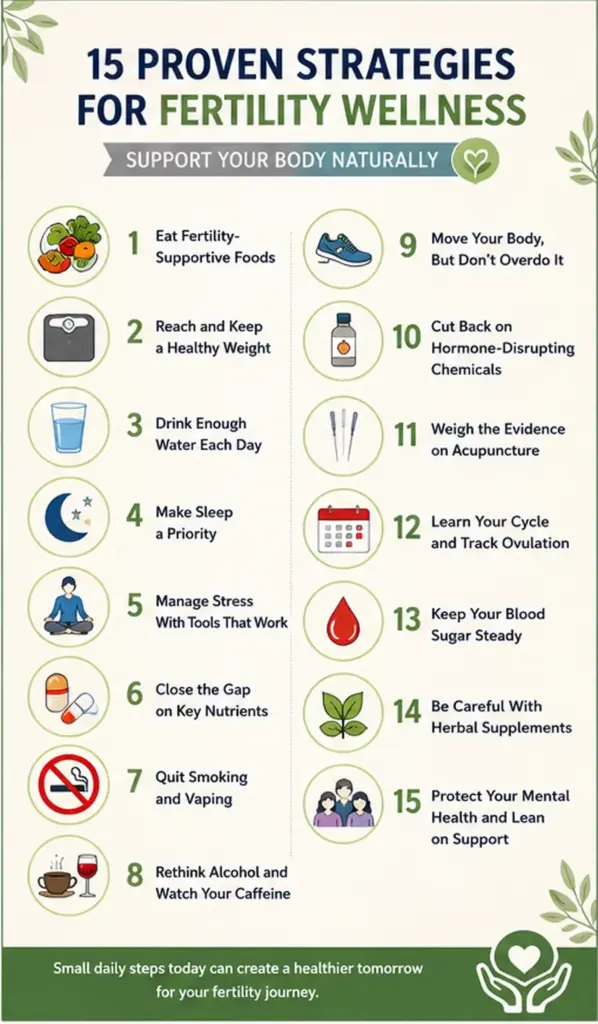
This guide covers 15 fertility wellness tips. Each one is backed by real research, from groups like the CDC, ASRM, and NIH. You will also learn when to call a specialist. Many tips matter for men too. Male factors play a role in almost half of all fertility cases.
Table of Contents
What Is Fertility Wellness?
Fertility wellness is how you care for your body day to day. Think food, weight, sleep, stress, and what you touch and breathe.
It is not a cure. It will not fix a blocked tube. It will not fix a low sperm count on its own. But it does help. It sets up better odds for pregnancy, on your own or with treatment like IUI or IVF.
Two things make a fertility wellness plan work. First, stick with it. Eggs and sperm take months to grow, not days. Second, know its limits. It should never take the place of a doctor’s visit if things are not working.
1. Eat Fertility-Supportive Foods
Your body needs steady fuel. Vitamins, minerals, and good fats all help set your hormones. They support the health of eggs and sperm too.
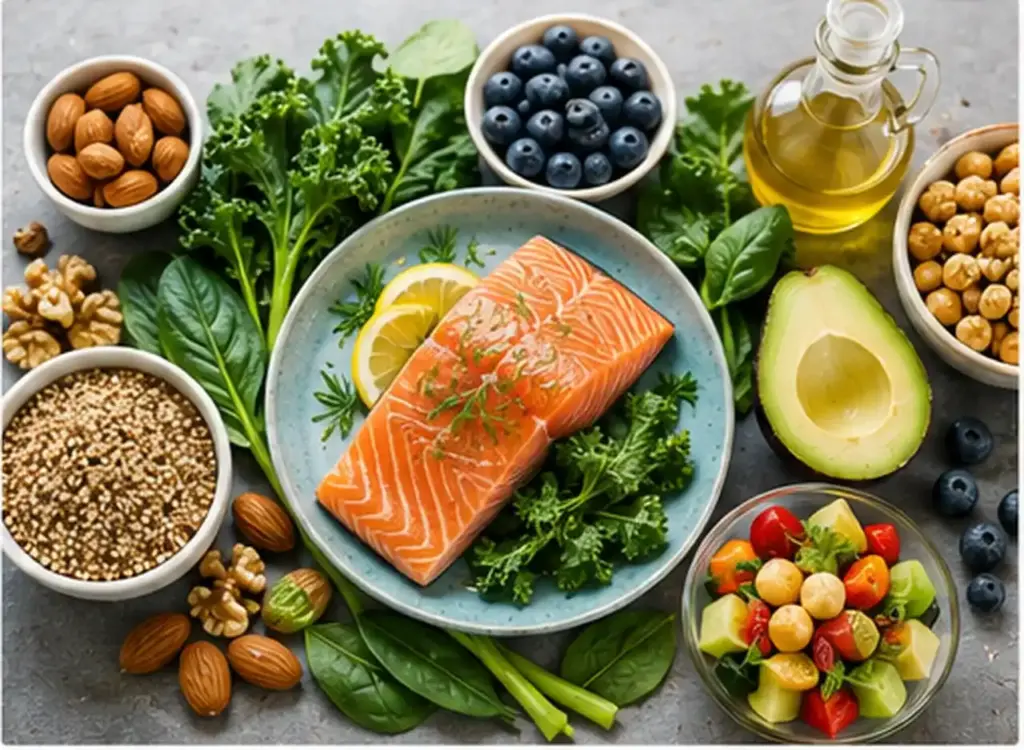
One eating style stands out. It is the Mediterranean pattern. It leans on veggies, fruit, whole grains, fish, and olive oil. It goes light on processed meat and added sugar. Studies link this pattern to better fertility wellness in both women and men.
A few simple swaps help:
- Fill your plate with leafy greens, bright veggies, and fruit.
- Choose whole grains like oats, brown rice, and quinoa. The fiber clears out extra hormones and steadies your blood sugar.
- Add good fats from olive oil, avocado, nuts, and fatty fish.
- Add a protein source at each meal. Rotate between fish, eggs, beans, and lean meat.
You do not need to eat with zero flaws. A plan you can follow most days beats a strict one you quit in two weeks. Our nutrition strategy guide has simple habits to try first, as part of your fertility wellness plan.
2. Reach and Keep a Healthy Weight
Your weight ties closely to your hormones. Being too thin can stop ovulation. So can carrying too much extra weight. Either one can delay a pregnancy.
The American Society for Reproductive Medicine has a striking stat here. About 1 in 8 fertility cases link back to weight extremes. That makes weight one of the more fixable parts of fertility wellness.
The goal is not a number on a scale. It is a range where your cycles run on time. Not sure where you stand? Try our free BMI calculator for a quick start point. Keep in mind BMI is just one clue, not the whole story.
Go slow. Fast weight loss can throw off your cycle just as much as extra weight can.

3. Drink Enough Water Each Day
Water does not get much credit in fertility talk, but it plays a role. Cervical fluid helps sperm swim, and that fluid is mostly water.
When you do not drink enough, that fluid can turn thick. It gets less friendly to sperm right around ovulation. Blood flow to your womb also needs enough water to work well.
Aim for about half your body weight in ounces each day. Drink more if you work out or live somewhere hot. Carry a bottle and refill it through the day. This habit sticks far better than trying to recall set drink times. It is a small piece of fertility wellness that adds up fast.
4. Make Sleep a Priority
Your body sets key hormones while you sleep. This includes the hormones that drive ovulation and sperm growth. Short, broken sleep throws that process off.
Most adults need 7 to 9 hours a night. A steady schedule matters almost as much as the hours themselves. Try to go to bed and wake up at the same time each day, weekends too. This keeps your body clock, and the hormones tied to it, on track.
Struggling to sleep? Start with the basics. Keep your room dark and cool. Put screens away for the last 30 minutes before bed. Cut off caffeine by early afternoon. Sleep is one of the easiest wins in a fertility wellness routine.
5. Manage Stress With Tools That Work
Stress and fertility are linked. But “just relax” is not real advice. It skips how stress works. Heavy stress can throw off the signals between your brain and your ovaries or testes. It also feeds habits, like poor sleep or skipped meals, that hurt fertility in other ways.
The fix is not zero stress. It is having tools that actually work. A few stand out in the research: mindfulness, talk-based therapy skills, and regular movement. Each one can lower stress hormones and lift your mood.
Pick one or two habits you will truly do. That could be ten minutes of slow breathing before bed. It could be a short walk after dinner. It could be writing down three good things from your day. Our guide to soothing relaxation practices has more ideas to try as part of your fertility wellness plan.

6. Close the Gap on Key Nutrients
Four nutrients come up again and again in fertility research. They are folate, vitamin D, omega-3 fats, and zinc. Here is what the proof really shows.
Folate (vitamin B9): The CDC backs 400 micrograms of folic acid each day. Start at least one month before you try to conceive. Its proven role is to prevent brain and spine defects early in pregnancy. Leafy greens, beans, and citrus fruit are good food sources too.
Vitamin D: Low levels tie to off-schedule cycles. They also tie to lower success in fertility treatment. Extra vitamin D seems to help most when your levels run low. Ask your doctor about a blood test first.
Omega-3 fats: Found in fatty fish, walnuts, and flaxseed. These fats link to better egg health in women. They link to better sperm movement in men too. Their calming effect on the body likely helps.
Zinc: Zinc helps eggs mature well. It is one of the best-studied nutrients for sperm count and movement. Oysters, beef, pumpkin seeds, and beans are good sources.
Food first is the rule of thumb. Use pills to fill real gaps, not to skip meals. Talk to your doctor before you add anything new, especially if you already take a prenatal pill.
7. Quit Smoking and Vaping
Of all the tips here, quitting smoking has some of the strongest proof behind it. Smoking harms egg health. It speeds up the loss of egg supply. It lowers sperm count and movement in men.
Vaping is newer, so long-term proof is thin. But nicotine itself throws off the hormones tied to ovulation, no matter how it enters your body. If you smoke or vape and want to conceive, quitting is one of the biggest wins you can make for your fertility wellness. Ask your doctor about quit support instead of going it alone.
8. Rethink Alcohol and Watch Your Caffeine
Alcohol and caffeine both draw mixed advice online. Here is what major medical groups say. ACOG, the group for OB-GYN doctors, advises against alcohol once you are pregnant. No amount has been proven safe. Many doctors urge the same care while you try to conceive.
Caffeine is more forgiving in small doses. ACOG caps it under 200 milligrams a day. That is roughly one 12-ounce cup of coffee, for anyone pregnant or trying to conceive. Energy drinks and some sodas add up fast, so check the label. Our breakdown of Boost Energy Drink’s caffeine content shows how quick a can or two can push you past that mark.
Neither of these calls for zero flaws. Stay under the caffeine mark most days. Treat alcohol as a rare choice, not a daily one.
9. Move Your Body, But Don’t Overdo It
Moderate exercise supports fertility wellness in real ways. It helps your body use insulin well. It helps balance your hormones. Research on physical activity and fertility points to 30 to 60 minutes of moderate movement most days as the sweet spot.
Here is the part fertility posts often skip. More is not always better. Very hard or long exercise, paired with too little food, can shut down the hormones that trigger ovulation. This can lead to light, missed, or absent periods. It shows up most in endurance athletes and daily hard trainers, not in someone doing a normal workout.
If your cycles run off and you train hard, talk to a doctor about your workout load. More sweat does not always mean more fertility wellness benefit.
10. Cut Back on Hormone-Disrupting Chemicals
Chemicals like BPA and phthalates hide in some plastics, food wrap, and beauty products. They can act like your body’s own hormones, or block them. Research from the National Institute of Environmental Health Sciences ties higher exposure to these chemicals with lower fertility in both women and men.
You cannot dodge every trace of them, and you do not need to. A few simple swaps cut your exposure:
- Store food in glass or steel, not plastic, especially anything hot.
- Skip the microwave for food still in plastic.
- Pick fragrance-free skin and hair products when you can. The word “fragrance” often hides phthalates on a label.
- Skip the paper receipt when you can. Many are coated in BPA.
These are fair, proven steps, not scare tactics. Small, steady swaps beat one big overhaul, and they add up as part of your fertility wellness routine.
11. Weigh the Evidence on Acupuncture
Acupuncture is a popular add-on choice for fertility care. It earns an honest look, not a flat yes or no. Reviews of acupuncture used with IVF show it may lift pregnancy rates a bit in some studies. But those same reviews find no clear gain in live birth rates. Much of this proof also comes from small groups, with a real chance of placebo effect.
In plain terms: acupuncture is unlikely to cause harm. Many people find it truly calming. It might add a small boost next to medical care. It should not replace a fertility doctor’s plan. Want to try it? Look for a licensed provider. Treat it as a side note to your care, not a swap for it.
12. Learn Your Cycle and Track Ovulation
You cannot time sex around ovulation if you do not know when it hits. Cycle length varies more than most folks think. Tracking gives you real facts instead of a guess.
A few tools work well together:
- Ovulation kits catch the hormone surge that hits 24 to 36 hours before ovulation.
- Body temperature ticks up a bit after ovulation. This confirms it happened, but only after the fact.
- Cervical fluid turns clear and stretchy, like raw egg white, right before ovulation.
Pair a kit with fluid checks for the best real-time view. Temperature only proves ovulation once it is over. Your fertile window runs about five days before ovulation through the day itself, since sperm can live that long inside the body. Tracking is a low-cost, high-value habit in any fertility wellness routine.
13. Keep Your Blood Sugar Steady
Blood sugar swings shape fertility more than most people think. This matters most for anyone with PCOS, short for polycystic ovary syndrome. PCOS is one of the top causes of ovulation-linked infertility. Insulin resistance, common with PCOS, blocks the hormone signals that ovulation needs.
Pair carbs with protein and fiber at meals. This slows the sugar spike after you eat. It also softens the insulin swings that can throw off ovulation. Swap white grains for whole grains. Add protein to breakfast instead of skipping it. Pick fiber-rich snacks over sweet ones. Our list of high-fiber snack ideas has options worth a try.
Do you see signs of PCOS? Off-schedule cycles, extra hair growth, or late acne are common flags. Bring these straight to your doctor. Diet alone will not manage PCOS by itself.
14. Be Careful With Herbal Supplements
Herbs like chasteberry (vitex), maca root, and ashwagandha show up a lot in fertility posts. The honest truth is the proof for most of them stays thin and mixed. Small studies hint that chasteberry may help some cycles run on time. Bigger, stronger trials are still missing. The same gap holds for maca and ashwagandha and their exact role in fertility.
Herbal pills are not checked like drugs are. Strength and purity can swing a lot between brands. Some herbs can also clash with fertility drugs. Others carry hormone-like effects that could work against your case.
Curious about a supplement? Bring the exact bottle to your doctor first. This matters even more if you use hormone-based fertility care. A well-meant online tip can work against you here.
15. Protect Your Mental Health and Lean on Support
Trying to conceive, over many months, takes a real toll. Studies that compare the stress of infertility to other health struggles found similar levels of anxious and low mood. If this has been hard on you, that reaction makes full sense.
A support crew helps in two ways. It gives you a place to vent the frustration. It also helps you stick with your other habits instead of burning out. That support can come from a partner, close friends, an online group, or a therapist who focuses on fertility.
Do sadness, worry, or hopelessness touch your daily life? Bring that to a doctor or therapist right away, apart from your fertility workup. Our guide on building better mental health habits has real starting points. Your mind matters just as much as your body in a fertility wellness plan.
When Should You See a Fertility Specialist?
Fertility wellness habits help everyone, whether or not you end up needing care from a doctor. But they do not swap in for a checkup when one is due. The American Society for Reproductive Medicine sets clear time frames:
- Under 35? Talk to a doctor after 12 months of trying with no luck.
- 35 or older? That window drops to 6 months. Egg count and quality drop faster past this age.
- See a doctor sooner, at any age, if you have off-schedule or missing periods, a known issue like PCOS or endometriosis, a past pelvic infection or surgery, or a partner with a known fertility issue.
Male factors play a role in about 40 percent of fertility cases. A checkup should cover both partners, not just the woman. A sperm test is a simple, cheap first step. Many couples wait far too long to ask for one.
Seeing a specialist does not mean something is wrong. It means real answers instead of more months of guesswork. Often, it turns up something simple to fix.
Frequently Asked Questions
What is fertility wellness, in plain terms?
Fertility wellness is the daily habits, food, sleep, weight, stress, and less harmful exposure, that support your body’s hormones. It works next to medical care, not instead of it.
How soon before trying to conceive should I start?
Give most changes at least 3 months to show an effect. That is roughly how long eggs and sperm take to mature. Folic acid is the one clear exception. Start it even sooner, at least a month ahead.
Do these tips apply to men too?
Yes, and this gets skipped a lot. Sperm are sensitive to smoke, heat, weight, and food. A fresh batch grows roughly every three months, so changes show up fairly fast.
Can fertility wellness promise I will get pregnant?
No set of habits can promise that. Stay wary of anything that claims otherwise. What these steps can do is clear out fixable blocks and support your body’s base function.
Is it normal to feel swamped by all this advice?
Yes, fully normal. Pick two or three changes that feel doable right now. Build from there instead of trying to fix everything at once.
Building a Fertility Wellness Routine You Can Actually Keep
None of these 15 tips need to be perfect. Trying to nail them all at once tends to backfire. A fertility wellness routine works best when you build it slow. Pick the two or three changes that feel doable this month. That might mean a fuller plate at dinner. It might mean a steady bedtime. It might mean booking that sperm test you have put off.
Give changes a few months to show results. Your body runs on its own clock. If you have tried for a while with no luck, treat this guide as a partner to medical care, not a swap for it. Talking to a doctor is not a sign that your habits failed. It is often the fastest way to real answers.
Not medical advice: This content, and any calculator results on this site, are for general informational purposes only and are not a substitute for professional medical advice, diagnosis, or treatment. Always talk to a qualified healthcare provider before starting a new diet, exercise routine, or health program.
Related Articles You May Like