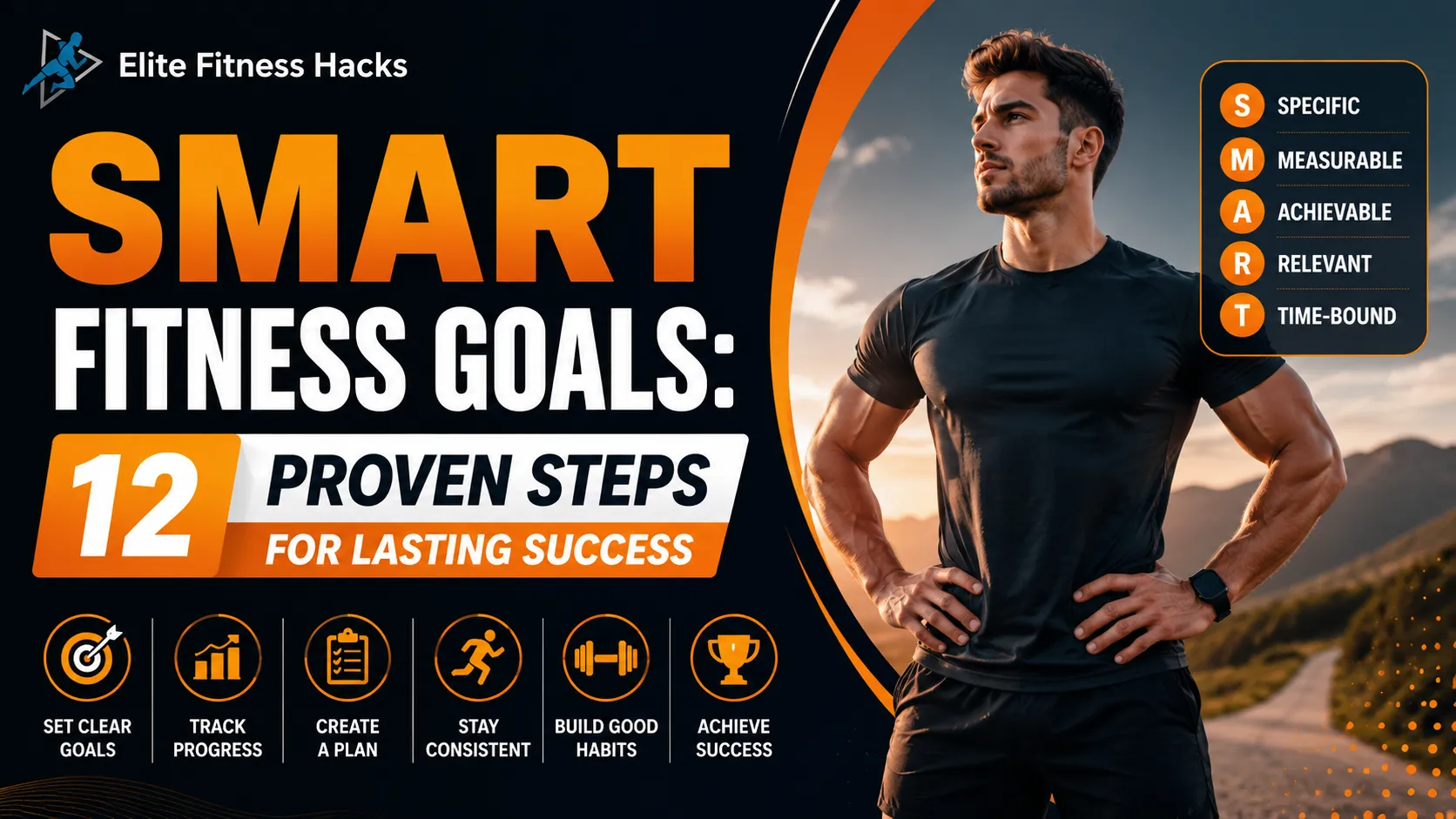
Most fitness goals fail for a boring reason. They were never specific enough to act on in the first place. “Get fit” and “lose weight” sound like goals. But they give your brain nothing concrete to aim at. That is exactly why they rarely survive past February.
SMART fitness goals fix that. In my coaching practice, the clients who actually follow through are almost never the most motivated ones on day one. They’re the ones whose goals were built specifically. Showing up didn’t require a decision every single day.
This guide covers the real research behind why SMART goals work. All 12 steps to building one properly. A full worked example. And the mistakes that quietly derail most people before month two.

Table of Contents
Why SMART Fitness Goals Actually Work
This is not just a motivational framework someone invented for fitness blogs. SMART goals rest on decades of real behavioral research. Psychologists Edwin Locke and Gary Latham spent over 35 years studying what drives performance. Their central finding holds up again and again. Specific, appropriately difficult goals consistently outperform vague ones like “do your best,” according to their landmark review in American Psychologist.
Vague goals give your brain nothing to measure against. A specific goal does the opposite. It tells you exactly what success looks like. That makes it far easier to notice progress and adjust course early, instead of only realizing you’ve drifted months later.
This matters more in fitness than almost anywhere else. Results are slow and easy to lose track of without a clear target. A goal you can measure keeps you honest about whether what you’re doing is actually working.
The Five Components, Explained Simply
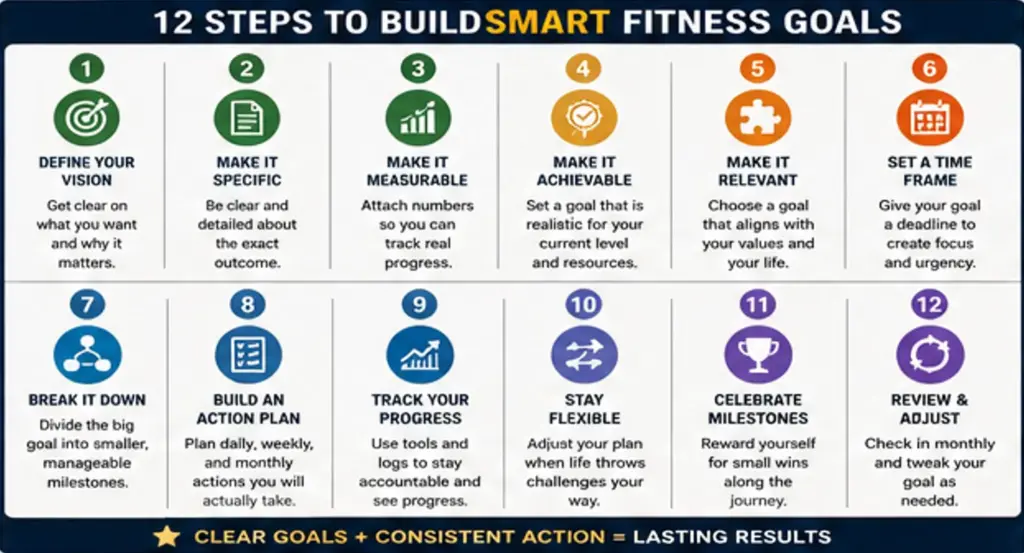
Every one of the 12 steps below traces back to one of these five pieces of SMART fitness goals.
Specific means naming the exact outcome. “Run a 5K without stopping” beats “get in shape.” It tells you precisely what you’re training for.
Measurable means attaching a number. Pounds lost. Miles run. Weight lifted. Minutes held in a plank. If you can’t measure it, you can’t tell if you’re actually getting closer.
Achievable means realistic for where you are right now. A beginner aiming for a marathon in one month is setting up a goal built to fail. Not one built to succeed.
Relevant means it actually matters to you personally. Not just something that sounded good in a magazine. Goals tied to your real motivations survive setbacks better than borrowed ones do.
Time-bound means a real deadline. Goals without a timeline tend to quietly slide into “someday.” In practice that usually means never.
Step 1: Define Your Fitness Vision
Before you build a SMART fitness goal, get clear on what you’re actually working toward. This is the picture that keeps you motivated when a specific goal alone starts to feel like just another task.
Ask yourself three questions. What does a healthy lifestyle look like for you specifically? How do you want to feel, physically and mentally? What kinds of activity do you genuinely enjoy, not just tolerate?
Example vision: “I want to finish a half-marathon feeling strong, not just surviving it. I want to eat in a way that doesn’t feel like punishment.” A vision like this gives every SMART goal you set afterward a reason to exist beyond the number itself.

Step 2: Make Your Goal Specific
Specificity is the foundation every other part of SMART fitness goals builds on. Vague goals create vague effort. “I want to lose weight” becomes “I want to lose 15 pounds by June 1st.” “I want to exercise more” becomes “I will train three times a week.” The second version in each pair is the one you can actually act on tomorrow morning.
Coaching note: Can’t picture the exact moment you’ll know you succeeded? The goal isn’t specific enough yet. Keep narrowing it until you can.
Step 3: Make Your Goal Measurable
Measurability is the piece most SMART fitness goals get wrong. A measurable goal turns “I think I’m making progress” into “I lost 3 pounds this month” or “I added 10 pounds to my squat.” That difference matters more than it sounds like it should. Visible progress is one of the strongest predictors of whether someone keeps going.
| Goal Type | What to Measure |
|---|---|
| Weight loss | Pounds lost |
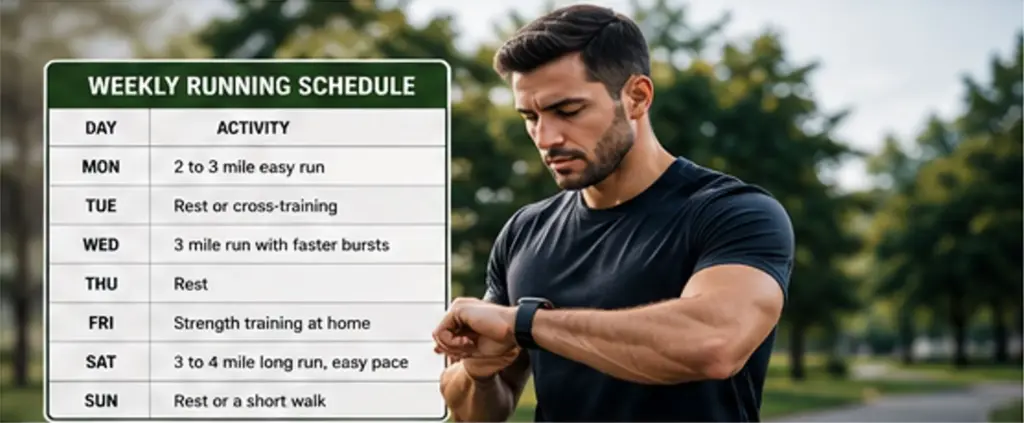
| Running | Miles completed, or time per mile |
| Strength training | Weight lifted, reps completed |
| Flexibility | Range of motion, inches gained in a stretch |
If your goal involves nutrition specifically, our macro calculator gives you real numbers to measure against instead of a vague sense of “eating better.”
Step 4: Make Your Goal Achievable
The achievable step is where most SMART fitness goals quietly fall apart. Challenge yourself, but stay honest about your starting point. A beginner targeting a marathon in one month is choosing a goal that almost guarantees burnout or injury. Not success.
Ask two questions before locking in a number. Is this realistic given my current fitness level? Do I actually have the time and resources this will require? A goal that fails both questions needs to shrink before you commit to it. Not after you’ve already missed it twice.
Step 5: Make Your Goal Relevant
Relevance is what separates SMART fitness goals that last from ones that fade by March. A goal that doesn’t connect to something you actually care about rarely survives a bad week. Ask yourself why this specific goal matters to you. How does it fit into your broader sense of health and life, not just this one season?
Coaching note: Goals borrowed from someone else’s Instagram post are the ones that get abandoned first. Goals tied to your own reasons are the ones that hold up when motivation runs low.
Step 6: Set a Time Frame
Time-bound is the piece most people skip when writing SMART fitness goals down. A deadline turns a wish into a plan. It forces real decisions about how to structure your weeks. Progress no longer waits for whenever you happen to feel like it.
| Goal | Suggested Time Frame |
|---|---|
| Lose 15 pounds | By a specific date, 3 to 4 months out |
| Run a 5K | Within 8 to 12 weeks |
| Complete a strength cycle | 8 weeks |
Coaching note: Build in a buffer. A goal with zero margin for a missed week or a bad flu turns one bad week into a reason to quit entirely.
Step 7: Break the Goal Into Smaller Pieces
Big SMART fitness goals need small pieces to actually feel achievable day to day. A 15-pound goal feels abstract. Losing 5 pounds this month feels doable. Same goal. Completely different psychological weight.
Example breakdown:
- Month 1: 5 pounds through diet changes and more daily movement.
- Month 2: Another 5 pounds, adding structured cardio.
- Month 3: The final 5 pounds through consistent strength training.
Smaller milestones give you real wins to notice along the way, instead of one distant finish line that offers nothing until you cross it.
Step 8: Build a Real Action Plan
Every serious SMART fitness goal needs a plan behind it, not just a target. A goal without a plan is just a wish with a deadline attached. Your action plan should cover daily, weekly, and monthly actions. All of it tied directly to the goal you set.
A sample structure:
- Daily: 30 minutes of training, a mix of cardio and strength. Real vegetables at most meals.
- Weekly: Meal prep on a set day. A quick check of the week’s training log.
- Monthly: A real review of what’s working and what needs to change.
If nutrition is part of your plan, our high protein meal prep ideas guide covers how to build the weekly piece without it eating up your whole Sunday.
Step 9: Track Your Progress
Tracking is what separates SMART fitness goals from ordinary wishes. It is not busywork. It is one of the more reliable predictors of whether someone actually reaches a health goal. It forces regular contact with reality, instead of relying on how you feel that day.
A few ways to do it well:
- Apps like MyFitnessPal or Strava log workouts and food automatically.
- A written journal captures how you felt, not just the numbers. That matters more than people expect.
- A simple spreadsheet works fine too, if you’d rather build your own system.
Pick whichever method you’ll actually use. The best tracking system is the one you don’t abandon after two weeks.
Step 10: Stay Flexible When Life Happens
Flexibility is what keeps SMART fitness goals alive through a hard month instead of getting abandoned. An injury, a flu, a brutal work month. These are not failures of your plan. They’re just life. Treat a setback as information to adjust around, not proof the whole goal was a mistake.
Coaching note: Get hurt? Modify the plan instead of abandoning it. Miss a target? Reset to something realistic given where you actually are now, not where the original plan assumed you’d be.
Step 11: Celebrate Milestones Along the Way
Small wins genuinely matter for any SMART fitness goals worth pursuing. Acknowledging progress, even minor progress, reinforces the exact behaviors you’re trying to build into habits.
New workout gear. A rest day that actually feels earned. A hike with friends instead of a solo gym session. None of these need to be elaborate. They just need to mark that you noticed the progress, not only chased the next target.
Step 12: Review and Adjust Monthly
The best SMART fitness goals get revisited, not just set once and forgotten. Set aside real time each month to check in. Are you on pace for your deadline? Does the goal still connect to your original vision? Has anything changed that means the goal itself needs to shift?
This is not admitting failure. Circumstances change. A goal that flexes with your actual life outlasts one that was set once and never revisited.
A Full Example, Start to Finish
Here’s how all 12 steps look applied to one real SMART fitness goal, not just described in the abstract.
Vision: Feel strong and confident, not just thinner.
Specific goal: Run a 5K in under 30 minutes.
Measurable: Track pace per mile weekly using a running app.
Achievable: Starting from zero running experience, this is realistic over 10 to 12 weeks with a structured plan. Not 2 weeks.
Relevant: Connects to wanting more energy for weekend hikes with family.
Time-bound: 12 weeks from today, with a specific race or self-timed date on the calendar.
Broken down: Weeks 1 to 4 build a base with run-walk intervals. Weeks 5 to 8 extend continuous running time. Weeks 9 to 12 focus on pace.

Action plan: Three runs a week, plus two strength sessions to protect against injury. Our bodyweight hamstring exercises guide covers a solid option for that strength piece specifically.

Tracking: A running app logging pace and distance every session.
Flexibility: A rolled ankle in week 6 shifts the plan to swimming for two weeks. Training does not stop entirely.
Milestones: A new pair of running shoes after week 4. A rest day guilt-free after the first continuous 5K, regardless of pace.
Review: Monthly check-ins confirm the pace target is realistic and adjust the final week’s plan accordingly.
That is what a real SMART fitness goal looks like once every piece is actually filled in, not left as a vague intention.
Common Mistakes That Derail SMART Fitness Goals
Setting the goal too big, too soon. Ambition is good. A goal with zero realistic path to success just guarantees an early quit.
Skipping the tracking step entirely. Without a way to measure progress, you’re relying on feelings alone. Feelings are a notoriously unreliable measure of whether a plan is actually working.
Treating flexibility as failure. Adjusting a goal after an injury or a rough month is smart planning. Not giving up. Rigid goals break. Flexible ones bend and keep going.
Ignoring mental health in the plan. Motivation dips are normal, not a sign something is broken. Our mental health and wellbeing guide covers habits that support consistency on the harder weeks, not just the easy ones.
Never reviewing the goal after setting it. A goal set once in January and never revisited drifts out of relevance fast. The monthly review in Step 12 is not optional if you want the goal to still make sense by month three.
Adapting SMART Fitness Goals to Your Specific Focus
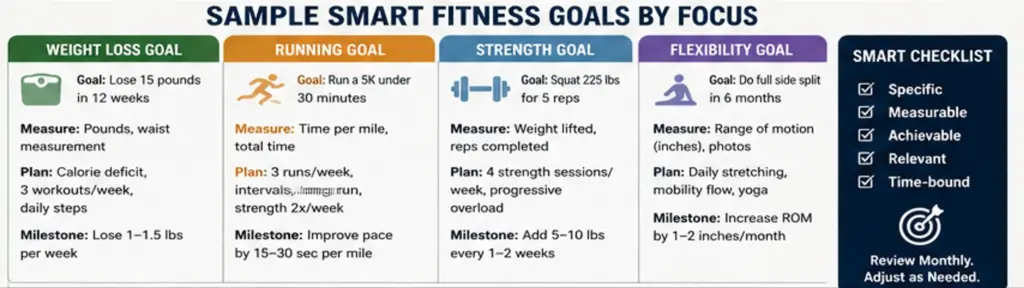
The 12 steps for SMART fitness goals work the same way regardless of what you’re training for, but the details shift depending on your focus. A few common examples make this concrete.
For weight loss, measurable usually means pounds or body measurements, tracked weekly rather than daily, since daily weight naturally fluctuates enough to be misleading. If nutrition is the harder half of this for you, our nutrition strategy guide covers the practical side of building a plan you can actually sustain.
For strength goals, measurable means the actual weight lifted or reps completed at a given weight. Achievable matters enormously here, since strength standards vary wildly based on experience, and comparing your numbers to an advanced lifter’s goals is a fast way to set yourself up for frustration.
For endurance goals, like running or cycling distance, time-bound and achievable work together closely. Building endurance safely takes real weeks, not days, and rushing the timeline is one of the more common ways people get hurt chasing a SMART fitness goal that was never realistic for their timeline.
For flexibility or mobility goals, measurable is the trickiest of the five components, since range of motion is harder to quantify than weight or distance. Simple methods work fine here: photos over time, or how far you can reach in a specific stretch, tracked consistently.
Whatever category your goal falls into, the same five components still apply. Only the specific numbers and timelines change.
Frequently Asked Questions
How is a SMART fitness goal different from a regular goal? A regular goal like “get fit” gives you nothing to act on tomorrow morning. A SMART fitness goal gives you a specific number, a deadline, and a way to measure whether it’s working. That is what actually drives follow-through.
What if I miss my deadline? Reset it. A missed deadline means the timeline or the goal itself needs adjusting. It does not mean you failed. Step 12 exists specifically for this.
How many goals should I set at once? One or two, not five. Splitting focus across too many goals at once is one of the more common reasons people finish none of them.
Do SMART goals work for mental or lifestyle goals too, not just fitness? Yes. The framework applies to almost any goal that benefits from clarity and a deadline. This guide focuses specifically on fitness applications though.
What’s the biggest reason SMART fitness goals fail in practice? Skipping the achievable and relevant parts. People often nail specific and measurable when writing SMART fitness goals, then set a target that’s unrealistic for their actual life or doesn’t connect to something they truly care about.
Conclusion
SMART fitness goals work because they replace vague hope with an actual plan you can follow and measure. Twelve steps sounds like a lot for one goal. But most of it is just answering direct questions. What you want. How you’ll know you got there. What you’ll do when life inevitably gets in the way.
Pick one goal. Run it through these 12 steps this week, not someday. A single well-built goal will get you further than five vague ones ever could.
Not medical advice: This content, and any calculator results on this site, are for general informational purposes only and are not a substitute for professional medical advice, diagnosis, or treatment. Always talk to a qualified healthcare provider before starting a new diet, exercise routine, or health program.
Related Articles You May Like