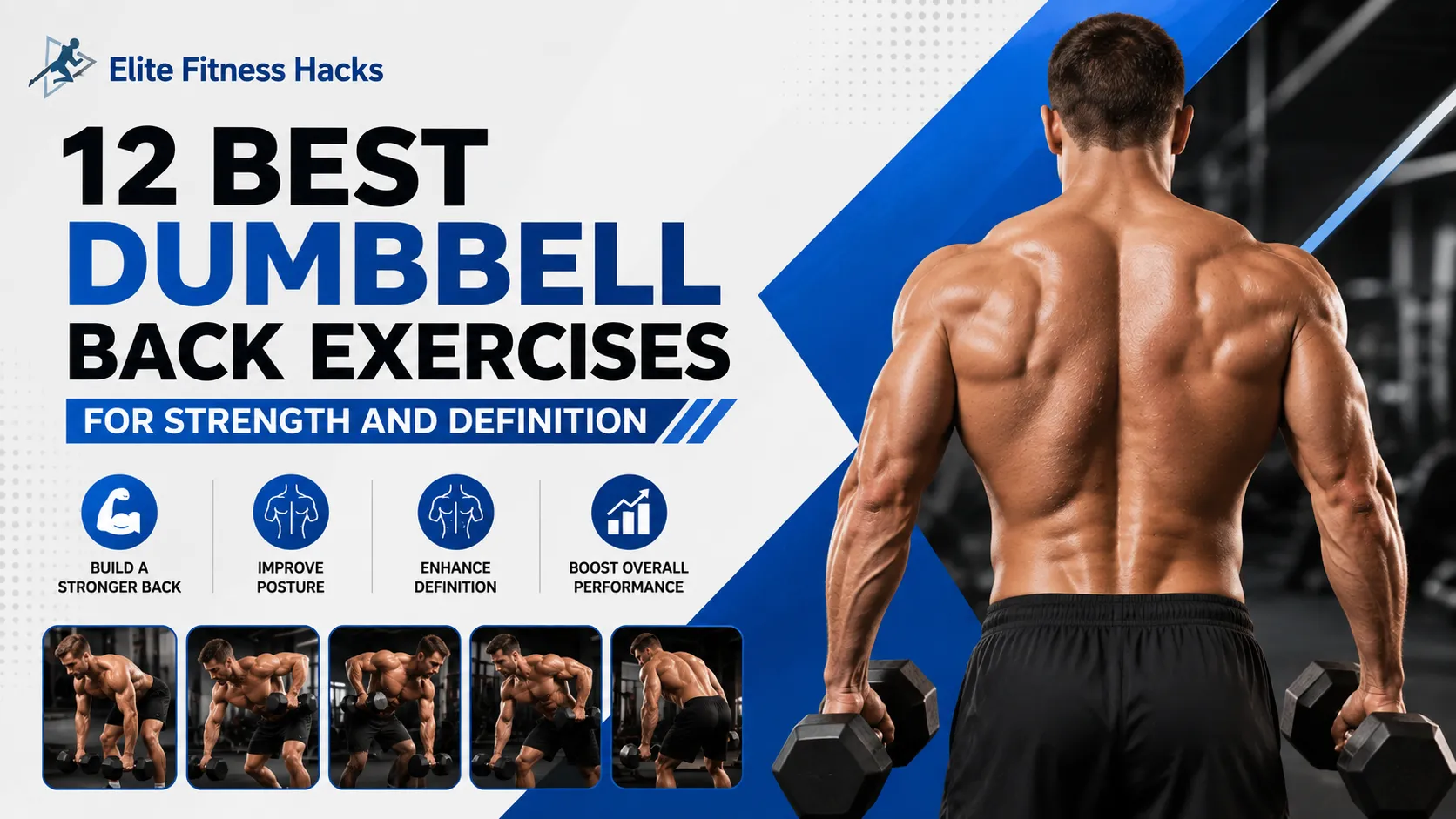
Dumbbell back exercises are one of the most practical ways to build a stronger, more defined back. They train each side of your body on its own. They scale from a light starter weight to a real challenge as you get stronger.
A strong back does more than look good in a mirror. It holds you upright at a desk. It protects your spine when you lift a suitcase. It also balances out all the pressing and sitting most of us do every day.
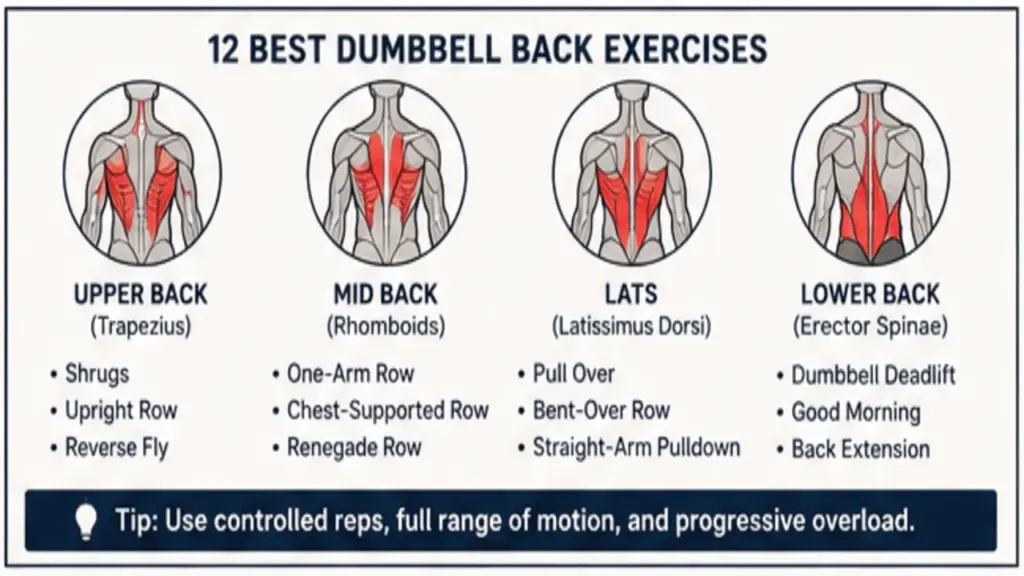
This guide covers the 12 best dumbbell back exercises for building strength and visible definition. Each one comes with clear form cues, common mistakes, and a coaching tip. You will also find guidance on sets, reps, and how often to train, based on current exercise science.
Table of Contents
Why These Dumbbell Back Exercises Work
Your back is not one muscle. It is a team of muscles. Each of these dumbbell back exercises trains a different part of that team.
Three muscles do most of the work in your upper and mid back. The trapezius moves your shoulder blades. The rhomboids pull your shoulder blades together. The latissimus dorsi pulls your arm down and in, and that last muscle gives your back its wide, tapered look.
Lower down, the erector spinae runs the length of your spine. It keeps you upright when you bend, lift, or twist, according to Harvard Health Publishing.
Strengthening these muscles does more than build definition. Harvard Health notes that a strong back can improve your posture. It can also help guard against injury during everyday lifting and bending. It may even support better results in sports like swimming and climbing.
Dumbbells offer one edge that a fixed barbell cannot match. You load each side of your body on its own. That makes it easier to notice a strength gap between your left and right side, and to fix it before it grows.
How Often Should You Do Dumbbell Back Exercises?
The Centers for Disease Control and Prevention has clear guidance here. Adults should do muscle-strengthening work for all major muscle groups, including the back, at least 2 days a week.
Mayo Clinic adds two more tips worth following. Warm up first with 5 to 10 minutes of brisk walking or light cardio before you pick up a weight. Then give the same muscle group at least a day of rest before training it again.
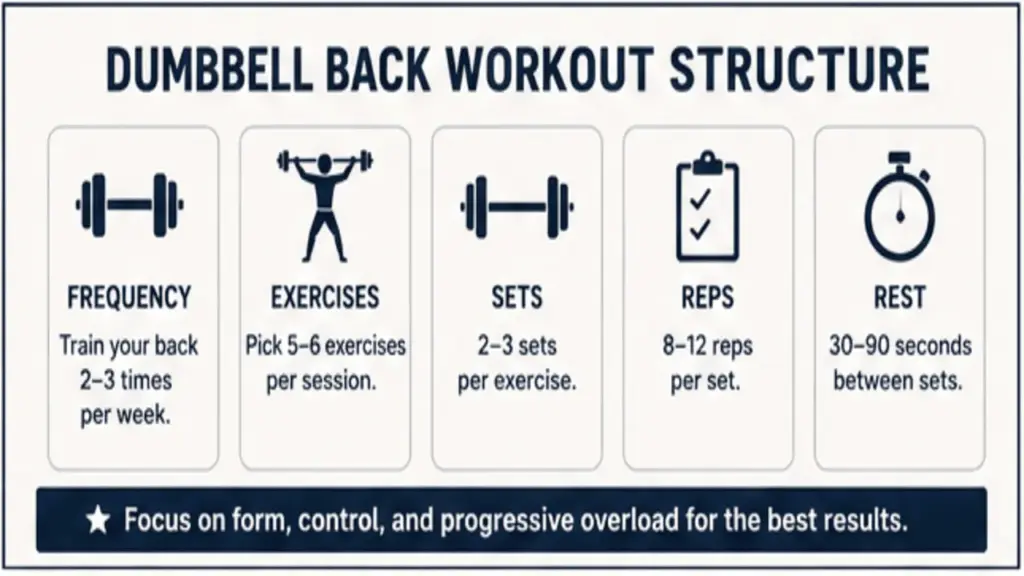
For most people, that means two or three back-focused sessions a week. Avoid training the same muscles on back-to-back days.
Choosing the right weight matters more than people expect. Harvard Health recommends 8 to 12 reps per exercise, building from a single set up to three as you get stronger, with 30 to 90 seconds of rest between sets. Pick a dumbbell heavy enough that the last two reps feel hard, but light enough that your form stays clean.
If you are new to back training, start light. Harvard Health suggests 2 to 5 pounds for small stabilizer moves. Add weight slowly as the pattern starts to feel natural.
Mayo Clinic’s advice on lifting speed is simple: don’t rush. Move each rep in a controlled way instead of using momentum to muscle it up, and rest about a minute between exercises. Breathe out as you lift the weight and breathe in as you lower it. Holding your breath under load adds strain you don’t need.
Want to build a full weekly program instead of a single workout? Our guide to strength training and conditioning essentials covers how to structure sets, rest, and progress across a full week.
The 12 Best Dumbbell Back Exercises for a Stronger, More Defined Back
Work through these dumbbell back exercises in the order below. Or pick five or six per session and rotate them across the week. Each entry names the muscles it works, the mistake that quietly cancels out the benefit, and a coaching cue to fix your form on the spot.
1. Dumbbell Deadlift
The dumbbell deadlift trains your erector spinae, glutes, and hamstrings together. It is the move most worth learning first. The hip hinge pattern it uses shows up in several other moves on this list.
How to do it:
- Stand with feet shoulder-width apart, a dumbbell in each hand in front of your thighs.
- Push your hips back and hinge forward, letting the dumbbells slide down close to your shins.
- Keep your back flat and your chest lifted through the whole descent.
- Drive your hips forward and squeeze your glutes to stand back up.
Common mistakes: Rounding the lower back under load is the biggest risk here. Letting the dumbbells drift away from your legs also turns an easy lift into a much harder one on your spine.
Coaching tip: If you have any history of back pain, practice the hip hinge with no weight first. Add light dumbbells once it feels natural. This is a hinge, not a squat, so the move should come from your hips folding, not your knees bending.
2. Bent-Over Dumbbell Row
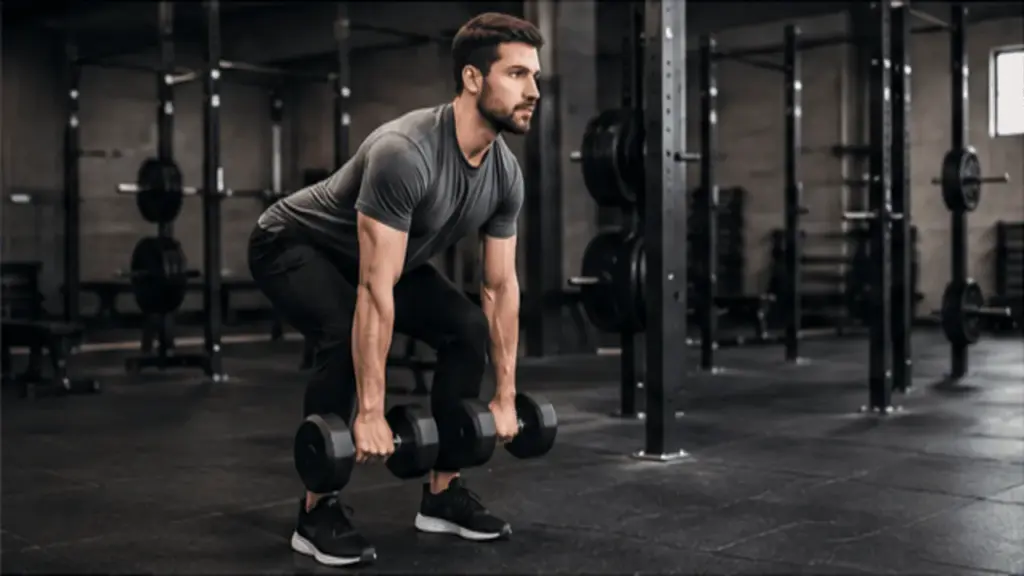
This is the workhorse move for upper and mid-back thickness. It hits the lats, rhomboids, and trapezius in a single pull.
How to do it:
- Stand with feet hip-width apart and knees slightly bent.
- Hinge forward from the hips until your torso sits near a 45-degree angle, keeping your back flat.
- Let the dumbbells hang, then pull them toward your ribs, leading with your elbows.
- Lower them back down under control.
Common mistakes: Using body momentum to heave the weight up works your lower back and hips more than your target muscles. Mayo Clinic flags rushed, momentum-driven lifting as a common cause of weight training injuries.
Coaching tip: Picture pulling your elbows toward the ceiling instead of curling the weight with your arms. That one cue fixes most rowing form problems.
3. Renegade Row
The renegade row is the toughest of these dumbbell back exercises. It combines a plank with a single-arm row, so your core and back work at the same time.
How to do it:
- Start in a push-up position, one dumbbell under each hand.
- Keep your body in a straight line from head to heels.
- Row one dumbbell to your ribs while balancing on the other hand.
- Lower it with control, then switch sides.
Common mistakes: Letting your hips rotate or sag as you row defeats the point of the move. Fighting that twist is exactly what makes it worth doing.
Coaching tip: This is not a beginner move. If your hips will not stay still, widen your foot stance or drop to your knees until your core catches up.
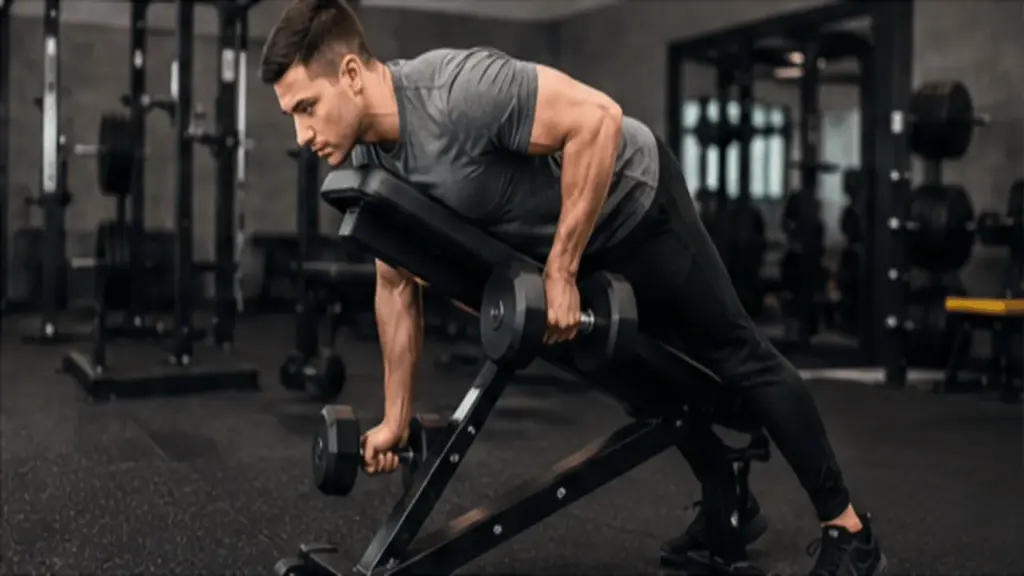
4. One-Arm Dumbbell Row
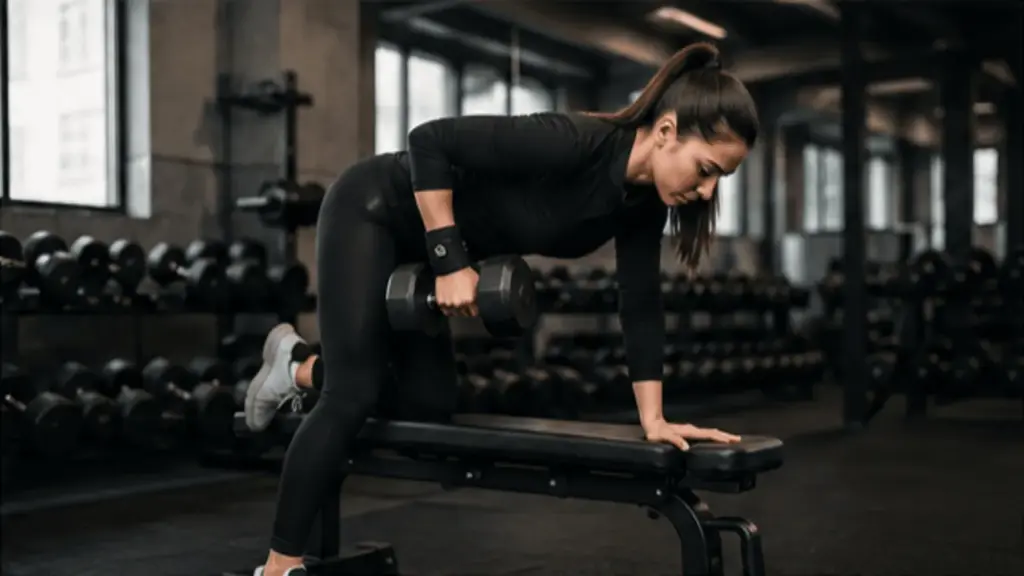
Training one side of your back at a time makes it harder for a stronger side to cover for a weaker one. That is what makes this move worth adding, even if you already do bent-over rows.
How to do it:
- Place one hand and knee on a bench for support.
- Hold a dumbbell in the other hand, arm hanging straight down.
- Pull the dumbbell toward your waist, keeping your elbow close to your body.
- Lower it slowly and repeat, then switch arms.
Common mistakes: Rounding your back or twisting your torso to add momentum shifts the work away from the lats and toward the lower back.
Coaching tip: Pause for a full second at the top of the pull. Squeeze your shoulder blade toward your spine before you lower the weight.
5. Dumbbell Shrug
The shrug isolates the upper trapezius, the muscle that gives your neck and shoulder line a stronger look.
How to do it:
- Stand tall with a dumbbell in each hand, arms hanging at your sides.
- Lift your shoulders straight up toward your ears.
- Hold briefly at the top.
- Lower them slowly back to the start.
Common mistakes: Rolling your shoulders forward or back adds joint stress with no muscle benefit. Going too heavy usually means your neck takes over the lift instead of a clean, controlled one.
Coaching tip: Move only your shoulders, not your head. If your neck is craning forward to help, the weight is too heavy.
6. Reverse Fly
The reverse fly targets your rear deltoids, rhomboids, and mid-trapezius. These are the exact muscles that fix the forward-rounded posture caused by hours of looking at a phone or keyboard.
How to do it:
- Stand with feet hip-width apart, knees soft, hinged forward at the hips.
- Hold a dumbbell in each hand in front of you, palms facing in.
- Raise the dumbbells out to the sides until your arms are roughly shoulder height.
- Lower them back down slowly.
Common mistakes: Weight that is too heavy forces you to swing the dumbbells instead of lifting with the target muscles. That defeats the point of a small-muscle move like this one.
Coaching tip: Keep a soft bend in your elbows the whole time. Focus on squeezing your shoulder blades together at the top, not on how high you raise your arms.
7. Dumbbell Pullover
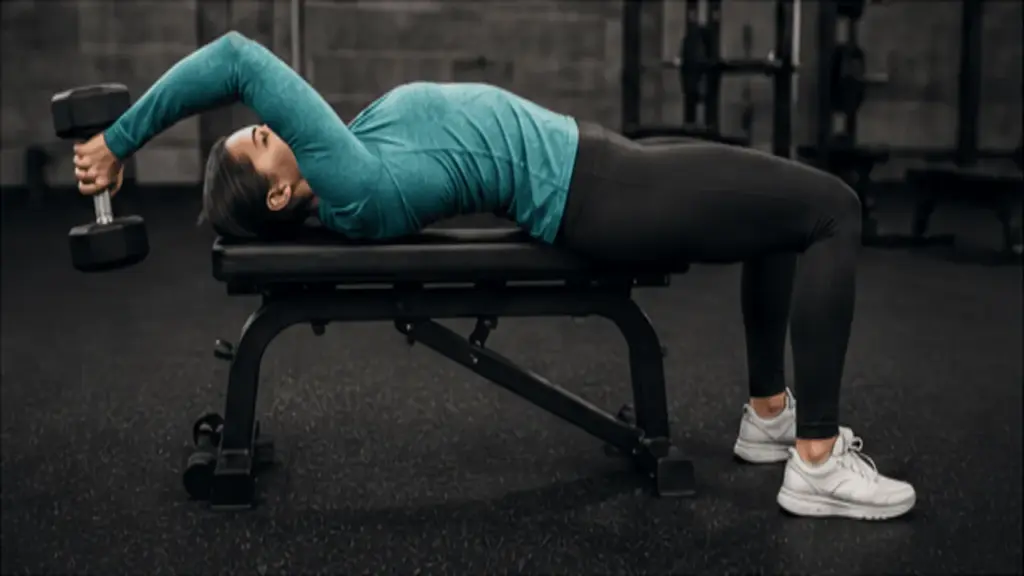
The pullover is a true hybrid move. It works your lats along with your chest and triceps, and how much each one does depends on your elbow angle and how deep you lower the weight.
How to do it:
- Lie on a bench with your upper back supported, feet flat on the floor.
- Hold one dumbbell with both hands above your chest, arms slightly bent.
- Lower the dumbbell slowly behind your head until you feel a stretch through your lats.
- Pull it back to the start without locking your elbows.
Common mistakes: Bending the elbows too much shifts the work toward the triceps and away from the back. Lowering the weight past a comfortable shoulder range adds strain without adding results.
Coaching tip: If your goal is back definition, keep your elbow bend shallow. Stop as soon as you feel a stretch, not when your arms hit the bench.
8. Dumbbell Superman
The Superman strengthens the erector spinae and glutes through spinal extension. It is the one move on this list where less weight is truly better.
How to do it:
- Lie face down, holding very light dumbbells.
- Lift your arms, chest, and legs a few inches off the floor at the same time.
- Hold for a second.
- Lower everything back down with control.
Common mistakes: Arching too far turns this into a lower-back strain risk instead of a controlled strengthening move. Dumbbells that are too heavy make that over-arching almost impossible to avoid.
Coaching tip: If you have a history of disc problems or sharp back pain, skip the added weight. Master the bodyweight version first, and check with a doctor or physical therapist before you progress, in line with Harvard Health’s general safety guidance for back exercise.
9. Farmer’s Walk
The farmer’s walk works your trapezius under a held load, builds grip strength, and reinforces upright posture, all while barely looking like a back move at all. It still earns its place on any list of serious dumbbell back exercises.
How to do it:
- Hold a heavy dumbbell in each hand at your sides.
- Stand tall, shoulders back, core braced.
- Walk forward for 20 to 30 seconds.
- Set the weights down with control, rest, and repeat.
Common mistakes: Letting your shoulders creep up toward your ears cancels out the postural benefit. Starting too heavy usually shows up as a hunched, shuffling walk instead of a strong, tall one.
Coaching tip: Think “proud chest, quiet feet.” If you can hear your steps slapping the floor, the weight is heavier than you can currently control.
10. Dumbbell Y Raise
The Y raise is a small move with a big payoff for the lower trapezius and serratus anterior. These are two stabilizers that most back workouts skip entirely.
How to do it:
- Stand with feet shoulder-width apart, knees slightly bent, holding light dumbbells.
- Raise your arms overhead in a Y shape, palms facing each other.
- Pause briefly at the top.
- Lower slowly back to the start.
Common mistakes: Using dumbbells heavier than 2 to 5 pounds almost always turns this into a shrug instead of a controlled raise. These small stabilizer muscles are not built for heavy load.
Coaching tip: Lead with your thumbs pointing slightly up. Move slowly enough that you could stop and hold the position at any point.
11. Dumbbell Sumo Deadlift
The sumo stance changes the deadlift in a real way. Your feet sit wide and the dumbbell hangs straight down between your legs, so your torso stays more upright than it does in a standard deadlift. Your quads and glutes also take on more of the load.
How to do it:
- Set your feet wider than shoulder-width, toes turned slightly out.
- Hold one dumbbell with both hands between your legs.
- Hinge and bend your knees to lower into the lift, keeping your back flat.
- Drive through your heels and squeeze your glutes to stand.
Common mistakes: Letting your knees cave inward under load is the most common flaw in any wide-stance lift, sumo deadlifts included.
Coaching tip: Picture screwing your feet into the floor, turning slightly outward, to keep your knees tracking over your toes.
12. Suitcase Carry
The suitcase carry looks almost like the farmer’s walk, but loading only one side changes what it trains. Instead of building grip and trap strength, it forces your obliques and the deep muscles along your spine to fight tipping sideways.
How to do it:
- Hold one dumbbell at your side, the other hand free.
- Stand tall, shoulders level, core braced.
- Walk forward for 20 to 30 seconds without leaning toward the weighted side.
- Switch hands and repeat for an even, balanced session.
Common mistakes: Leaning your torso away from the weight to make the carry easier removes the core challenge that makes this move worth doing.
Coaching tip: Picture walls on either side of you that you cannot lean into. Staying upright, not the distance you walk, is the real test here.
Programming and Safety Tips for These Dumbbell Back Exercises
A few habits separate people who build steady strength from people who get hurt or hit a wall.
Warm up first. Mayo Clinic recommends 5 to 10 minutes of brisk walking or light cardio before you lift. Cold muscles strain more easily than warm ones.
Put form ahead of load. Every one of these dumbbell back exercises works better, and more safely, with a lighter weight and clean form than a heavier weight and sloppy form.
Rest the same muscle group for at least a day between sessions. Training a tired, under-recovered back does not build more strength. It just raises your injury risk with no extra payoff.
Check with a doctor first if you have a history of back injury, joint trouble, or another chronic condition. This matters most for load-bearing moves like the deadlift, sumo deadlift, and weighted Superman. Poor form on top of an existing issue can make things worse, not better.
If you are setting up space to train at home, our guide to building a home gym covers which dumbbells and accessories are worth the money. Our full body home workout equipment guide rounds out the picture if you want to train more than just your back. Our dumbbell HIIT workouts guide is a good next stop for a faster-paced session with the same gear.
Frequently Asked Questions About Dumbbell Back Exercises
What muscles do dumbbell back exercises target? Together, these exercises cover the full back. That includes the trapezius and rhomboids in your upper back, the latissimus dorsi for width, and the erector spinae along your spine for lower-back strength and stability.
How many sets and reps should I do? Aim for 1 to 3 sets of 8 to 12 reps per exercise. Pick a weight that makes the final two reps truly hard without breaking your form.
How often should beginners do dumbbell back exercises each week? Two to three sessions a week works well for most beginners. Leave at least one rest day between sessions that target the same muscles.
Can dumbbell back exercises replace barbell training? For general strength and visible definition, yes. Dumbbells also come with the bonus of fixing side-to-side imbalances. If your goal is maximal strength on one lift, though, barbells still let you load more total weight than two dumbbells can match.
What weight should I start with? Start light. Harvard Health suggests 2 to 5 pounds for small stabilizer moves like the Y raise and reverse fly. For bigger lifts like the row and deadlift, pick a weight you can control through 8 to 12 reps, then add weight slowly once your form holds steady.
Do dumbbell back exercises actually improve posture? They help, especially moves like the reverse fly and Y raise that target the muscles left weak by hours of desk work. Exercise alone will not fix your posture if you spend the rest of your day slumped over a screen, so pair the training with regular posture checks through your day.
Is soreness after a back workout normal? Mild soreness for a day or two is a normal response to new or harder training. Sharp pain during the move, or pain that lingers well past a few days, is not normal, and is a sign to stop and check with a professional.
Can I do dumbbell back exercises without a gym? Yes. A single pair of adjustable dumbbells covers every move on this list, which is part of why they fit so well into a home routine.
Your Next Steps With Dumbbell Back Exercises
A stronger back is not built in one session. It is built by showing up for these dumbbell back exercises two or three times a week, and by letting your form improve before your weights do.
Start with the deadlift and bent-over row to build your base. Add the row variations and reverse fly for balance and posture. Use the carries on days you want a lower-impact session that still challenges your grip and core.
If you want more structure around this routine, our guide to setting SMART fitness goals is a useful next step. It helps turn these exercises into a plan you will actually stick with. Pair that structure with the sets, reps, and rest guidance above, and the results, in strength and in how your back looks, tend to follow.
Not medical advice: This content, and any calculator results on this site, are for general informational purposes only and are not a substitute for professional medical advice, diagnosis, or treatment. Always talk to a qualified healthcare provider before starting a new diet, exercise routine, or health program.
Related Articles You May Like