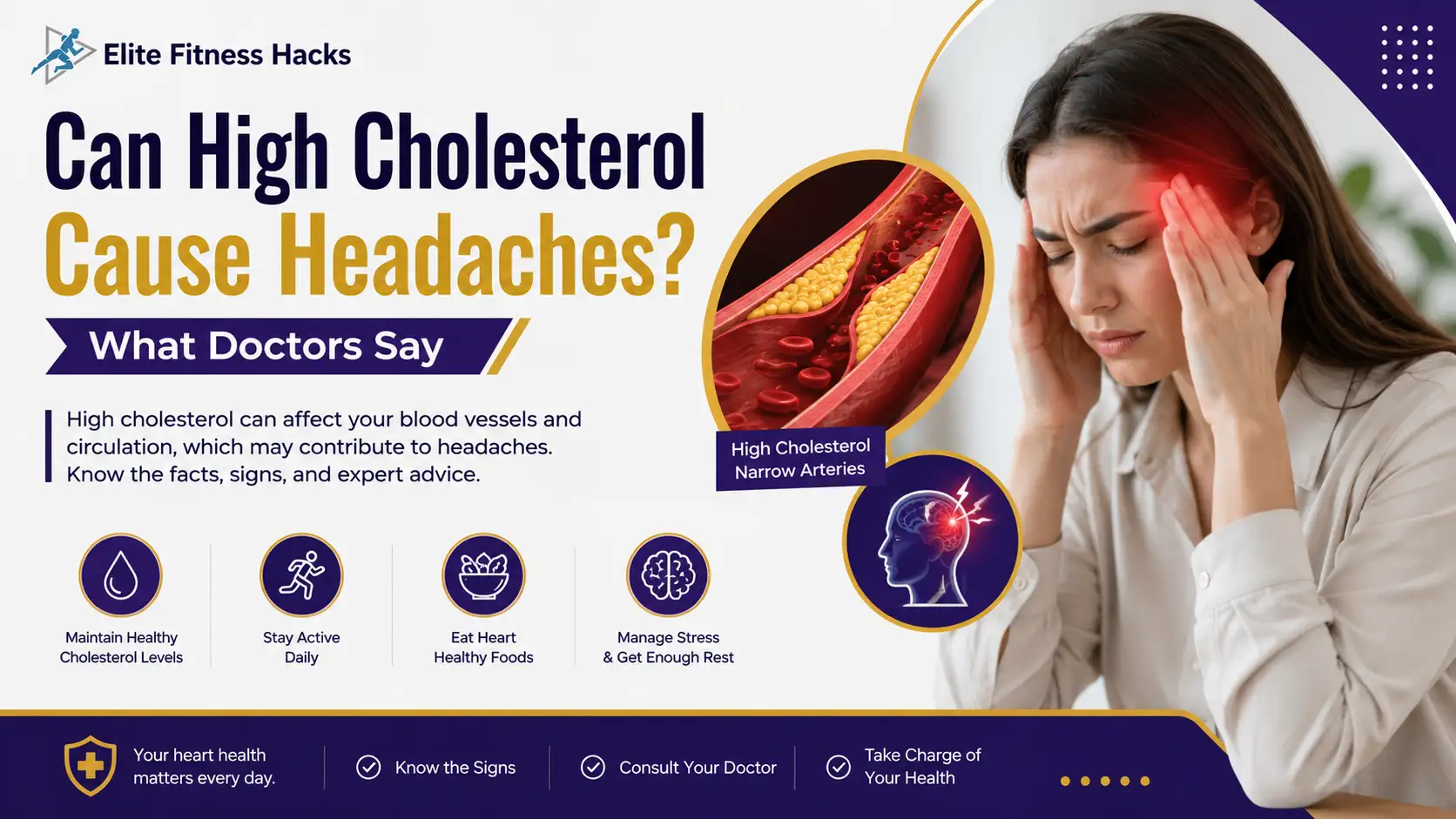
Can high cholesterol cause headaches? The short, honest answer is no, not directly. Cleveland Clinic cardiologist Dr. Luke Laffin puts it plainly: “There’s no definitive evidence that it does.”
That is not the answer most articles on this topic give you. Many will walk you through a confident chain of “cholesterol causes this, which causes that, which causes your headache.” The real research does not support that chain nearly as cleanly. What it does support is more useful anyway: cholesterol matters for reasons that have nothing to do with your headache, and there are real warning signs worth knowing that get missed when people chase the wrong explanation.
This guide gives you the accurate picture. What cholesterol actually does. Why the cholesterol-headache mix-up happens. And the specific situations where a headache is a real warning sign.
Table of Contents
The Short Answer
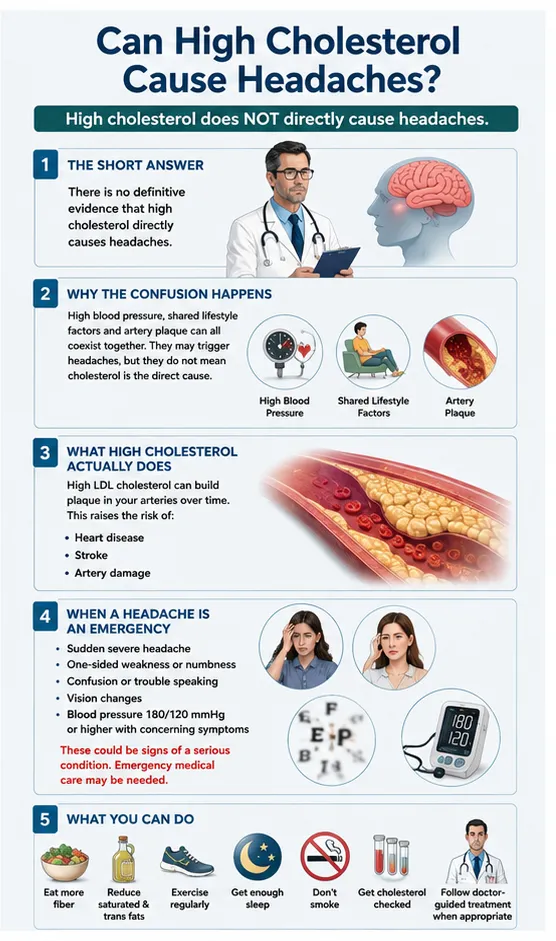
Can high cholesterol cause headaches on its own? No. Doctors call high cholesterol a silent condition. Most people feel nothing at all, even at dangerously high levels. That is exactly why blood tests exist. If headaches were a reliable sign, doctors would already be using them to screen for it.
Where the confusion comes from is real, though. Some conditions travel alongside high cholesterol: poor diet, inactivity, and sometimes high blood pressure. Those can genuinely cause headaches. People notice the headache, know their cholesterol is high, and connect two things that are not actually cause and effect.
What Cholesterol Actually Does
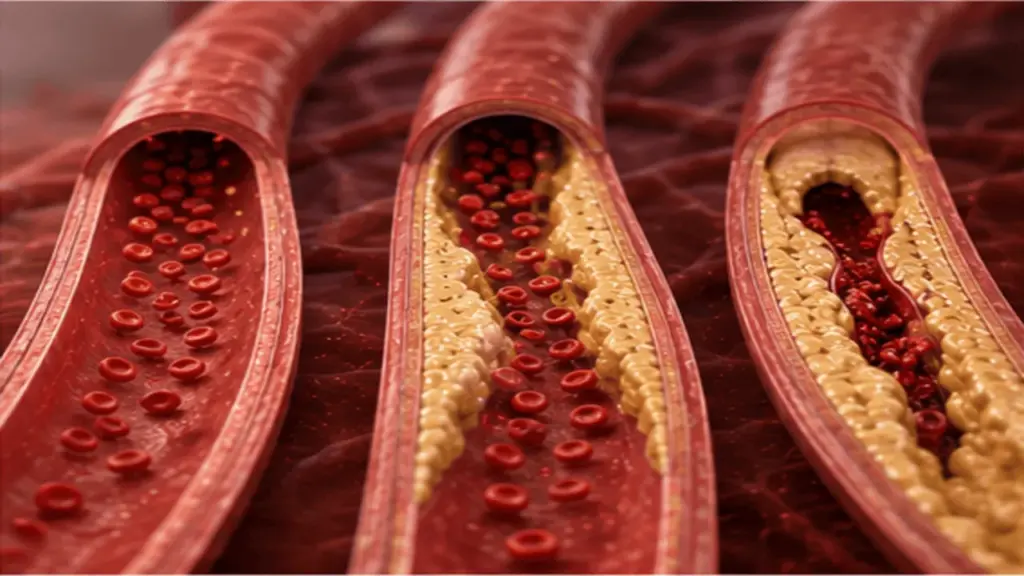
Cholesterol gets treated like a villain, but your body cannot function without it. It is a waxy substance your liver makes, and it handles jobs you would not want to lose.
It builds hormones. Estrogen and testosterone both start with cholesterol as a raw material.
It makes vitamin D possible. When sunlight hits your skin, it converts a cholesterol compound into vitamin D, which your bones and immune system depend on.
It helps you digest fat. Bile acids, made from cholesterol, break down the fat in your food so your body can absorb it.
The trouble starts with the balance between two types. LDL, often called “bad” cholesterol, builds up inside blood vessel walls when levels run high. HDL, the “good” kind, carries cholesterol back to your liver to be cleared out. Managing your numbers means keeping LDL down and HDL reasonably high. It does not mean wiping out cholesterol altogether. That would not even be possible.
Why People Think Cholesterol Causes Headaches
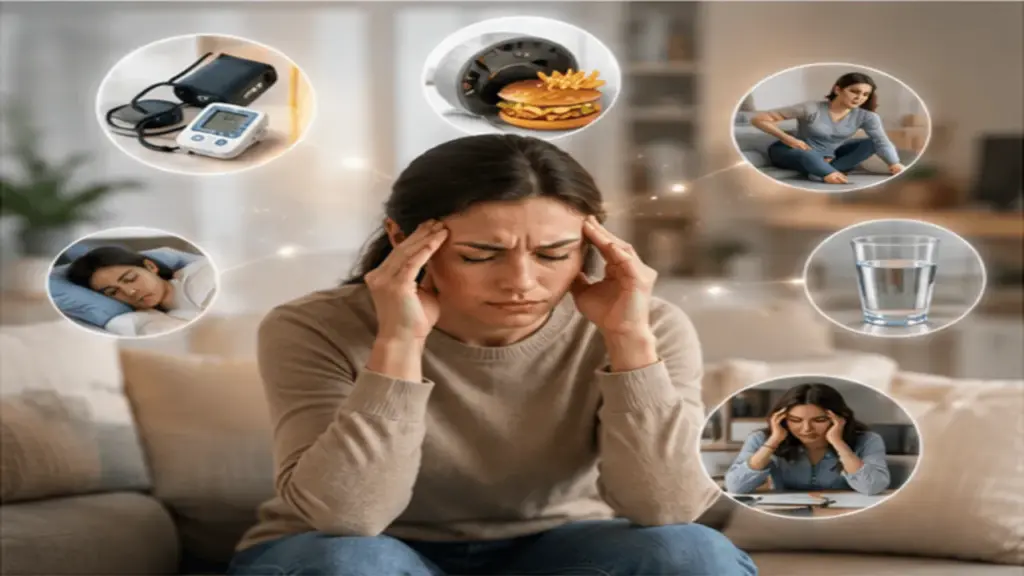
If the evidence is this thin, why does “can high cholesterol cause headaches” get searched so often? Three explanations get repeated online, and each one deserves a more honest look than it usually gets.
High blood pressure. This is the biggest source of confusion. High cholesterol can narrow arteries over years. Narrowed arteries are one factor among several that affect blood pressure. But here is the part most articles skip: typical high blood pressure does not cause headaches either. It is famously silent, the same way high cholesterol is. Headaches only show up reliably when blood pressure spikes to a real emergency level. More on that next.
Reduced blood flow. Plaque buildup from high cholesterol can narrow blood vessels over time, including ones that supply the brain. In advanced cases, this is a real concern for stroke risk. But framing this as a routine cause of everyday headaches overstates what the evidence shows. Migraines involve complex nerve and brain chemistry. They are not simply a shortage of blood flow. Current research does not support a direct line from cholesterol to migraine.
Shared risk factors. This is the honest explanation most of the time. Poor sleep, too much sugar, dehydration, stress, and inactivity can all raise cholesterol. They can also cause headaches on their own, with no link between the two.
When a Headache Is a Real Warning Sign

This is the part worth remembering more than anything else in this guide. Certain headaches are not about cholesterol at all. They are your body telling you to get help immediately.
A hypertensive crisis. Does your blood pressure read 180/120 mmHg or higher, along with a severe headache, chest pain, shortness of breath, or vision changes? That is a medical emergency, according to Mayo Clinic. Call 911 or get to an emergency room. Do not wait to see if it passes.
A stroke. A sudden, severe headache with no clear cause is a real stroke warning sign. So is numbness on one side of the body, confusion, trouble speaking, and vision problems, says the CDC. Every minute matters here. Call 911 rather than waiting to see a doctor later.
A heart attack. Chest discomfort, pain in the arms, back, neck, or jaw, shortness of breath, and breaking into a cold sweat are the warning signs to know, per the American Heart Association. Headache is not typically part of this picture, but the other signs deserve the same urgency.
If a headache shows up with any of these symptoms, treat it as an emergency first and figure out the cause later.
Know Your Actual Numbers
You cannot answer “can high cholesterol cause headaches” for yourself without first knowing your numbers. Guessing does not work here, since high cholesterol has no symptoms of its own.
A standard lipid panel checks four things: total cholesterol, LDL, HDL, and triglycerides. For most healthy adults, total cholesterol under 200 mg/dL is considered desirable, LDL under 100 mg/dL is optimal, and HDL above 60 mg/dL is protective. Your doctor will weigh these against your age, family history, and other risk factors rather than judging one number in isolation.
Ask for this test at your next check-up if it has been more than a few years. It takes minutes, and it is the only real way to know if cholesterol is something you need to manage, headaches or not.
Managing Cholesterol for Reasons That Actually Matter

None of this means cholesterol does not matter. It is a real driver of heart disease, stroke, and artery damage over time. It just is not your headache’s cause. Here is what actually moves your numbers.
Cut back on trans fats. They hide in many processed foods and raise LDL directly. Check the label for “partially hydrogenated oil.”
Add more fiber. Oats, beans, fruit, and vegetables all help lower LDL. Our high fiber snacks list and kidney bean recipes both make this an easy swap rather than a diet overhaul.
Swap saturated fat for unsaturated fat. Replace red meat and full-fat dairy with olive oil, nuts, and avocado where you reasonably can. Our nutrition strategy guide covers how to build this into a real week of meals.
Move regularly. Aerobic activity like walking, jogging, or cycling raises HDL and lowers LDL. Strength training helps too, by building muscle and reducing body fat.
Quit smoking if you smoke. It lowers HDL and damages blood vessels directly. One year after quitting, your risk of coronary heart disease drops by about half, according to the American Heart Association.
Keep alcohol moderate. The traditional guidance is one drink a day for women and two for men, though current research increasingly suggests less is better across the board. Heavy drinking raises LDL and blood pressure both.
Ask your doctor about medication if lifestyle changes are not enough. Statins and other cholesterol medications are a real, well-studied option. This is a conversation for your doctor, not a lifestyle blog.
Get checked regularly. Cholesterol has no symptoms, so a blood test is the only real way to know where you stand. Ask your doctor how often makes sense for your age and history.
General Headache Relief That Actually Helps
Whatever is behind your headaches day to day, these basics genuinely help most people.
Drink enough water. Dehydration is a common, underrated headache trigger. Aim for roughly eight glasses a day. Drink more if you are active or if it is hot out.
Give your eyes a break from screens. Try the 20-20-20 rule. Every 20 minutes, look at something 20 feet away for at least 20 seconds. It sounds small, but it adds up over a full workday.
Manage stress on purpose. Deep breathing, stretching, or a short walk can lower tension headaches before they build. Our mental health and wellbeing guide covers daily habits that help with this beyond just headaches.
Watch your caffeine, both directions. Too much can trigger a headache. Cutting it out suddenly can too. Consistency matters more than the exact amount you land on.
Protect your sleep. Aim for 7 to 9 hours on a fairly steady schedule. Poor sleep is one of the most common, most fixable headache triggers there is. It is often the first thing worth fixing before anything else on this list.
Track your headaches for two weeks. Write down when they happen, what you ate, how you slept, and how stressed you were. Patterns usually show up faster than people expect, and a clear pattern makes the next doctor’s visit far more useful.
Frequently Asked Questions
Can high cholesterol cause headaches directly? No. Multiple cardiologists and major health institutions confirm there is no definitive evidence linking the two directly. The confusion comes from other conditions that often occur alongside high cholesterol.
If not cholesterol, what actually explains headaches in people with high cholesterol? Usually shared risk factors: poor diet, dehydration, stress, and lack of sleep can raise cholesterol and cause headaches independently, without one causing the other.
Can high blood pressure from cholesterol cause headaches? Only in extreme cases. Typical high blood pressure is silent, just like high cholesterol. A headache tied to blood pressure usually means a hypertensive crisis, a genuine emergency requiring immediate care.
Should I worry about a headache if I already know my cholesterol is high? Not because of the cholesterol itself. Do pay attention if the headache is sudden, severe, or comes with numbness, confusion, vision changes, or trouble speaking. Those combinations need emergency care regardless of your cholesterol numbers.
Can lowering my cholesterol reduce how often I get headaches? Not directly, since cholesterol was not causing them in the first place. But the same habits that lower cholesterol, better sleep, more movement, less processed food, also tend to reduce headache frequency on their own.
Do cholesterol medications cause headaches as a side effect? Some people report headaches when starting statins, though it is not among the most common side effects. If a new headache pattern starts after beginning medication, mention it to your doctor rather than stopping on your own.
When should a headache send me to the doctor instead of waiting it out? If it is the worst headache of your life, comes on suddenly, or shows up with vision changes, confusion, weakness on one side, or trouble speaking, treat it as an emergency and call 911. For headaches that are just more frequent or intense than usual, a regular doctor’s visit is the right next step.
Conclusion
Can high cholesterol cause headaches? Not directly, and the evidence does not support the confident claims you will find on a lot of other sites. What high cholesterol does do is raise your risk for heart disease, stroke, and artery damage over years, which is reason enough to manage it well.
Treat your headaches and your cholesterol as two separate things worth taking seriously, not one causing the other. Get your cholesterol checked, build the habits that genuinely move it, and if a headache ever shows up with numbness, confusion, vision changes, or chest pain, skip the research and call 911 instead.
Not medical advice: This content, and any calculator results on this site, are for general informational purposes only and are not a substitute for professional medical advice, diagnosis, or treatment. Always talk to a qualified healthcare provider before starting a new diet, exercise routine, or health program.
Related Articles You May Like