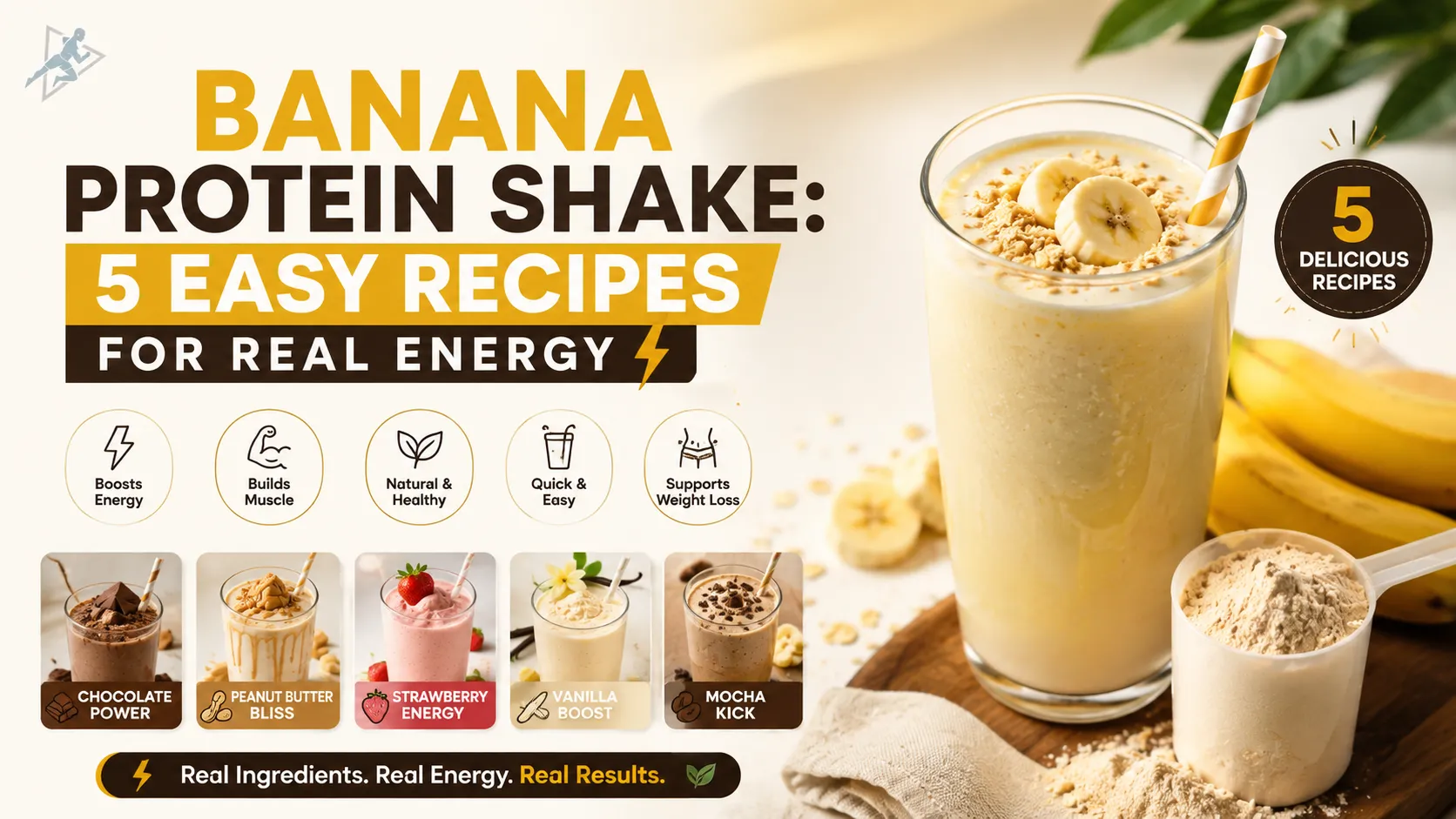
A good banana protein shake solves a real problem. You need something fast and filling. Not another granola bar. Blend it, drink it, done in under five minutes.
In my coaching practice, this is one of the first things I hand new clients. Especially the ones who say they “don’t have time to eat right.” A banana protein shake is not a magic food. But it closes a protein gap most people have without realizing it, and it does that job easily.
This guide covers the base recipe. Two real variations worth trying. And the timing and protein powder questions clients actually ask me. Not just generic tips copied from every other shake article online.
Table of Contents
Why Banana and Protein Work Together
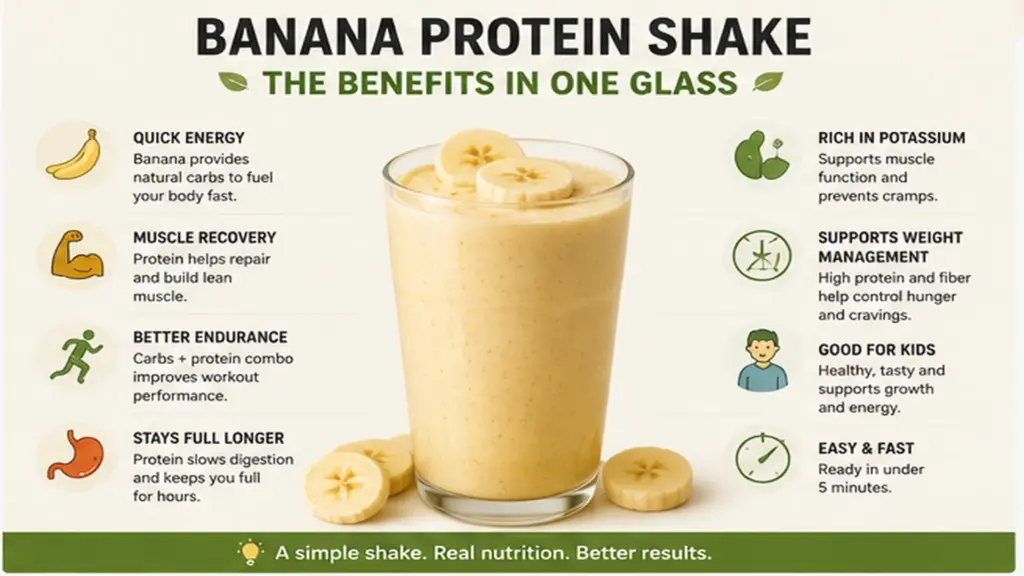
A medium banana carries about 27 grams of carbs. It also has 420 milligrams of potassium, per Harvard’s Nutrition Source. That refuels the fuel stores your muscles burn through during exercise. Potassium supports the muscle work you just did too.
What a banana does not have much of is protein, just over a gram. That is where a scoop of protein powder earns its place. Protein slows digestion. It keeps you full longer than the banana alone would. It also gives your body the amino acids it needs to repair muscle.
Put plainly: the banana handles quick energy. The protein handles staying power and recovery. Neither one does the other’s job well alone. That is why this combination beats either ingredient blended by itself.
The Base Banana Protein Shake Recipe
This is the version to learn first. Everything else here is just a variation on it.
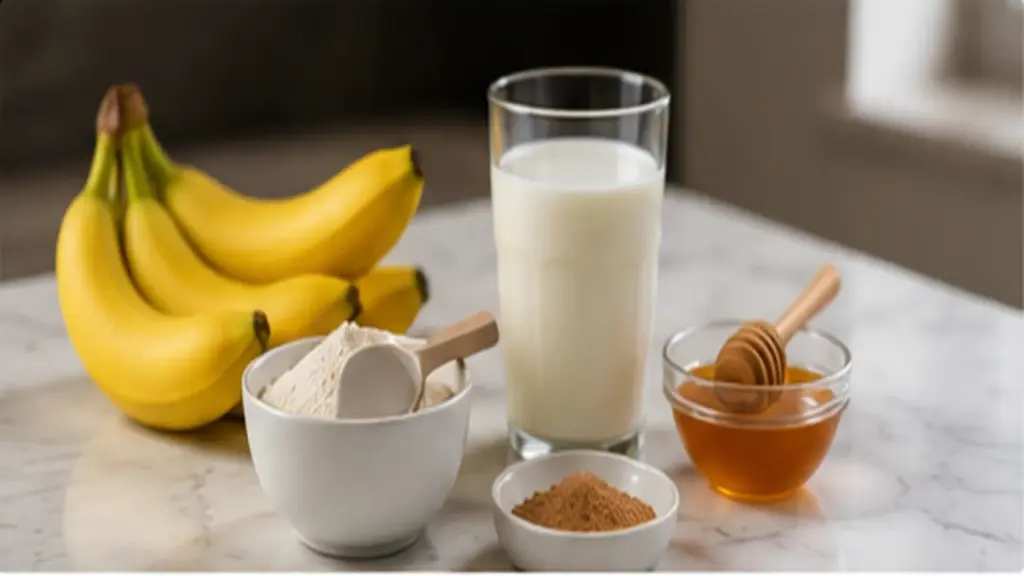
What you need:
- 1 ripe banana
- 1 cup of milk, dairy or a non-dairy option like almond milk
- 1 scoop of protein powder, whey or plant-based
- 1 tablespoon of honey or maple syrup, optional
- ½ teaspoon of cinnamon, optional
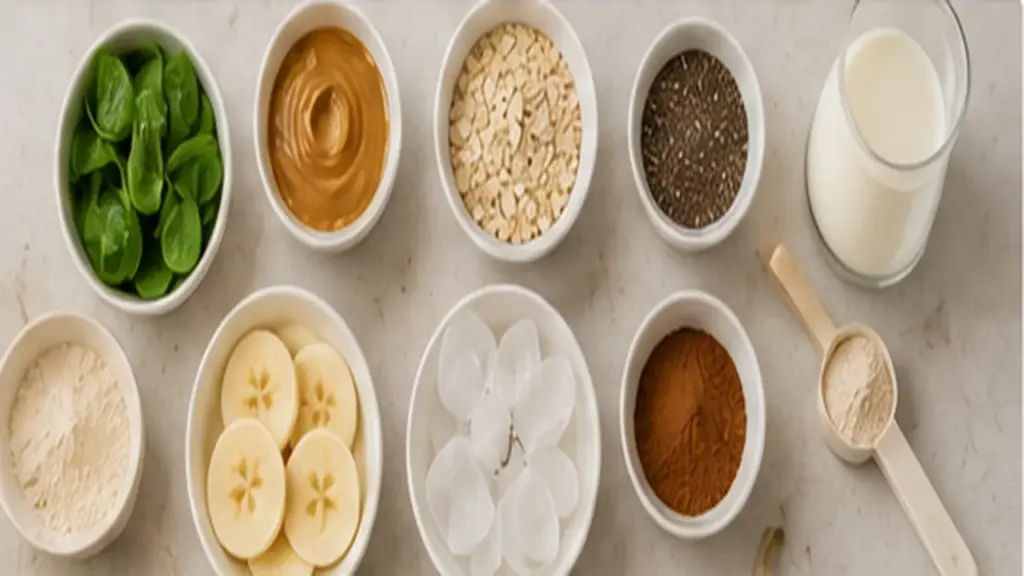
Worth adding in: a handful of spinach for extra vitamins without changing the flavor, a tablespoon of peanut butter for healthy fat, a few ice cubes for a colder texture, or a quarter cup of oats for more fiber and staying power.
How to make it:
- Peel the banana and gather your ingredients.
- Add the liquid to the blender first, then the banana, protein powder, and any extras. Liquid first blends more evenly.
- Blend until fully smooth. Too thick? Add a splash more milk and blend again.
- Taste it. Add honey or maple syrup now if you want it sweeter.
- Pour and drink right away, while the texture is still smooth and cold.
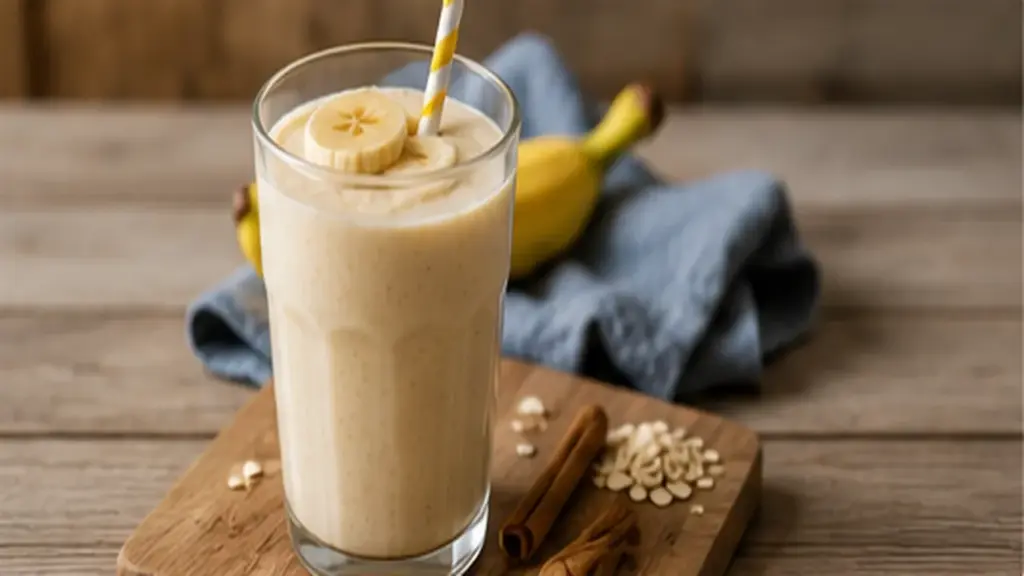
A few things that actually improve it: freeze the banana ahead of time. That gives you a thicker, colder shake, and it beats relying on ice, which can water down the flavor. Change up your protein powder brand once in a while, since flavor and texture vary more than people expect. Building this into a broader weekly plan? Our high protein meal prep ideas guide covers how to fit a shake like this into a full day of eating, not just a single recipe.
Who Benefits Most
A banana protein shake is not built for just one type of person. The benefits shift a bit depending on who is drinking it.
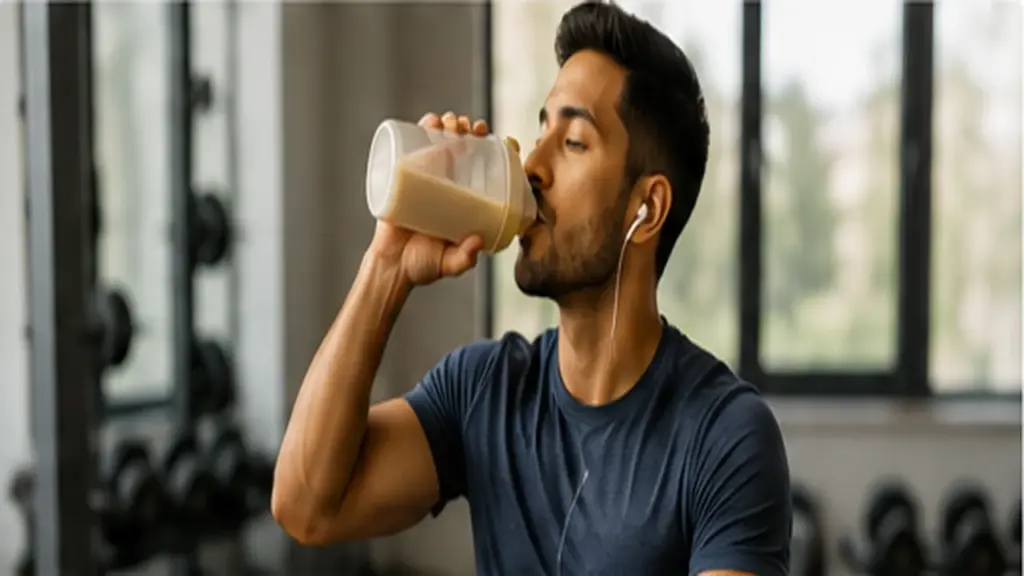
For anyone strength training, the protein supports muscle repair after a session. The banana’s carbs help refill the fuel you burned through. It is a simple way to hit both needs in one glass. Not two separate decisions.
For anyone managing weight, the protein and fiber combo keeps you full longer than a banana or a juice-based shake would. That fullness is what actually cuts snacking later. It is not some special fat-burning trick.
For kids, a smaller portion makes a genuinely healthy, mess-free snack. Most kids will drink it without complaint, since the banana flavor dominates. It supports normal growth through the protein. It also gives them steady energy for an active day. Our protein snacks for kids list has more ideas if you want a wider rotation beyond just shakes.
Build Your Own Banana Protein Shake
Once you understand why the base shake works, you can build your own version. No recipe card needed.
Start with your liquid. A cup of milk or a non-dairy option is the base for almost every good shake. Less liquid gives you a thicker, spoonable texture. More liquid gives you something you can drink through a straw. Neither is wrong. It just depends what you want.
Add your banana. One medium banana is the standard. A smaller half-banana works if you want fewer carbs. Or use a full banana plus a handful of frozen mango if you want it sweeter and thicker.
Choose your protein. Pick a powder you actually enjoy drinking. That beats a “better” powder you end up avoiding. Being consistent matters more than small gaps in amino acid profile.
Pick one extra, not five. Peanut butter for fat and flavor. Oats for fiber. Spinach for extra nutrients without changing the taste. Cinnamon for warmth. Adding all four at once usually makes a shake taste muddy, not better. One good pick beats a kitchen-sink approach almost every time.
Blend, taste, adjust. Too thick, add liquid. Too thin, add ice or a bit more banana. Too bland, that is what the honey, cinnamon, or cocoa powder are for.
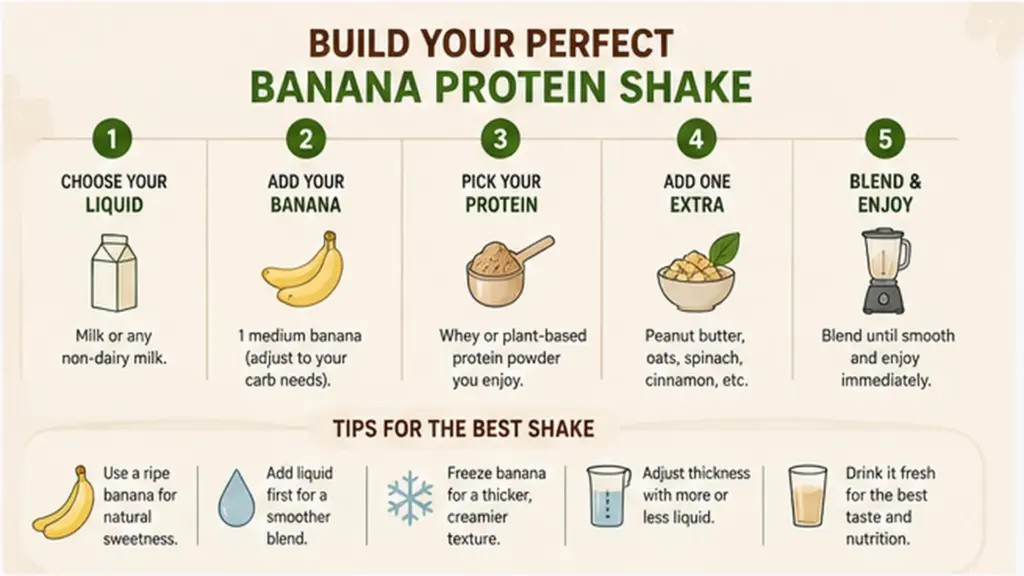
This same structure works for the base version. It works for the chocolate variation too, or something you invent yourself on a random Tuesday. Once it clicks, you stop needing a recipe at all.
Two Worthwhile Variations
Once the base banana protein shake feels automatic, these two are worth adding into the rotation.
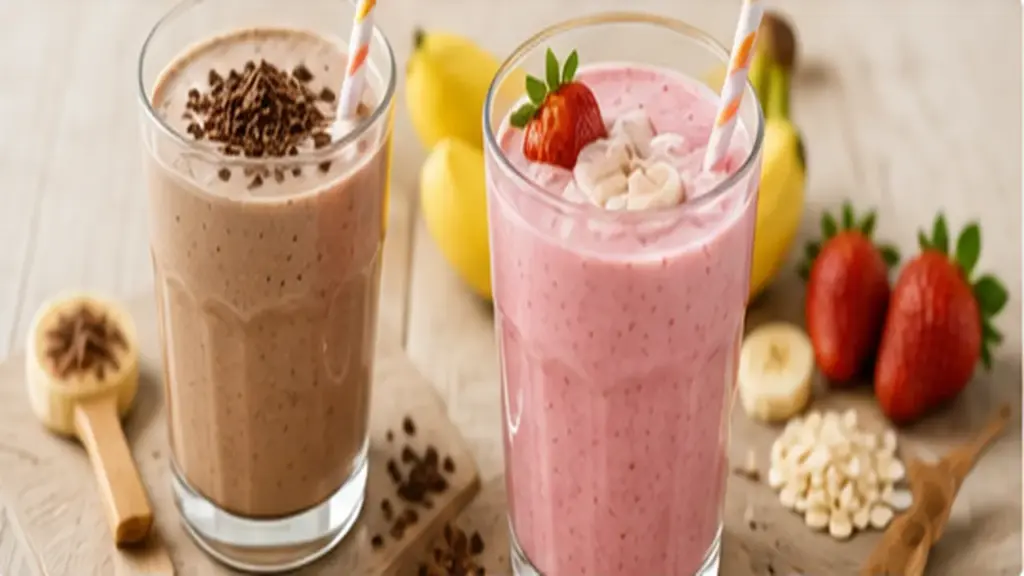
Chocolate Banana Protein Shake
Swap in a scoop of chocolate protein powder. Or add a tablespoon of cocoa powder to your regular one. The chocolate flavor pairs naturally with banana. A tablespoon of peanut butter here makes it taste closer to a dessert than a recovery drink. Freeze the banana ahead of time if you want it extra thick. Top with cacao nibs or a few chocolate chips if you’re not counting every calorie that day. For a fully vegan version, use a plant-based protein powder and a non-dairy milk. It holds up just as well.
Tropical Dry Fruit and Banana Shake
Blend your banana with a cup of coconut milk instead of dairy. Add two tablespoons of chopped dried mango or dried apricot, and a tablespoon of chia seeds if you have them on hand. The dried fruit adds natural sweetness and a real dose of fiber. The coconut milk brings a real change in flavor from the standard version. Haven’t worked with chia before? Our guide on how long to soak chia seeds explains why a quick soak first makes them blend in far smoother than adding them dry.
Timing and Protein Powder, Answered Honestly
Does it matter if you drink it right after a workout? Less than most fitness content implies. Older advice pushed a strict 30-minute “anabolic window.” Research since then has shown that window is much wider. What matters more is your total protein for the day. Space it out every three to four hours instead, per the International Society of Sports Nutrition. A shake within a couple hours of training works just as well as one taken the second you put the weights down.
Whey or plant-based? Whey digests fast. It also has a complete amino acid profile. That makes it a reliable default. Plant-based options, usually pea protein or a blend, work nearly as well for most people. They are the obvious choice if you are vegan or sensitive to dairy. Taste and how well it blends matter more than one type being truly superior for casual use.
How much protein powder is enough? Most single-scoop servings land between 20 and 25 grams. That fits well within the 20 to 40 gram range shown to support muscle repair per serving. You do not need two scoops to get the benefit. Going well beyond one scoop mostly just adds calories.
Banana Protein Shake Nutrition Breakdown
A basic version, one banana, one cup of milk, and one scoop of protein powder, runs roughly 280 to 320 calories. That depends on your milk and protein powder choice. It breaks down to around 25 to 30 grams of protein, 35 to 40 grams of carbohydrate, and a modest amount of fat, mostly from the milk.
Add-ins change the math. A tablespoon of peanut butter adds roughly 90 calories and 8 grams of fat. A quarter cup of oats adds about 4 grams of fiber and 110 calories. A handful of spinach adds almost nothing calorie-wise, just extra vitamins and minerals for free. None of these are bad additions. They just mean the shake stops being a snack. It starts being closer to a full meal, which is sometimes exactly what you want.
How this compares to a store-bought protein shake. Most bottled versions run similar calories. But they often carry more added sugar and fewer real ingredients. Making your own banana protein shake means you control exactly what goes in. A banana also brings real fiber and potassium. A bottled shake sweetened with syrup usually will not.
Where the sugar actually comes from. The banana itself, not anything added. That natural sugar comes packaged with fiber. Fiber slows how fast it hits your bloodstream, compared to the same amount of sugar from a candy bar or soda. This is worth knowing if you track sugar intake. It answers whether a banana protein shake fits your day.
Frequently Asked Questions
How many calories are in a banana protein shake? The base version runs about 280 to 320 calories. Add-ins push that higher. Peanut butter, oats, or extra fruit can bring it closer to 450 to 500 calories for a fully loaded version.
Can I use a banana protein shake as a meal replacement? Yes, if you build it out with enough substance. Add oats for fiber. Add a full tablespoon of nut butter for fat. Make sure your protein powder brings the shake to at least 25 grams of protein. A thin, banana-and-water version will not hold you the same way.
Is it better before or after a workout? After tends to make more sense. Carbs and protein together support recovery directly. That said, a shake beforehand works fine too. It’s a good option if you need quick, easy energy and don’t want a heavy meal sitting in your stomach during training.
Can I make it ahead of time? It is best fresh, within a few hours. Banana texture breaks down. The shake can separate in the fridge too. Need to prep ahead? Freeze portioned bags of banana and add-ins. Blend with liquid and protein powder fresh each time.
What if I don’t like the taste of my protein powder? Try a different brand before giving up on shakes entirely. Protein powders vary a lot in flavor and how well they blend. A shake made with a powder you don’t enjoy will never taste good, no matter what else you add.
Are banana protein shakes good for kids? Yes, in a smaller portion and with attention to the protein powder used. Choose one without added stimulants or excess sugar. Treat it as a snack, not a meal replacement, for younger kids who are still building varied eating habits.
Quick Reference
Keep this in mind next time you make a banana protein shake.
- One banana. One cup of milk. One scoop of protein powder. That is the base.
- Blend liquid first. It mixes better that way.
- Freeze the banana ahead if you want it thick and cold.
- Pick one extra, not five. Peanut butter, oats, or spinach all work well alone.
- Drink it fresh. It tastes best within the hour.
- Aim for 20 to 30 grams of protein per shake. That is the real target.
Conclusion
A banana protein shake earns its place for one simple reason. It solves the real problem of needing something fast and actually useful. No special or magic ingredient needed. Learn the base recipe first. Then branch into the chocolate or tropical version once it feels automatic.
Keep a banana on the counter and protein powder in the cupboard. This stops being a recipe you look up. It just becomes something you make on autopilot.
Not medical advice: This content, and any calculator results on this site, are for general informational purposes only and are not a substitute for professional medical advice, diagnosis, or treatment. Always talk to a qualified healthcare provider before starting a new diet, exercise routine, or health program.
Related Articles You May Like