Cold weather does not mean fewer fresh options at the store. Winter Seasonal Fruits are at their peak right now. Many of them pack more vitamin C, fiber, and plant compounds than what you find in July.
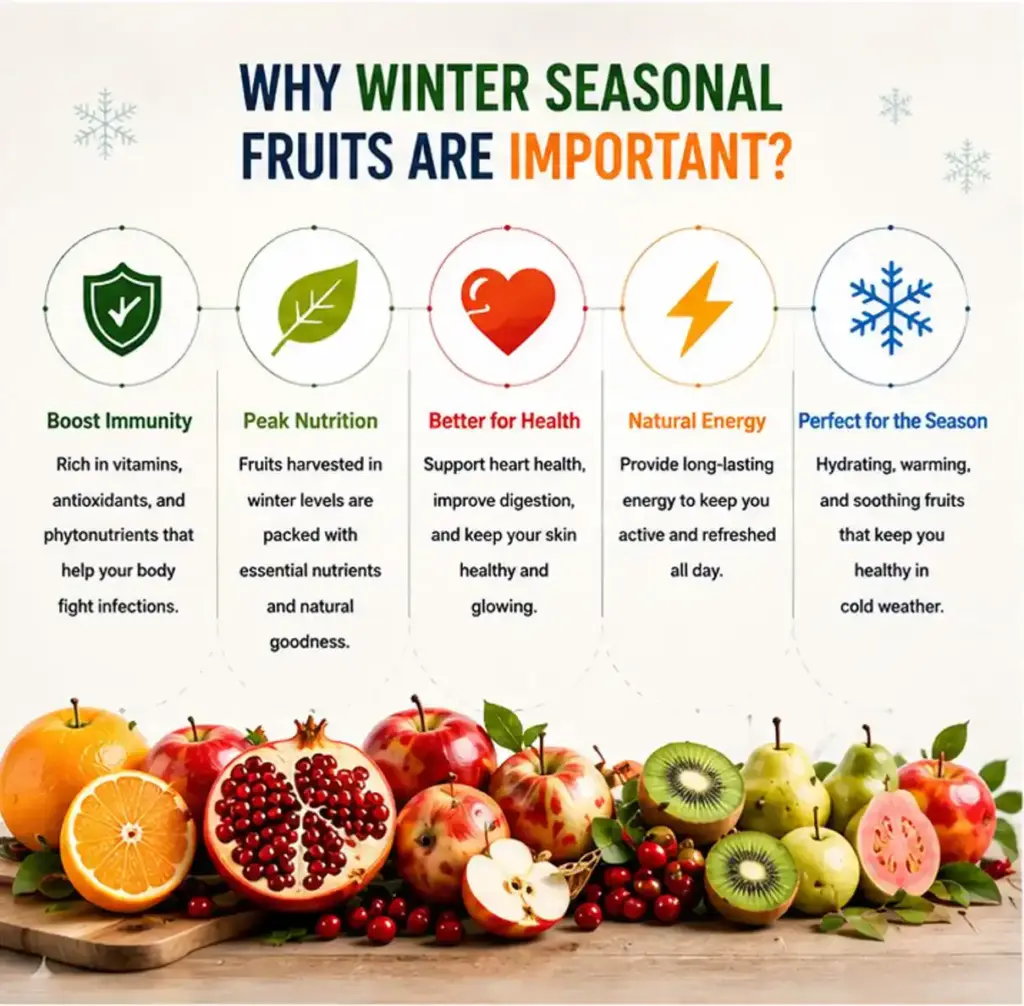
That timing is not an accident. Citrus, pomegranates, and persimmons ripen best in cool weather. That is exactly when your immune system could use extra help. This guide covers the 10 best Winter Seasonal Fruits. You will learn what each one does for your body. You will also get simple ways to fit them into a normal week.
Table of Contents
What Makes a Fruit a Winter Seasonal Fruit
A fruit earns the label “winter seasonal” when it ripens in the cold months. In the Northern Hemisphere, that is often November through February. Citrus trees, pomegranate bushes, and persimmon trees are built for this. They need cool nights to build up their sugar and color.
This matters more than most people think. A fruit picked at its peak and sold within a few weeks holds onto more vitamin C and plant compounds. A fruit picked early and shipped across an ocean loses some of that. So when you buy Winter Seasonal Fruits in season, you get a better deal on nutrition, plus better flavor.
There is one honest exception on this list. Dates are picked in early fall, not winter. But they store well for months. They also show up constantly in winter cooking across the Middle East, North Africa, and South Asia. Dates earn their spot here through tradition, not strict harvest timing. That is worth knowing before you assume every fruit on this list was picked yesterday.
It also helps to know that “winter seasonal” can shift by region. A fruit sold as in-season in Florida might arrive a month later in the Midwest. Local farmers markets are a good gauge of true local timing. Grocery chains, on the other hand, often import from warmer regions to keep shelves stocked year-round. Neither approach is wrong, but the imported version usually loses a bit of freshness along the way.
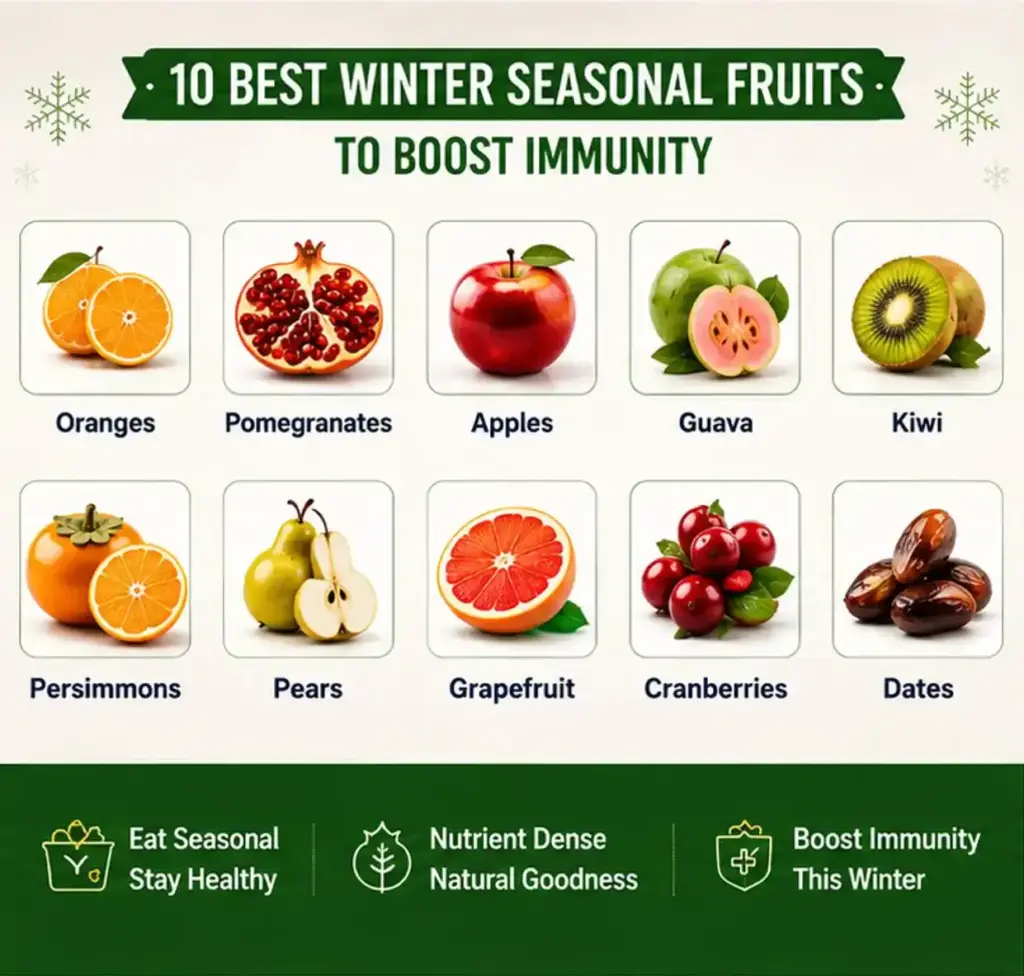
Oranges
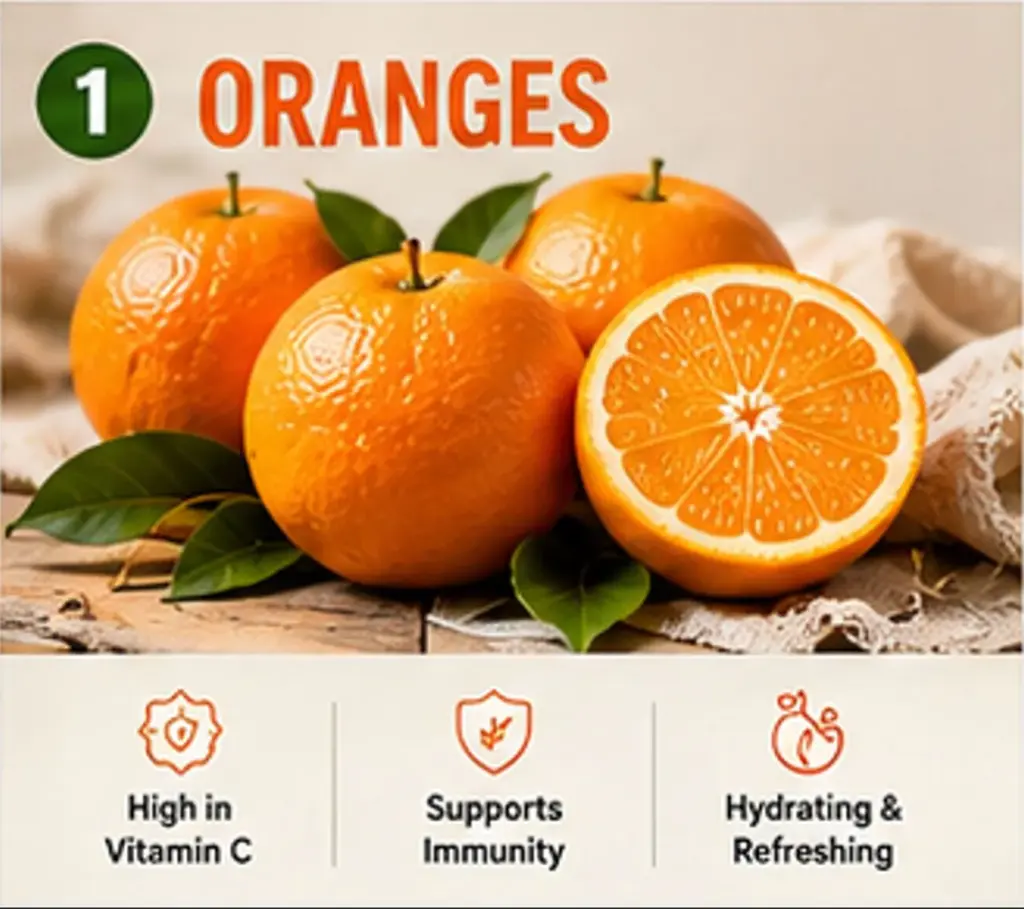
Oranges are the fruit most people picture first when they think of Winter Seasonal Fruits. There is good reason for that. A single orange gives you a solid share of your daily vitamin C, a nutrient your immune cells need to fight off common infections. The NIH Office of Dietary Supplements confirms this basic role.
Whole oranges also bring fiber and natural water that juice does not. A glass of orange juice gives you the vitamin C, but it strips out the fiber. It also turns the sugar into a form your body absorbs fast. Juice now and then is fine. Eating the whole fruit is the better daily habit for blood sugar and fullness.
Buy oranges that feel heavy for their size. Weight is a better freshness sign than color for this Winter Seasonal Fruit. Some perfectly ripe oranges have rough or slightly green skin.
Pomegranates
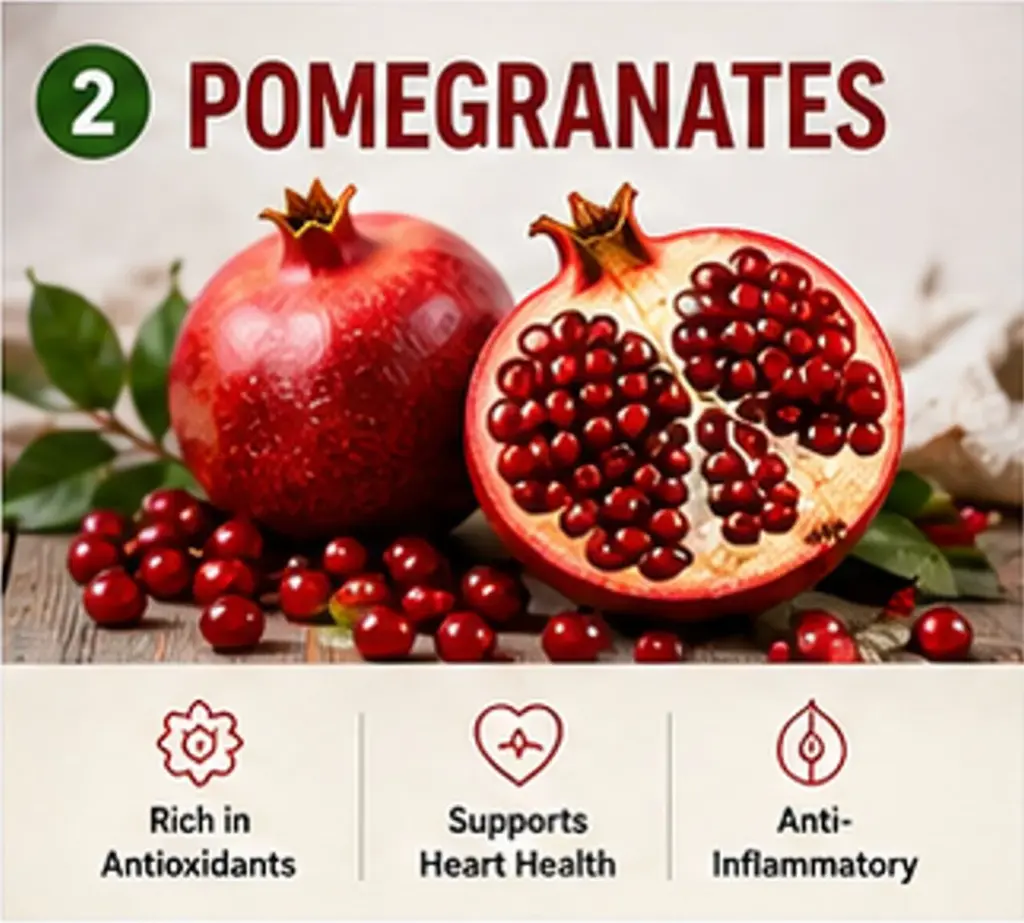
Pomegranate seeds, called arils, are packed with polyphenols. These plant compounds include punicalagins and ellagic acid. Most research on them has focused on heart health. Studies link regular pomegranate intake to small drops in blood pressure. Some research also links it to less damage to LDL cholesterol, a step tied to artery plaque buildup.
The fruit form matters here. Bottled pomegranate juice often has added sugar. Even “100% juice” versions skip the fiber found in the seeds themselves. A whole pomegranate takes a few extra minutes to deseed. But you get the plant-compound benefit without the extra sugar.
Here is a fast way to deseed one. Cut the pomegranate in half. Hold it cut-side down over a bowl of water. Tap the back firmly with a spoon. The seeds drop out clean, and the white pith floats to the top.
Apples
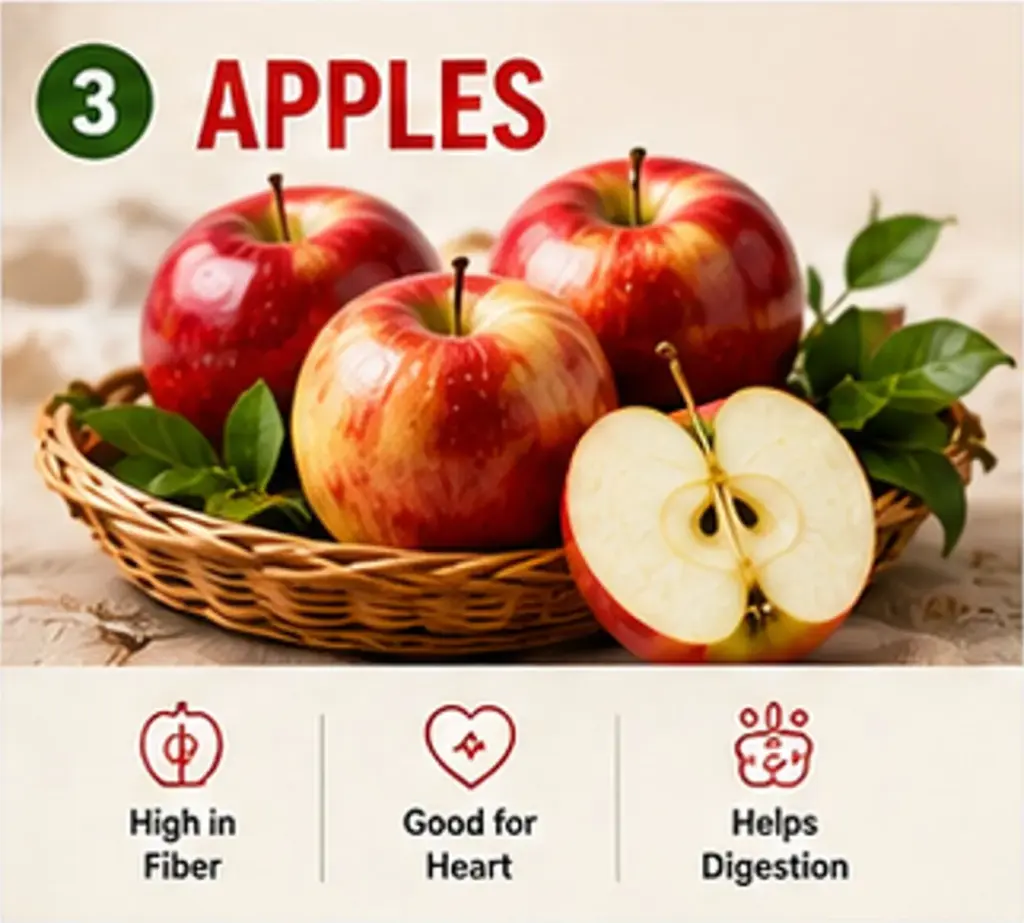
Apples are one of the few Winter Seasonal Fruits that store well. Most apple types are picked in fall. Cold storage is why they still taste crisp in February. The fiber in an apple slows down how fast sugar hits your blood. This comes mostly from pectin, a fiber that sits packed into the skin.
That is useful for anyone watching their blood sugar. A whole apple with the skin on causes a slow, small rise in blood sugar. Apple juice causes a much bigger spike. Peeled apple slices lose some of this benefit too. Much of the fiber sits just under the skin.
Apples also hold up well when baked. That makes them a low-effort winter dessert. Slice one, add a little cinnamon, and roast it at 375°F for about 20 minutes.
Guava
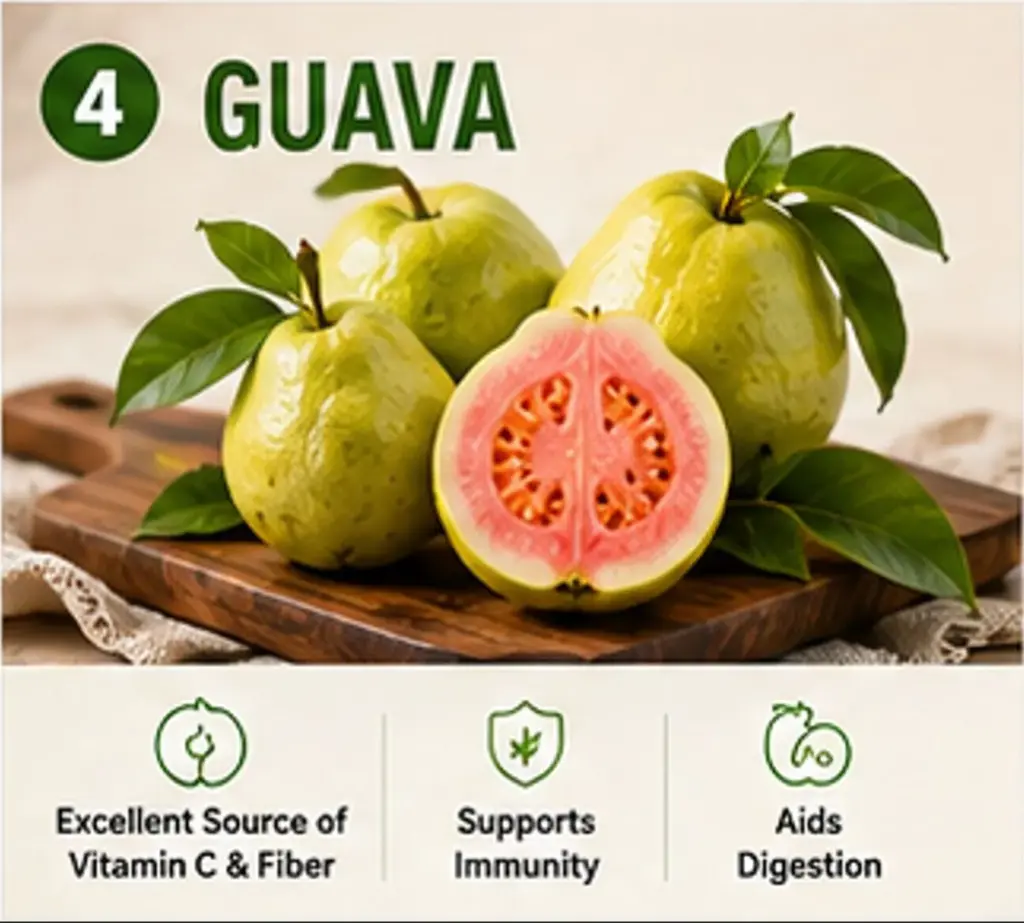
Guava rarely gets the credit oranges do. By the numbers, it probably should. According to USDA FoodData Central, a 100-gram serving of raw guava has about 228 milligrams of vitamin C, compared with about 53 milligrams in the same amount of orange. Guava carries more than four times the vitamin C by weight.
Guava also holds close to 5 grams of fiber per 100 grams. That is clearly more than most citrus fruits. It makes guava filling even in small portions. The seeds are edible and add crunch. Some people strain them out of smoothies if the texture bothers them.
If you can find ripe guava locally this winter, it is worth trying. The flavor sits somewhere between a pear and a strawberry. A slightly under-ripe guava firms up nicely within a day or two on the counter.
Kiwi
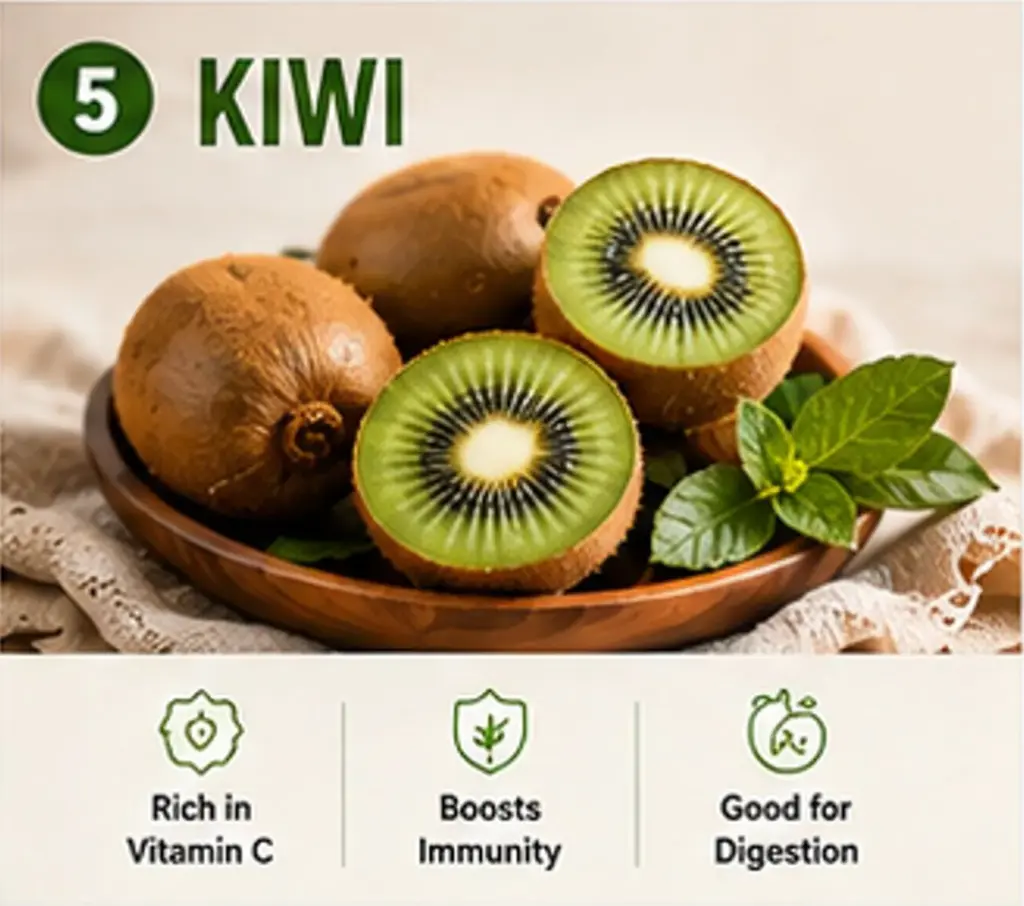
Kiwi stands apart from most Winter Seasonal Fruits. The skin is edible and adds fiber if you eat it. Most of the fruit’s vitamin C sits just under the skin. Peeling it away removes some of the nutrition you are reaching for in the first place.
Kiwi also has an enzyme called actinidin. This enzyme helps break down protein. That is why kiwi works well in a meat marinade. Some people also feel a mild tingle on the lips after eating a lot of it at once. That reaction is often harmless. If you have a known kiwi allergy, skip it completely.
For a quick snack, halve a kiwi and eat it with a spoon. Leave the skin on the outside. No peeling needed.
Persimmons

Persimmons come in two types worth knowing apart. Hachiya persimmons are astringent. They taste bitter and harsh until they turn fully soft, almost jelly-like. Fuyu persimmons are non-astringent. You can eat these firm, like an apple.
Both types are strong sources of vitamin A, plus a good amount of fiber per serving. Vitamin A helps normal vision and healthy skin. One persimmon adds to a balanced diet. It does not replace one.
If you buy Hachiya persimmons and they still feel firm, leave them on the counter. Do not put them in the fridge yet. Cold slows down softening a lot.
Pears
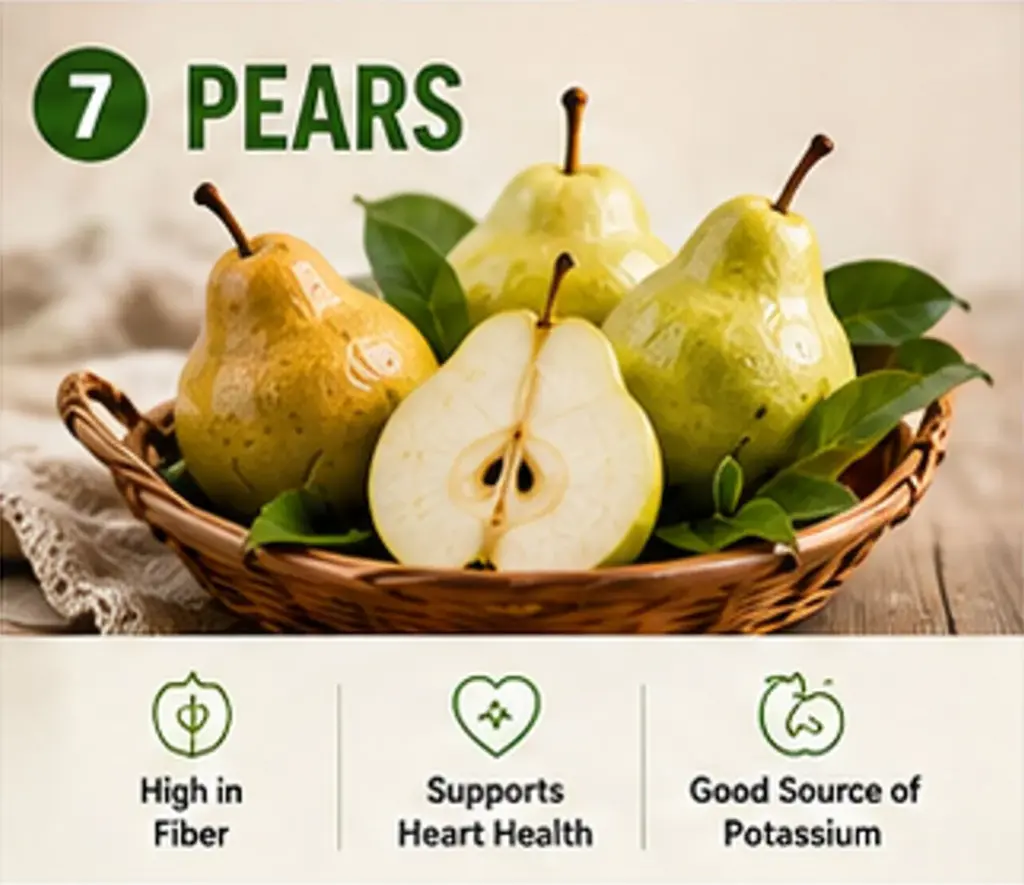
Pears behave differently from almost every other fruit here. They ripen better off the tree than on it. Growers pick pears while still hard. The fruit finishes ripening in storage. That is why store-bought pears often need a few days on the counter first.
A ripe pear gives you roughly 6 grams of fiber. It also carries a good amount of potassium. This mineral helps regulate fluid balance and blood pressure. Most of the fiber sits in the skin. Leaving the skin on gets you the most value.
To check ripeness, press gently near the stem. If it gives slightly, the pear is ready. Checking the middle does not work well. Pears ripen from the neck down first.
Grapefruit
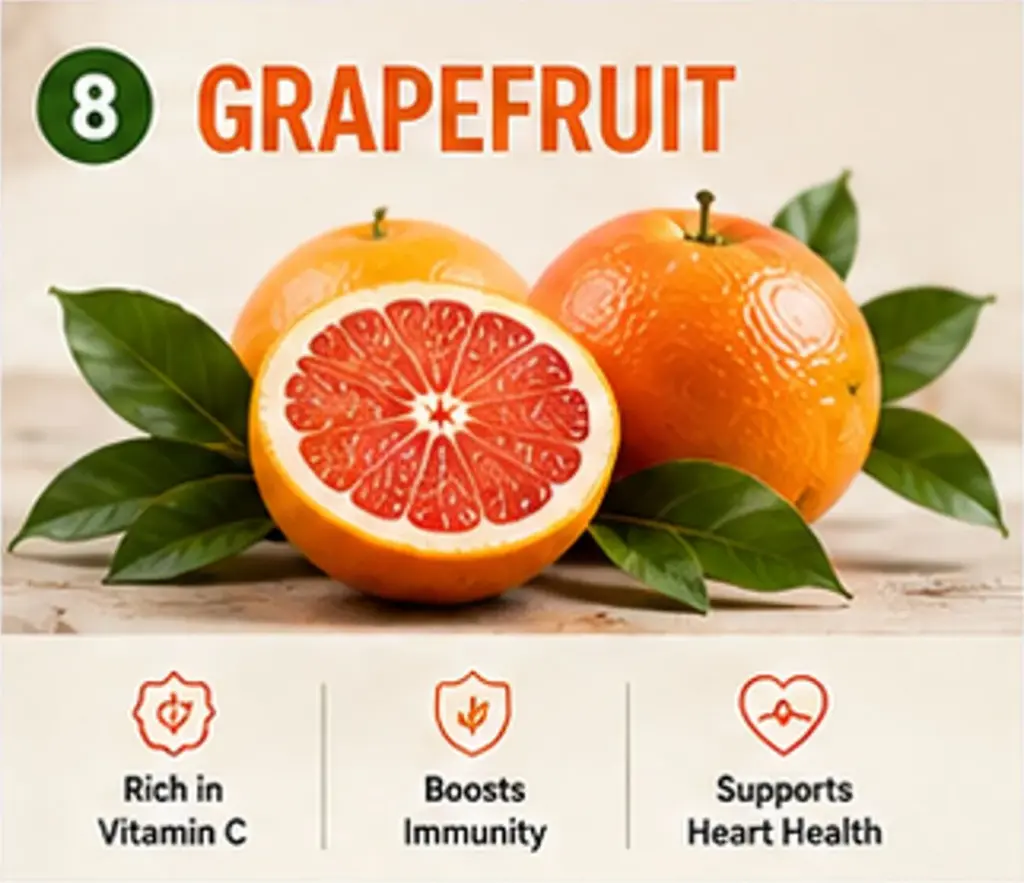
Grapefruit is close to orange in nutrition. It gives you a solid dose of vitamin C, though its flavor runs more bitter and less sweet, which some people prefer. But grapefruit carries a caution most winter fruit does not.
Compounds in grapefruit block an enzyme in your gut wall. That enzyme normally helps break down many common medicines. This list includes some statins, certain blood pressure drugs, and other prescriptions, per Mayo Clinic. This can push medicine levels in your blood too high. That is why the FDA requires warning labels on many affected drugs.
If you take any daily prescription medicine, check with your pharmacist first. Do this before adding grapefruit to your routine, even in small amounts. This is not a minor food myth. It is a real risk for certain drugs.
Cranberries

Cranberries are one of the more research-backed Winter Seasonal Fruits. Still, the evidence is more narrow than most headlines suggest. A large 2023 Cochrane review found that cranberry products can lower the rate of repeat urinary tract infections. This benefit showed up in women and kids. It also showed up in people prone to UTIs after certain medical procedures. That is per the National Center for Complementary and Integrative Health.
That evidence applies to prevention, not treatment. Once a UTI has started, cranberry products do not clear it. A suspected UTI still needs a doctor visit. A glass of cranberry juice is not a fix for that.
Fresh cranberries taste sharp and tart on their own. That is why most cranberry sauces and juices add a good amount of sugar. If you watch your sugar intake, look for unsweetened dried cranberries instead. You can also make a simple sauce with just a little natural sweetener.
Dates
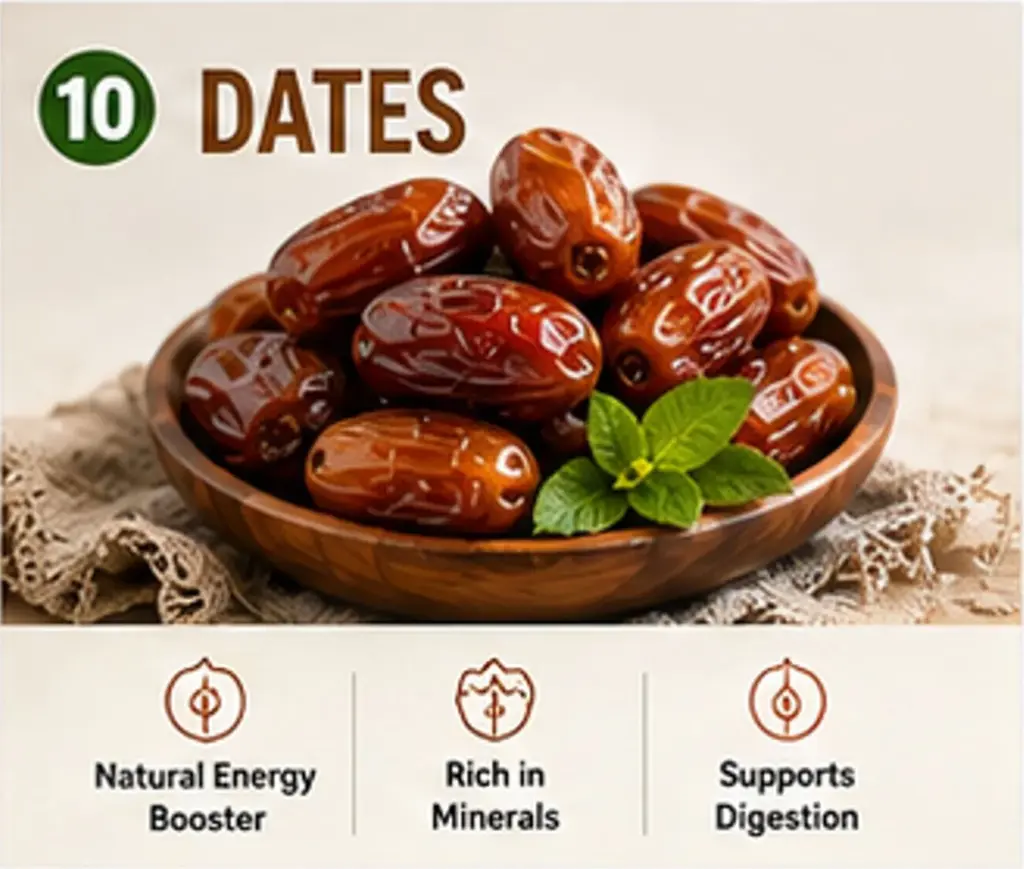
Dates bring fiber, potassium, and a good amount of iron. All of this comes in a small, sweet package. That sweetness is exactly why portion size matters more with dates than almost anything else here. A small handful adds up in calories and sugar fast.
Two or three dates make a good snack. Pair them with a source of protein, like a handful of nuts. Protein slows down digestion and softens the sugar spike. Dates also work well as a natural sweetener in baking. They can swap out some or all of the refined sugar in a recipe.
Look for dates that feel soft and slightly wrinkled, not dry and hard. Medjool dates run softer and more caramel-like, while Deglet Noor dates are firmer and less sweet. Either type makes a solid addition to your Winter Seasonal Fruits lineup.
How to Build a Simple Winter Fruit Rotation
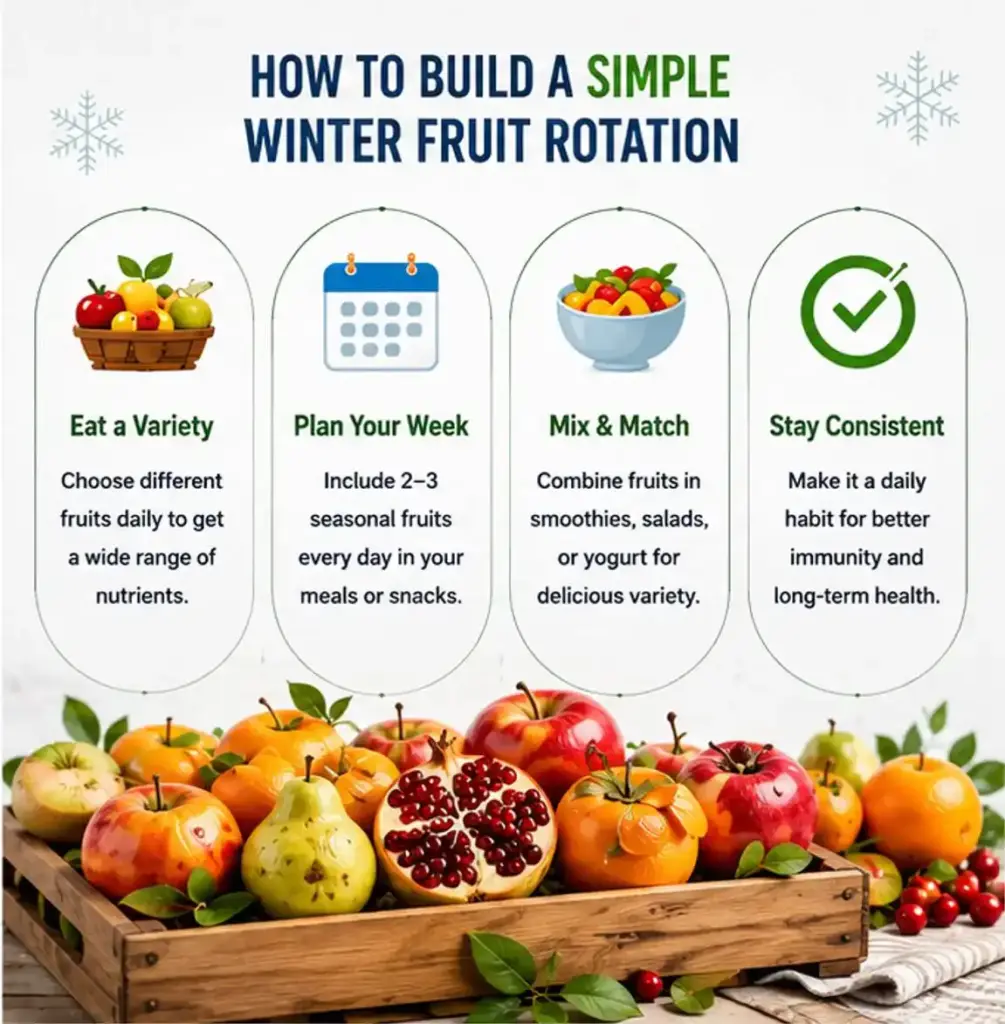
You do not need to eat all 10 Winter Seasonal Fruits in one week. Rotate through three or four at a time. This keeps things interesting. It also spreads out the nutrient mix, without turning grocery shopping into a project.
A simple weekly pattern might look like this.
- Add orange or grapefruit segments to breakfast two or three mornings a week.
- Keep a bowl of apples or pears on the counter for an afternoon snack.
- Toss pomegranate arils or kiwi into a lunch salad once or twice a week.
- Save dates and dried cranberries for post-workout fuel. Pair this habit with a broader nutrition strategy that already covers your daily calorie needs.
Do you already track intake through a TDEE calculator? Fitting a couple of fruit servings into your day is a small change, not a big rework.
Fruit also pairs well with other high-fiber snacks. This helps if digestion or fullness between meals is something you want to improve. Your main goal this winter might be closing nutrient gaps, not just eating more produce. If so, check your daily vitamin routine alongside your fruit intake. Food and supplements work best as a team, not as copies of each other.
For busy days, pair two or three of these fruits with quick energy snacks. This covers fiber and quick energy, with little planning.
Smart Shopping and Storage Tips for Winter Seasonal Fruits
A few small habits stretch your money and your produce further. None of these take extra time once they become routine.
- Shop the discount bin first. Bruised or oddly shaped Winter Seasonal Fruits often taste the same as perfect ones, just cheaper.
- Store citrus in the fridge crisper drawer. It stays fresh for weeks longer than citrus left on the counter.
- Keep apples and pears away from other produce. Both release a gas that speeds up ripening in nearby fruit.
- Freeze extra pomegranate arils and cranberries in a single layer on a tray first. This stops them from clumping together in the bag.
- Buy persimmons a few days before you plan to eat them, since ripening time varies by variety.
None of these tips require special tools. They just make it easier to keep Winter Seasonal Fruits on hand without waste.
Frequently Asked Questions About Winter Seasonal Fruits
What are the best Winter Seasonal Fruits to eat?
Oranges, guava, pomegranates, kiwi, and persimmons stand out for vitamin C and plant compounds. Apples, pears, and dates bring the most fiber. There is no single “best” fruit here. The strongest approach rotates a few different Winter Seasonal Fruits, rather than leaning on just one.
Are Winter Seasonal Fruits better for you than off-season fruit?
Mostly, yes. But the gap is mostly about freshness, not a totally different nutrient makeup. A fruit picked near its natural season and sold fast tends to hold onto more vitamin C, and it tastes better than the same fruit picked early and shipped far out of season.
How many servings of Winter Seasonal Fruits should I eat per day?
Most guidelines suggest one and a half to two cups of fruit daily for adults. That works out to about two medium pieces, or roughly one cup of pomegranate arils or cranberries. Winter Seasonal Fruits can make up all or part of that daily goal.
Can people with diabetes eat Winter Seasonal Fruits safely?
Many can, in fair portions. Whole fruit has fiber, which slows down sugar absorption compared with juice. Dates and very ripe fruit carry more sugar per serving. Portion size and pairing fruit with protein or fat matter more than avoiding fruit. Anyone with diabetes should still confirm portions with a doctor or dietitian. Needs vary from person to person.
Is grapefruit safe to eat with all medicines?
No. Grapefruit interacts with a known list of medicines, including certain statins and blood pressure drugs. It changes how your body breaks these drugs down. If you take daily prescription medicine, ask a pharmacist before adding grapefruit or its juice to your diet.
Do frozen versions of Winter Seasonal Fruits still count?
Yes, in most cases. Fruit frozen soon after harvest often keeps its vitamin C and fiber almost as well as fresh fruit. Sometimes it keeps even more than fresh fruit. That is especially true if the fresh fruit traveled far and sat on a shelf a week or two.
Conclusion
Winter does not have to mean settling for bland produce that survived a long trip to the store. Winter Seasonal Fruits like guava, pomegranate, persimmon, and citrus are truly at their best right now. Working three or four of them into a normal week is a real habit. It can help your immune health through the cold months. Start with whichever one sounds best to you. Keep the grapefruit and medicine caution in mind if it applies to you. Then build from there.
Do you manage a health condition, or take regular medicine? If so, check with a doctor, pharmacist, or dietitian first. Do this before making big changes to your fruit intake.
Not medical advice: This content, and any calculator results on this site, are for general informational purposes only and are not a substitute for professional medical advice, diagnosis, or treatment. Always talk to a qualified healthcare provider before starting a new diet, exercise routine, or health program.
Related Articles You May Like