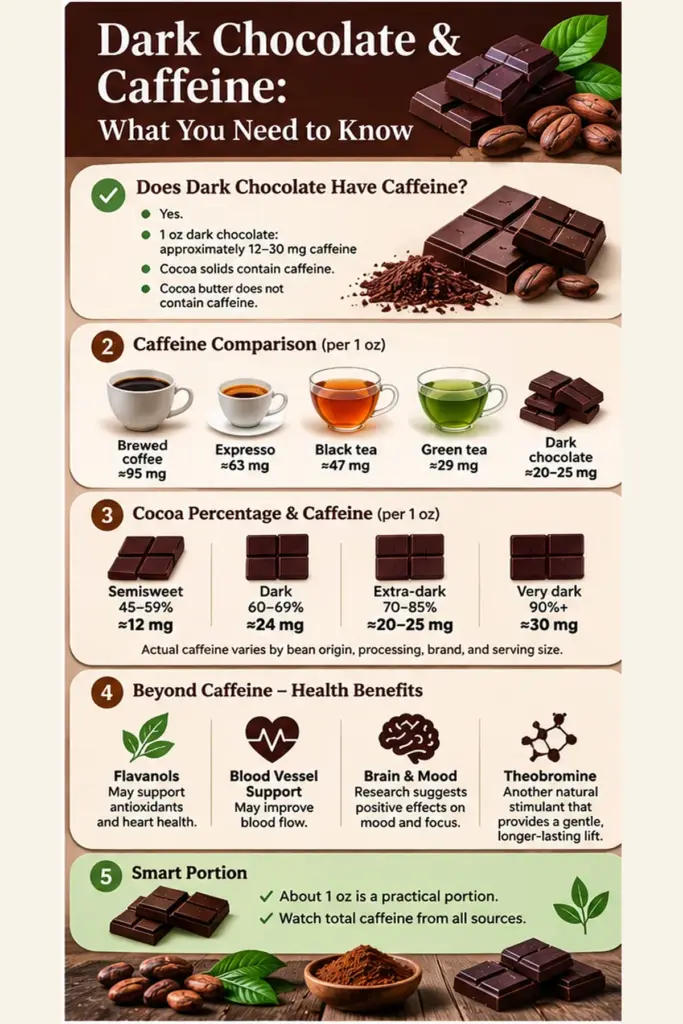
Does dark chocolate have caffeine? Yes, it does. But the amount is often smaller than people expect. Cocoa solids naturally hold caffeine. The exact amount depends on how much cocoa a bar contains. If you drink coffee or tea, and also eat dark chocolate daily, watch the total. That combined caffeine can add up fast.
This guide breaks down the real caffeine numbers. It compares dark chocolate to coffee and tea. It also covers the research behind chocolate’s other benefits. Plus, it covers a few things most guides leave out.
Quick Answer, If You’re in a Hurry
- Yes, dark chocolate has caffeine.
- A one-ounce piece holds about 12 to 30 mg.
- That’s far less than a cup of coffee, which holds about 95 mg.
- Darker chocolate tends to have more caffeine than lighter chocolate.
- One ounce a day is a good rule of thumb for most people.
- Dark chocolate also brings real health perks, plus a few real risks worth knowing.
- Cocoa butter alone has no caffeine at all.
- Theobromine, not caffeine, gives chocolate its slow, lasting buzz.
Table of Contents
What Is Caffeine, and Why Does It Matter?
Caffeine is a natural stimulant. Plants make it as a built-in pesticide. It shows up in coffee beans, tea leaves, kola nuts, and cocoa pods.
Once you eat or drink it, caffeine reaches your brain fast. There, it blocks a molecule called adenosine. Adenosine builds up during the day. It makes you feel sleepy. Caffeine blocks that signal. You feel more alert instead. In plain terms: caffeine wakes up your brain by muting the “get tired” switch.
Not everyone handles caffeine the same way. Genetics play a role. So does body weight. Certain medicines, and pregnancy too, can slow it down. That’s why one cup of coffee hits some people harder. It hits others barely at all.
Does Dark Chocolate Have Caffeine? The Numbers by Cocoa Percentage
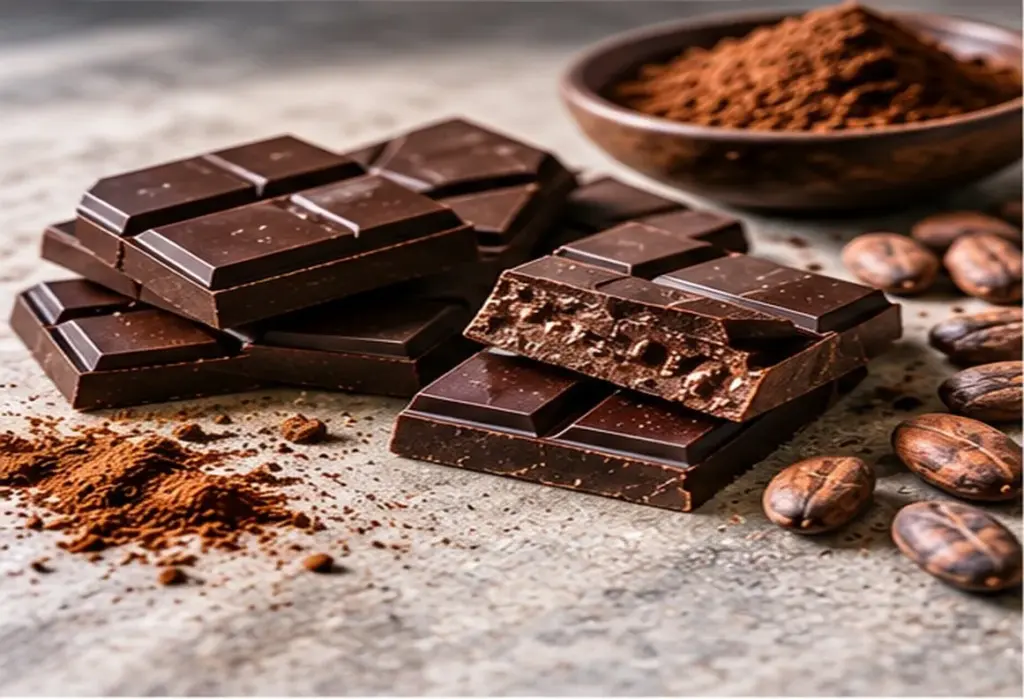
Cocoa solids hold the caffeine in chocolate. Cocoa butter does not. That one fact explains most of the differences between chocolate types.
More cocoa solids often means more caffeine. Figures from USDA FoodData Central, cited by several nutrition sources, give a useful range. Here’s roughly what to expect per one-ounce (28-gram) serving.
- Semisweet chocolate (45–59% cocoa): about 12 mg of caffeine.
- Dark chocolate (60–69% cocoa): about 24 mg of caffeine.
- Extra-dark chocolate (70–85% cocoa): roughly 20 to 25 mg in most bars. Bean origin can push some samples closer to 35–40 mg.
- Very dark chocolate (90% cocoa or higher): commonly around 30 mg, sometimes more.
These numbers are averages, not guarantees. Chocolate makers don’t have to list caffeine on the label. The only way to get an exact figure is lab testing. Most shoppers never see that data.
A quick word on serving size. One ounce is small. Think a thick domino, or three small squares. If you eyeball more than that, your true numbers could run higher. They could beat the estimates above by a wide margin.
Dark Chocolate vs. Coffee, Tea, and Espresso
Numbers mean more with context. Here’s how one ounce of dark chocolate stacks up against other common caffeine sources.
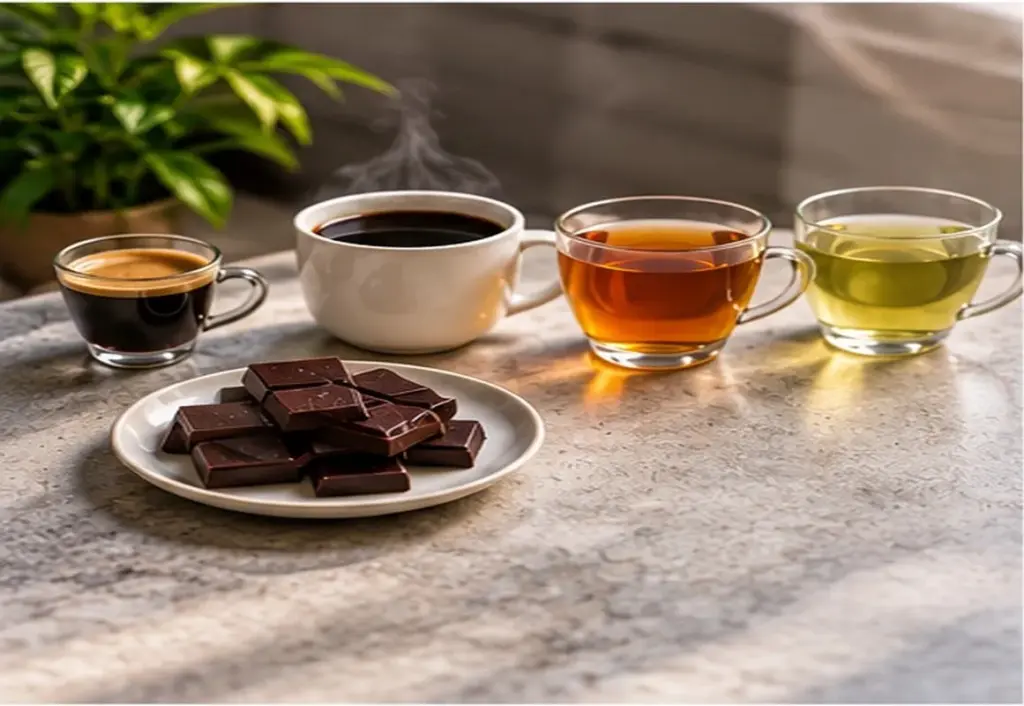
- 8 oz brewed coffee: about 95 mg.
- 1 oz espresso shot: about 63 mg.
- 8 oz black tea: about 47 mg.
- 8 oz green tea: about 29 mg.
- 1 oz dark chocolate (70%+ cocoa): about 20 to 25 mg.
You’d need three or four ounces of dark chocolate. That’s what it takes to match one cup of coffee. That’s close to a full standard bar in one sitting. Comparing chocolate to something stronger? Our breakdown of a boost energy drink shows the gap. It’s wider than you might think.
Theobromine: Chocolate’s Other Stimulant
Caffeine isn’t the only active compound in dark chocolate. It also holds theobromine, in much larger amounts. A 70–85% bar can carry 250 to 500 mg of theobromine per ounce.
Theobromine belongs to the same chemical family as caffeine. It works more slowly, though. It also lingers in your body longer. This may explain something odd. Chocolate can leave you feeling warm and alert, well past what its small caffeine number suggests. So does dark chocolate have caffeine or theobromine behind that feeling? Really, it’s both working together.
Why Caffeine Levels Vary So Much From Bar to Bar
Two bars with the same cocoa amount can still hold different levels of caffeine. Bean origin plays a big part. Cocoa from one country can differ from cocoa grown in another. Coffee beans vary the same way from region to region. A 75% bar from Ecuador can test higher in caffeine. Compare that to a 75% bar from Mexico instead.
How the beans are handled matters too. Longer fermentation changes the final caffeine content. Heavier roasting can reduce it a little. Some caffeine breaks down under high heat. Dutch treatment is a chemical step. It’s used mostly for cocoa powder, and it can lower caffeine even further. None of these steps are required by law. So two brands can make very different choices.
None of this shows up on the package. Treat the ranges above as a solid estimate, not a lab result for the exact bar in your pantry. If you truly need an exact figure, ask the maker directly. That’s your best option.
Health Benefits Linked to Dark Chocolate
People focus on caffeine first. But it isn’t the ingredient researchers care about most. That title goes to flavanols, a group of plant compounds packed into cocoa solids.
A Strong Source of Flavanol Antioxidants
Dark chocolate holds far more flavanol-rich cocoa solids than milk chocolate. That’s per the Harvard T.H. Chan School of Public Health’s Nutrition Source. Flavanols act as protective compounds. They help limit everyday cell damage tied to aging and long-term disease.
Here’s the catch, though. Making chocolate often destroys a large share of these compounds. Heavy roasting, alkalizing, and Dutch treatment can all strip flavanols out. A “dark chocolate” label alone doesn’t promise you a flavanol-rich bar.
Heart and Blood Vessel Support
Flavanols appear to support nitric oxide production. Nitric oxide relaxes blood vessels. It also improves blood flow. Research summarized by Mayo Clinic Health System points to modest drops in blood pressure. This shows up with regular, moderate dark chocolate intake.

That benefit comes with a trade-off. Dark chocolate is calorie-dense. It’s also often high in saturated fat. Eating more of it to chase a bigger heart benefit tends to backfire fast. If you already track your numbers, take a look at our guide on how high cholesterol affects your body. It pairs well with this one.
This benefit also has real limits. If you take blood thinners or heart medicine, ask a doctor first. Flavanols can change how some drugs act in your body. Chocolate is a helpful habit. It is not a treatment.
Mood and Brain Effects
People often call chocolate a mood booster. That’s partly true, and partly hype. Eating any food you enjoy can trigger the brain’s reward pathway. That alone can lift your mood, caffeine or not.
The research on flavanols and brain function is more exact. It’s also more interesting. According to Harvard Health Publishing, flavanols may help protect brain cells. They may also support blood flow to the brain. This comes from lab studies and small human trials. The evidence is promising. It’s still early, though. A chocolate bar doesn’t work like a supplement.
If mood is your main reason for reaching for chocolate, build other supports too. Food alone won’t carry the whole job. Our guide to healthy habits that support mental wellbeing covers approaches that skip food entirely.
Common Myths About Chocolate and Caffeine
A few common beliefs about chocolate and caffeine don’t hold up well.
Myth: All dark chocolate has the same caffeine amount. How much cocoa a bar holds matters. So does bean origin, and so does how it’s made. Two “70% dark” bars from different brands can differ by ten milligrams or more.
Myth: Dark chocolate will keep you awake like coffee does. Possible, but unlikely at normal portions. You’d need several ounces in one sitting to match a single cup of coffee.
Myth: Milk chocolate is basically caffeine-free. It’s low in caffeine, not free of it. A serving often holds a few milligrams. That’s still more than zero.
Myth: Pricier chocolate always means more flavanols. Price often reflects bean origin and brand image. It doesn’t tell you much about flavanol content. That depends on steps most labels never mention.
Myth: Does dark chocolate have caffeine only in the darkest bars? No. Even a 45% bar carries a small amount. Higher cocoa just tends to carry more.
Who Should Watch Their Dark Chocolate Intake
Dark chocolate isn’t risky for most healthy adults in normal amounts. A few groups have real reasons to stay careful, though.
Caffeine Sensitivity
Some people feel caffeine’s effects strongly, even at low doses. Common symptoms include a racing heart, restlessness, and trouble falling asleep. Mayo Clinic says adults should stay under 400 mg of caffeine a day. That’s a total across all sources combined. Sensitive people often do better well below that limit.
Think about how your day adds up. Two cups of coffee alone can reach close to 200 mg. Add a full bar of extra-dark chocolate on top. You could pass the daily limit without even knowing it. Does dark chocolate have caffeine enough to matter here? Combined with coffee, yes, it can.
If afternoon chocolate keeps you up at night, try a calmer evening routine instead. Our roundup of relaxation practices for a calmer mind offers a few starting points.
Migraines: A Mixed Picture
Chocolate has long been blamed for migraines. The proof behind that claim is weaker than most people assume. Some studies gave people real chocolate. Others got a fake version instead. Most found no clear difference in migraine attacks between the two groups.
That doesn’t mean nobody reacts to it. Some people do seem to notice a real pattern between chocolate and their headaches. If you suspect a link for yourself, try a simple food and symptom log. It will tell you more than any broad rule can.
Calories Add Up Fast
Dark chocolate runs roughly 150 to 170 calories per ounce. The exact number depends on the brand and sugar content. That’s easy to miss when you snack straight from the bag. Measuring a real portion out helps.
Keeping a rough sense of your daily calorie target makes portion control much simpler. Check your own numbers with our free calorie calculator. It only takes a couple of minutes.
Sugar Can Cancel Out the Benefits
Not every dark chocolate bar is created equal. Some brands add enough sugar that the product barely qualifies as “dark” beyond the wrapper.
Check the ingredient list, not just the front label. A short list topped by cocoa mass or chocolate liquor is a good sign. A bar where sugar appears first or second is not.
A Less-Discussed Concern: Heavy Metals
Most guides about dark chocolate stop at sugar and calories. There’s another factor worth knowing about: heavy metals.
Consumer Reports testing checked 28 dark chocolate bars. Every single one had some cadmium and lead in it. For 23 of those bars, just one ounce a day was enough. That single ounce could put an adult over California’s safety limit for lead, cadmium, or both.
That threshold works as a labeling trigger, not a poisoning risk. Occasional dark chocolate stays low-risk for most healthy adults. But cadmium and lead build up in the body over time. Consumer Reports warned pregnant women and young children to be extra careful. A sensible middle ground is to rotate. Eat a high-cocoa bar some days. Choose a lower-cocoa treat on other days, instead of the same bar every day for months.
How to Enjoy Dark Chocolate Without a Caffeine Overload
A few simple habits let you enjoy the flavor and the flavanols. You won’t have to overdo the stimulant side.
Pick chocolate with at least 70% cocoa. You’ll get more flavanols per bite. You’ll often get less added sugar too. That helps offset the calorie concern.
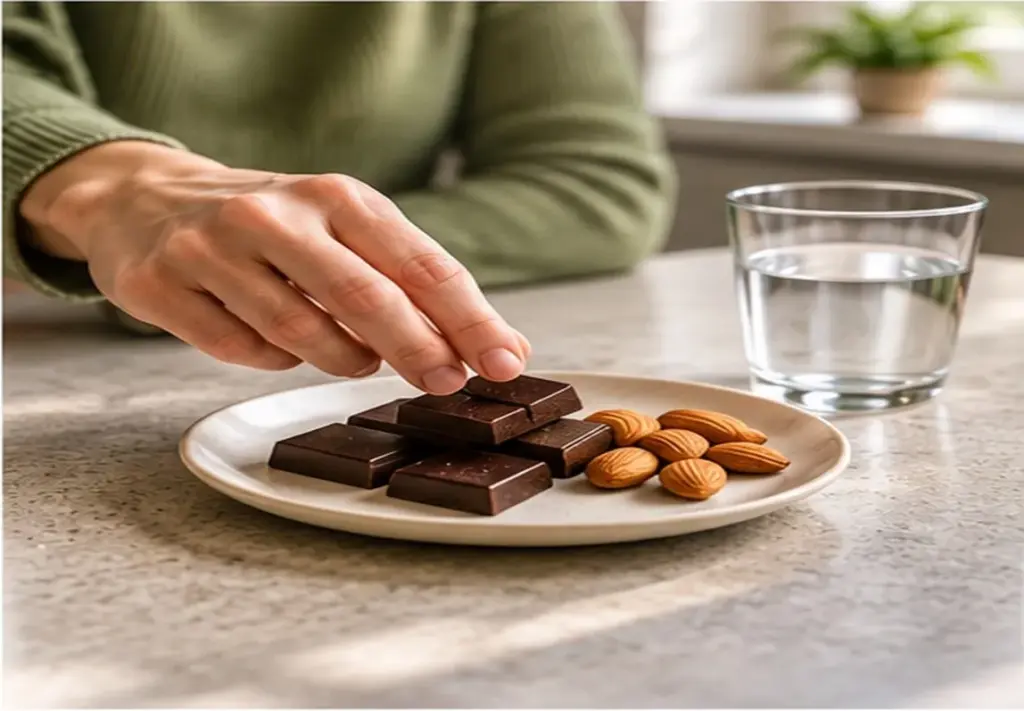
Stick to about one ounce a day. That’s roughly one small chocolate square. It’s a portion most nutrition sources agree on. It keeps both calories and caffeine in check.
Watch your timing. If you’re sensitive to caffeine or theobromine, keep chocolate to the morning or early afternoon. Save it for after dinner only if your sleep tends to hold up fine.
Pair it with real food. A square of dark chocolate with a handful of almonds slows digestion down. It also makes the treat feel like part of a meal, not a separate indulgence.
Store it right. Keep chocolate in a cool, dry spot, away from direct light. Heat can melt the fat and dull the taste. It won’t change how much caffeine is inside, though.
Frequently Asked Questions
Is there caffeine in dark chocolate? Does dark chocolate have caffeine? Yes. Cocoa solids naturally hold caffeine. Darker chocolate holds more of it than milk or white chocolate.
How much caffeine is in a standard dark chocolate bar? A full 3.5-ounce bar of 70–85% cocoa chocolate holds around 70 to 90 mg of caffeine. That’s roughly one cup of coffee’s worth, though this varies by brand.
Is dark chocolate a real substitute for coffee? Not really, unless you’re eating a very large amount. One ounce delivers only a fraction of a coffee cup’s caffeine. It works better as a mild pick-me-up than a true replacement.
Does eating dark chocolate late at night disrupt sleep? It can, especially if you’re sensitive to caffeine or theobromine. Both compounds stay active in your body for several hours. Reconsider an evening chocolate habit if your sleep has gotten worse lately.
Do milk and white chocolate have less caffeine than dark chocolate? Yes. Milk chocolate holds around 3 to 10 mg per ounce. White chocolate, made only from cocoa butter with no cocoa solids, holds almost none.
Is caffeine-free chocolate available? True caffeine-free chocolate is rare. Any product with real cocoa solids will hold at least a trace. White chocolate comes closest to caffeine-free among common options.
Does a higher cocoa percentage always mean more caffeine? Usually, but not always. Bean origin matters. So does how the beans are handled. A 70% bar from one brand can hold more caffeine than an 85% bar from another.
Does dark chocolate help with athletic performance? Maybe, in a small way. Some athletes eat a small piece before a workout for a mild lift. The effect is modest at best. Timing your meals well matters far more than chocolate alone.
Does caffeine in chocolate affect kids differently than adults? Yes. Children weigh less, so the same dose of caffeine hits them harder. Most child health groups suggest keeping caffeine low, or off the menu, for young kids. A piece of dark chocolate counts toward that total. So does soda.
Can pregnant women eat dark chocolate? In small amounts, most guidance says yes. ACOG says to keep total caffeine under 200 mg a day during pregnancy. That’s well below the standard 400 mg limit. It’s also worth staying mindful of the heavy metal point raised above.
Conclusion: Does Dark Chocolate Have Caffeine? Here’s the Bottom Line
So, is there caffeine in dark chocolate? Yes, but often in amounts most people can enjoy without much concern. A one-ounce serving carries somewhere between 12 and 30 mg. That’s a fraction of what’s in a standard cup of coffee.
The bigger story is what else sits inside that same square. Flavanols come with real, if modest, research behind them. Calories and sugar matter too. So do trace heavy metals, a factor worth knowing even though it rarely gets mentioned.
Choose chocolate with a high cocoa percentage. Keep your portion to about an ounce. Notice how your own body responds. That’s really all it takes to enjoy dark chocolate wisely.
Key takeaways:
- Dark chocolate does have caffeine, just not much.
- Darker bars tend to hold more than lighter ones.
- Coffee still wins by a wide margin.
- Flavanols, not caffeine, are the real health story.
- Sugar and calories can undo the benefits fast.
- Heavy metals are a real, if minor, concern.
- Pregnant women and kids should stay extra careful.
Not medical advice: This content, and any calculator results on this site, are for general informational purposes only and are not a substitute for professional medical advice, diagnosis, or treatment. Always talk to a qualified healthcare provider before starting a new diet, exercise routine, or health program.
Related Articles You May Like