Personalized food means eating based on your own body. Not a generic plan built for everyone. Your training, your body weight, your sleep, and even your gut all shape what you need. Get that match right, and recovery, energy, and fat loss all improve. Get it wrong, and even a “healthy” diet can leave you tired and stuck.
This guide covers eight ways personalized food changes your fitness results. It’s backed by real research, not generic food lists. It also covers common myths, since a lot of “personalized nutrition” online is really just marketing.
Quick Answer, If You’re in a Hurry
- Personalized food means matching your diet to your own body, not a generic plan.
- Start with your weight, your goals, and how much you train.
- Protein and calorie targets matter far more than any single “best food.”
- Most of the value is free. You don’t need a lab test to begin.
- Track for two weeks, then adjust one thing at a time.
- Genetic tests exist, but the proof behind them is still thin.
Table of Contents
What Personalized Food Really Means
Personalized food is not a diet. It’s a process. You start with your own numbers. Body weight. Activity level. Goals. Any health issues. Then you build a plan around those numbers, not a basic list.
Researchers call this precision nutrition. The Harvard T.H. Chan School of Public Health says it means tailoring advice to a person’s genes, gut health, and lifestyle. Not the same advice for each person.
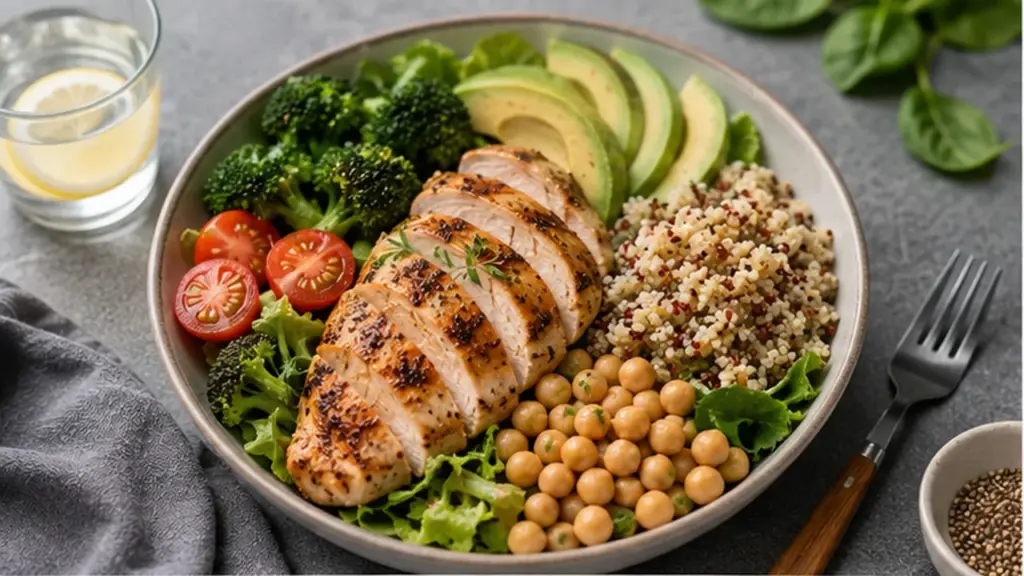
Here’s the part most guides skip. You don’t need a lab test to start. Matching your protein and calories to your own body weight already covers most of the benefit. Genetic testing sits at the advanced end. The evidence for how much it adds is still thin.
Who Benefits Most From a Personalized Approach
Not everyone needs the same level of detail. A casual gym-goer training three times a week gets most of the value here. Simple calorie and protein targets are enough. No further tweaking needed.
Someone lifting for general health, walking daily, or doing a beginner program fits here too. The math stays the same no matter the workout. Figure out your calories. Hit your protein number. Adjust from there.
Competitive athletes, people managing a health condition, and anyone stuck despite doing “everything right” benefit from going deeper. That might mean tracking sleep, digestion, and training data alongside food. For most people starting out, the basics go a long way before any of that becomes necessary.
Signs Your Current Diet Isn’t Personalized Yet
A few common signs are easy to spot. You’re eating “clean” but still tired by mid-afternoon. Your weight won’t move despite following a popular diet. You feel great on rest days but crash during hard training weeks.
Workouts feel harder than they should, even though your training hasn’t changed. You copy a friend’s meal plan and get worse results than they do. Any one of these is a sign your food is built for someone else’s body, not yours.
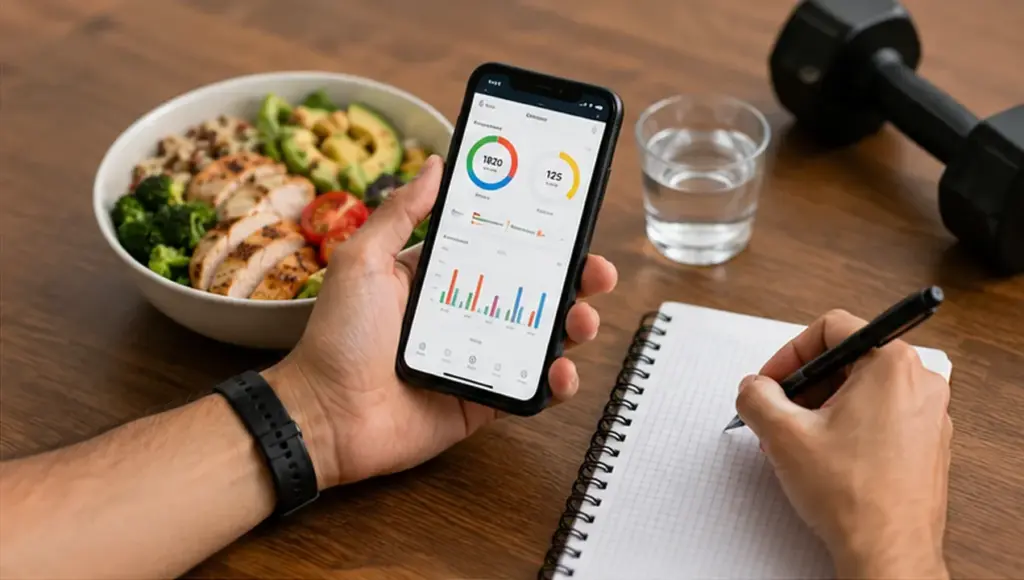
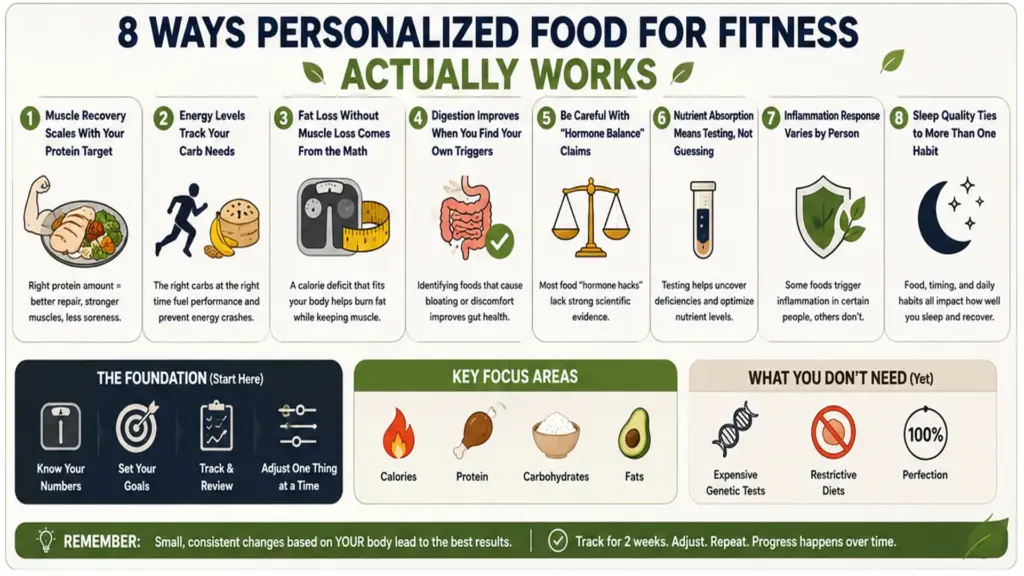
1. Muscle Recovery Scales With Your Protein Target
Why a Generic Food List Falls Short
Most guides list “good” recovery foods. Chicken. Eggs. Protein shakes. These foods are fine. But the food choice matters less than the amount. A 130-pound runner and a 220-pound lifter need very different total protein. Even if they eat the same foods.
What the Research Actually Says
The International Society of Sports Nutrition sets daily protein at 1.4 to 2.0 grams per kilogram of body weight. That’s for most people who train often. During a calorie deficit, that range can climb higher. Up to 2.3 to 3.1 grams per kilogram, to help protect muscle while you lose fat.
For a 160-pound person, that’s roughly 100 to 145 grams a day in a normal phase. Personalized food means doing that math for your own weight. Not copying someone else’s meal plan. Our macro calculator does this for you in under a minute.
Timing Matters Less Than People Think
Protein timing gets a lot of hype. But total daily intake matters more than a narrow post-workout window. Spread protein across three or four meals. Aim for 20 to 40 grams each time. That simple pattern works well for most people.
2. Energy Levels Track Your Carb Needs
One Person’s Fuel Is Another Person’s Excess
The “eat oatmeal before your workout” tip skips a basic fact. Carb needs scale with training volume. Someone doing two-hour endurance sessions needs far more carbs than someone doing three short strength workouts a week.
Think of two coworkers who both hear “eat more carbs before training.” One runs long races on weekends. The other lifts weights for forty minutes, twice a week. The same tip means very different amounts of food for each of them, even though it sounded identical.
Matching Carbs to Your Training Load
Sports nutrition research points to intakes as high as 8 to 10 grams of carbs per kilogram of body weight. That’s for endurance athletes on their heaviest training days. Someone with a lighter schedule needs a fraction of that amount. Our TDEE calculator factors in your activity level. It helps you set a carb target that matches your real output, not someone else’s.
Signs You’re Off Target
Constant afternoon crashes are one sign. So is dragging through the last third of a workout. Feeling wired but tired is another. These often mean your carb intake doesn’t match your training. Adjusting the amount often fixes it. You rarely need to switch food groups entirely.
3. Fat Loss Without Muscle Loss Comes From the Math
The “Fat-Burning Food” Myth
No single food burns fat. Spicy foods and green tea create a small, temporary bump in calorie burn. But the effect is tiny, often just a few dozen extra calories a day. That’s nowhere close to what drives fat loss.
What Personalization Actually Looks Like Here
Real fat loss comes from a calorie deficit sized to your body. Paired with enough protein to hold onto muscle. A deficit that works for a beginner will often stall, or backfire, for an experienced lifter with more muscle mass. Personalized food means calculating your own maintenance calories first. Then setting a deficit from there, instead of copying a fixed number off the internet.
Our free calorie calculator estimates your maintenance level. It uses your weight, height, age, and workouts. Your deficit ends up built on your own numbers, not a guess.
4. Digestion Improves When You Find Your Own Triggers
Why “Eat Yogurt and Kimchi” Doesn’t Work for Everyone
Fermented foods help a lot of people. But many adults are lactose intolerant. Some react poorly to high-FODMAP foods, no matter how “healthy” those foods are marketed as. A blanket recommendation can genuinely backfire for these people.
A More Personal Approach
Track which foods cause bloating or cramping for a week or two. That tells you far more than any general food list ever could. Fiber is a good example. Most adults benefit from more of it. But adding too much too fast, not the fiber itself, is often what causes discomfort. Ramping up gradually, rather than all at once, is the easiest way to avoid it.
A simple log works better than memory here. Jot down what you ate, and how your stomach felt an hour or two later. After a week or two, a pattern often stands out clearly. Maybe it’s dairy. Maybe it’s a specific vegetable, or eating too close to a workout. Once you spot it, the fix is often simple. Swap one ingredient, or adjust the timing of a meal.
5. Be Careful With “Hormone Balance” Claims
This is where a lot of personalized food content overreaches. So it’s worth being direct here. Food does not “balance your hormones” the way many wellness articles imply. Hormone levels come from complex systems. Food only influences part of that picture, alongside sleep, stress, and underlying health conditions.
What food can really support is the raw material your body needs. Adequate calories. Enough dietary fat. Key nutrients like zinc, magnesium, and vitamin D. Chronic undereating or very low-fat diets can disrupt hormone function. Fixing that is where food helps most.
If you suspect a real hormone imbalance, that’s a different story. Unexplained fatigue or major weight changes call for bloodwork with a doctor. Not a new supplement or food swap.
6. Nutrient Absorption Means Testing, Not Guessing
The Iron and Vitamin C Pairing, Done Right
Vitamin C does help your body absorb non-heme iron. That’s the type found in beans, spinach, and other plant foods. The National Institutes of Health confirms this pairing. It also notes that coffee, tea, and calcium can lower iron absorption when eaten in the same meal.
A simple example: pair a spinach salad with orange slices. It absorbs better than the same spinach next to a glass of milk. Small swaps like this add up over weeks, even without changing your total food intake at all.
Why This Only Matters If You’re Actually Low
Here’s the part most guides skip. This pairing matters most for people who are already low in iron. That’s more common in menstruating women, endurance athletes, and people eating mostly plant-based diets. If your iron levels are normal, chasing this pairing adds little value. A simple blood panel tells you whether it’s worth the effort.
7. Inflammation Response Varies by Person
Not Everyone Reacts to the Same Foods
Omega-3 fats, found in fish, walnuts, and flaxseed, are well studied for supporting a healthy inflammation response. But individual reactions vary a lot. Some people notice joint pain or stomach trouble after certain foods. Those same foods don’t bother other people at all. There is no single “anti-inflammatory” list that works the same for everyone.
Dairy is a common example. Some people handle it fine. Others notice more joint stiffness or puffiness the day after eating it, for reasons that aren’t fully understood. Neither reaction is wrong. It’s just a different body responding in its own way.
Training Load Matters as Much as Food
Overtraining itself raises inflammation markers. If you’re eating well but still feel sore and run down, look at your training volume too. It’s not always just the diet. Plant-based omega-3 sources like walnuts and flaxseed are worth adding if fish isn’t part of your diet.
8. Sleep Quality Ties to More Than One Habit
Beyond the Magnesium Headlines
Magnesium-rich foods like almonds and spinach get a lot of attention for sleep. There’s decent evidence they support relaxation. But sleep quality depends on much more than one nutrient. Caffeine timing matters. So does meal size close to bedtime. Your evening wind-down habits often matter more than any single food.
Caffeine Sensitivity Is Genuinely Personal
Some people clear caffeine fast. They can drink coffee at 4 p.m. with no issue. Others feel it well into the night from a single lunchtime cup. This is a real, personal difference. It’s not just willpower. That’s exactly why personalized food means watching your own response, not following a fixed cutoff time everyone else uses. Pairing better food timing with an evening wind-down routine tends to help more than changing diet alone.
How to Build Your Own Personalized Food Plan
Start with your numbers. Calculate your maintenance calories and a protein target from your actual body weight and training volume. Skip the chart everyone else uses.
Track for two weeks before changing anything. Write down what you eat. Note your energy, digestion, sleep, and workout performance. Patterns show up fast once you’re looking for them.
Adjust one thing at a time. Change protein first. Then carbs. Then meal timing. One variable at a time, so you know what caused the improvement.
Consider a registered dietitian for harder cases. A medical condition is a good reason to get help. So is a demanding training schedule, or results that just won’t move on your own. A sports dietitian can build a plan around blood work and your specific history. Our nutrition strategy guide is a solid starting framework if you want to build your own plan first.
Stay skeptical of DNA-based diet kits. A 2020 evidence review by the Academy of Nutrition and Dietetics found only weak evidence that genetic test results change nutrition outcomes. These tests aren’t necessarily useless. But they aren’t the proven starting point the marketing suggests.
A Quick Worked Example
Say you weigh 150 pounds and train four times a week. Your protein target lands around 95 to 135 grams a day. That’s based on the 1.4 to 2.0 gram range per kilogram of body weight. Your calorie target comes from your maintenance level. Find it with a TDEE or calorie calculator. Subtract a modest deficit if fat loss is the goal.
That’s it. Two numbers. No superfoods, no lab panel, no guesswork. Everything else in this guide builds on getting those two numbers right first.
A 200-pound lifter lands somewhere else entirely. Closer to 125 to 180 grams of protein, with a higher calorie baseline overall. Neither number is “correct” in isolation. Each one only makes sense next to the body it belongs to. That’s the whole point of building your plan around your own weight. Not a chart written for an average reader who doesn’t exist.
Common Misconceptions About Personalized Food
Myth: Personalized food has to be expensive. The core of it is free: calculating your own calorie and protein targets. Cost only enters the picture with lab testing or a dietitian, and those are optional add-ons, not requirements.
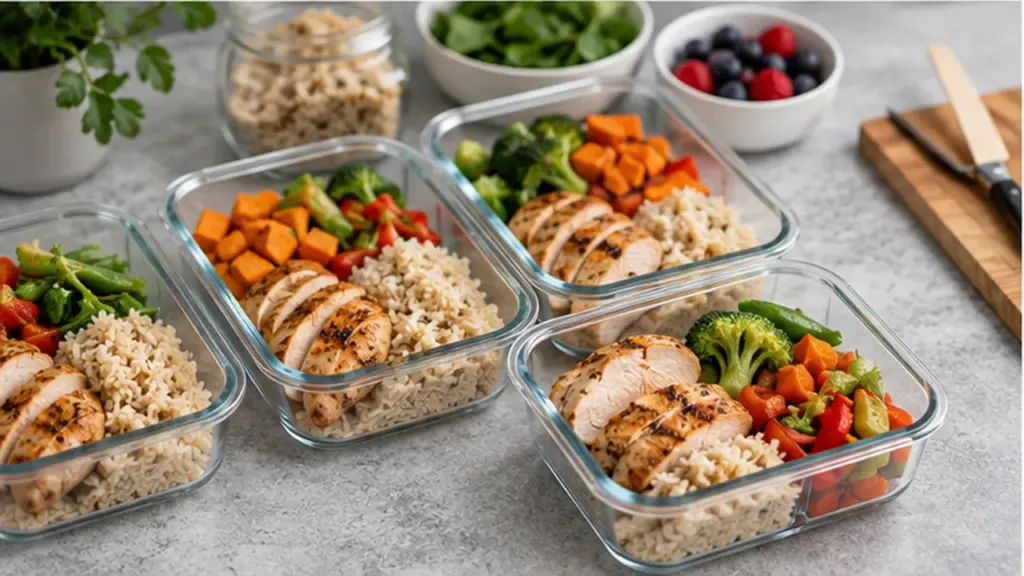
Myth: It means eating exotic superfoods. Personalized food is about matching amounts and timing to your body. Not switching to unusual ingredients. Chicken, rice, and vegetables can be perfectly personalized once the portions match your real needs.
Myth: It’s the same as “clean eating.” Clean eating focuses on food quality in a general sense. Personalized food focuses on quantity and timing matched to your specific goals. That’s a different question.
Myth: You have to eat the same thing every day to stay “on plan.” Personalized food is about hitting your protein and calorie numbers. It has nothing to do with eating identical meals. Rotating meals that fit your targets works just as well. It’s often easier to stick with, too.
Myth: Results show up right away. Most people need two to four weeks of steady tracking. That’s how long it takes for real patterns in energy, digestion, or recovery to become clear. Judging a personalized approach after three days isn’t a fair test.
Myth: One “personalized” plan works forever. Your needs shift as your training, weight, and goals change. A plan that fit you six months ago may not fit you now. Revisiting your numbers every few months keeps the plan personal.
A Sample Day, Put Together
Here’s what this looks like in practice. Say your protein target is 120 grams a day, and your calorie target is 2,200.
Breakfast: Three eggs, a slice of toast, and a piece of fruit. That’s about 20 grams of protein and 400 calories.
Lunch: Grilled chicken, rice, and a big pile of vegetables. Roughly 40 grams of protein and 600 calories.
Snack: Greek yogurt with berries. Around 20 grams of protein, 250 calories.
Dinner: Salmon, sweet potato, and a salad. About 35 grams of protein, 650 calories.
Evening: A small handful of almonds. Just 5 grams of protein, 300 calories, if room is left in the budget.
Add it up, and you land close to both targets. Notice something simple here. There’s no exotic food. No supplement stack. Just ordinary meals sized to fit one person’s numbers. That’s the entire idea behind personalized food, in one plate at a time.

The Same Day, Adjusted for Fat Loss
Say the goal shifts to fat loss. The plan barely changes shape. Just the size.
Swap the toast for a smaller slice. Trim the rice at lunch. Skip the evening almonds, or swap them for a piece of fruit instead. Protein stays close to the same, since that’s what protects your muscle. Only the extra calories come down.
This is the whole point of personalized food in one small example. The plan flexes with your goal. The structure barely moves at all.
Key Terms in Plain English
A few words show up a lot in this guide. Here’s what each one means, in plain terms.
TDEE. Short for Total Daily Energy Expenditure. It’s the number of calories your body burns in a normal day. This counts workouts, walking, and even digestion.
Deficit. Eating fewer calories than you burn. A modest deficit leads to fat loss over time. Too large a deficit tends to backfire.
Macro. Short for macronutrient. Protein, carbs, and fat are the three macros. Getting these three numbers right for your body is most of what this whole guide is about.
Non-heme iron. The type of iron found in plant foods like beans and spinach. It’s absorbed less easily than the iron in meat. That’s why pairing it with vitamin C helps.
Precision nutrition. The formal term researchers use for personalized food. It means building dietary advice around one person’s body and history, not a broad population.
Frequently Asked Questions
What is personalized food? It’s eating based on your own body weight, training volume, goals, and health history. Not a plan built for the average person.
Do I need genetic testing for personalized food to work? No. Calculating your calorie and protein needs from your body weight and activity covers most of the benefit. Genetic and microbiome testing are optional, more advanced layers. Evidence for them is still developing.
Can personalized food help with weight loss specifically? Yes. Mainly by setting a calorie deficit sized to your real maintenance level, plus a protein target that protects muscle. That beats a low-calorie plan built for someone else. One that may be too harsh, or too mild, for your body.
How is personalized food different from a meal plan I find online? A meal plan online is built for an average reader. Personalized food starts with your specific numbers. Two people following the same personalized principles can end up eating very different amounts.
Is working with a nutritionist necessary? Not for most people starting out. A sports dietitian becomes more valuable in harder cases. Think a medical condition, competing goals, or results that haven’t moved despite your own efforts.
What should I track first if I’m just starting out? Start with calories and protein. Those two numbers drive most of your results. Once those feel steady, layer in carbs, fiber, or meal timing based on what you’re still struggling with.
How long until I see results? Give it three to four weeks. Weight and energy naturally bounce around day to day. A full month smooths out the noise and shows you the real trend.
Will personalized food work if I’m not an athlete? Yes. The same math applies whether you lift weights, walk for exercise, or just want more steady energy. Your numbers will look different from an athlete’s. But the process of matching food to your own body works the same way.
Conclusion: Personalized Food Is About Your Numbers, Not a New Diet
Personalized food isn’t a trend or a fixed meal plan. It’s the simple idea that your protein, carbs, and calories should match your actual body and training. Not a basic list built for someone else.
Start with the basics. Calculate your own calorie and protein targets. Track how you respond for a couple of weeks. Adjust one thing at a time. That alone captures most of what personalized food has to offer. No lab work required.
Key takeaways:
- Personalized food starts with your own body weight and goals, not a generic list.
- Protein and calorie math beats any single “best food.”
- Most of the benefit is free, and it takes no lab work.
- Digestion, sleep, and energy all respond to your own patterns, not a fixed rule.
- Genetic tests are optional, and the proof behind them is still weak.
- Track for two weeks, then change one thing at a time.
Not medical advice: This content, and any calculator results on this site, are for general informational purposes only and are not a substitute for professional medical advice, diagnosis, or treatment. Always talk to a qualified healthcare provider before starting a new diet, exercise routine, or health program.
Related Articles You May Like