Beef bone soup is simple in theory. Bones, water, time. But there’s more to get right than most recipes let on. Choosing the right bones, cooking it safely, and sorting real benefits from wellness hype all matter. This guide covers the full process, plus an honest look at what the research backs up.
Fitting this into a broader eating pattern matters too. Building out a full week of meals? Our nutrition strategy guide covers the basics of putting a plan together around foods like this one.
Quick Answer, If You’re in a Hurry
- Beef bone soup, also called bone broth, comes from simmering bones 12 to 24 hours with an acid like vinegar.
- Marrow bones and oxtail give the richest flavor and the most gelatin.
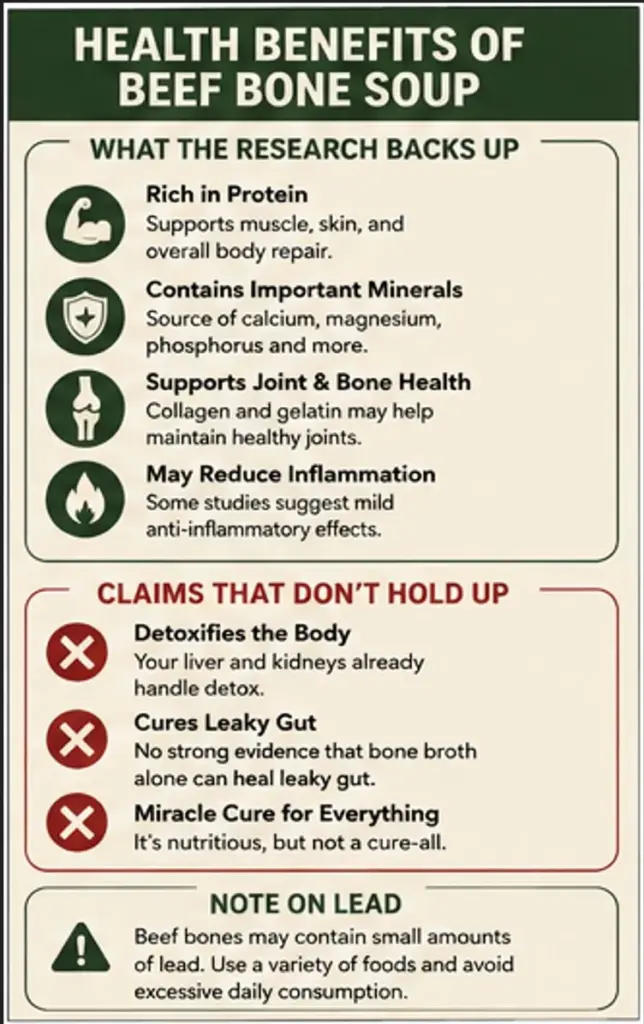
- Real research supports some benefits: protein, minerals, and mild anti-inflammatory effects.
- Claims that it “detoxifies” your body or cures leaky gut go beyond what evidence shows.
- Cool a big batch in shallow containers, not one large pot, to stay food-safe.
- It keeps about a week in the fridge, or three months in the freezer.
Table of Contents
What Is Bone Broth, Really?
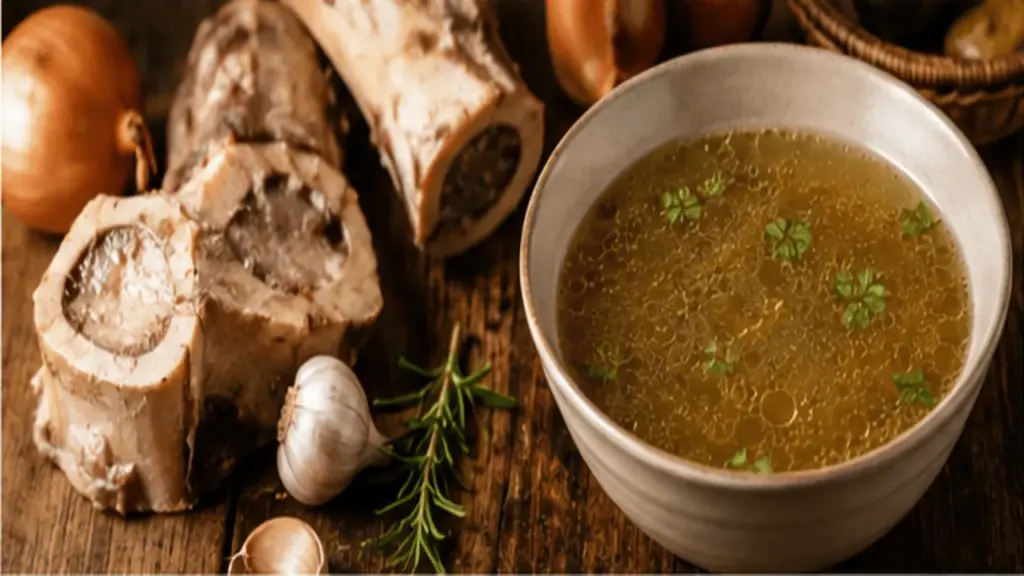
Beef bone soup, often called bone broth, comes from simmering beef bones in water. It takes a long time. Meat, vegetables, and herbs often join the pot too. Regular broth uses mostly meat and cooks fast. Bone broth leans on bones and cooks slow.
That slow cook time matters. It’s what converts collagen in the bones into gelatin. Gelatin is what gives a good pot of broth its thick, silky texture once it cools.
Choosing the Right Beef Bones
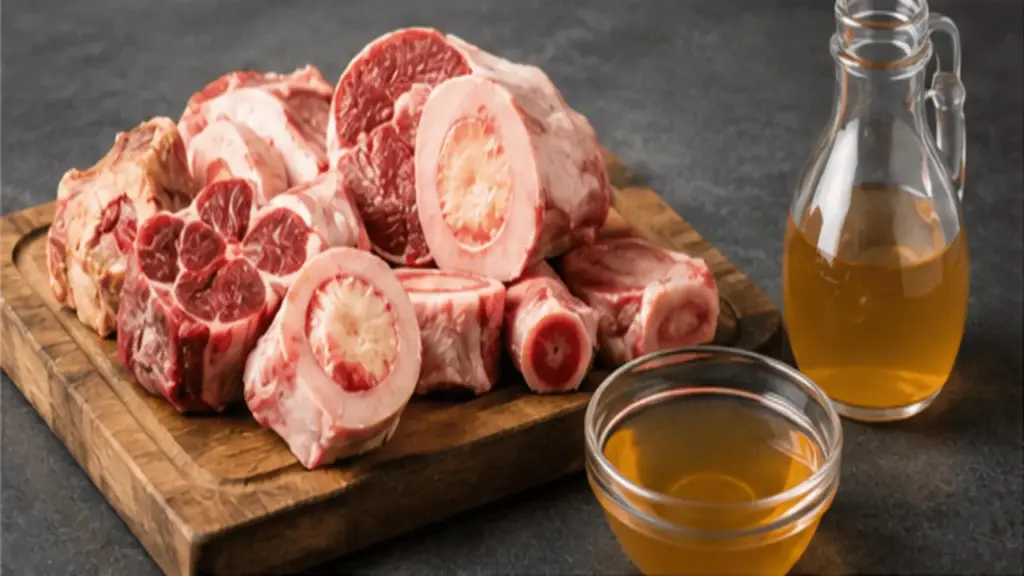
Marrow bones and oxtail make the richest broth. They’re packed with collagen and fat. Both build flavor and body. A butcher counter or the meat section of most grocery stores carries both.
Grass-fed or organic bones aren’t required for a good pot. They may carry a slightly different fat profile. But the core cooking process and outcome stay the same either way. Buy what fits your budget.
Mixing bone types works well too. Marrow bones for richness. Knuckle or joint bones for extra gelatin. A little meat still on the bone for added flavor. A butcher can point you toward a good mix if you ask.
What Equipment You Actually Need
You don’t need anything fancy. A large stock pot works fine on the stove. A slow cooker works just as well, and needs less babysitting over the long cook time.
A fine mesh strainer or a layer of cheesecloth handles the straining step. A ladle makes moving hot broth safer than pouring straight from a heavy pot. Beyond that, a set of storage containers is all you really need.
How to Make Beef Bone Soup, Step by Step
Ingredients:
- 2 pounds beef bones (marrow bones or oxtail work best)
- 2 tablespoons apple cider vinegar
- 10 cups water
- 2 carrots, chopped
- 2 celery stalks, chopped
- 1 onion, quartered
- 3 garlic cloves, smashed
- 1 teaspoon dried thyme
- Salt and pepper, to taste
- Fresh parsley, for garnish (optional)
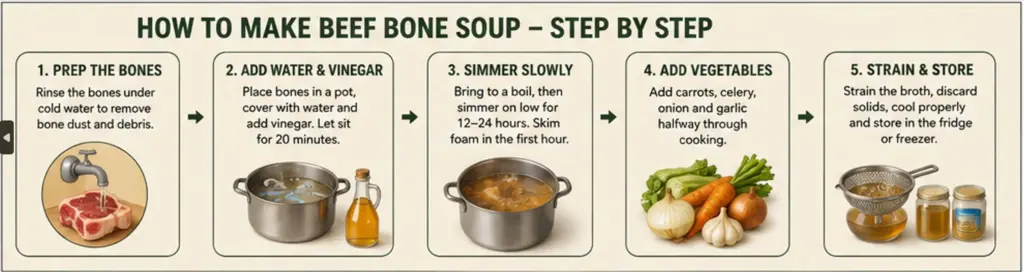
Step 1: Prep the bones. Rinse the bones under cold water. This clears off bone dust and surface debris left from butchering.
Step 2: Add water and vinegar. Place the bones in a large pot or slow cooker. Cover with water. Add the vinegar, then let everything sit for 20 minutes before turning on the heat. The acid helps draw minerals out of the bone during cooking.
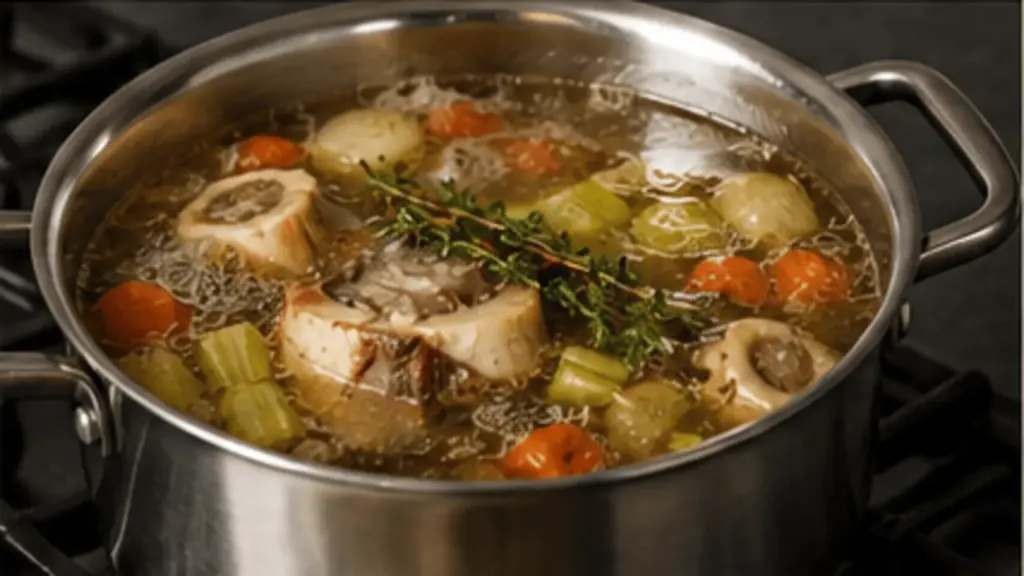
Step 3: Bring to a simmer. Heat until the water just boils, then drop it down to a low simmer. Skim off any foam that rises to the top in the first hour. Add the thyme, salt, and pepper. Cover and cook for 12 hours. Some cooks push to 24 hours for a deeper flavor and more gelatin.
Step 4: Add the vegetables. About halfway through cooking, stir in the carrots, celery, onion, and garlic. Adding them earlier tends to overcook them into mush by the time the broth is done.
Step 5: Strain and store. Once cooking is done, strain the broth through a fine strainer or cheesecloth. Discard the solids, or save the meat for another dish. Cool it properly (more on that below), then refrigerate or freeze.
Roasting the Bones First (Optional, but Worth It)
Raw bones make a fine broth. Roasted bones make a better one. Spread the bones on a baking sheet. Roast at 400°F for 30 to 45 minutes before they go in the pot.
Roasting browns the surface of the bones and marrow. That browning adds a deeper, more savory flavor that plain simmering alone doesn’t produce. It’s an extra 45 minutes of hands-off time for a real difference in the final taste.
The Real Health Benefits, and the Honest Limits
Beef bone soup has picked up a big reputation online. Some of that reputation holds up under real research. A good chunk of it doesn’t. Here’s the honest breakdown.
What’s Actually in a Cup
A typical cup of well-strained broth runs low in calories, often well under 100, since most of the fat can be skimmed off before serving. Protein content varies with how long and how richly it’s cooked. Roughly 8 to 10 grams per cup is a reasonable general estimate. That’s a modest but real contribution, not the protein powerhouse some marketing suggests.
What the Research Backs Up
Beef bone soup is a real source of protein, along with small amounts of minerals like calcium, magnesium, and potassium that leach out of the bone during cooking. It also contains gelatin, the cooked form of collagen. Plus amino acids your body uses for tissue repair.
There’s also modest evidence for mild anti-inflammatory effects. That’s a real, if limited, finding, not empty marketing.
Claims That Don’t Hold Up
A lot of the bigger claims outrun the evidence. The Harvard T.H. Chan School of Public Health states plainly that bone broth contains only small amounts of minerals. That’s despite marketing claims that it detoxifies the liver, reverses wrinkles, and relieves joint pain.
Collagen itself is a real, useful protein. But Harvard Health notes that research on collagen supplements is still early. Bone broth also supplies far less concentrated collagen than the supplements used in most studies. Drinking a bowl of broth is not the same as taking a measured collagen dose.
“Leaky gut” claims deserve their own note. A peer-reviewed review states plainly that leaky gut syndrome is not currently accepted as a formal medical diagnosis. Bone broth may support general gut comfort for some people. But it isn’t a documented cure for a condition that mainstream medicine doesn’t formally recognize.
“Detoxifies your body” is another phrase worth retiring. Your liver and kidneys already handle detoxification around the clock. No food, this broth included, adds a special extra layer of detox. Your organs already handle that.
A Note on Lead: Small Risk, Worth Knowing
Here’s something most recipes never mention. Bones can store trace lead from the environment. A long, slow cook can pull some of it out into the broth. A small pilot study found higher lead levels in bone broth compared to plain tap water.
Some context matters here. The study was small and hasn’t been widely replicated. Even its highest measured sample stayed below the EPA’s action level for lead in drinking water. This isn’t a reason to panic. But skip making it your daily go-to drink, especially if you’re pregnant or feeding young kids. And buy bones from a supplier you trust.
Food Safety: The Step Most Recipes Skip
A 12 to 24 hour cook time raises a question most recipes skip entirely: how do you cool a huge pot of hot broth safely afterward?
The USDA calls the range between 40°F and 140°F the “danger zone,” where bacteria multiply fastest. Food shouldn’t sit in that range longer than two hours.
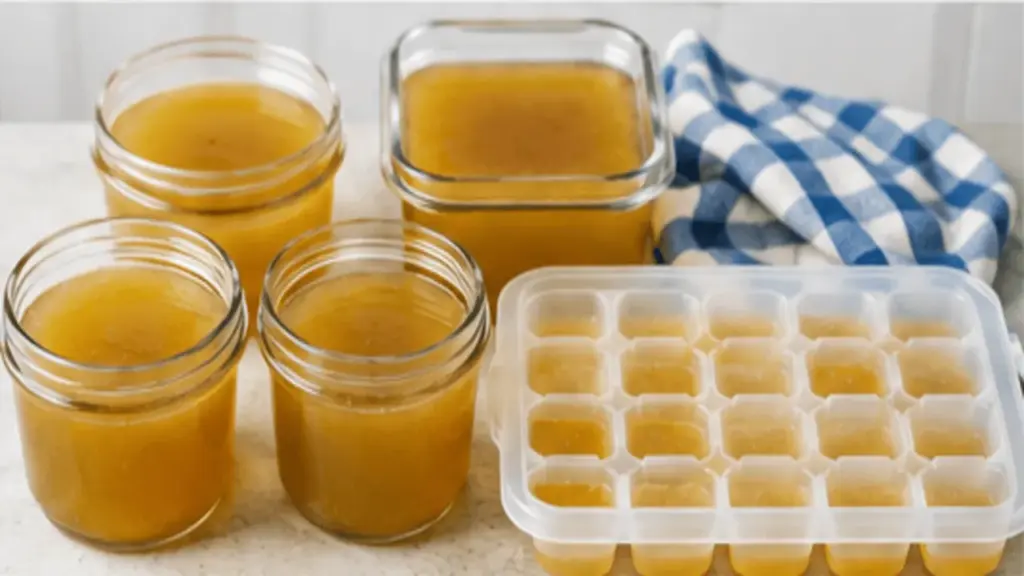
A full pot of hot broth left to cool on the counter takes far longer than that. It stays in unsafe territory too long. The fix is simple. Split the broth into several shallow containers before refrigerating. Thinner layers cool much faster than one deep pot. That keeps your broth safely out of the danger zone.
Ways to Use the Broth
Beef bone soup works well far beyond a bowl on its own.
As a base. Use it in place of water in other soups and stews. It works well in gravies or sauces too.
As a drink. Warm a cup and sip it plain, with a pinch of salt, the way you might drink tea.
As a cooking liquid. Cook rice, quinoa, or other grains in it instead of water. You get extra flavor and a protein boost.
Alongside eggs. A warm cup of broth next to a couple of eggs makes a simple breakfast. Savory, and protein-forward. Our hard boiled egg calories breakdown is handy if you want to plan the exact numbers.
Paired with protein. Beef bone soup is fairly low in protein per cup on its own. Pairing it with a real protein source rounds out a meal. Our high-protein meal prep ideas guide has combinations that work well alongside a warm bowl.
Common Mistakes That Ruin Beef Bone Soup
Boiling instead of simmering. A hard boil clouds the broth and can make it taste flat. A gentle simmer, with just the occasional bubble, gives a cleaner result.
Skipping the skim. Foam that rises in the first hour carries impurities. Skimming it off gives you a clearer, better-tasting broth.
Not cooking long enough. Beef bones need real time, often 12 hours or more, to release their gelatin. Rushing the process leaves you with a thin, watery result.
Cooling it wrong. As covered above, cooling a full pot too slowly is a real food safety risk. Not just a texture issue.
Troubleshooting a Broth That Didn’t Turn Out Right
Broth won’t gel in the fridge. That usually means not enough collagen-rich bones, like knuckle or joint bones, went into the pot. More marrow bones alone won’t fix it. Add a few joint bones next time.
Tastes bland. Salt gets added at the end for a reason. Taste right before serving, and adjust then, not earlier. The broth reduces and concentrates as it cooks.
Broth looks cloudy. A rolling boil instead of a gentle simmer is the usual cause. Cloudy broth is still safe to drink. It’s a texture and appearance issue, not a safety one.
Too greasy on top. Chill the finished broth fully first. The fat hardens into a solid layer on top, which lifts off easily with a spoon.
Flavor Variations Worth Trying
The base recipe is a starting point, not a fixed rule. A few swaps change the character of the broth quite a bit.
Asian-inspired. Add fresh ginger and a few whole star anise. A splash of soy sauce in the last hour rounds it out.
Mexican-inspired. Add a dried chile or two, plus a bit of cumin. Finish with fresh cilantro and lime after straining.
Herb-forward. Bay leaves, rosemary, and a Parmesan rind added in the last hour give a rich, savory depth.
None of these require changing the base method. They just layer extra flavor onto the same long, slow simmer.
A Note on Taste, for First-Timers
First batch taste flat or greasy? That’s normal. Most new cooks find their second or third batch tastes noticeably better than the first.
Small choices add up fast. A bit more salt at the end. A touch less water next time. Skimming the fat a little more carefully. None of these take skill. They just take one more try.
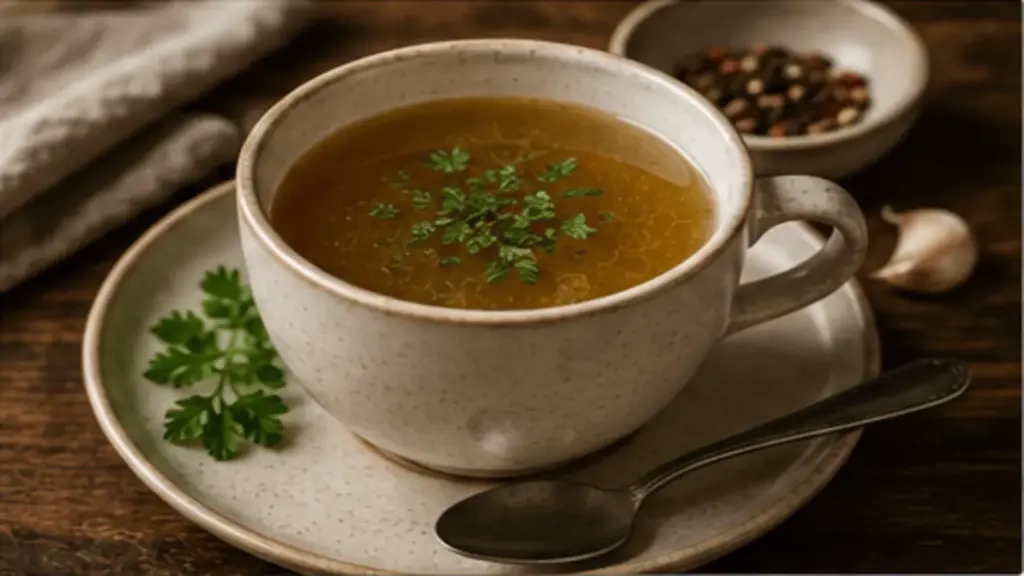
A warm mug of beef bone soup on a cold day is a small, simple pleasure. Give yourself a few tries before judging the results too harshly. Most people land on a version they love by the second or third batch.
A Simple Batch-Cooking Plan
Beef bones are often sold in larger quantities than one batch needs. Cooking a double batch takes barely more effort than a single one. The simmer time stays the same either way.
Freeze the extra broth in one-cup portions. Freezer bags laid flat work well, or silicone muffin trays for smaller portions. Flat bags stack easily and thaw faster than a single large block. Label each container with the date. Broth loses quality after a few months in the freezer. It stays technically safe well past that point, though.
Special Diets and Needs
Watching sodium. Homemade beef bone soup lets you control salt directly, unlike most store-bought versions. Managing blood pressure or already watching your sodium intake? Our guide on how high cholesterol affects your body covers related heart-health basics worth knowing.
Pregnant or nursing. Given the lead findings above, moderation is the smart move here, rather than a daily habit. Check with your doctor if you have specific concerns.
Managing a histamine sensitivity. Long-simmered broths can be higher in histamines for some sensitive individuals. If it gives you symptoms like flushing or headaches, try a shorter cook time. A doctor’s input is worth considering too.
Looking for a plant-based protein option instead. Want a protein source without animal bones? Our kidney bean recipes guide is a solid plant-based alternative.
Common Misconceptions
Myth: More cook time always means more nutrients. Cooking much past 24 hours doesn’t add meaningful extra nutrition. It mostly just reduces the liquid further and can turn the flavor bitter.
Myth: Bone broth and stock are totally different things. They’re close cousins. Both are based on bones. The main difference between beef bone soup and standard stock is cook time and how much gelatin ends up in the final product.
Myth: It has to be homemade to count. Quality store-bought beef bone soup is a legitimate option too. Check the label for a short ingredient list, without a wall of additives.
Myth: Beef bone soup is a complete meal on its own. It’s a flavorful, useful base, but it’s fairly light on protein and calories by itself. Pair it with real food for an actual meal, not just a warm drink.
Myth: The gelatin means it’s high in overall protein. Gelatin adds body and texture, but it’s not a complete protein on its own. It’s missing some amino acids that your body needs from other food sources.
Frequently Asked Questions
What is this broth good for? Real, evidence-backed benefits include protein, some minerals, and modest anti-inflammatory effects. Bigger claims like detoxing or curing digestive conditions go beyond what current research supports.
How long does it last in the fridge? About a week, stored properly in a sealed container. For longer storage, freeze it for up to three months.
Can I make it in a slow cooker? Yes. A slow cooker works well for the long simmer time. It also needs less attention than a stovetop pot.
Is beef bone soup the same as beef stock? They’re very close. Beef bone soup, or bone broth, typically cooks longer. It also leans more heavily on bones than a standard stock does.
Why does it turn solid in the fridge? That’s gelatin, and it’s a good sign. It means real collagen broke down during cooking. It turns liquid again once reheated.
Conclusion: Beef Bone Soup, Made Right
Beef bone soup is a genuinely useful, flavorful staple worth having in your kitchen. It’s not a cure-all, and treating it like one sets you up for disappointment. What it offers is plenty on its own: real protein, minerals, gelatin, and a comforting, savory base for other meals.
Choose good bones. Simmer low and slow. Cool it safely in shallow containers. You’ll end up with a beef bone soup worth making again.
Not medical advice: This content, and any calculator results on this site, are for general informational purposes only and are not a substitute for professional medical advice, diagnosis, or treatment. Always talk to a qualified healthcare provider before starting a new diet, exercise routine, or health program.
Related Articles You May Like