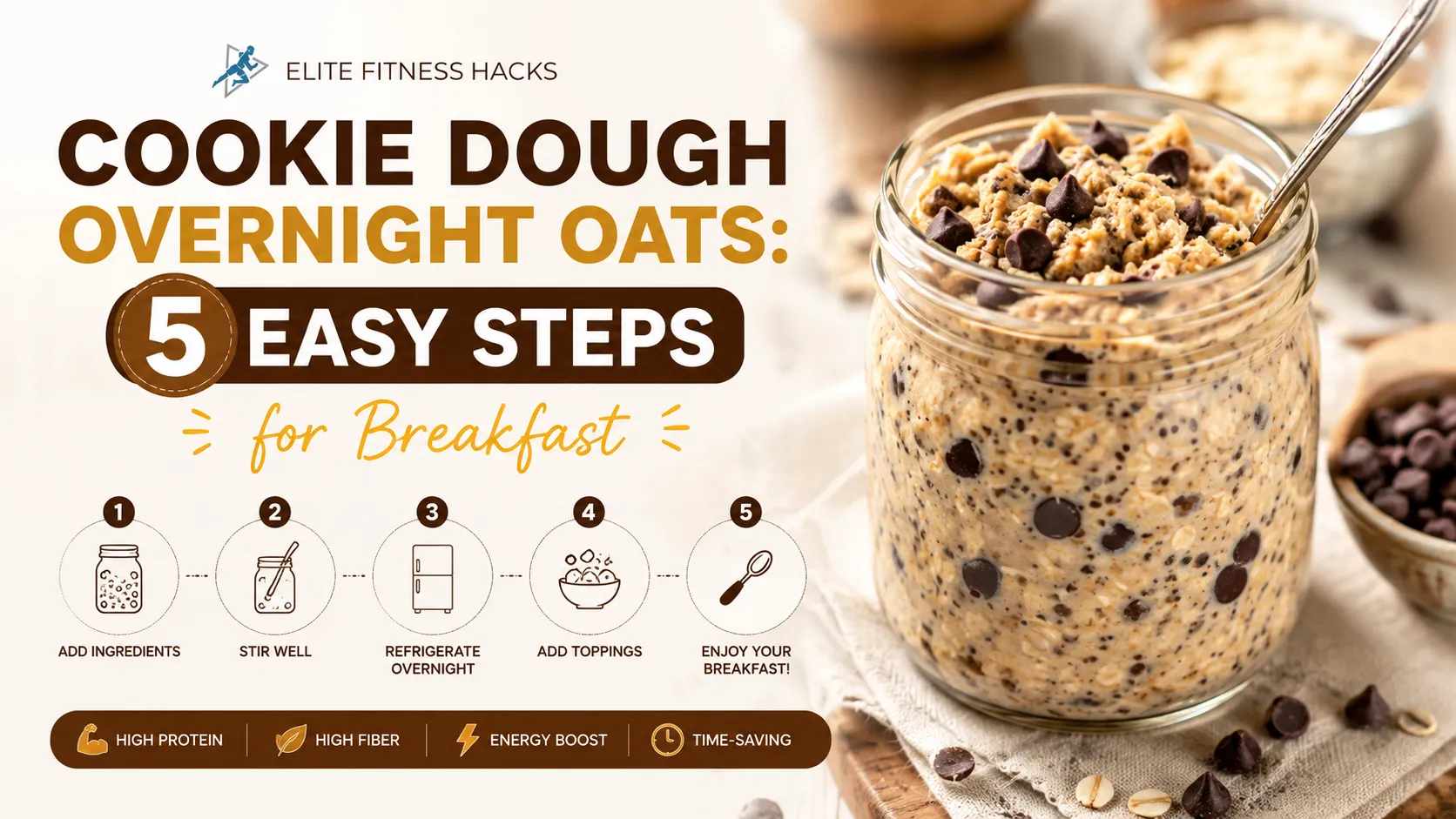
Cookie dough overnight oats sound like a treat. They also happen to be a genuinely solid breakfast. No oven. No stovetop. Five minutes of prep the night before. You wake up to something that tastes like dessert but holds you until lunch.
In my coaching practice, this is exactly the kind of recipe I point clients toward. Mornings are the hardest part of eating well for most people. It takes almost no willpower to eat something that tastes this good. That is half the battle with breakfast in the first place.
This guide covers the real recipe. The actual nutrition numbers behind it. Smart swaps if you have dietary needs. And storage advice that won’t leave you guessing.
Table of Contents
Why Cookie Dough Overnight Oats Actually Work
Oats are not just filler here. They carry real fiber. A good portion of it is beta-glucan, a type of soluble fiber. Research shows it can lower LDL cholesterol by around 12 points, according to Harvard’s Nutrition Source. That same fiber also slows down how fast sugar hits your bloodstream. That matters more than people think for a breakfast that tastes this sweet.
Soaking the oats overnight does real work too. It softens them without any cooking. It breaks down some of the starch. You get a creamy texture instead of the chewy bite you get from a quick five-minute bowl of oatmeal.
Greek yogurt and nut butter are what actually make this cookie dough overnight oats recipe worth repeating. Together they push the protein well past what a plain bowl of oats offers on its own. That is the real reason this breakfast keeps you full past 10 a.m. instead of leaving you hungry an hour after eating.
The Simple Science Behind Soaking Oats
Raw oats are edible, but they are tough to digest well without a soak. Soaking softens the outer bran layer. It also starts to break down some of the natural compounds that can make raw grains harder on digestion for some people.
This is not a new trick. Cultures around the world have soaked grains and legumes before eating them for centuries. This was long before “overnight oats” became a trendy breakfast term. The science mostly just confirms what home cooks already knew. Time and liquid do real work on a raw grain.
Practically speaking, this means cookie dough overnight oats are not just a texture preference. The soak actually changes how your body handles the oats, not just how they feel in your mouth. That is worth remembering the next time you’re tempted to skip the wait and eat them after only an hour in the fridge.
Ingredients You’ll Need
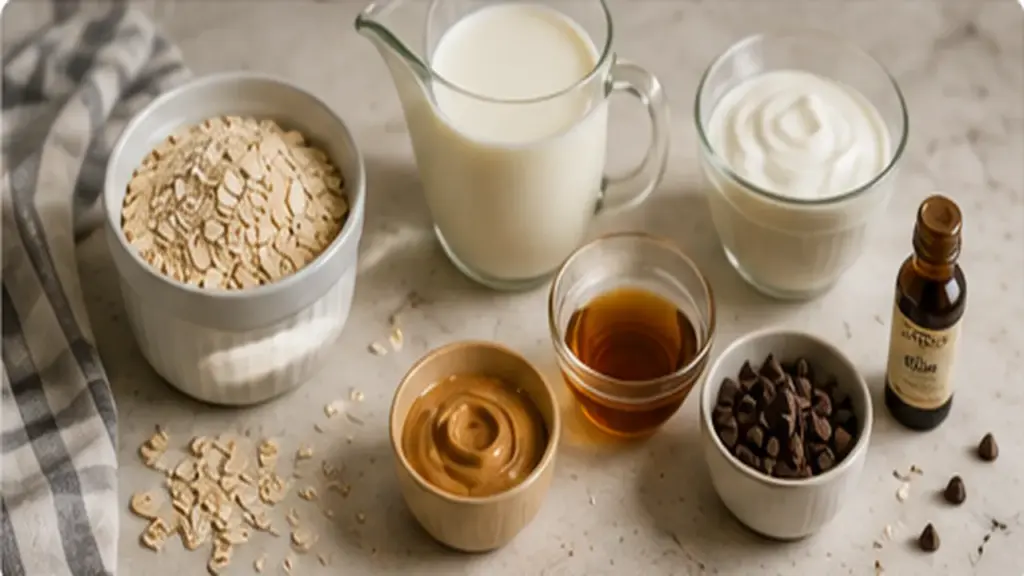
Every good batch of cookie dough overnight oats starts with the same six ingredients. Nothing exotic, nothing hard to find.
The base:
- ½ cup old-fashioned rolled oats. Quick oats turn mushy here, so skip them.
- 1 cup milk, dairy or a non-dairy option like almond or oat milk.
- ½ cup Greek yogurt, or a plant-based yogurt if you prefer.
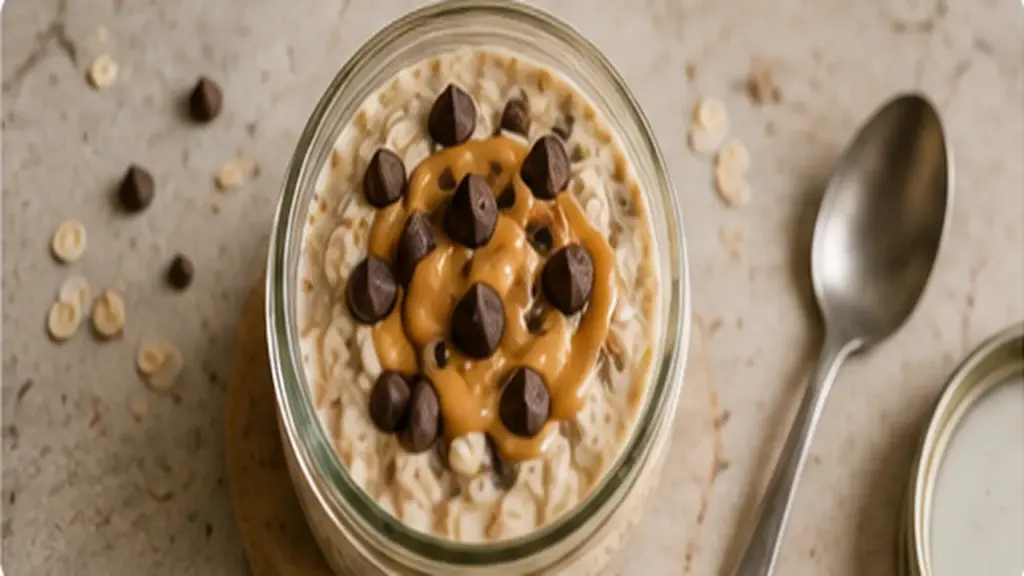
- 2 tablespoons nut butter. Almond or peanut both work well.
- 1 tablespoon maple syrup or honey.
- 1 teaspoon vanilla extract.
Each ingredient here does a real job, not just a flavor job. The oats bring fiber and structure. The milk adds moisture and softens everything overnight. Greek yogurt brings protein and tang, which is what keeps this from tasting like plain oatmeal with sugar mixed in. Nut butter brings healthy fat and the actual cookie dough flavor everyone is after. Vanilla ties the whole thing together, the same way it does in real cookie dough. Skip any one of these and the final result noticeably suffers, whether that shows up as thin texture, flat flavor, or a breakfast that leaves you hungry an hour later.
Worth having on hand for swaps:
- Certified gluten-free oats, if that matters for you.
- Coconut milk for a tropical variation, or cashew milk for extra creaminess.
- Sunflower seed butter as a nut-free alternative.
- Agave or a small amount of stevia if you want a lower-calorie sweetener.
None of these swaps change the basic method. They just shift the flavor or the nutrition slightly, so feel free to mix and match based on what is already in your kitchen.
How to Make Cookie Dough Overnight Oats
This takes about five minutes of real work. The rest is just time in the fridge.
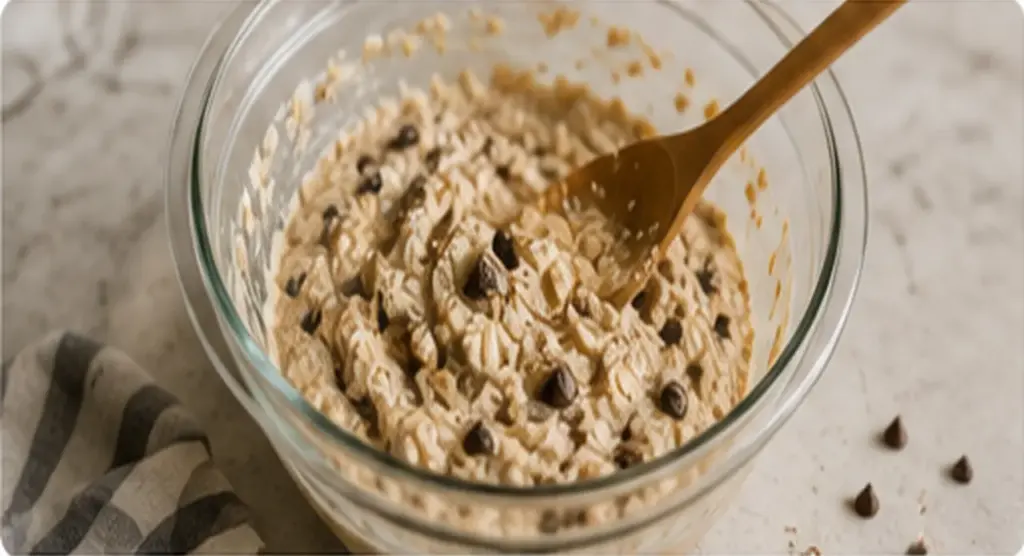
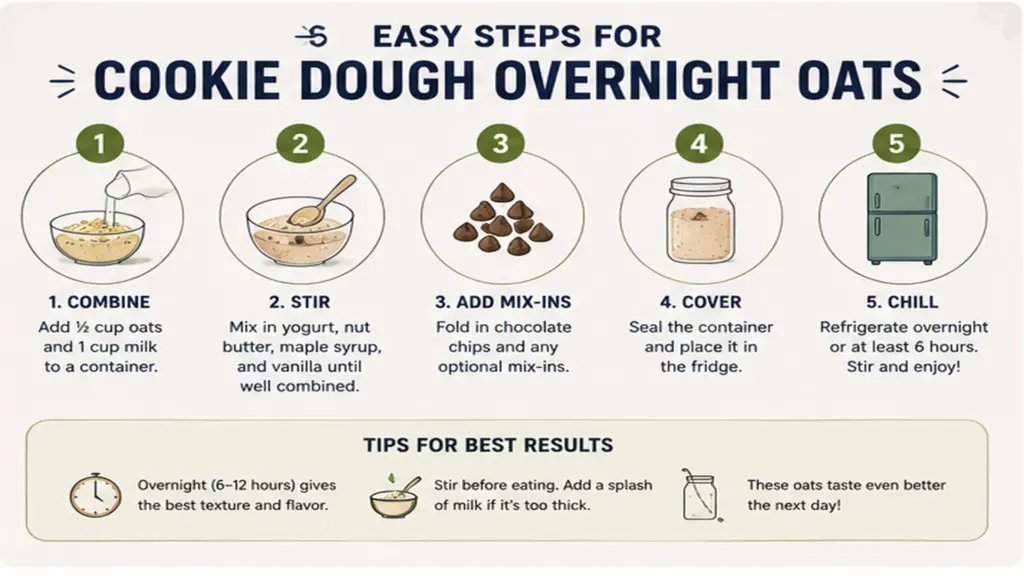
- Combine the oats and milk. Add ½ cup rolled oats and 1 cup milk to a jar or container. Stir well.
- Mix in the Greek yogurt. Add ½ cup and stir until fully combined. This is where most of the protein and the creamy texture come from.
- Stir in the nut butter. Add 2 tablespoons and mix until smooth. This step gives cookie dough overnight oats their signature flavor.
- Sweeten and flavor. Add 1 tablespoon of maple syrup or honey, plus 1 teaspoon of vanilla extract. Stir everything together.
- Seal and refrigerate. Close the container tightly. Refrigerate overnight, or at least 4 hours if you’re short on time.
That is genuinely the whole process. No cooking. No special equipment. Just a jar and a spoon.
Tips for the Best Texture and Flavor
A pinch of cinnamon or nutmeg adds warmth without adding sugar. It pairs naturally with the vanilla and nut butter already in the mix.
Longer soaking makes a real difference. Four hours works. But overnight gets you a noticeably creamier result, since the oats have more time to fully absorb the liquid.
Consistency is easy to adjust. Too thick in the morning? Stir in a splash more milk. Too thin? You added a bit too much liquid the night before. Cut back slightly next time and let it sit a little longer.
Temperature matters more than people expect too. Cookie dough overnight oats taste best cold, straight from the fridge. Letting the jar sit out for a few minutes before eating can actually dull the flavor, since cold temperatures tend to make sweetness taste sharper and more pronounced.
If you’re making this for the first time, resist the urge to add extra sweetener before tasting it soaked. The flavor changes noticeably overnight as the ingredients meld together. What tastes only mildly sweet right after mixing often tastes plenty sweet by morning. Taste it fresh from the fridge before deciding it needs more honey or syrup.
Mix-Ins, Toppings, and Healthy Swaps
Part of what makes cookie dough overnight oats worth making again and again is how easy they are to customize. The base rarely needs to change, only what you add on top.
Add these after soaking, not before. They keep their texture instead of turning soft overnight.
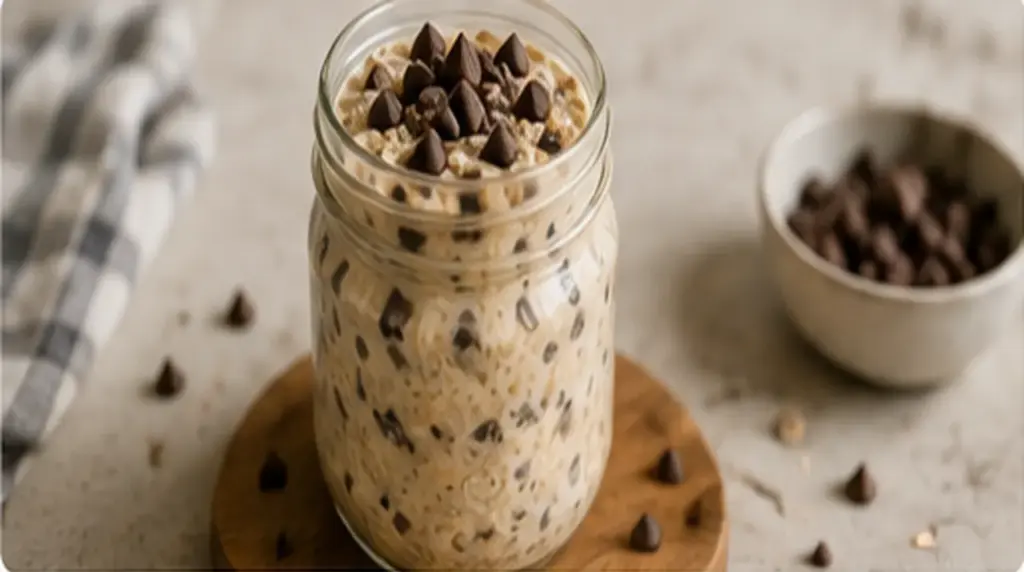
- Mini chocolate chips, for that real cookie dough flavor.
- Chopped walnuts or almonds, for crunch and healthy fat.
- Sliced banana or fresh berries, for natural sweetness. Like building breakfast around fruit and protein together? Our banana protein shake recipe follows a similar idea in drinkable form.
- A spoonful of granola on top, for extra crunch.
- Chia seeds mixed in, for more fiber and staying power. If chia is new to you, our guide on how long to soak chia seeds covers the ratio and timing that actually works.
Lighter swaps that don’t sacrifice flavor:
- Low-fat or non-fat Greek yogurt cuts calories while keeping the protein high.
- A natural nut butter with no added sugar or oil trims unnecessary extras.
- Mashed banana or unsweetened applesauce can replace the maple syrup entirely. This lets the sweetness come from whole food instead of syrup.
Do not feel locked into one version. Once you know the base ratio, cookie dough overnight oats become less of a recipe and more of a template you can adjust based on what is in your kitchen that week.
Nutrition Breakdown
A batch made with whole milk, regular Greek yogurt, and almond butter runs roughly 420 to 460 calories. This is based on standard ingredient values from USDA FoodData Central. That breaks down to about 24 to 28 grams of protein, 8 to 10 grams of fiber, and 45 to 50 grams of carbohydrate, most of it from the oats and sweetener.
That protein number is worth pausing on. A plain half-cup of dry oats alone carries about 5 grams of protein. Greek yogurt adds another 10 to 12 grams. Nut butter adds roughly 7 more. Add it up and you get a genuinely high-protein breakfast. It is not just a bowl of carbs with a cookie dough flavor on top.
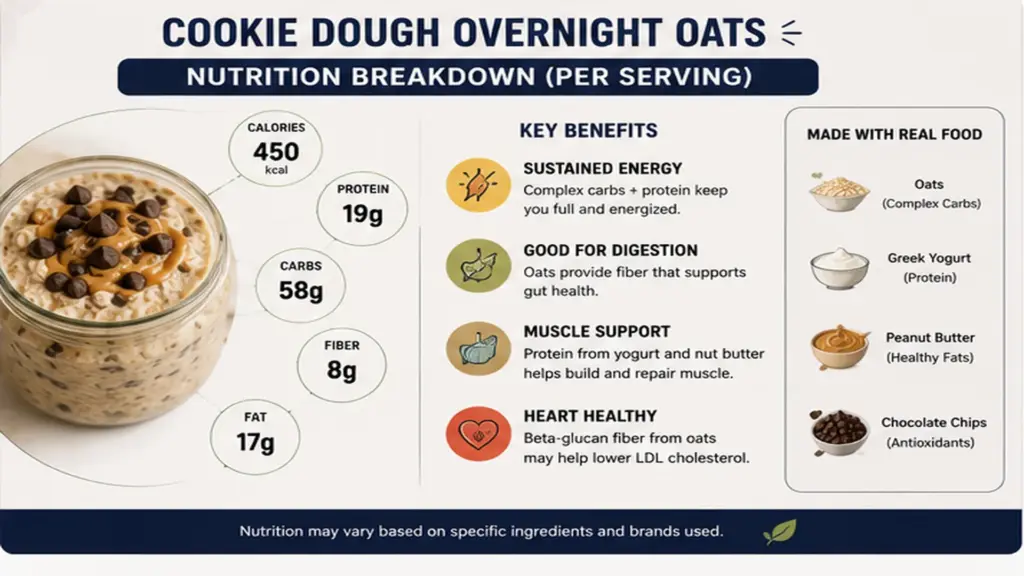
Swapping to non-fat Greek yogurt and a lower-sugar sweetener can bring the total down closer to 350 calories. You lose very little protein doing this, so it is worth trying if calories are a goal for you.
How this compares to a typical bowl of cereal. Most cereal, even the “healthy” kind, runs light on protein and heavy on fast-digesting carbs. A bowl with milk might land around 200 to 250 calories. But it often carries under 10 grams of protein. Cookie dough overnight oats deliver more than double that protein for a similar calorie cost. That is the real reason this recipe holds you longer than cereal does.
Common Mistakes to Avoid
Most cookie dough overnight oats disappointments trace back to one of four things.
Using quick oats instead of rolled oats. Quick oats absorb liquid too fast and break down into a mushy, paste-like texture overnight. Rolled oats hold their shape and give you that classic creamy-but-textured bite.
Not soaking long enough. Anything under 4 hours leaves the oats partly firm in the center. Overnight is genuinely the better call whenever you can plan for it.
Adding crunchy toppings before the soak. Chocolate chips, granola, and nuts all lose their texture if they sit in liquid overnight. Add them fresh, right before eating, every time.
Skipping the stir before eating. Ingredients can settle overnight, especially the nut butter. A quick stir in the morning brings everything back together evenly.
Storage: How Long They Actually Last
How long cookie dough overnight oats last comes down to a simple answer most articles overcomplicate. Sealed and refrigerated, they stay good for up to 5 days. Texture and flavor are best in the first 3 days. After that, the oats can turn slightly denser as they keep absorbing liquid. They are still safe to eat through day 5 though.
Leave toppings off until you’re ready to eat if you’re making a batch ahead. Chocolate chips and granola both lose their texture fast once they sit in the moisture overnight. Nobody wants soggy granola.
Give leftovers a quick smell and look before eating, the same way you would with any dairy-based dish. If anything seems off, skip it rather than risk it.
Freezing is possible, but not ideal. The texture changes once thawed. Yogurt and oats do not freeze and reheat cleanly the way a cooked dish would. Want a freezer-friendly make-ahead breakfast instead? This recipe works better refrigerated fresh each week rather than frozen in bulk.
Batching this for the week works well if you’re also building out a broader meal prep routine. Our high protein meal prep ideas guide covers how to structure a full week around recipes like this one. Our macro calculator can help you see exactly how a batch of cookie dough overnight oats fits into your daily targets.
Frequently Asked Questions
Real questions people ask about cookie dough overnight oats, not just restated tips from earlier in this guide.
Can I make cookie dough overnight oats without yogurt? Yes, though you’ll lose some protein and creaminess. Swap in an extra splash of milk and expect a slightly thinner, less tangy result. Adding an extra tablespoon of nut butter helps make up some of the difference.
Do I have to use old-fashioned rolled oats? For the best texture, yes. Quick oats break down too much and turn mushy overnight. Steel-cut oats go the opposite direction and often stay too firm without a longer soak, so rolled oats are the reliable middle ground.
Can kids eat cookie dough overnight oats? Generally yes, and the flavor tends to be an easy sell for picky eaters. Watch the added sugar if you’re serving young kids regularly. Using a natural nut butter without added sugar keeps the whole thing more balanced.
Is this recipe actually healthy, or just healthy-sounding? It holds up. Real oats, real dairy or plant protein, real nut butter, and a modest amount of sweetener. That adds up to a legitimately balanced breakfast, not just a dessert wearing a health food label.
Can I double the recipe for meal prep? Yes, and it scales cleanly. Multiply every ingredient by however many servings you want. Mix it all in one large container. Then portion it into individual jars before refrigerating. This saves real time on busy weeks.
Why did my oats turn out too thick or too thin? Thickness depends almost entirely on your oats-to-liquid ratio and how long you let them sit. Too thick means too little liquid or too long a soak. Stir in more milk in the morning. Too thin usually means too much liquid. Use slightly less next time and let it soak a bit longer.
How much protein should a good breakfast actually have? A fair target for most adults is 20 to 30 grams. This version of cookie dough overnight oats lands right in that range. That is well above what most standard breakfasts offer.
Can I use flavored yogurt instead of plain Greek yogurt? You can, but it adds more sugar than plain yogurt does. Plain yogurt lets the maple syrup and vanilla control the sweetness. That gives you more control over the final result.
What is the best jar or container for this recipe? Anything with a tight seal works. Mason jars are popular since you can see the layers and they travel well, but a simple container with a snap-on lid does the job just as reliably.
Quick Reference
- Base ratio: ½ cup oats, 1 cup milk, ½ cup Greek yogurt, 2 tablespoons nut butter.
- Soak time: 4 hours minimum, overnight for the best texture.
- Storage: up to 5 days refrigerated, best within the first 3.
- Add crunchy toppings fresh, never before the soak.
- Protein per batch: roughly 24 to 28 grams.
Conclusion
Cookie dough overnight oats earn a spot in a real breakfast rotation because they deliver on both fronts: genuine nutrition and a flavor that actually makes you want to eat breakfast. No cooking, five minutes of prep, and a result that holds up for days in the fridge.
The base recipe above is a genuinely solid starting point on its own. But the real value here is the ratio, not the exact ingredients. Once you understand why each part matters, protein from yogurt, fat from nut butter, fiber from oats, you can swap and adjust without ever needing to look up a recipe again.
Make a batch tonight, and you’ll have proof by tomorrow morning that a healthy breakfast doesn’t have to taste like one.
Not medical advice: This content, and any calculator results on this site, are for general informational purposes only and are not a substitute for professional medical advice, diagnosis, or treatment. Always talk to a qualified healthcare provider before starting a new diet, exercise routine, or health program.
Related Articles You May Like