

Type your goal (weight loss, muscle gain, recipes) to get started.
Free Fitness Tool
Macronutrient Calculator
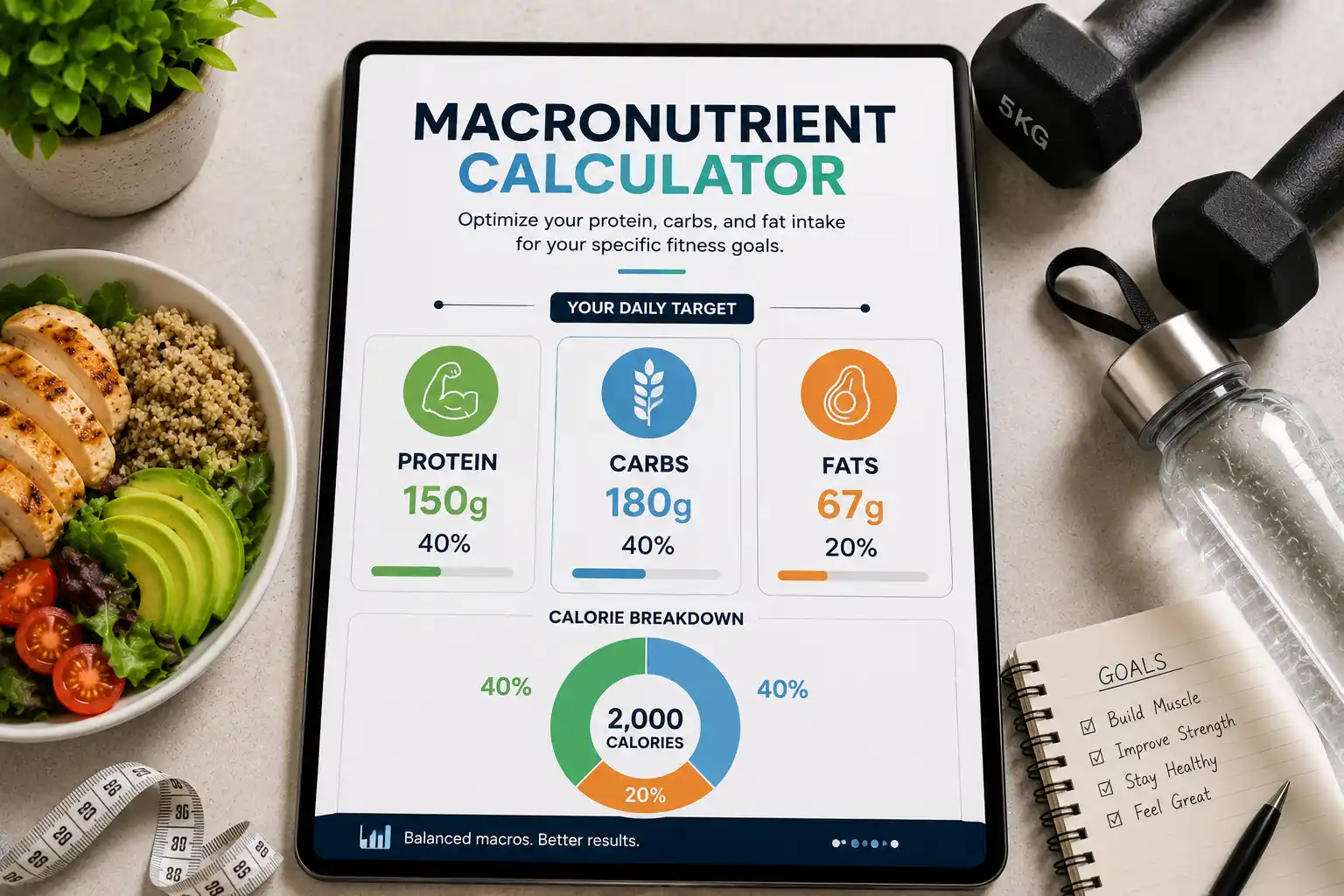
Split your daily calories into protein, carbs, and fat targets that fit your specific goal.
Free to useInstant resultsNo sign-up needed
Not medical advice: This content, and any calculator results on this site, are for general informational purposes only and are not a substitute for professional medical advice, diagnosis, or treatment. Always talk to a qualified healthcare provider before starting a new diet, exercise routine, or health program.
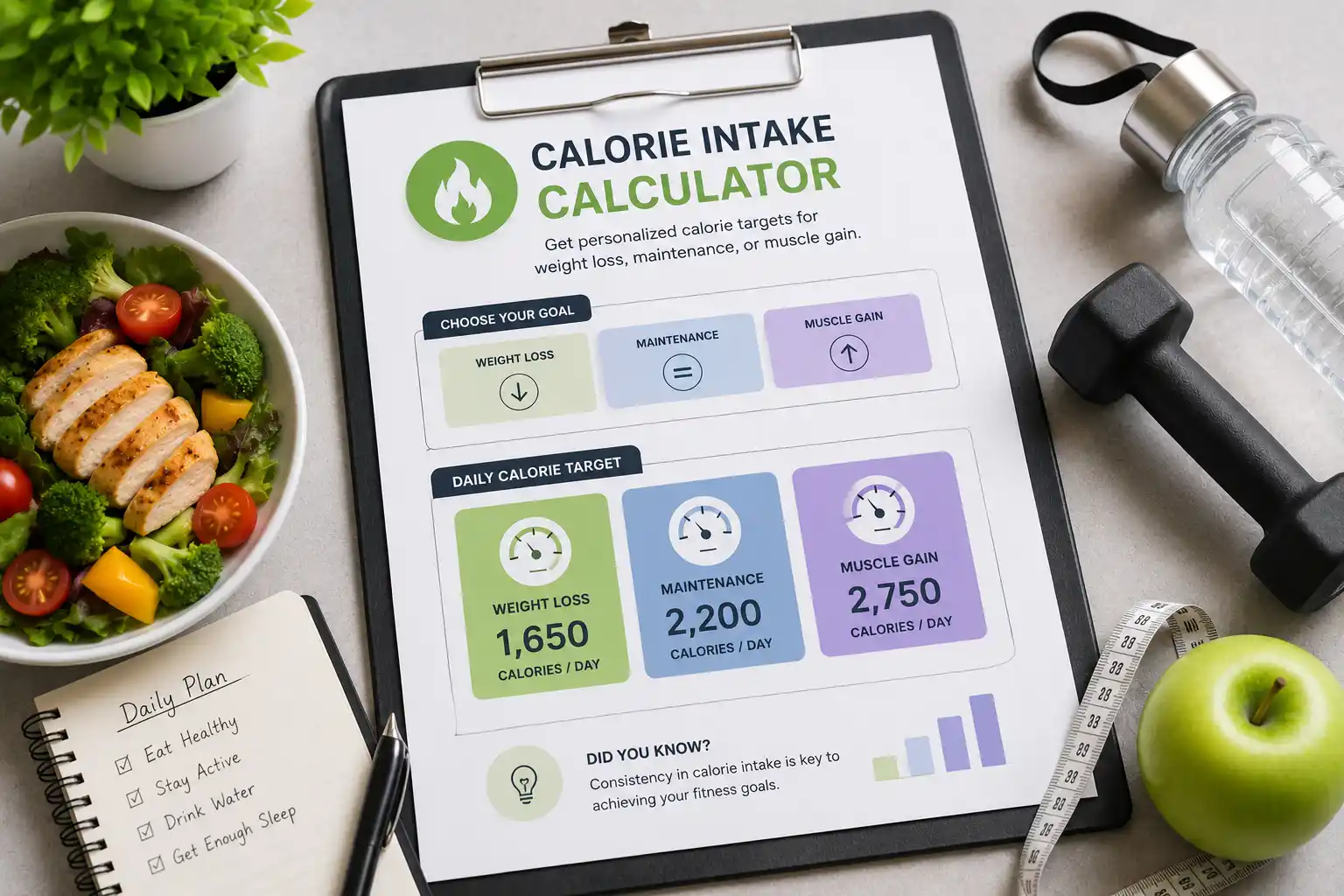
Don't know your daily calorie target yet? Calculate it here first, then come back and paste it in above.
How It Works
How it's calculated
Once your daily calorie target is set, this tool builds your macros around protein first. Protein gets priority because it protects muscle during weight loss and supports muscle growth during a surplus. Most people who train regularly do well around 1.6 to 2.2 grams of protein per kilogram of body weight. Whatever calories remain get split between carbs and fat, based on your goal.
How to interpret your result
Your gram targets are a guide, not a strict rulebook. Hitting them within ten to fifteen grams on most days matters far more than perfect daily precision. Protein deserves the closest attention since it drives muscle outcomes directly. Carbs and fat have more room to flex around your personal preferences and training schedule, as long as your total calories stay where you want them.
Frequently Asked Questions
How much protein do I actually need?
For most people training regularly, 1.6 to 2.2 grams per kilogram of body weight covers muscle repair and growth. The higher end of that range matters more when you're eating in a calorie deficit.
Are carbs the enemy of fat loss?
No. Total calories drive fat loss, not carbs on their own. Carbs fuel your workouts and help you recover. Cutting them too low often just makes training feel harder without speeding up your results.
Do macros matter more than total calories?
Calories still decide whether you gain, lose, or hold steady. Macros shape the quality of that change: how much comes from muscle versus fat, and how good you feel and perform along the way.