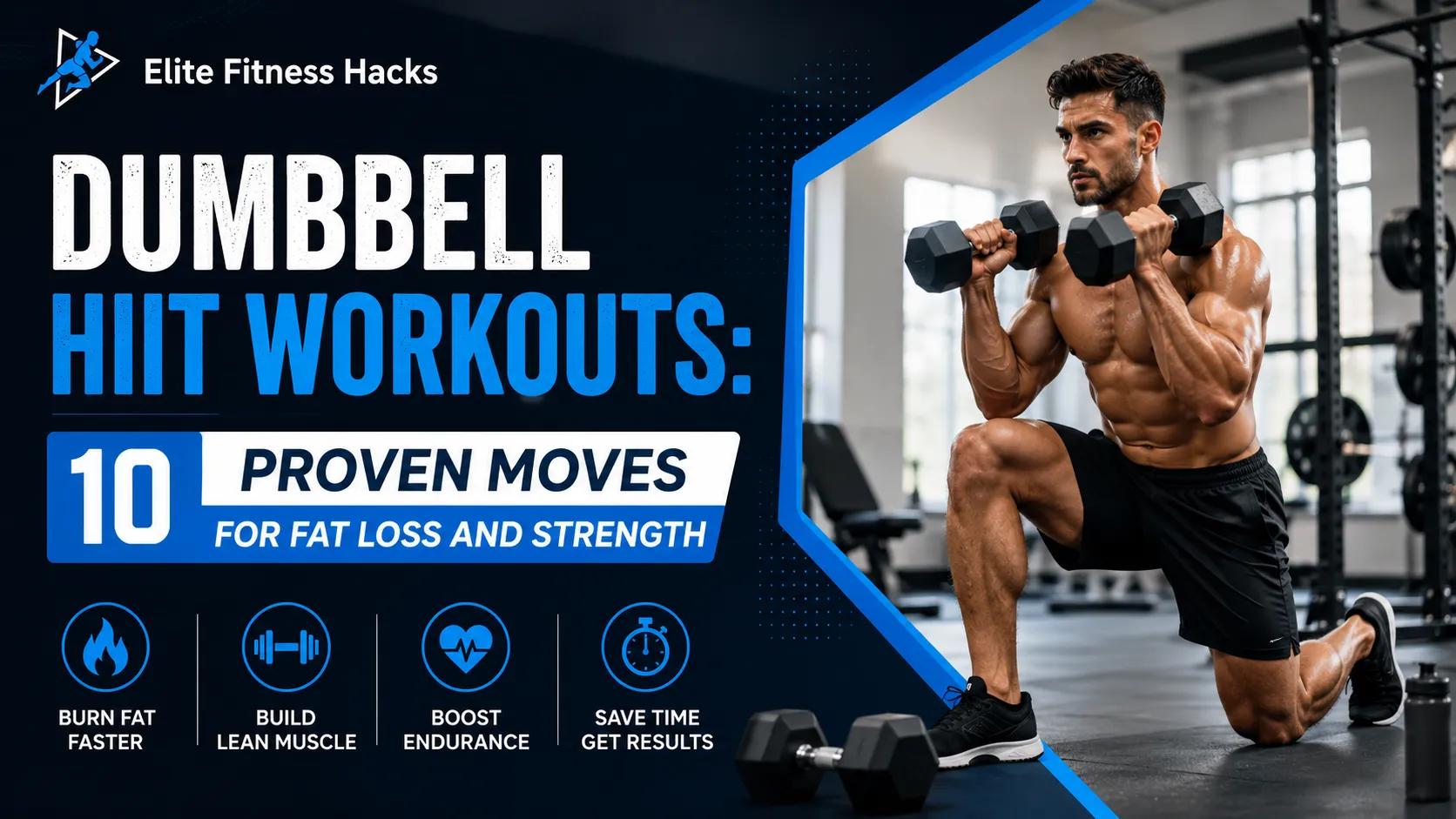
Dumbbell HIIT workouts mix hard cardio with real strength work. They pack the calorie burn of sprint intervals into short bursts of weighted moves. In just 20 minutes, your heart rate climbs while your shoulders, hips, and core carry real load. That’s something a bodyweight-only circuit can’t match. This guide covers ten of the best dumbbell HIIT workouts, why they burn fat so well, and how to build a routine around your fitness level.
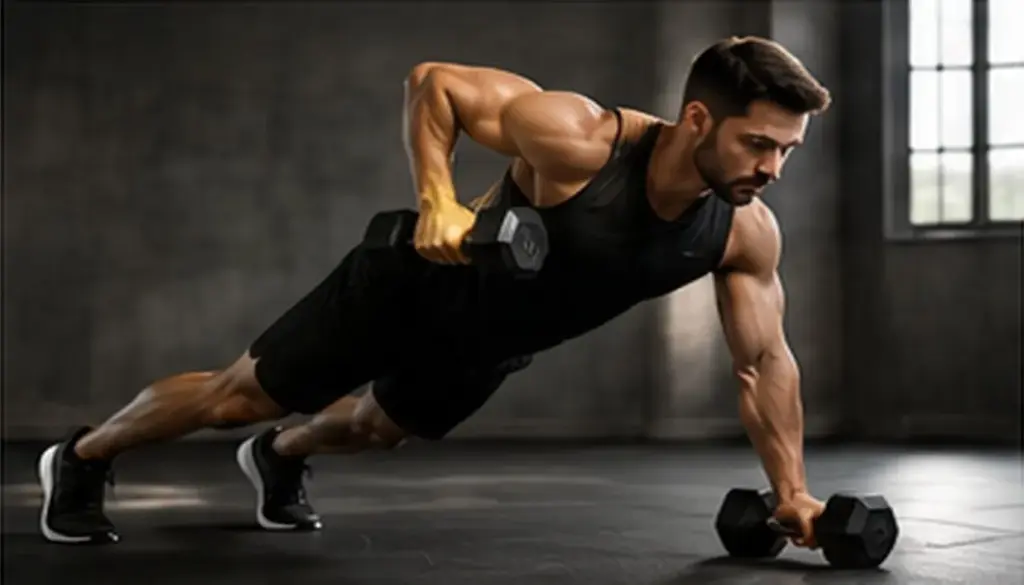
Table of Contents
What Are Dumbbell HIIT Workouts?
Dumbbell HIIT workouts are short bursts of hard effort mixed with brief rest. You use dumbbells instead of just your body weight. A work period usually lasts 20 to 45 seconds. Rest lasts 10 to 20 seconds. You repeat this for several rounds.
Adding dumbbells changes the demand. Your grip, core, and stabilizing muscles all work harder to control the weight. At the same time, your heart rate stays high from the fast pace. That mix is what sets dumbbell HIIT workouts apart from plain cardio or slow strength training.
These workouts ask two systems to work at once: your heart and lungs, and your muscles. That’s why they feel harder than either style alone.
Why Dumbbell HIIT Workouts Burn Fat So Efficiently
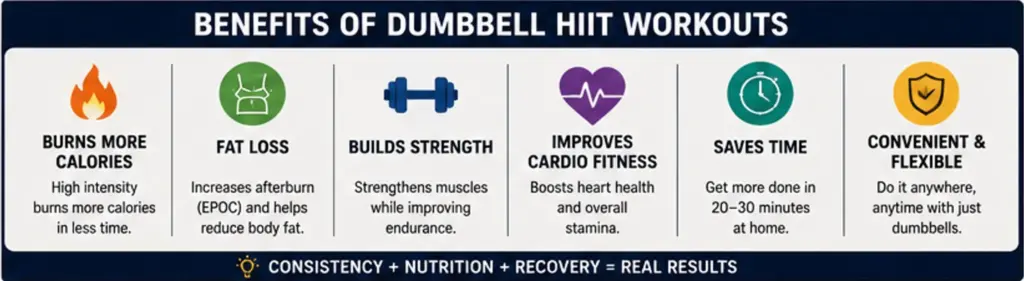
The short answer is intensity. Hard effort pushes your body to use more anaerobic energy. Recovering from that effort keeps your metabolism higher even after you put the weights down.
This effect has a name: excess post-exercise oxygen consumption, or EPOC. People often call it the “afterburn effect.” Your body burns extra calories for a while after the workout ends. It’s restoring oxygen, clearing waste products, and starting to repair muscle. Cleveland Clinic explains the afterburn effect in plain terms if you want to dig deeper.
Harvard Health has also found that interval training can match or beat steady, moderate exercise for blood pressure, blood sugar, and weight loss, in far less time. Read Harvard Health’s guide to interval training here. That time savings is real, not just a marketing claim.
One thing to keep in mind: no workout burns fat from just one body part. Spot reduction isn’t real, no matter how many core moves you add. What dumbbell HIIT workouts actually do is raise your total calorie burn and help protect your muscle while you eat in a deficit. That combination drives fat loss, not the workout alone. Think of these sessions as one piece of the puzzle, alongside your diet.
There’s a bonus, too. Because these workouts mix hard cardio with resistance, one session can count toward two goals at once. The CDC says adults need 150 minutes of moderate cardio, or 75 minutes of vigorous cardio, each week. On top of that, adults need muscle-strengthening work on two or more days. See the CDC’s activity guidelines here. A hard 25-minute dumbbell HIIT session can check both boxes at once.
Who Should (and Shouldn’t) Try Dumbbell HIIT Workouts
These workouts suit people who already move well. You should be able to squat, hinge, and press with good form at a slow pace first. New to strength training? Spend two or three weeks learning each move slowly before you add speed.
This isn’t extra caution for no reason. Mayo Clinic notes that form breaks down as you get tired. Interval training pushes you toward fatigue on purpose. Mayo Clinic’s guide to proper weight training form covers the basics worth learning first.
A few groups should modify or skip certain moves:
- Anyone with heart issues, high blood pressure, or a long inactive stretch should check with a doctor before trying hard interval training. Harvard Health recommends this step directly.
- Anyone with wrist, shoulder, or lower back trouble should be careful with renegade rows, push presses, and swings. These moves load those joints while you’re tired.
- Pregnant individuals should ask their doctor which moves are safe, since high-impact and breath-holding exercises aren’t always advised.
- Anyone recovering from injury should rebuild strength slowly first, then add speed later.
None of this makes dumbbell HIIT workouts unsafe for a healthy adult. It just means good form isn’t optional here.
Choosing the Right Dumbbell Weight
The right weight for HIIT is usually lighter than what you’d use for slow strength sets. Speed and fatigue build fast. A weight that feels fine for five slow reps can feel unsafe by rep fifteen.
For most beginners, 5 to 10 pounds per dumbbell works well for presses and rows. Use 10 to 20 pounds for hip moves like swings and deadlifts, since those use bigger muscles. Go heavier as you get stronger. But use this simple test: if your form breaks before the interval ends, the weight is too heavy for that move.
Owning two or three pairs of dumbbells gives you options. A light set and a moderate set let you match the load to the exercise. Building a home gym for these workouts? This full body workout at home equipment guide covers what else is worth buying.
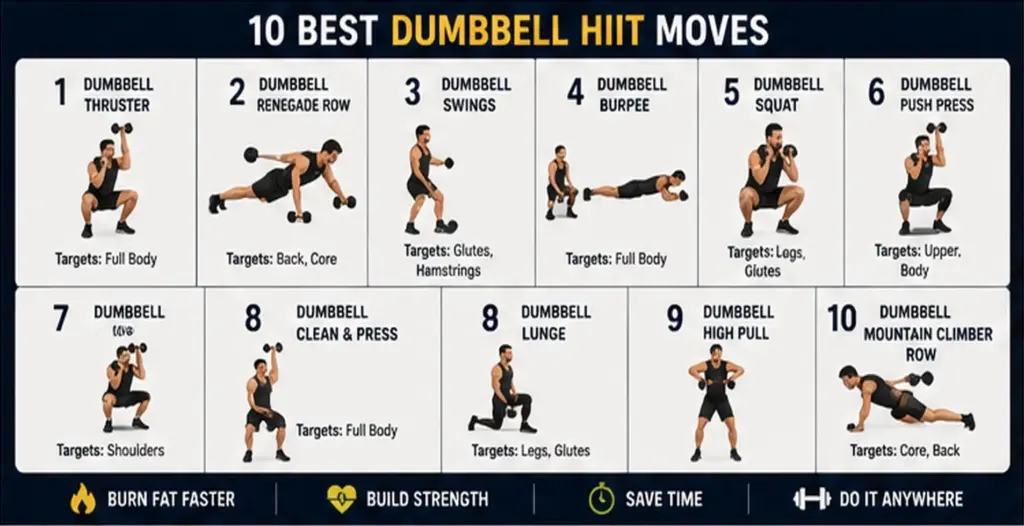
The 10 Best Dumbbell HIIT Workouts
Each move below uses a default pace of 30 seconds of work and 15 seconds of rest. You can adjust this ratio based on your level (see the sample routines below). Do these in order for a full circuit, or mix and match to fit your goals.
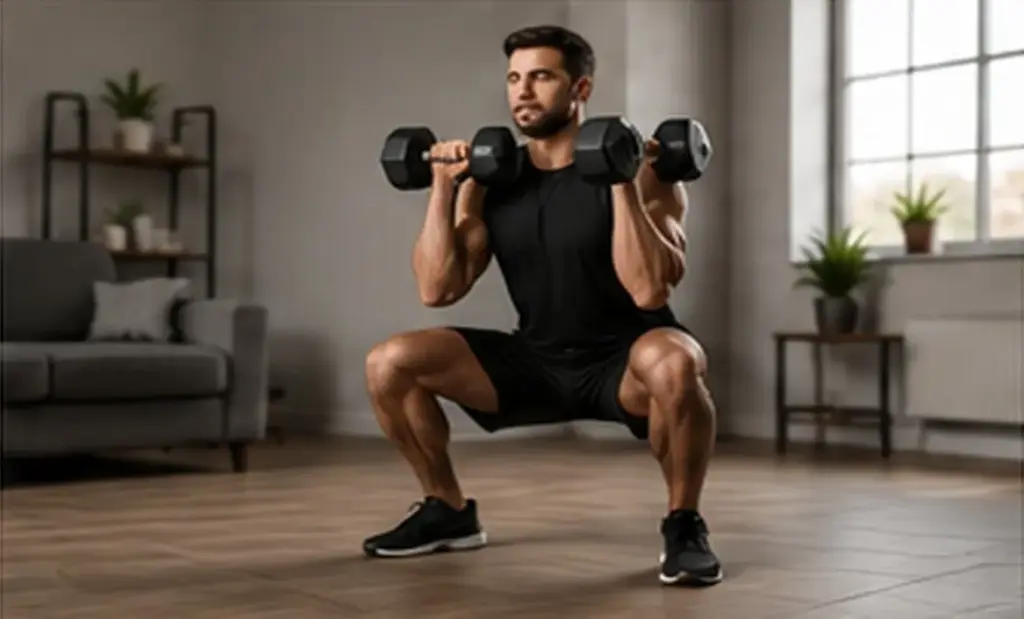
1. Dumbbell Thrusters
Muscles targeted: legs, shoulders, core
Thrusters combine a squat and an overhead press in one move. That makes them one of the toughest dumbbell HIIT workouts on this list. Your heart rate climbs fast.
- Stand with feet shoulder-width apart, holding a dumbbell in each hand at shoulder height.
- Squat down, pushing your hips back and keeping your chest up.
- Drive up out of the squat and press the dumbbells overhead in one motion.
- Lower the dumbbells back to your shoulders and repeat.
Common mistake: pushing the weight up with your arms alone. Let your legs start the movement. Your shoulders just finish it.
2. Dumbbell Swings
Muscles targeted: hamstrings, glutes, shoulders
Swings are a hip-hinge move, not a squat. That difference matters for safety.
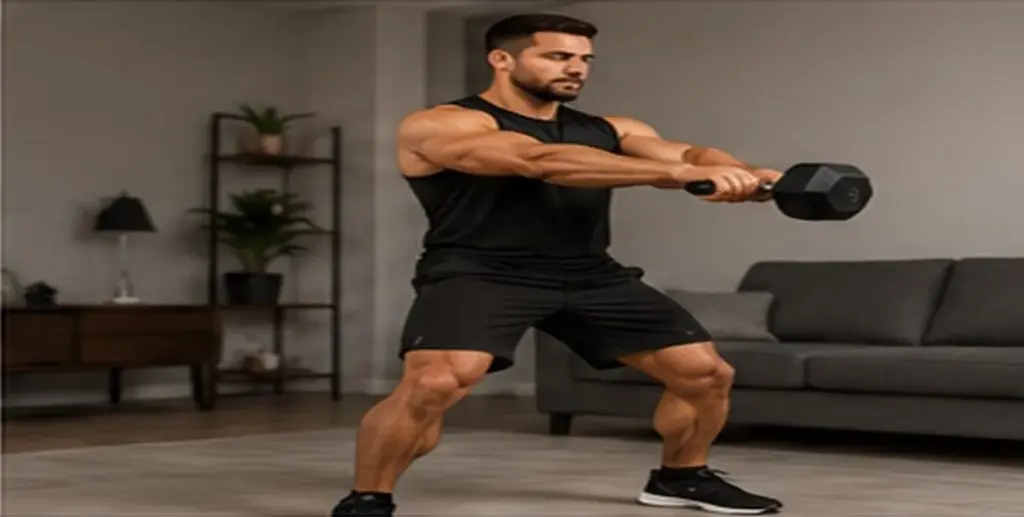
- Stand with feet shoulder-width apart, holding one dumbbell with both hands in front of your hips.
- Hinge at your hips, not your knees, and let the dumbbell swing back.
- Drive your hips forward hard to swing the dumbbell up to shoulder height.
- Let it swing back down and repeat.
Keep your spine straight the whole time. If your lower back rounds at the bottom, the weight is too heavy, or you need more hip hinge practice first.
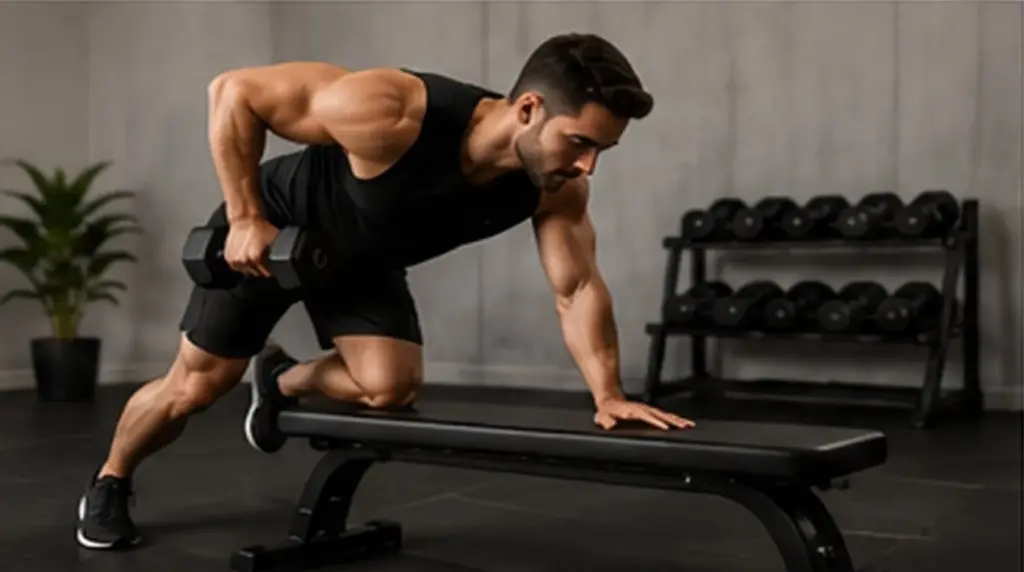
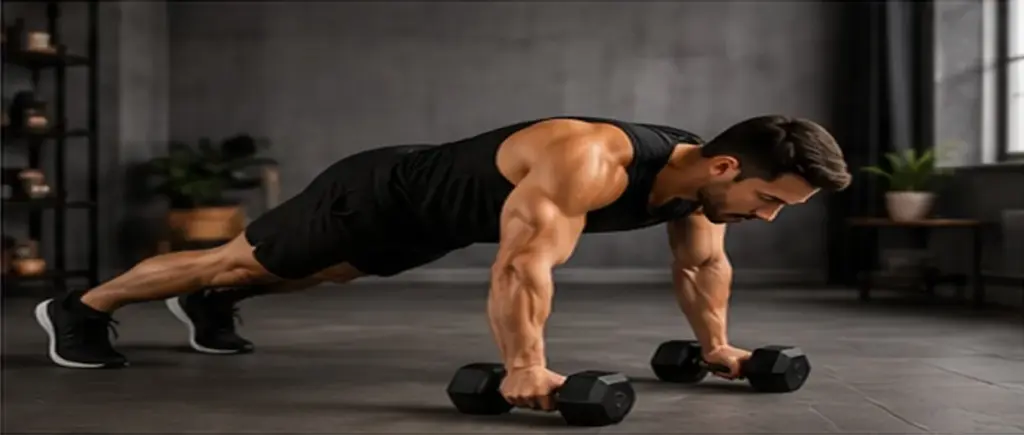
3. Renegade Rows
Muscles targeted: back, core, shoulders
This move takes more coordination than most. You’re holding a plank while rowing at the same time.
- Start in a plank position with a dumbbell in each hand. Set your feet a bit wider for balance.
- Row one dumbbell up toward your hip. Keep your hips square to the floor.
- Lower it back down and switch sides.
- Keep alternating for the full interval.
Renegade rows build the same pulling strength as classic dumbbell back exercises, just under time pressure. If your hips rock side to side, slow down and widen your stance.
4. Dumbbell Burpees
Muscles targeted: full body
Dumbbells make burpees harder on both your heart and your muscles. This is one of the toughest moves on the list.
- Stand holding a dumbbell in each hand.
- Squat down and set the dumbbells on the floor. Jump your feet back into a plank.
- Do a push-up, then jump your feet back toward your hands.
- Stand up fast, lifting the dumbbells overhead as you rise.
New to this move? Skip the push-up and the overhead lift. Just step back into the plank instead of jumping. You still get a strong cardio hit while you build up strength.
5. Dumbbell Lunges
Muscles targeted: legs, glutes, core
- Stand with feet hip-width apart, holding a dumbbell in each hand at your sides.
- Step forward with one leg. Lower your back knee toward the floor.
- Push through your front heel to stand back up.
- Switch legs for the full interval.
Walking lunges raise the cardio demand. Stationary lunges are easier to control if balance is tricky. Both belong in a solid dumbbell HIIT workouts routine.
6. Dumbbell Push Press
Muscles targeted: shoulders, arms, core
The push press skips the deep squat. You just use a small knee dip to help drive the weight up.
- Stand with feet shoulder-width apart, holding a dumbbell in each hand at shoulder height.
- Bend your knees slightly, then push up fast to help drive the dumbbells overhead.
- Lower the dumbbells back to your shoulders with control.
- Repeat, letting your legs help each rep.
Shoulder mobility matters here. If you can’t lock the dumbbells out overhead with your arms by your ears, work on that separately before you add speed.
7. Dumbbell Mountain Climbers
Muscles targeted: core, legs, shoulders
This move leans more toward cardio than strength. It’s a good one to bring your heart rate back up between heavier lifts.
- Start in a plank with your hands resting on the dumbbells, not the floor.
- Drive one knee toward your chest while the other leg stays extended.
- Switch legs fast, like a running motion.
- Keep your hips low and your core tight.
Gripping the dumbbells adds extra work for your wrists and shoulders compared to regular mountain climbers on the floor.
8. Dumbbell Skaters
Muscles targeted: legs, glutes, core
Skaters bring in a side-to-side move that nothing else on this list covers.
- Stand with feet hip-width apart, holding a light dumbbell in each hand.
- Jump sideways, landing on one foot while the other foot sweeps behind you.
- Jump to the other side right away.
- Keep your chest up and your landings soft.
Balance matters more than strength here. Use lighter dumbbells than you would for thrusters, or skip the weight until your footwork feels solid.
9. Dumbbell Deadlifts
Muscles targeted: hamstrings, glutes, back
- Stand with feet hip-width apart, holding a dumbbell in each hand in front of your thighs.
- Hinge at your hips, lowering the dumbbells along your legs. Keep your back flat.
- Stop when you feel a stretch in your hamstrings, around shin height.
- Drive your hips forward to stand back up.
Form breaks down fastest here, usually as a rounded lower back. If that happens, shorten your range of motion or drop the weight instead of pushing through bad form.
10. Dumbbell Plank Jacks
Muscles targeted: core, shoulders, legs
A strong finisher for any circuit, since it tests core stability right when you’re most tired.
- Start in a plank with your hands on the dumbbells.
- Jump your feet out wide, then back together. Don’t let your hips sag or lift.
- Keep your core tight and your shoulders over your wrists.
- Repeat at a steady pace.
If your hips move more than your feet, slow down. This move loses most of its value once your core stops doing the work.
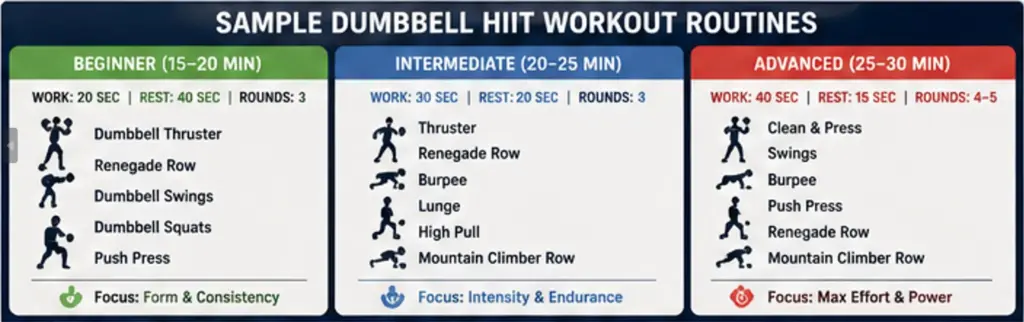
Sample Routines for Dumbbell HIIT Workouts by Level
The right interval ratio depends on your conditioning, not just your strength. Here are three versions of the same circuit for different levels.
Beginner (20 sec work / 20 sec rest, 1 round)
| Exercise | Work | Rest |
|---|---|---|
| Dumbbell Lunges | 20 sec | 20 sec |
| Dumbbell Deadlifts | 20 sec | 20 sec |
| Renegade Rows | 20 sec | 20 sec |
| Dumbbell Mountain Climbers | 20 sec | 20 sec |
| Dumbbell Plank Jacks | 20 sec | 20 sec |
Intermediate (30 sec work / 15 sec rest, 2 rounds)
| Exercise | Work | Rest |
|---|---|---|
| Dumbbell Thrusters | 30 sec | 15 sec |
| Dumbbell Swings | 30 sec | 15 sec |
| Renegade Rows | 30 sec | 15 sec |
| Dumbbell Lunges | 30 sec | 15 sec |
| Dumbbell Push Press | 30 sec | 15 sec |
| Dumbbell Mountain Climbers | 30 sec | 15 sec |
| Dumbbell Skaters | 30 sec | 15 sec |
| Dumbbell Deadlifts | 30 sec | 15 sec |
| Dumbbell Plank Jacks | 30 sec | 15 sec |
Advanced (40 sec work / 10 sec rest, 2 to 3 rounds, add burpees)
| Exercise | Work | Rest |
|---|---|---|
| Dumbbell Thrusters | 40 sec | 10 sec |
| Dumbbell Swings | 40 sec | 10 sec |
| Dumbbell Burpees | 40 sec | 10 sec |
| Renegade Rows | 40 sec | 10 sec |
| Dumbbell Lunges | 40 sec | 10 sec |
| Dumbbell Push Press | 40 sec | 10 sec |
| Dumbbell Mountain Climbers | 40 sec | 10 sec |
| Dumbbell Skaters | 40 sec | 10 sec |
| Dumbbell Deadlifts | 40 sec | 10 sec |
| Dumbbell Plank Jacks | 40 sec | 10 sec |
Always warm up and cool down. Five minutes of light cardio and dynamic stretching before, and the same after, cuts injury risk without wasting your session.
How Often to Train and How to Progress
Two to three sessions a week works well for most people. Leave at least one rest or light day between sessions. Training this hard every day tends to backfire through fatigue, not speed up your results.
Progress one step at a time:
- Increase your work interval (20 to 30 to 40 seconds) before you add weight.
- Shorten your rest once your form stays solid at the current level.
- Add a second round once one round feels manageable.
- Add weight last, and only on moves where your form is already strong.
Want a deeper look at frequency, recovery, and nutrition for strength training? This strength training and conditioning guide covers the basics that apply beyond HIIT.
Common Mistakes That Undercut Results
Chasing speed over form. Intensity is the point, but intensity built on broken form raises injury risk without adding much benefit.
Using a weight that’s too heavy for the pace. A dumbbell that’s fine for eight slow reps is often too heavy for 30 seconds of fast reps.
Skipping the warm-up. Jumping into hard work with cold muscles is one of the most preventable causes of strains.
Training hard every day. These workouts are tough by design. Muscles need rest to repair and actually get stronger.
Ignoring nutrition on training days. Hard intervals burn through your energy stores fast. Under-fueling hurts both performance and recovery. This nutrition strategy guide has practical tips for fueling harder training days.
Not tracking progress. Without some record of weight, rounds, or time, it’s hard to know if you’re improving. A fitness calculator can help you estimate your calorie needs and track changes as your training grows.
Frequently Asked Questions
What makes a workout a “dumbbell HIIT workout” instead of regular strength training? The interval structure is the key difference. Regular strength training uses longer rest, often 60 to 90 seconds, between sets. Dumbbell HIIT workouts use short rest on purpose, so your heart rate stays high.
How long should a session last? Most good sessions run 15 to 30 minutes, not counting warm-up and cool-down. Past that point, fatigue usually hurts your form faster than extra time helps.
Can beginners do dumbbell HIIT workouts safely? Yes, with two changes: lighter dumbbells and longer rest relative to work. The beginner routine above (20 seconds work, 20 seconds rest) is a good starting point once you know each move.
How many calories do these workouts burn? It depends on your weight, effort, and the exercises used, so any single number online is a rough guess at best. A hard 25 to 30 minute session often burns a few hundred calories, with the afterburn effect adding a bit more over the next few hours.
Is HIIT or steady cardio better for fat loss? Neither wins outright. Dumbbell HIIT workouts save time and add strength work that steady cardio skips. Steady cardio is easier to sustain and gentler on your joints. Many people do best mixing both across the week.
Do I need heavy dumbbells to see results? No. The interval structure drives most of the benefit, not the weight alone. Moderate weight with good form and real effort beats heavy weight with sloppy form.
What if I only own one pair of dumbbells? One moderate pair still works for most of these moves. You’ll just need to pace yourself on harder exercises like thrusters and push presses, since you can’t lighten the load exercise by exercise.
Conclusion
Dumbbell HIIT workouts earn their popularity honestly. They deliver real cardio and strength benefits in a fraction of the time a normal split workout takes. The ten moves above, from thrusters to plank jacks, hit every major muscle group while keeping your heart rate in the zone that drives the afterburn effect.
Start with the pace and weight that match where you are now. Focus on form before speed in your first few weeks. Then progress one step at a time. Pair your training with steady nutrition and real rest, and dumbbell HIIT workouts can become one of the most efficient tools in your fitness routine.
Not medical advice: This content, and any calculator results on this site, are for general informational purposes only and are not a substitute for professional medical advice, diagnosis, or treatment. Always talk to a qualified healthcare provider before starting a new diet, exercise routine, or health program.
Related Articles You May Like