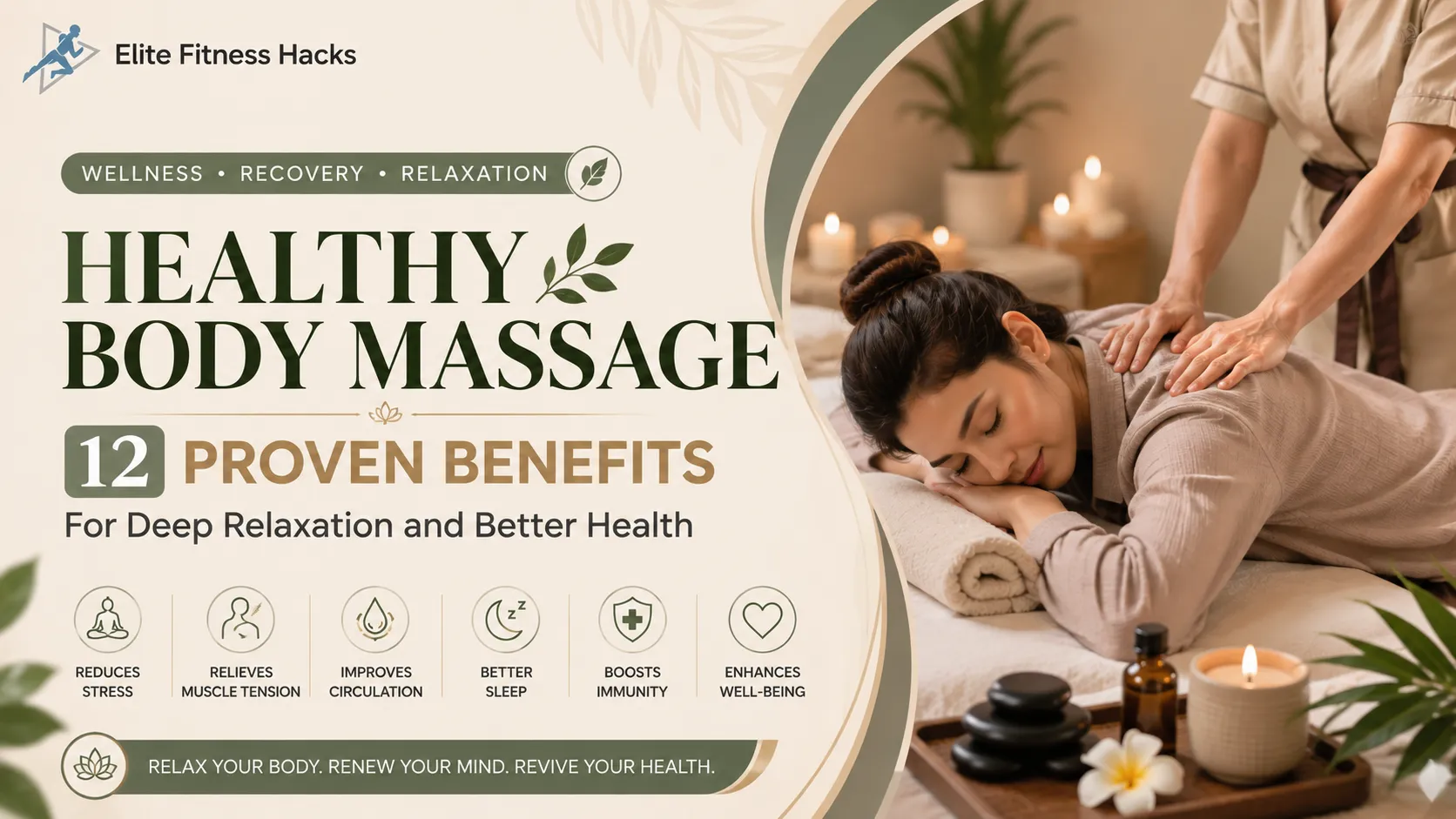
Most people book a healthy body massage when they feel tense or worn out. That instinct is backed by real science. A healthy body massage does more than feel good for an hour. It changes real things in your body. Stress hormones drop. Sore muscles heal faster. Sleep gets deeper.
This guide covers 12 proven benefits of a healthy body massage. Each one is backed by real research, not guesswork. You will also learn where the evidence is strong and where it is still limited. That way, you know exactly what to expect from your next session.
Table of Contents
What Is a Healthy Body Massage?
A healthy body massage means someone uses their hands to work on your muscles. The goal is to relax tight spots without causing pain. Some styles are gentle, like a Swedish massage. Others are firmer, like deep tissue work.
The National Center for Complementary and Integrative Health (NCCIH) has studied massage for years. Researchers have looked at its effect on back pain, neck pain, knee arthritis, and headaches. Results range from modest to strong, depending on the issue.
That mixed picture is a good sign. It means a healthy body massage is not a miracle cure. It also means every benefit below comes from real studies, not marketing hype.
Common Types of Healthy Body Massage
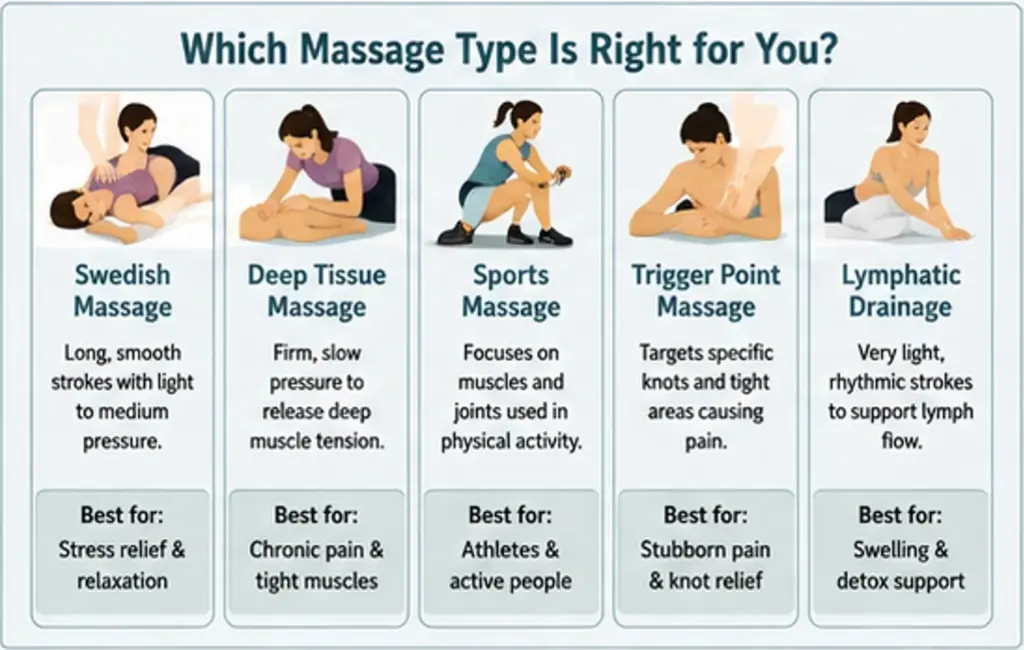
Not all massage feels the same, and the style you pick changes the result you get. Here are the styles you will run into most often:
- Swedish massage. Long, smooth strokes at light to medium pressure. Best for stress relief and a first-time visit.
- Deep tissue massage. Firm, slow pressure aimed at deeper muscle layers. Best for chronic tightness and old aches.
- Sports massage. Built around active muscles and joints. Best before or after training.
- Trigger point massage. Focused pressure on one tight knot at a time. Best for a stubborn, specific pain spot.
- Manual lymphatic drainage. Very light, rhythmic strokes. Used for medical swelling, not general relaxation.
Not sure which one to book? Tell the front desk what you want out of the session. A good therapist will match the style to your goal.
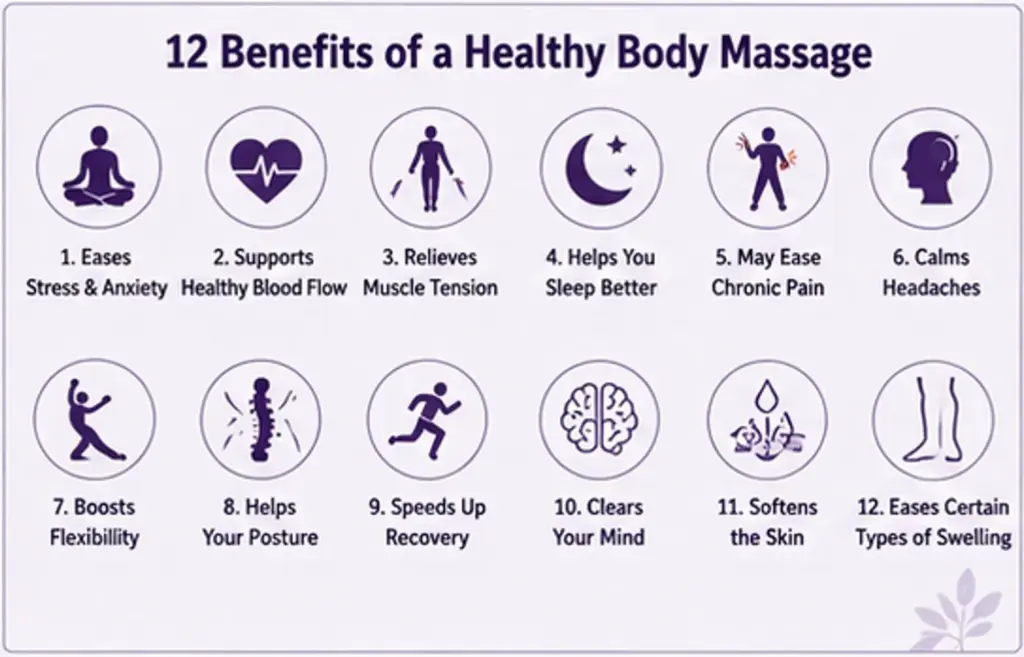
1. Eases Stress and Anxiety
Stress builds up quietly. You might not notice a tight jaw or racing thoughts. Then a massage therapist presses on a sore spot. Suddenly, you feel how much tension you were holding.
A healthy body massage works on stress in a clear way. According to Mayo Clinic, a one-hour massage can lower cortisol, your main stress hormone. At the same time, it raises serotonin, a chemical linked to calm mood.
This is not just a nice feeling. Lower cortisol means your body spends less time on high alert. Over weeks, this can mean fewer stress symptoms. Think tight shoulders, shallow breathing, or a short temper.

If anxiety is a daily struggle, pair massage with other soothing relaxation practices. Massage works best as one part of a bigger plan, not a stand-alone fix.
Try this: book a 60-minute Swedish massage focused on your neck and shoulders. That is where most people carry stress.
2. Supports Healthy Blood Flow
A healthy body massage uses pressure and long strokes. These strokes push blood through tight tissue. Once the pressure lifts, blood flows more freely than before.
Better blood flow means your muscles and organs get more oxygen. This matters most for people who sit all day. Long hours at a desk slow blood flow to the legs and lower back.
Deep tissue massage tends to boost blood flow the most. It uses firm, steady pressure. Do you have a blood flow problem, like poor flow in your legs? Talk to your doctor first. Firm pressure is not right for every case.
3. Relieves Muscle Tension
Tight muscles send many people looking for a healthy body massage. Bad posture at a desk or carrying a heavy bag on one side can cause this. Tension builds in the same spots: the neck, the upper back, and the lower back.
Massage works on tension in a simple way. Pressure on a tight muscle helps it let go. Repeated strokes also boost blood flow to the area. This helps clear some of the buildup tied to stiffness.
Here is an honest note, though. NCCIH found real relief for long-term low-back pain. It also found short-term relief for neck and shoulder pain. But the research behind these findings is often rated low to moderate in quality. In plain terms, most people do feel less tense after a massage. It just works better as part of a pain plan. It is not a total fix on its own.
Does one spot always feel tight, like your neck? Ask your therapist to spend extra time there. Do not let a rushed full-body routine skip past it.
4. Helps You Sleep Better
Poor sleep and muscle tension feed each other. You feel too tense to relax into sleep. Then poor sleep makes you feel even more tense the next day. A healthy body massage can break that cycle.
A review published through the National Institutes of Health looked at several studies on massage and sleep. It found real gains in both self-reported sleep quality and actual sleep time, tracked by wearable sensors. That detail matters. The effect showed up in real sleep data, not just in how people felt.

Timing helps too. Book your massage in the early evening rather than right before bed. This gives your body time to settle before sleep. You avoid falling asleep right away and waking up groggy.
5. May Ease Fibromyalgia and Arthritis Pain
Most massage articles skip this benefit. That is a shame. The evidence here is often stronger than for more popular claims, like boosting your immune system. That immune claim gets repeated a lot online, but solid research does not back it up.
NCCIH’s own review found real promise for fibromyalgia, but only with regular sessions over time. A separate review looked at seven studies and over 350 people with arthritis. It found that massage beat inactive treatments for easing pain. This held true most of all for knee arthritis.
Notice the key phrase: “over time.” One massage might ease pain for a day or two. But the studies behind these results used people who got massage again and again, not just once.
If you manage a condition like fibromyalgia or arthritis, loop in your doctor first. That way, massage supports your treatment plan instead of working around it.
6. Calms Tension Headaches
Not every headache comes from the same place. That is why massage helps with some more than others. Tension headaches come from tight muscles in your neck, scalp, and shoulders. Massage targets that tightness directly, so it tends to help.
Migraines work differently. They involve changes in nerves and blood vessels in the brain. Massage may ease some migraine triggers, like neck tension or stress. But it is not a proven cure for migraines on its own.
If your headaches are frequent or severe, do not assume massage alone will fix them. It is worth ruling out other causes of frequent headaches with your doctor first.
For tension headaches, ask for focused work at the base of your skull and across your shoulder blades. That is where relief tends to show up fastest.
7. Boosts Flexibility
Tight muscles limit how far a joint can move. A healthy body massage lengthens muscle fibers and works out small knots that build up over time. This is common in people who sit for hours or repeat the same movements often.
This matters well beyond sports. Reaching for a top shelf takes healthy range of motion. So does checking your blind spot while driving, or bending to tie your shoes. When that range shrinks, small movements start to feel harder or slightly sore.
Deep tissue and sports massage tend to bring the biggest flexibility gains. They work more directly on the tissue around your muscles, not just the surface layer.
8. Helps Your Posture
Bad posture is rarely a choice. It happens when some muscles get tight, like the chest and front shoulders. Meanwhile, other muscles get weak and stretched out, like the ones between your shoulder blades.
A healthy body massage will not fix posture on its own. Posture also depends on muscle strength and daily habits. But massage does solve one piece of the puzzle. It loosens the tight muscles pulling your body out of line in the first place.
For lasting change, pair massage with real strength work. A focused strength training routine that targets your upper back and core builds posture gains that last.
9. Speeds Up Recovery After Workouts
Here is where many massage articles get it wrong. The soreness you feel one to three days after a hard workout is not caused by lactic acid. That old idea was proven false decades ago. Lactic acid clears from your muscles within about an hour of finishing exercise. Soreness has not even started by then.
What causes that soreness? Tiny damage to your muscle fibers. This happens most after new movements. It also happens after exercise that stretches a muscle under load. Think of walking downhill or lowering a heavy weight slowly. That damage triggers swelling and irritation in the area. That swelling is what you feel as stiffness.
Massage genuinely helps here, just not for the reason most people think. A review of 11 clinical studies, with over 500 people, was published through the National Institutes of Health. It found that massage after exercise cut soreness ratings at 24, 48, and 72 hours. It also lowered blood markers linked to muscle damage and helped strength recover faster.
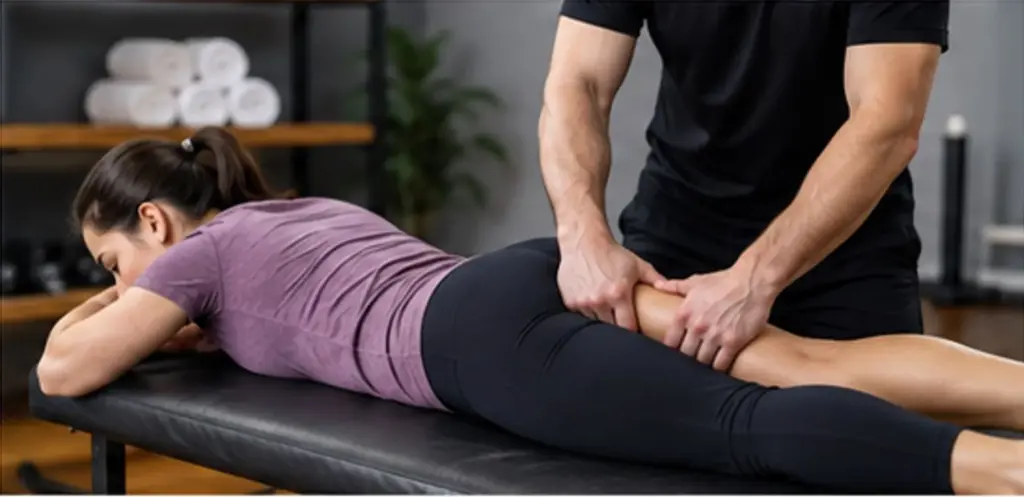
Do you follow a serious strength training plan? Book a healthy body massage within a day or two of your hardest session. That is when it seems to help the most.
10. Clears Your Mind
It is hard to think clearly when your body feels tense. It is also hard when your mind will not stop racing. A healthy body massage clears some of that noise. It mostly works through the same stress pathway that helps with anxiety.
This is not about massage making you smarter. A relaxed body finds it easier to focus. A body stuck in a low-grade stress response does not. People often say they feel mentally “lighter” after a massage. That lines up with lower cortisol and less muscle tension, not some special brain effect.

Does mental fog show up often, not just once in a while? Look at your sleep, workload, and stress as a whole. Guides on how to balance your mental health can help you build a fuller plan. Massage works best as one piece of that plan, not the whole thing.
11. Softens the Skin
This benefit is smaller than the others, so let’s be honest about it. Massage does not deeply change your skin’s health. What helps here is more simple. The oils or lotions used during a session add real moisture to your skin. Better blood flow from the massage strokes can also give your skin a warm, flushed look right after.
Pick a nourishing oil, like sweet almond, coconut, or jojoba oil. That choice matters more than the massage technique itself. If dry or irritated skin is a real concern, see a dermatologist. They offer more targeted help than massage alone.
12. Eases Certain Types of Swelling
Manual lymphatic drainage is a gentle, specific style of massage. It helps move extra fluid out of tissue when your body’s normal drainage is not keeping up. This comes up most after surgery or during cancer treatment. It also helps with swelling in the legs and feet during pregnancy.
This is different from a regular relaxation massage. It should only be done by someone trained in this exact technique. If you are pregnant and dealing with swelling, review broader pregnancy wellness strategies alongside any massage plan. Swelling can sometimes point to other issues that need medical care.
Does swelling show up suddenly? Is it only on one side? Does it come with pain, redness, or warmth? If so, see a doctor before booking a massage. Those signs can point to a blood clot. Massage in that case could cause harm instead of help.
Who Should Be Careful With Massage
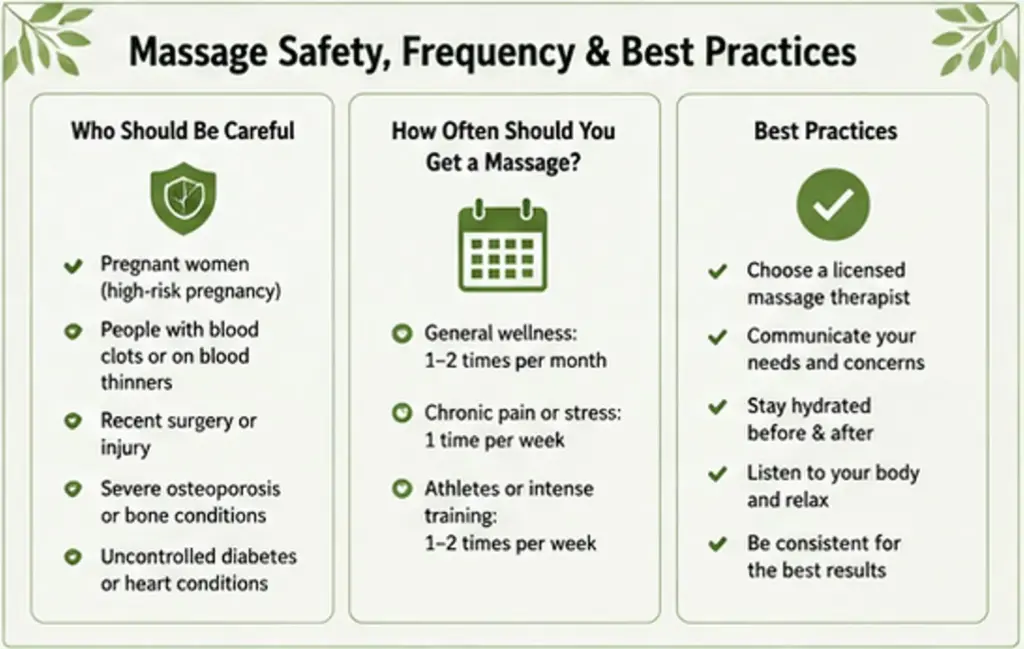
A healthy body massage is safe for most people. But it is not automatically right for everyone. Mayo Clinic advises checking with a doctor first in certain cases. These include a bleeding disorder, blood thinners, or a recent heart attack. Other cases are a blood clot, a broken bone, weak bones, or a new burn.
Massage should also skip tumors, open wounds, and areas of nerve damage. None of this means massage is risky for most people. It just means a quick chat with your doctor is smart in these cases. Your therapist can then adjust pressure and technique to fit your needs.
How to Get the Most From Your Massage
A few small habits make a real difference in how much you gain from each session.
- Speak up. Tell your therapist about sore spots, pressure preference, and any injuries before the session starts, not halfway through.
- Drink water after. This supports normal blood flow and can help you feel less stiff the next day.
- Arrive a few minutes early. Rushing in stressed works against the calm the massage is meant to bring.
- Treat it like a real appointment. The benefits of a healthy body massage add up with steady use. Routine self-care beats a rare treat.
How Often Should You Get One?
There is no single right answer. It depends on your goal. For general stress relief, once or twice a month is a solid starting point for most people.
Some people manage a specific issue instead. This might be chronic low-back pain, fibromyalgia, or heavy training soreness. For these cases, weekly sessions match what the studies above used. Watch how your body responds and adjust from there.
Final Thoughts
A healthy body massage offers a real, research-backed way to manage stress. It also eases muscle tension and helps you sleep better. It speeds recovery from workouts or certain health conditions too. These benefits are real. But they work best as part of a bigger wellness routine. They are not a stand-alone fix for serious health issues.
If you are new to massage, start with a basic Swedish or deep tissue session. Notice which techniques help you the most. Then build a routine around what truly works for your body. Your goal might be stress relief, better sleep, or faster recovery. A steady healthy body massage habit is one of the most proven forms of self-care. Add it to your routine today.
Not medical advice: This content, and any calculator results on this site, are for general informational purposes only and are not a substitute for professional medical advice, diagnosis, or treatment. Always talk to a qualified healthcare provider before starting a new diet, exercise routine, or health program.
Related Articles You May Like