Stress builds up quietly. A tight jaw here. A racing mind at 2 a.m. there. Soon your whole body feels braced for something bad.
Soothing relaxation is the fix. It is a set of simple, proven habits. They calm your nervous system. They give your mind room to breathe again.
You do not need a mountain trip or a free afternoon to feel the benefit. Most of the ten soothing relaxation habits below take fifteen minutes or less. Several fit into a normal day, and no one even has to notice you are doing them.
This guide covers what each habit does inside your body. You will learn how to do each one the right way. You will see where the proof is strong, and where it is thin. You will also learn how to build a routine that fits your real life.
Table of Contents
What Is Soothing Relaxation and Why Does It Matter?
Your body runs on two gears. One is the stress gear. It speeds up your heart. It tightens your muscles. It fills your blood with cortisol and adrenaline.
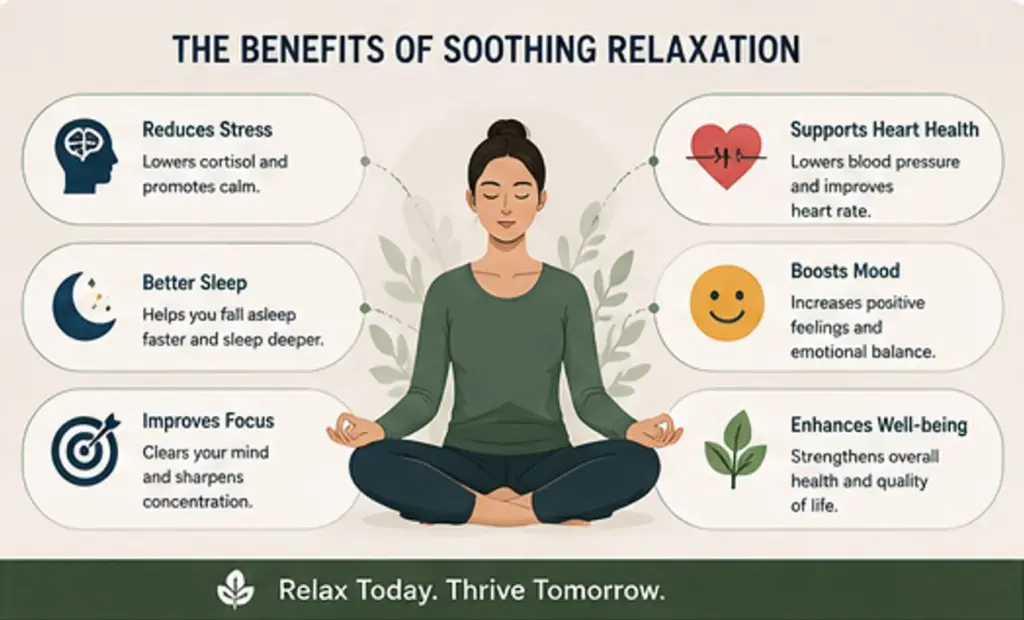
The other gear is calm. It works the other way. It slows your pulse. It lowers your blood pressure. It lets your tight muscles let go.
Soothing relaxation habits are simple tools. They shift you from the first gear to the second, on purpose. The NCCIH says relaxation steps can lower blood pressure and ease signs of swelling in the body. They may even help blood sugar levels in people with type 2 diabetes (NCCIH).
You do not need a diagnosis to use them. Anyone with deadlines, bad sleep, or a noisy home can use these tools to feel steadier. They also pair well with habits that balance your mental health, since a calmer body tends to bring a clearer mind.
One honest note: soothing relaxation is a skill, not a switch. Your first few tries may feel odd. That is normal. It gets easier each time.
10 Soothing Relaxation Practices to Calm Your Mind and Body
Each of these ten habits works on soothing relaxation from a new angle. Some work through your breath. Some work through your muscles. Some work through your focus.
Try a few of them. Notice which one truly slows your heart rate, not just which one sounds nice on paper.
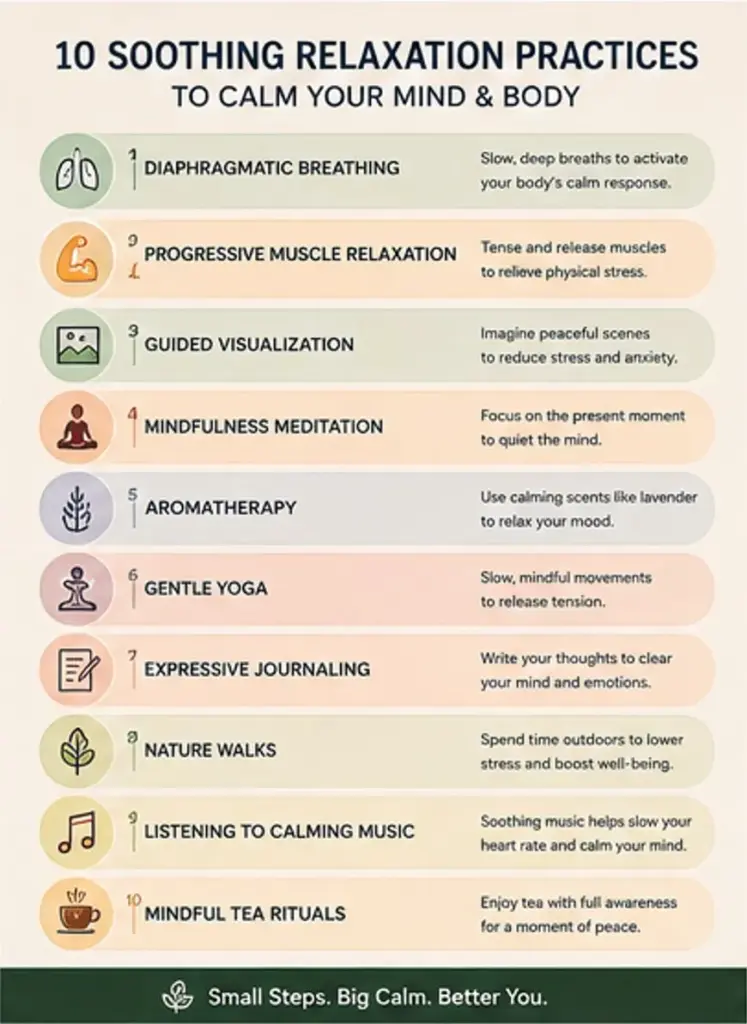
1. Diaphragmatic Breathing
Most people take short chest breaths when they feel stressed. This keeps the body on high alert. Diaphragmatic breathing, also called belly breathing, flips that pattern. It pulls air deep into your lungs.
Try this simple version at your desk or in bed:
- Sit or lie down. Put one hand on your chest and one on your stomach.
- Breathe in slowly through your nose for four seconds. Your stomach hand should rise more than your chest hand.
- Hold the breath for a second or two. Then breathe out through pursed lips for six seconds.
- Repeat this for five to ten minutes.
The long exhale matters more than the inhale here. A longer exhale wakes up the vagus nerve. This is the main path your body uses to calm down. If you keep only one tip from this list, keep this: breathe out longer than you breathe in.
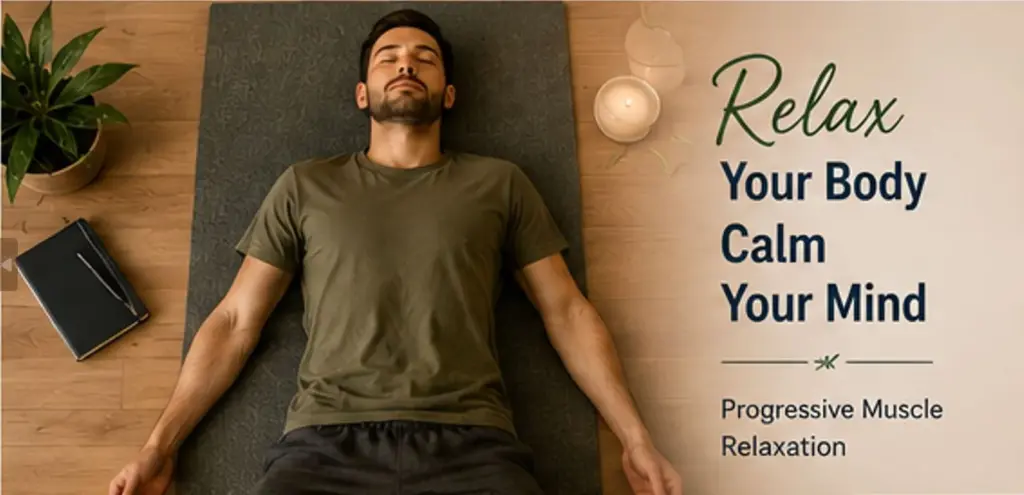
2. Progressive Muscle Relaxation
Progressive muscle relaxation is often shortened to PMR. It is nearly a century old. A doctor named Edmund Jacobson saw that mind tension and muscle tension rise and fall together. Loosen the muscles on purpose, and the mind tends to follow.
The method is simple. Start at your feet. Squeeze one muscle group hard for five seconds. Then let it go all at once. Notice the change. Move up through your calves, thighs, stomach, hands, arms, shoulders, and face, one group at a time.
Two small tips make PMR work better. First, let go fast, not slow. That sharp before-and-after feeling is what your brain reads as relief. Second, your shoulders and jaw hold the most hidden tension. Give them extra time even if the steps rush past them.
3. Guided Visualization
Visualization asks your brain to react to a scene in your head the same way it would react to a real one. Picture a quiet beach in enough detail, and your body can feel a mild version of the calm you would feel if you were truly there.
To try it, close your eyes and pick one clear place. Do not settle for a vague idea of “somewhere calm.” Add real texture: the air’s warmth, a sound nearby, a smell in the air. Stay with that one scene for three to five minutes instead of jumping between scenes.
This habit tends to suit people who think in pictures more than words. If you find it hard to “see” much with your eyes closed, that is not a flaw in you. It just means another habit on this list, like breathing or PMR, will likely suit you better.
4. Mindfulness Meditation
People often think meditation means an empty mind. That idea sets you up to feel like you failed within the first thirty seconds. The real skill is smaller. Notice when your focus drifts, then bring it back gently. Do this again and again, without judging yourself for drifting in the first place.
A simple way to start:
- Sit in a comfortable spot. Close your eyes, or rest them softly on one spot.
- Bring your focus to the feeling of your breath, wherever you feel it most: your nose, chest, or stomach.
- When a thought pulls your focus away, notice it, then return to the breath.
That small act of noticing and returning is the whole exercise. It shares something with practicing thought observation, where you watch your own thoughts instead of getting swept up in them. Five minutes a day is a fair start. How long you sit matters far less than doing it often.
5. Aromatherapy
Aromatherapy uses scent, often from oils like lavender, chamomile, or bergamot, to shift your mood through smell. It is one of the more popular soothing relaxation habits. It is also one where the proof is more mixed than the ads suggest.
The NCCIH notes that while some people feel calmer with lavender scent, current studies have not clearly shown it lowers anxiety or improves sleep on its own (NCCIH). Think of it as a nice, low-risk add-on to a calm routine, not a cure by itself.
A few tips matter if you try it. Never put raw oil right on your skin. Mix it first with a carrier oil, such as almond or jojoba oil. Pregnant women, young kids, and anyone with asthma or scent issues should check with a doctor first. Aromatherapy also pairs well with touch. That is part of why it often shows up with a relaxing body massage rather than on its own.
6. Gentle Yoga
Gentle yoga differs from sport-style yoga in one key way. The goal is a calmer body, not a hard workout. Poses last longer. Moves are slower. Your breath sets the pace, not the other way around.
Three poses cover most of what you need. Child’s Pose stretches your lower back while you breathe slowly. Cat-Cow gently moves your spine in step with your breath. Legs-Up-The-Wall, where you lie on your back with your legs up against a wall, is one of the easiest ways to tell your body it is safe to slow down.
Hold each pose for five to eight full breaths instead of rushing through a routine. If a pose hurts rather than gently stretches, ease out of it. Gentle yoga should never cause pain.
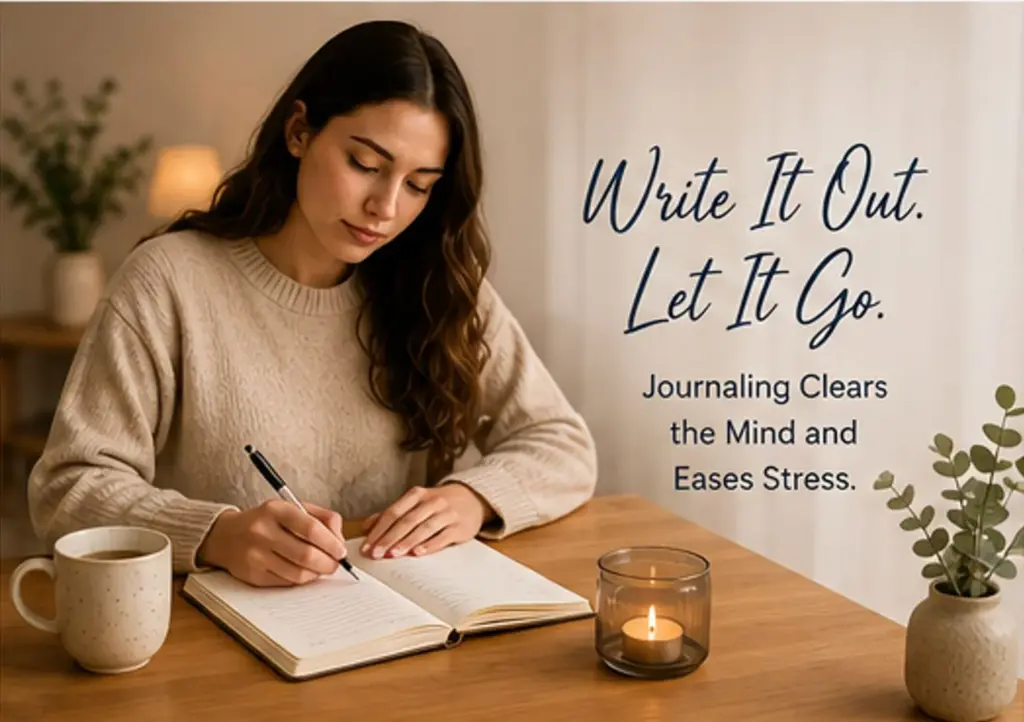
7. Expressive Journaling
Writing about a hard event, rather than just thinking about it, seems to help people work through it. A researcher named James Pennebaker studied this kind of writing for years. He found that writing about upsetting events cut down on stuck, looping thoughts. Some of his studies even linked it to fewer stress-related doctor visits over time (APA).
The style studied most is open and free. Write for fifteen to twenty minutes about what is on your mind. Do not stop to fix grammar or line up your thoughts. Some people find this works best in short bursts, not every day, since facing hard stuff daily can feel heavy rather than freeing.
If a topic feels too heavy to face alone, treat that as a sign to talk to a therapist. It is not a reason to skip the topic for good.
8. Nature Walks
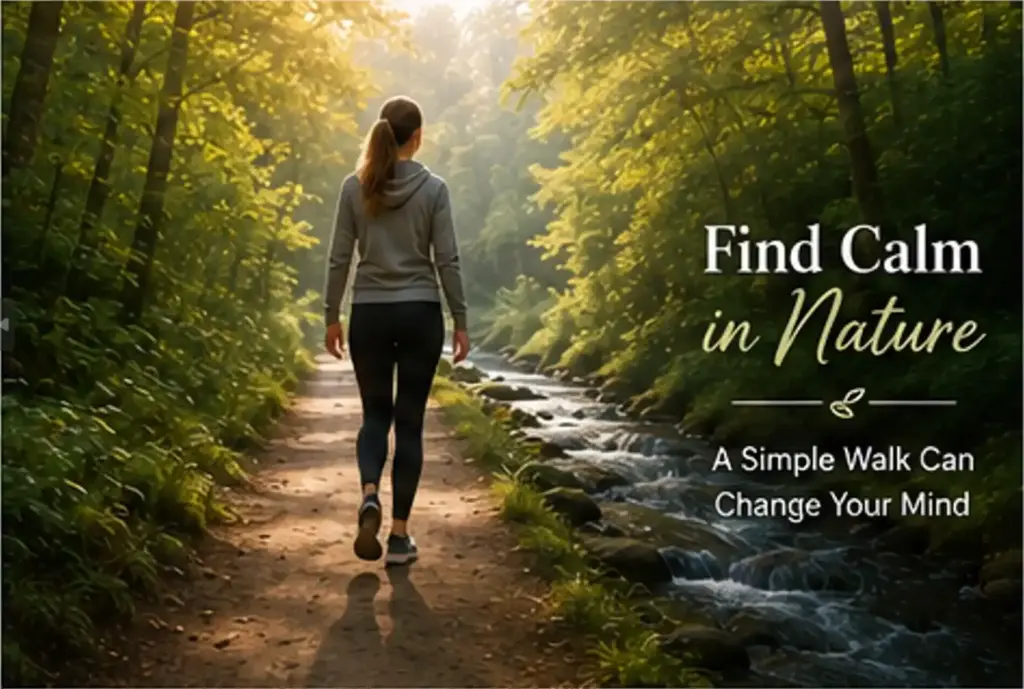
Time outdoors is one of the easier items on this list to measure. A well-known 2019 study in Frontiers in Psychology tracked stress hormone levels before and after time outside. It found that twenty minutes outdoors clearly lowered those levels, with the biggest drop between twenty and thirty minutes (Harvard Health).
You do not need a forest or a big trail. A park, a tree-lined street, or even a backyard counts, as long as it gives you a real sense of nature, not just concrete and traffic. Walking slowly, without checking your phone, seems to matter more than how far you go.
If a full twenty minutes feels hard most days, ten minutes still helps. It is just a smaller dose of the same benefit.
9. Listening to Calming Music
Slow songs, usually between 60 and 80 beats a minute, can pull your heart rate toward their own slow pace. Your body tends to sync to a rhythm around it. Music with no words tends to work better for calm than songs with lyrics, since words use the language part of your brain and can pull your focus away from calming down.
Sit somewhere quiet. Use headphones if you can. Fight the urge to check your phone while you listen. Ten to fifteen minutes is often enough to feel your shoulders drop.
This is also one of the easiest soothing relaxation habits to add to a routine you already have. It can play quietly during a commute or a work break, with no extra time needed.
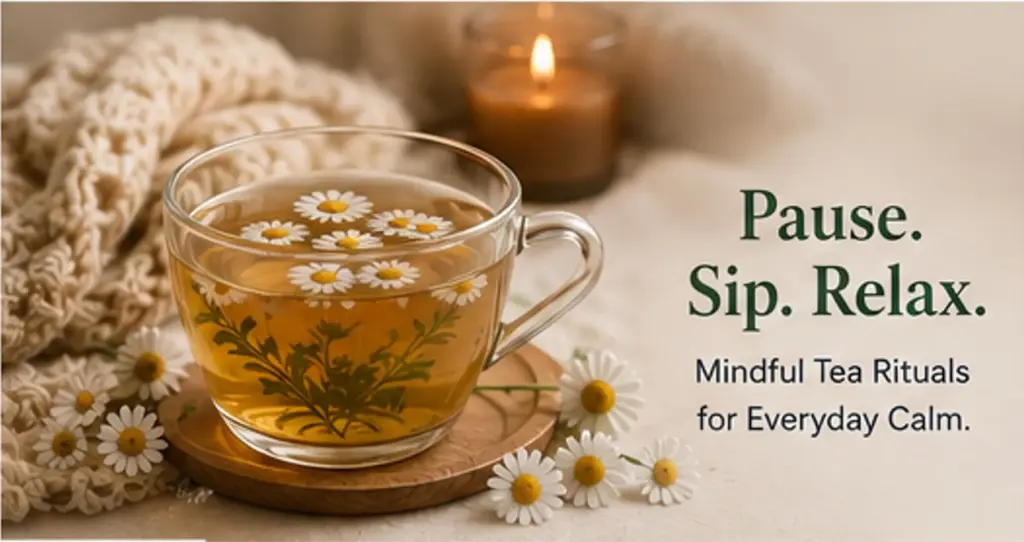
10. Mindful Tea Rituals
There is a real gap between sipping tea while you scroll your phone and drinking tea with full focus. The second style, often called a mindful tea ritual, turns a few minutes into a small, safe window of calm.
Chamomile and peppermint are common picks since both are free of caffeine. It is worth knowing that the proof for chamomile easing worry or helping sleep is still thin and mixed. People with a ragweed allergy should also take care, since chamomile comes from the same plant family and can cause a reaction (NCCIH).
To try it, make the tea without doing anything else at the same time. Notice the warmth of the cup, the smell before your first sip, and the taste itself. The ritual, more than the tea itself, is doing most of the calming work here.
How to Choose the Right Practice for You
Ten options is a lot, and you do not need all of them. These soothing relaxation habits split into two rough groups: still habits (meditation, visualization, tea rituals) and moving habits (yoga, nature walks, PMR).
If sitting still with your eyes closed makes you feel more restless than calm, you are not doing it wrong. You likely do better with a moving habit first. You can add still habits once your body has had more time to settle down. Meditation does not have to come first for anyone.
Your daily setup matters as much as your nature. A five-minute breathing break fits inside a work bathroom break. A twenty-minute walk does not. Fitting soothing relaxation into your day works best when you match the habit to the time you truly have, not the ideal version you saw online.
It also helps to see these habits as one small part of a wider set of steps that support everyday wellness, next to sleep, movement, and food, rather than one single fix for stress.
Common Mistakes That Get in the Way of Soothing Relaxation
The most common slip is to treat calm like a task to get right. That mindset rebuilds the very tension you want gone. There is no perfect way to breathe or sit still. There is only the version that truly slows you down.
A second slip is to quit after one or two tries because the effect felt small. Soothing relaxation works more like a skill you build than a pill you take once. The NCCIH notes that people who use relaxation steps often are more likely to feel real benefit than those who try them just once or twice (NCCIH).
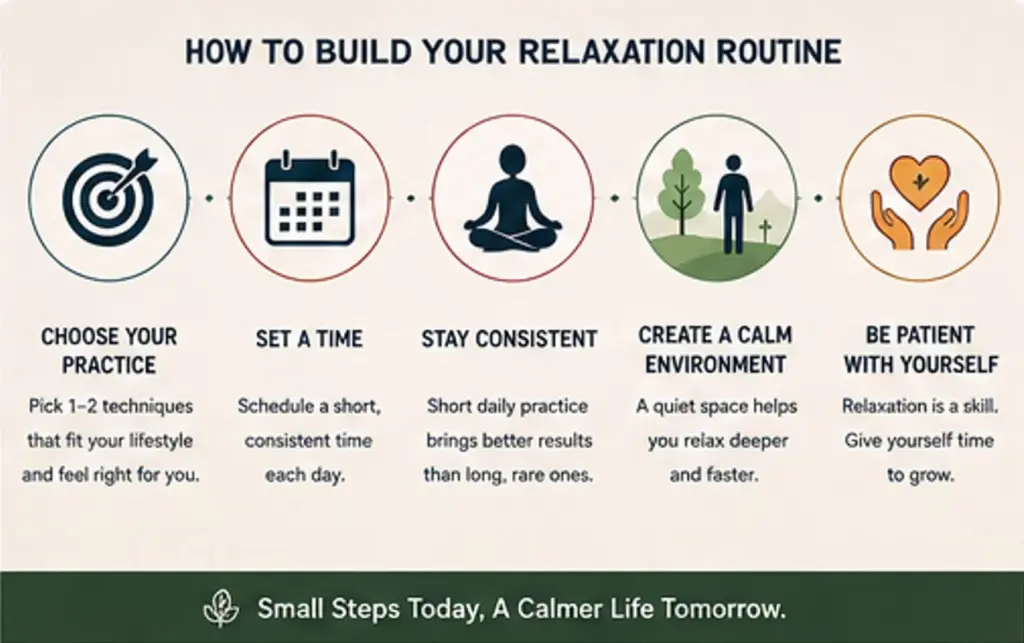
A third slip is to pick a habit because it sounds impressive, not because it fits your life. A twenty-minute guided meditation you never do helps you less than a two-minute breathing break you do every single day.
How Often Should You Practice Soothing Relaxation Techniques?
Short and often beats long and rare. Five to ten minutes a day gives you steadier gains than one forty-minute session a week. Your body responds well to repeats, and to knowing what comes next.
If you are working on one issue, like trouble falling asleep or tight, tense muscles, give a habit two to three weeks of daily use before you judge if it works. Mayo Clinic notes that most relaxation steps are safe to mix. Pairing a morning breathing break with an evening tea ritual is a fair way to bookend a hard day (Mayo Clinic).
When Soothing Relaxation Techniques Are Not Enough
Soothing relaxation habits are truly useful, but they are not a stand-in for real medical or mental health care. If worry, low mood, or body symptoms stick around despite steady practice, that is a sign to talk with a doctor or a therapist, not to just try harder at breathing.
One less known point is worth knowing. A small group of people, mainly those with a history of trauma, some mental health issues, or epilepsy, may find that a given relaxation step brings up upset feelings instead of calm. This is rare. If it happens to you, tell a health care provider rather than push through it alone.
Frequently Asked Questions
What are soothing relaxation practices, exactly? They are simple steps, such as breathing drills, meditation, and gentle yoga, that turn on your body’s calm response instead of its stress response. The goal is a calmer body, not one exact mood every single time.
Can these soothing relaxation practices actually help with sleep problems? Yes, most of all progressive muscle relaxation and diaphragmatic breathing. Both ease the body tension that can keep you up at night. They work best as part of a steady wind-down routine, not as a one-time fix on a rough night.
Which soothing relaxation technique suits complete beginners best? Diaphragmatic breathing and journaling are the easiest starting points. Neither needs gear or training, and both give a clear effect within a few minutes.
Is it normal to feel restless or bored at first? Yes. Sitting with your own thoughts, with no phone or task, feels strange to most adults. Feeling restless in the first week or two is common. It is not a sign you are doing it wrong.
Do I need to set aside a fixed time of day? No, though pairing a habit with one you already have makes it far more likely to stick. Try a breathing break right before bed, or a short walk right after lunch, instead of hunting for a free slot from scratch.
Can kids or teens use these techniques too? Most of them work well for kids with an adult’s help, most of all breathing drills and short guided visualization. Aromatherapy needs extra care around dose and skin contact in young kids.
Is it possible to overdo soothing relaxation practices? Not in a body sense for most people. But turning them into one more item on a strict to-do list can undo the whole point. A relaxed ten minutes helps more than a stiff, joyless thirty.
Conclusion
Soothing relaxation is not about finding one perfect step and using it forever. It is about building a small toolkit: breath, movement, writing, scent, and sound, that you can reach for based on the day and the time you truly have.
Start with one habit this week. Pick the one that felt easiest to picture yourself doing, not the one that sounded most impressive. Sticking with a simple step will calm your body more than using a fancy one now and then.
Over weeks and months, these small, repeated bits of soothing relaxation add up. Your body starts to bounce back from stress faster, and it holds onto calm longer. That is really the whole point.
Not medical advice: This content, and any calculator results on this site, are for general informational purposes only and are not a substitute for professional medical advice, diagnosis, or treatment. Always talk to a qualified healthcare provider before starting a new diet, exercise routine, or health program.
Related Articles You May Like