



Type your goal (weight loss, muscle gain, recipes) to get started.
Free Fitness Tool
TDEE Calculator
Combine your BMR with your real activity level to see how many calories you actually need each day.
Free to useInstant resultsNo sign-up needed
Not medical advice: This content, and any calculator results on this site, are for general informational purposes only and are not a substitute for professional medical advice, diagnosis, or treatment. Always talk to a qualified healthcare provider before starting a new diet, exercise routine, or health program.
Don't know your BMR yet? Calculate it here first, then come back and paste it in above.
How It Works
How it's calculated
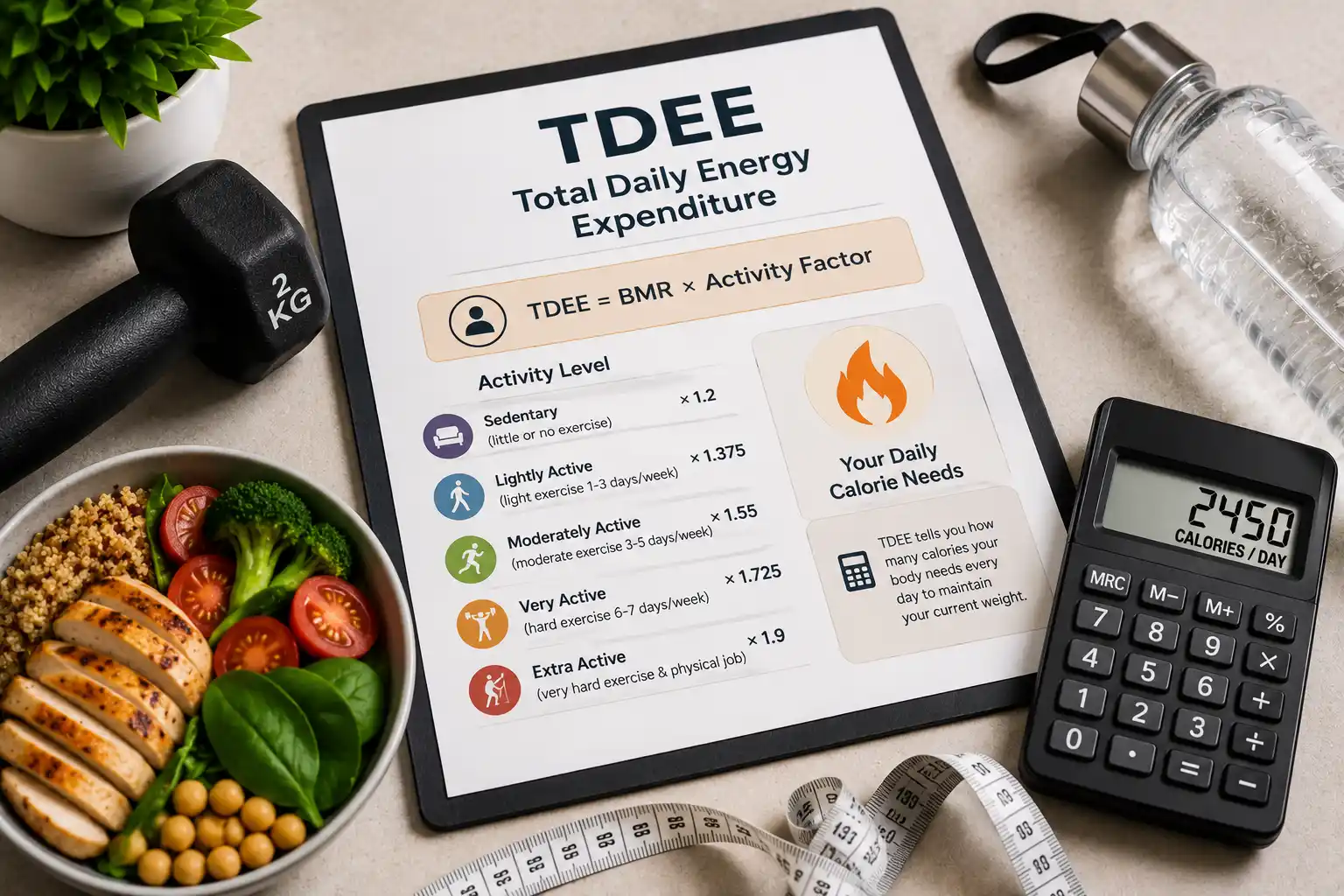
TDEE takes your BMR and multiplies it by an activity factor. A desk job with little movement uses around 1.2. Light exercise a few times a week pushes that to about 1.375. Regular training most days lands near 1.55 to 1.725. Very demanding daily activity, like manual labor plus intense training, can reach 1.9. Multiply your BMR by the number that fits your week, and you get your maintenance calories: the amount that keeps your weight steady.
How to interpret your result
Treat your TDEE as an estimate, not a guarantee. Two people with identical height, weight, and age can burn noticeably different amounts of energy each day, thanks to differences in sleep, genetics, and how much they naturally fidget or move without thinking about it. Use your number as a starting point. Track your weight for two or three weeks, then adjust up or down based on what actually happens on the scale.
Frequently Asked Questions
How close is this estimate to my real number?
It's usually within a few hundred calories, which is a solid starting point. Real accuracy comes from watching your weight trend over several weeks and adjusting from there, rather than trusting the formula alone.
Do I need to recalculate this often?
Yes. Your TDEE shifts as your weight changes. Recalculate every time you gain or lose around five to seven kilograms, or every few weeks if you're actively cutting or building.
My results don't match how my body actually behaves. Why?
Activity level is the most common source of error. Many people rate their week as more active than it really is, especially if their job involves sitting most of the day. Try choosing one activity level lower and see if that fits your real results better.