Getting to the gym sounds easy. Then real life gets in the way. Work runs late. Traffic piles up. The workout you planned turns into another skipped session.
A fit home gym fixes this problem at the source. Your equipment sits exactly where you live.
This guide covers ten reasons a fit home gym pays off. You’ll get real numbers and honest trade-offs. You’ll also learn what a home gym can’t replace, plus a simple starter list.
New to fitness or tired of paying for a gym you rarely visit? The case comes down to one idea. Less friction means more workouts, and more workouts beat any single burst of motivation.
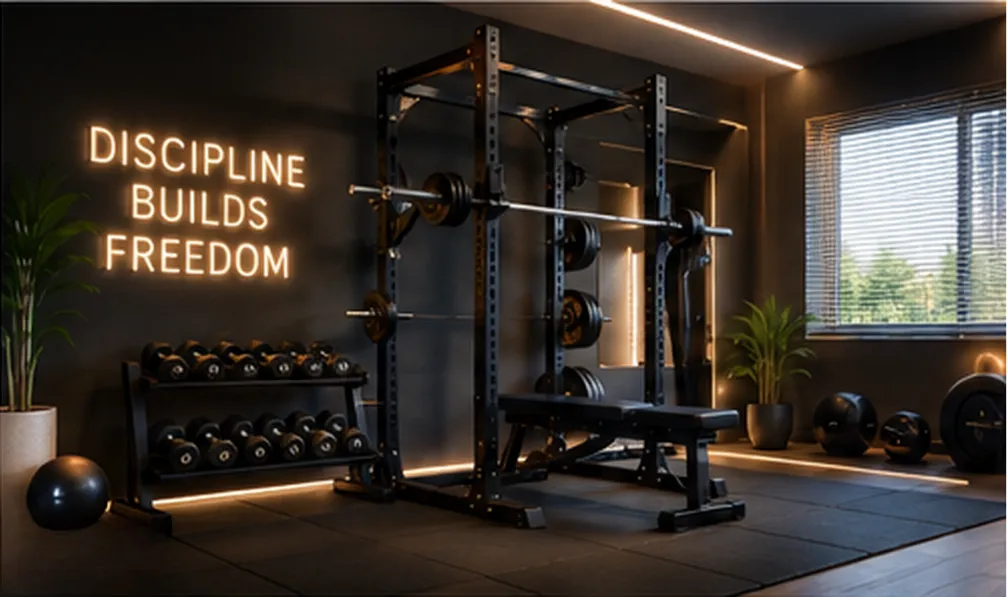
Table of Contents
What Counts as a Fit Home Gym?
A fit home gym isn’t a spare room full of dusty machines. It’s a small, dedicated space. You set it up with gear you’ll actually use.
That could mean a corner with a mat and two dumbbells. It could mean a garage with a rack, a bench, and a rower. Size and cost scale to your goals, not the other way around.
A studio apartment might only need a resistance band and a doorway pull-up bar. A homeowner with a garage might build toward a full barbell setup over a year or two. Both count. What matters is that the space gets used.
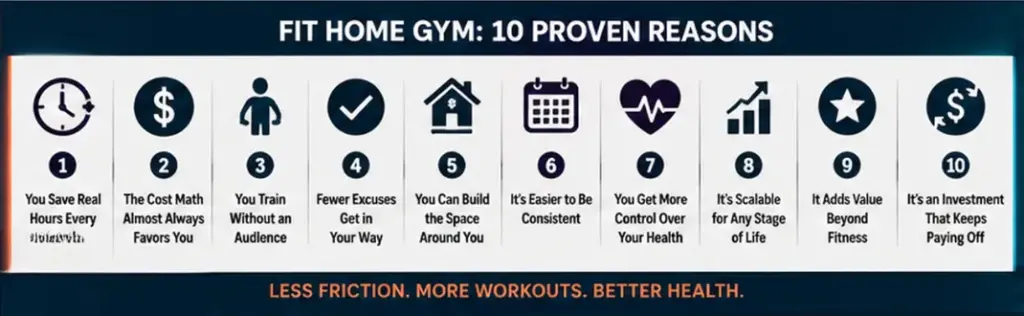
1. You Save Real Hours Every Week
Commuting to a gym costs more than gas money. Driving, parking, changing, and waiting for equipment can eat 90 minutes for just 30 minutes of real training.
A fit home gym cuts that time completely. You warm up in your living room. You train for 20 to 30 minutes. Then you get back to your day.
This adds up fast. Four sessions a week at 45 minutes saved each trip equals three hours back, every week. That’s enough time for an extra workout, more sleep, or less stress.
Over a year, three saved hours a week grows to more than 150 hours. That’s close to a full week of free time. Put another way, the time you save could fund a second workout most weeks, at no extra cost to your day.

2. The Cost Math Almost Always Favors a Fit Home Gym
Commercial gym memberships often run $30 to $100 a month. That’s $360 to $1,200 a year, and the bill repeats whether you show up or not.
A home gym works differently. You pay once for gear. After that, every workout is free.
A Simple Cost Comparison
| Expense | Commercial Gym (Annual) | Fit Home Gym (One-Time) |
|---|---|---|
| Membership or equipment | $360–$1,200 | $150–$1,000+ |
| Travel and parking | $100–$300 | $0 |
| Ongoing cost after year one | Repeats annually | $0 (aside from occasional upkeep) |
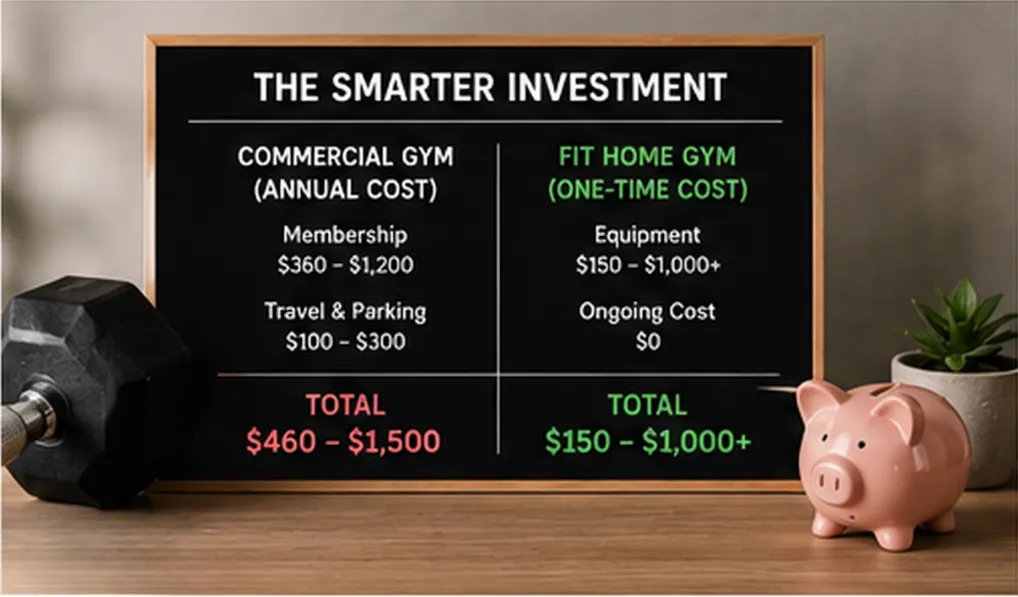
Exact numbers depend on where you live and what you buy. But the pattern holds up. A modest fit home gym built around dumbbells, a bench, and bands often pays for itself within eight to twelve months.
There’s a resale angle too. Dumbbells and barbells hold their value well. They don’t wear out like cardio machines with motors and belts. If your plans change, most of what you spend on free weights comes back to you.
3. You Train Without an Audience
Beginners often skip gyms because they feel watched. That worry is real. It stops many people before they build a habit.
A fit home gym removes the audience. You can fumble through your first squat. You can rest as long as you need. You can replay a video three times, and no one will notice.
This matters more than it sounds. Confidence grows through practice, and practice is easier when nobody watches you learn.
4. Fewer Excuses Get in Your Way
Most adults don’t meet basic activity goals. The reasons rarely come down to willpower alone. The CDC’s physical activity guidelines call for 150 minutes of moderate exercise each week, plus two days of strength work. Yet bad timing and far-off gyms remain two of the top reasons people fall short.
A fit home gym removes both barriers at once. There’s no commute to skip. There’s no closing time to plan around. There’s no excuse tied to “I didn’t have time to get there.”
That doesn’t mean motivation stops mattering. It means the biggest outside obstacles disappear, which makes the inside ones easier to manage. Setting clear, trackable goals helps too. If you haven’t set yours yet, SMART fitness goals give you a simple framework that pairs well with a flexible home setup.
5. You Can Build the Space Around You
A commercial gym looks the same for every member. A fit home gym looks exactly how you want it to.
Some people like a bare space with just a mat and a rack. Others want mirrors, music, and photos on the wall. Both work, because you’re the only person you’re designing for.
Small Details That Make a Big Difference
- A mirror to check your form on squats and deadlifts
- A speaker or playlist that keeps you moving
- Rubber flooring to protect joints and cut noise
- Good light, so early sessions don’t feel like a chore
None of this is required. But small choices affect whether you actually walk into that room tomorrow.
How Long Before You See Results?
This is the question most people want answered first. With three to four sessions a week in a fit home gym, most beginners feel better sleep and more energy within two to three weeks. That comes before any visible change shows up.
Strength gains usually follow next. Many new lifters lift heavier weight within four to six weeks. Part of this comes from real muscle growth. Part comes from your nervous system learning the movement.
Visible changes in muscle tone take longer. Plan on eight to twelve weeks of steady training, paired with decent nutrition.
None of this happens just because gear sits nearby. It happens because a fit home gym makes those three or four weekly sessions easier to finish. Finished sessions produce results. The equipment alone does not.
6. The Health Payoff Compounds Over Years
Consistency, not intensity, drives most long-term health gains. A fit home gym is built for consistency. It removes much of the friction from every session.
What the Research Actually Shows
The CDC recommends adults get at least 150 minutes of moderate aerobic activity each week, plus strength work on two or more days. Meeting these targets lowers the risk of heart disease, type 2 diabetes, and other chronic conditions.
Mayo Clinic notes that most healthy adults notice stronger muscles from strength training at least twice a week, for about 20 to 30 minutes each session. You don’t need hour-long sessions to see results.
Exercise also shapes mental health through real biological pathways. Research from the National Institutes of Health shows that physical activity affects blood flow to the brain and the body’s stress response. This helps explain why regular movement links to lower anxiety and better mood.
Older adults gain even more from training close to home. The CDC’s guidance for adults 65 and older recommends mixing aerobic work, strength work, and balance training each week. A short walk to a home setup removes one more reason that mix gets skipped.
A fit home gym doesn’t create these benefits on its own. It simply makes the habit easier to repeat, week after week, for years instead of months.
7. Kids and Partners Get Pulled In Too
A home gym sits in plain view of daily life. That makes it easy for family to join in without a formal invite. A partner doing squats while dinner cooks counts. So does a child copying your stretches on the mat.
This works best when the space feels open, not intimidating. Keep a light set of dumbbells or a second mat nearby. Let family workouts stay loose and short, not like a formal class.
Over time, these small shared moments shape a household’s habits more than any lecture about health ever could.
8. You Don’t Need Much to Start
One of the biggest myths about a fit home gym is that it needs a room full of machines. It doesn’t. Mayo Clinic notes that homemade weights, like a plastic bottle filled with water or sand, can work just as well as dumbbells when you’re getting started.
A Realistic Starter List
Beginner tier (under $150):
- A yoga mat
- A set of resistance bands
- Adjustable dumbbells or a fixed pair
Intermediate tier ($150–$500):
- An adjustable bench
- A pull-up bar
- Kettlebells in two or three weights
Dedicated tier ($500+):
- A squat rack or power cage
- An Olympic barbell and plates
- Cardio gear like a rower or bike
For a full walkthrough of options by budget, see this home workout equipment guide. For workout ideas once your space is ready, try dumbbell HIIT workouts and dumbbell back exercises. Both need very little gear.
A little upkeep keeps gear working well. Wipe down mats and benches after each use. Check dumbbell coatings and barbell sleeves once a month for wear. This small habit adds years to the life of budget equipment.
A Simple Weekly Split to Start With
A basic three-day split works well for most beginners setting up a fit home gym for the first time.
- Day 1: Full-body strength (squats, push-ups, rows, planks)
- Day 2: Rest or a light walk
- Day 3: Full-body strength, slightly heavier
- Day 4: Rest
- Day 5: Full-body strength or a HIIT circuit
- Weekend: Active rest, like a walk or a stretching session
This structure meets the CDC’s two-day strength minimum with room to spare. It also leaves enough recovery time between sessions, which matters more than most beginners expect.
9. Where a Fit Home Gym Falls Short
No setup is perfect. A home gym has real limits worth knowing before you commit.
Specialized machines are the biggest gap. Leg press stations, cable towers, and lat pulldown machines take up space most homes can’t spare. If your program leans on machine work, you may still need occasional access to a full gym.
Safety matters too. Heavy lifts like squats and bench press are safer with a spotter or safety bars. Training alone means knowing your limits and using a rack with safety pins.
A home gym also drops the built-in social side of a commercial gym. Classes, trainers, and workout partners don’t happen on their own. You have to build that support yourself, through a workout buddy, an online group, or a schedule you actually track.
Space and noise matter too, especially in apartments. Dropping heavy dumbbells upstairs can bother neighbors below. Rubber flooring and controlled reps help. If storage is tight, pick gear that folds or stacks, since a rack you never put away is a rack you’ll stop using.
None of this cancels out the benefits above. It just means a fit home gym works best as your main training space, with occasional trips to a full gym for heavy lifts or special equipment.
10. It Builds a Habit That Actually Sticks
Every reason on this list points to one outcome. A fit home gym lowers the gap between deciding to train and actually training. That gap, more than motivation, decides whether a routine survives past month one.
Tracking your numbers helps too. A quick BMI or macro check through a fitness calculator gives you a baseline. That keeps your progress visible, even on weeks when the scale barely moves.
Who a Fit Home Gym Fits Best
Not everyone needs the same setup. A few common situations make the choice easier.
- Busy parents: short on time, need workouts squeezed between school runs and bedtime. A home setup removes the commute entirely.
- Remote workers: already home all day, so a midday session breaks up long hours at a desk.
- Beginners: want privacy to learn form without an audience watching.
- Frequent travelers: need a backup plan for weeks away from a regular gym. Bands and a suspension trainer pack easily into a bag.
- Serious powerlifters: may still want a commercial gym or a well-built garage setup with a full rack and heavy plates, since safety and specialized bars matter more at that level.
This isn’t an all-or-nothing choice. Many people keep a fit home gym for daily training and a commercial membership for occasional heavy lifts or group classes.
Fit Home Gym FAQs
What’s the minimum gear I need to get started?
A mat, a set of resistance bands, and one pair of adjustable dumbbells cover most beginner routines. Add more once your goals get specific.
How much space do I actually need?
A 6×6 foot area fits dumbbells, a mat, and bodyweight work. Bigger gear like a rack or bike needs closer to 8×10 feet, with room overhead.
Can I get the same results at home as at a commercial gym?
Yes, for most goals. Strength, endurance, and fat loss all respond to steady training, and home training is often easier to stay consistent with. The exception is competitive lifting, where machines and spotted lifts matter more.
Is it worth setting up if I only have 20 minutes a day?
Yes. A 20-minute dumbbell circuit or HIIT block still covers a solid share of weekly activity goals. Doing it daily beats an occasional long trip to a far-off gym.
What’s the biggest mistake people make when setting one up?
Buying too much too soon. Start small with flexible gear. Use it for a few months. Then add machines or heavier weights based on what you actually need.
Do I need a coach if I train at home?
Not always. But one or two sessions with a trainer, early on, helps you learn proper form on big lifts. After that, video tutorials and steady progress cover the rest.
How do I stay motivated without a gym community nearby?
Set clear goals. Track your progress. Try an online class or find a workout partner who checks in with you. The setting helps, but support still matters.
Will secondhand gear work as well as new?
In most cases, yes. Dumbbells, plates, and benches don’t wear out like electronics do. Check welds and moving parts before buying anything mechanical, like a bike or rower, secondhand.
How do I know when I’ve outgrown my starter setup?
Watch for stalled progress. If you’re maxing out your dumbbells or modifying every move around limited gear, that’s your signal. Add one piece at a time, based on what your routine actually needs.
What’s the best time of day to train at home?
Whatever time you’ll actually keep. Morning sessions dodge schedule conflicts, while evening sessions help release the day’s stress. Consistency matters more than the exact hour you pick.
Final Verdict: Is a Fit Home Gym Worth It?
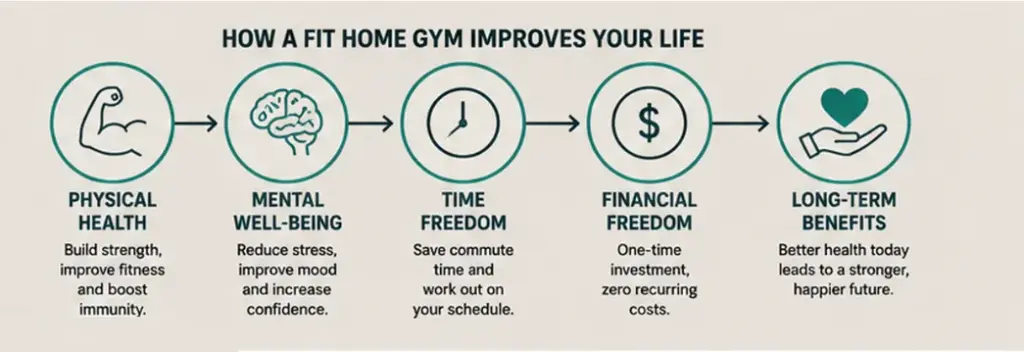
For most people, yes. A fit home gym removes the two biggest reasons workouts get skipped: time and hassle. It often pays for itself within a year. It won’t replace every machine at a commercial gym, and it won’t build motivation on its own. But it clears away enough friction that showing up stops being the hard part.
Ready to start? Keep your first purchase small. Get a mat, a set of dumbbells, and a set time on your calendar. Everything else can wait until your routine tells you what it actually needs.
Not medical advice: This content, and any calculator results on this site, are for general informational purposes only and are not a substitute for professional medical advice, diagnosis, or treatment. Always talk to a qualified healthcare provider before starting a new diet, exercise routine, or health program.
Related Articles You May Like