Most cardio advice defaults straight to running or cycling. Your arms, shoulders, and back end up getting almost no cardiovascular work at all. Upper body cardio exercises fix that gap. They raise your heart rate while building real strength and endurance in muscles your usual cardio routine never touches.
In my coaching practice, upper body cardio is the piece clients skip most. It usually feels less familiar than a treadmill. That is exactly why it is worth adding. Balanced training, not just more of the same movement pattern, is what actually prevents the injuries and plateaus that stall people out.
This guide covers 10 real upper body cardio exercises, proper form for each, and the mistakes that quietly waste most people’s effort in this part of training.
Table of Contents
Why Focus on Upper Body Cardio
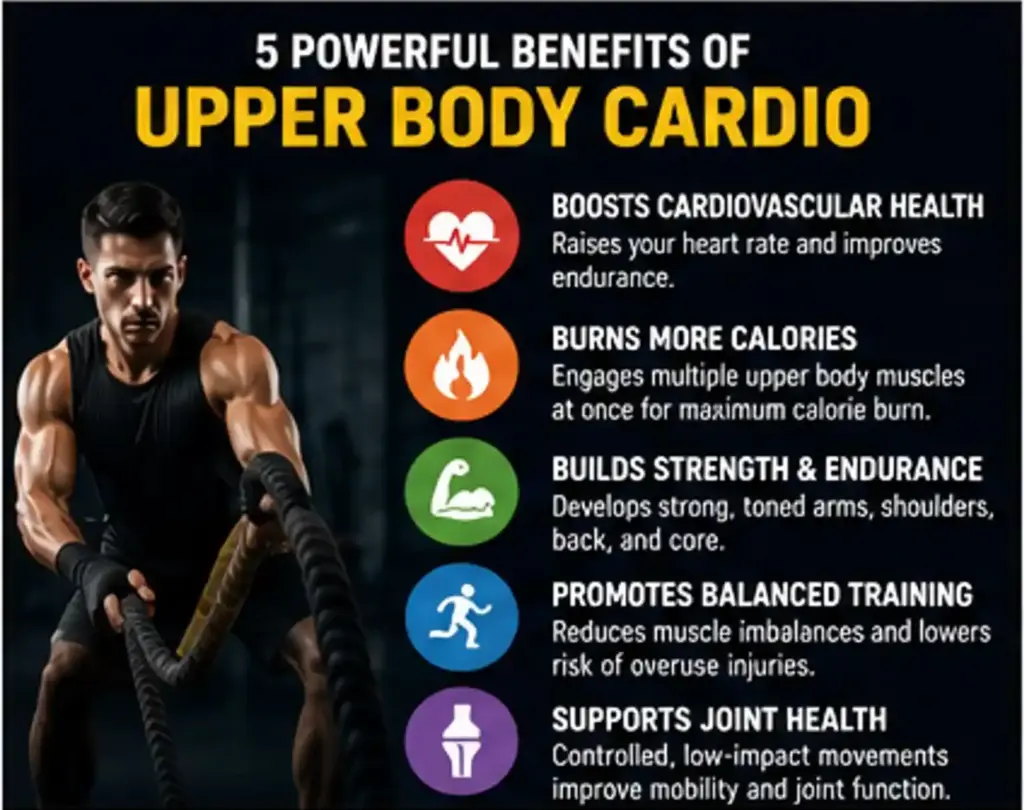
Most fitness routines lean heavily on lower body cardio. Running, cycling, the stair climber. Upper body cardio exercises close that gap. They build balanced muscle development, which helps prevent the overuse injuries that come from repeating the same movement pattern too often.
They also burn real calories. Engaging your arms, shoulders, back, and core at once raises your heart rate faster than most single-muscle-group exercises do. That makes these movements efficient for both fitness and weight management goals.
Beyond calories, upper body cardio exercises build genuine cardiovascular endurance. They support joint health too, through controlled, repeated movement. Most of them need minimal equipment as well, which makes them realistic for a home workout, not just a fully equipped gym.
Adults should get at least 150 minutes of moderate aerobic activity a week, says the CDC. Upper body cardio exercises are a legitimate way to hit part of that total. They are not just a supplement to “real” cardio done elsewhere.
Warming Up Before You Begin
Skipping the warm-up before upper body cardio exercises is one of the fastest ways to turn a good workout into an injury. Spend 5 to 10 minutes on light cardio and dynamic movement first, before any of the exercises below.
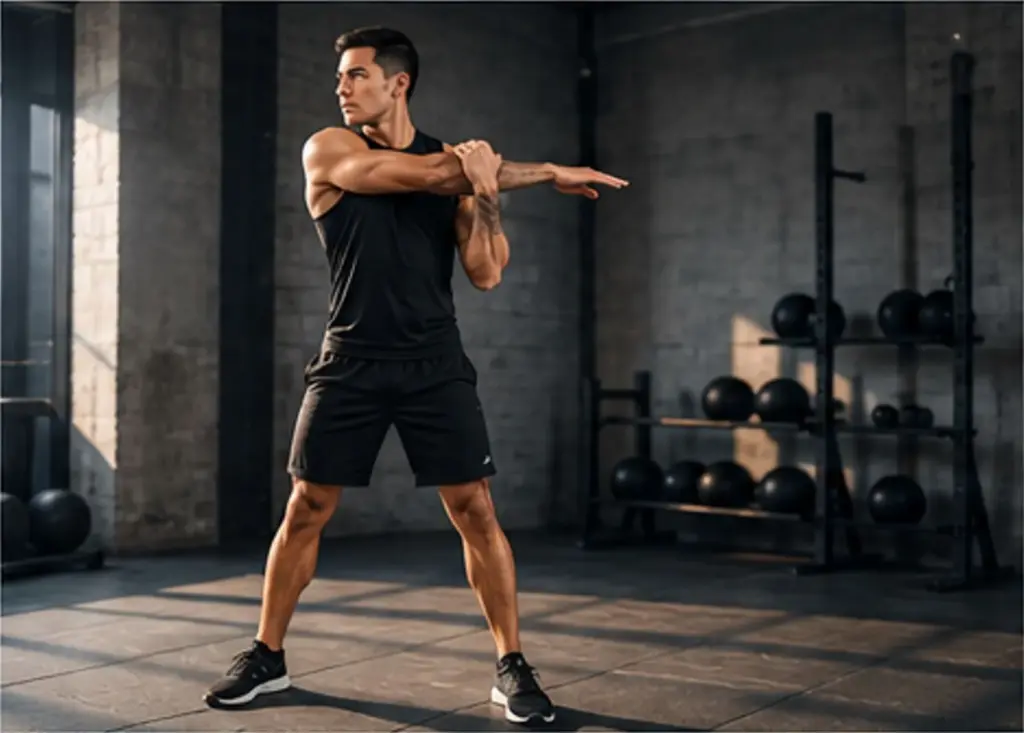
Arm circles. Extend your arms to the sides and make small circles, gradually increasing the size. This wakes up your shoulders specifically. That matters since shoulders take on real load in most upper body cardio exercises.
Torso twists. Feet hip-width apart, rotate your torso side to side. This warms your core and upper back together. Both get worked hard in movements like battle ropes and medicine ball slams.
Light cardio. A few minutes of easy jogging or high knees raises your heart rate step by step. It beats shocking your system straight into a high-intensity set.
1. Battle Ropes
Battle ropes deliver one of the highest-intensity upper body cardio exercises on this entire list. They’re brutal on your grip and shoulders, in the best way.
How to perform: Anchor the ropes securely. Stand with feet shoulder-width apart and hold one end in each hand. Create alternating waves by moving your arms up and down rapidly. Slams, circles, and double waves all add variety once the basic wave feels controlled.
Duration: 30 seconds to 1 minute of work, 30 seconds of rest, for 4 to 5 rounds. Extend the work intervals as your endurance improves.
Coaching notes: Most beginners tense their shoulders up toward their ears. Keep them down and relaxed. Let your arms do the work instead of your neck.
2. Rowing Machine
The rowing machine gives you a genuinely low-impact way to hit your upper body, back, and cardiovascular system at once.
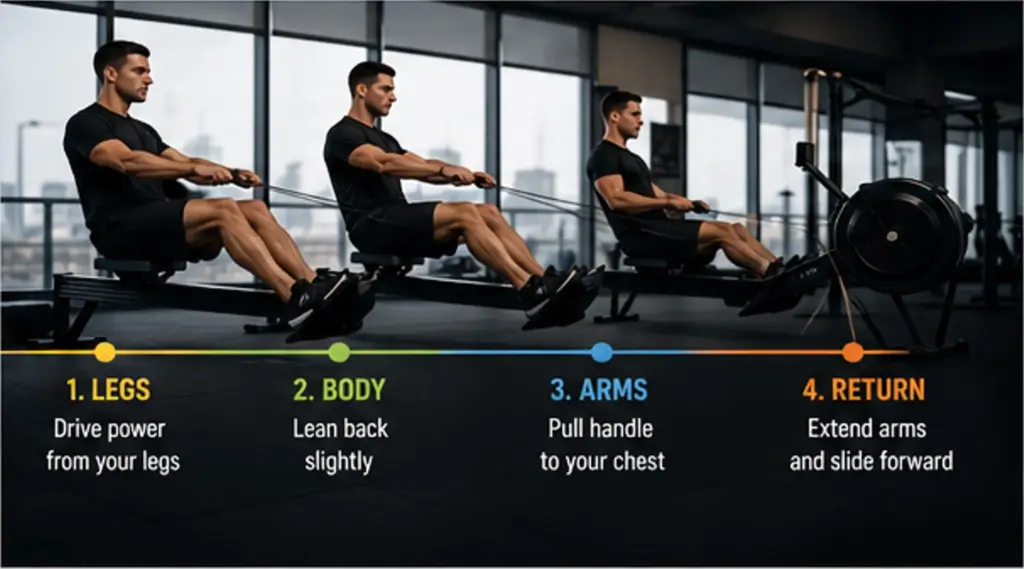
How to perform: Strap your feet in securely and grip the handle with both hands, back straight. Push off with your legs first. Lean back slightly as you pull the handle toward your chest. Keep the motion smooth, not jerky.
Duration: Start with 15 to 20 minutes at a steady pace. Add intervals of moderate and high-intensity rowing once that feels manageable.
Coaching notes: The power comes from your legs first, not your arms. Pulling with your arms before your legs finish driving is the single most common form mistake on this machine.
3. Push-Up Variations
Push-ups build strength on their own. The right variations turn them into a real cardio challenge too.
How to perform: Start with a standard push-up, plank position, lowering your chest to the ground and pressing back up. Progress to clap push-ups. Push up explosively enough to clap before landing. Plyometric push-ups keep that explosive power without the clap.
Duration: 10 to 15 reps per variation, 3 sets total. Adjust the rep count to match your current level honestly.
Coaching notes: Explosive variations are genuinely demanding. Master a clean standard push-up for several weeks first. Poor form on the clap or plyometric versions risks your wrists and shoulders.
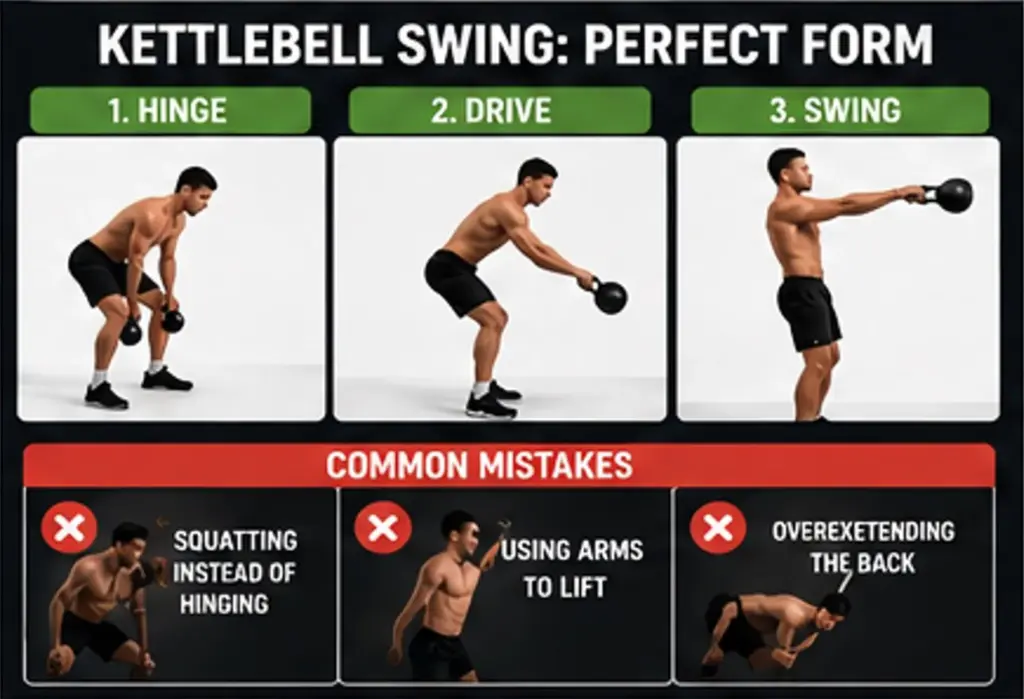
4. Kettlebell Swings
Kettlebell swings blend strength and cardio in a single movement, driven by your hips rather than your arms.
How to perform: Stand with feet shoulder-width apart, kettlebell on the floor between them. Hinge at your hips, grip the bell with both hands, then drive through your hips to swing it up to shoulder height. Arms stay relatively straight throughout, guiding the bell rather than lifting it.
Duration: 15 to 20 swings per set, 3 to 4 sets, with brief rest between.
Coaching notes: This is a hip hinge, not a squat, and definitely not a shoulder press. If your lower back rounds at any point, the weight is too heavy. Work on your hip hinge before adding load.
5. Medicine Ball Slams
Medicine ball slams are pure explosive power. They double as a genuinely effective stress reliever.
How to perform: Stand with feet shoulder-width apart, holding the ball overhead. Slam it down with real force, bending your knees slightly to absorb the impact. Squat to retrieve it and repeat.
Duration: 30 seconds of work, 30 seconds of rest, for 4 to 5 sets.
Coaching notes: Use a slam ball designed for this, not a bouncy medicine ball meant for tosses. The wrong ball will bounce back at your face. That is a genuinely common and avoidable injury.
6. Jump Rope
Jump rope needs almost no space and almost no equipment. It remains one of the most efficient calorie-burning upper body cardio exercises on this list.
How to perform: Grip the handles firmly, elbows close to your sides. Rotate the rope with your wrists, not your whole arms. Jump with both feet, knees slightly bent to absorb impact.
Duration: 1 minute of jumping, 30 seconds of rest, repeated for 10 to 15 minutes total.
Coaching notes: Most beginners jump too high and land too hard. A small hop, just enough to clear the rope, protects your knees and lets you sustain a longer session.
7. Mountain Climbers
Mountain climbers put real, sustained load on your shoulders and arms while your legs drive the cardio intensity. That makes this a genuine upper body cardio exercise, not a lower-body move with your arms just along for the ride.
How to perform: Start in a high plank, hands under your shoulders. Drive one knee toward your chest, then quickly switch legs, keeping your hips low and your core tight throughout.
Duration: 30 to 45 seconds of continuous work, 30 seconds of rest, for 4 to 5 rounds.
Coaching notes: Sagging hips are the most common breakdown here. They shift load away from your shoulders and core toward your lower back. Slow down and reset your plank position rather than pushing through with poor form.
8. Shadow Boxing
Shadow boxing raises your heart rate fast while building coordination most other cardio exercises never touch.
How to perform: Stand in a boxing stance, feet shoulder-width apart. Throw punches into the air, adding footwork and head movement for a more dynamic, realistic session.
Duration: 2 to 3 minutes per round, 1 minute of rest, for 4 to 5 rounds.
Coaching notes: Keep your wrists straight and your punches controlled rather than wild. Sloppy technique here is where wrist strain sneaks in, even without any equipment involved.

9. TRX Suspension Training
TRX suspension straps use your own body weight as resistance. That makes the intensity fully adjustable just by changing your body angle.
How to perform: Anchor the straps securely at a high point. Rows, push-ups, and tricep extensions all work well here. Standing further back or leaning at a steeper angle increases the difficulty of nearly every movement.
Duration: 15 to 20 minutes, moving between different exercises to keep the session varied.
Coaching notes: Start with a shallower angle than feels challenging. TRX difficulty scales fast. A small change in body position adds real difficulty quickly.
10. Swimming
Swimming might be the most complete upper body cardio exercise on this list. Water resistance makes every single stroke genuine work.
How to perform: Use varied strokes. Freestyle and butterfly both hit the upper body hard, engaging different muscle groups. Alternate moderate-pace swimming with sprint intervals to push your heart rate higher.
Duration: 20 to 30 minutes, incorporating intervals for the biggest cardiovascular benefit.
Coaching notes: Breathing rhythm matters more than raw arm strength here. Panicked, irregular breathing burns you out faster than the actual physical effort does.

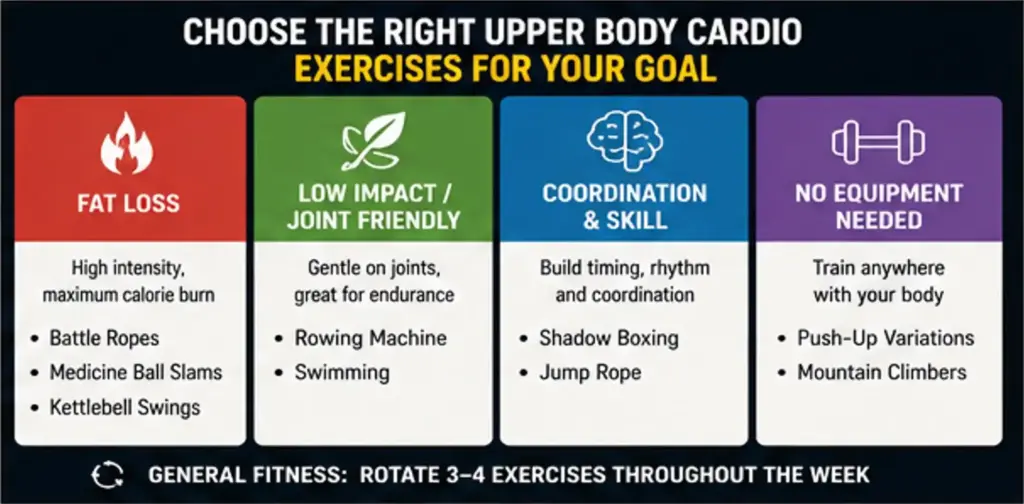
Choosing the Right Upper Body Cardio Exercises for Your Goal
Not every exercise on this list serves the same purpose. Picking based on your actual goal beats picking at random.
If your main goal is fat loss, prioritize the highest-intensity options: battle ropes, medicine ball slams, and kettlebell swings. These burn the most calories per minute among upper body cardio exercises. They demand full-body coordination, not just arm movement.
If you’re working around a joint issue, swimming and the rowing machine are your best options here. Both are genuinely low-impact. That matters if your knees, hips, or lower back need a break from higher-impact training.
If you want to build coordination alongside cardio, shadow boxing and jump rope both develop timing and rhythm. Most other upper body cardio exercises never touch that skill. It carries over into other sports and daily movement in a way pure strength work does not.
If equipment access is your limiting factor, push-up variations, mountain climbers, and shadow boxing need nothing beyond your own body weight. Every other exercise on this list needs at least some equipment. A rope, a kettlebell, or a pool.
If you’re training for general health rather than a specific goal, rotate through several of these across the week instead of committing to just one. Variety here is not just about staying interested. It spreads the physical demand across different joints. That beats overloading the same ones over and over.
Matching the exercise to the actual goal is what makes upper body cardio exercises worth the time you put into them. Not picking whatever looks impressive online.
Common Mistakes With Upper Body Cardio Exercises
Skipping the warm-up entirely. Cold shoulders and cold grip strength are a fast way to strain something during an explosive movement like battle ropes or medicine ball slams.
Using momentum instead of control. Kettlebell swings, medicine ball slams, and TRX rows all lose most of their benefit when you swing through the motion using momentum, not controlled muscle engagement.
Going all-out on day one. These are demanding movements. Build volume and intensity gradually over a few weeks. Do not max out your first session and end up too sore to train again for a week.
Ignoring grip fatigue. Battle ropes and kettlebell swings both tax your grip hard. A failing grip mid-set is a real safety issue, not just an inconvenience, especially with a kettlebell in motion.
Treating every session the same. Rotate between 3 or 4 different upper body cardio exercises each week. This keeps your joints and connective tissue from taking the exact same stress over and over.
Building a Real Weekly Routine
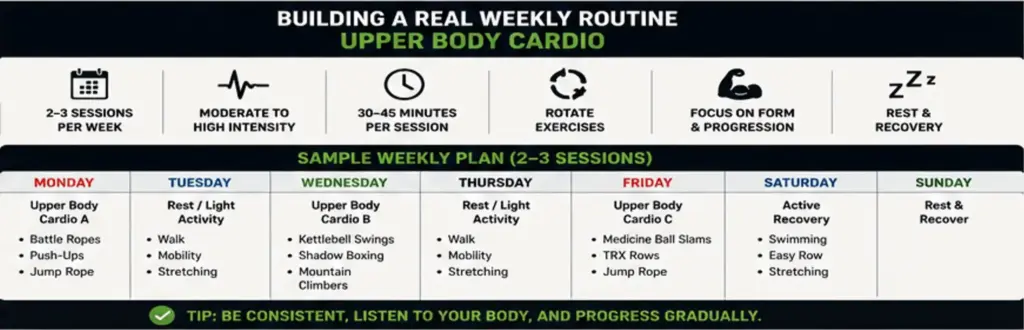
Two to three sessions a week focused on upper body cardio is plenty for most people. Especially when layered on top of other training you’re already doing.
If you’re new to this kind of training, start with jump rope, rowing, and push-up variations. All three are relatively low-skill. They let you build a base before adding the more technical movements.
Once that feels manageable, add battle ropes, kettlebell swings, and shadow boxing. These demand more coordination and control, and they reward the base you’ve already built.
For real variety, rotate in mountain climbers, medicine ball slams, TRX training, and swimming depending on what equipment you have access to on a given day.
Nutrition supports this work as much as the training itself does. Protein specifically helps you recover between these demanding sessions. Our high protein meal prep ideas guide covers how to set that up without a complete overhaul of your diet. Our macro calculator can tell you roughly how much you need based on your training volume.
Building a broader program rather than just adding cardio? Our strength training essentials guide and our bodyweight hamstring exercises guide both cover the lower-body and strength side of a balanced routine. Want a structured way to track how all of this comes together over weeks and months? Our SMART fitness goals guide walks through building a real, trackable plan instead of just guessing at progress.
Frequently Asked Questions
How often should I do upper body cardio exercises? Two to three times a week works well for most people, with rest days between sessions targeting the same muscle groups hard.
Do I need special equipment? Some upper body cardio exercises do, battle ropes and kettlebells specifically. Push-ups, mountain climbers, jump rope, and shadow boxing all need little to no equipment though. That makes a full session possible at home.
Can these exercises help with weight loss? Yes. Engaging multiple large muscle groups at once raises your heart rate and calorie burn more efficiently than isolated single-muscle exercises do. That supports weight loss as part of a full calorie deficit.
What if I’m completely new to this kind of training? Start slow. Prioritize form over intensity. Jump rope, rowing, and standard push-ups are the most beginner-friendly entry points on this list. Add the more explosive movements once those feel controlled.
How do I know if I’m working hard enough? You should be breathing noticeably harder and breaking a sweat within a few minutes. If you can hold a full, easy conversation the entire time, the intensity is probably too low to count as real cardio.
Can I do upper body cardio exercises every day? Not advisable for the higher-intensity ones like battle ropes or kettlebell swings. Your muscles and connective tissue need recovery time. Two to three focused sessions a week works better than daily maximum effort, with lighter activity like swimming or a slow row on the other days.
Conclusion
Upper body cardio exercises fill a real gap most fitness routines leave open. They build genuine cardiovascular endurance, real strength, and balanced muscle development. Your usual lower-body-focused cardio never touches any of that on its own.
Start with two or three exercises from this list that match your current equipment and fitness level. Master the form, build consistency, and add the more demanding movements once the basics feel automatic. That approach beats trying all 10 at once and burning out by week two.
Not medical advice: This content, and any calculator results on this site, are for general informational purposes only and are not a substitute for professional medical advice, diagnosis, or treatment. Always talk to a qualified healthcare provider before starting a new diet, exercise routine, or health program.
Related Articles You May Like