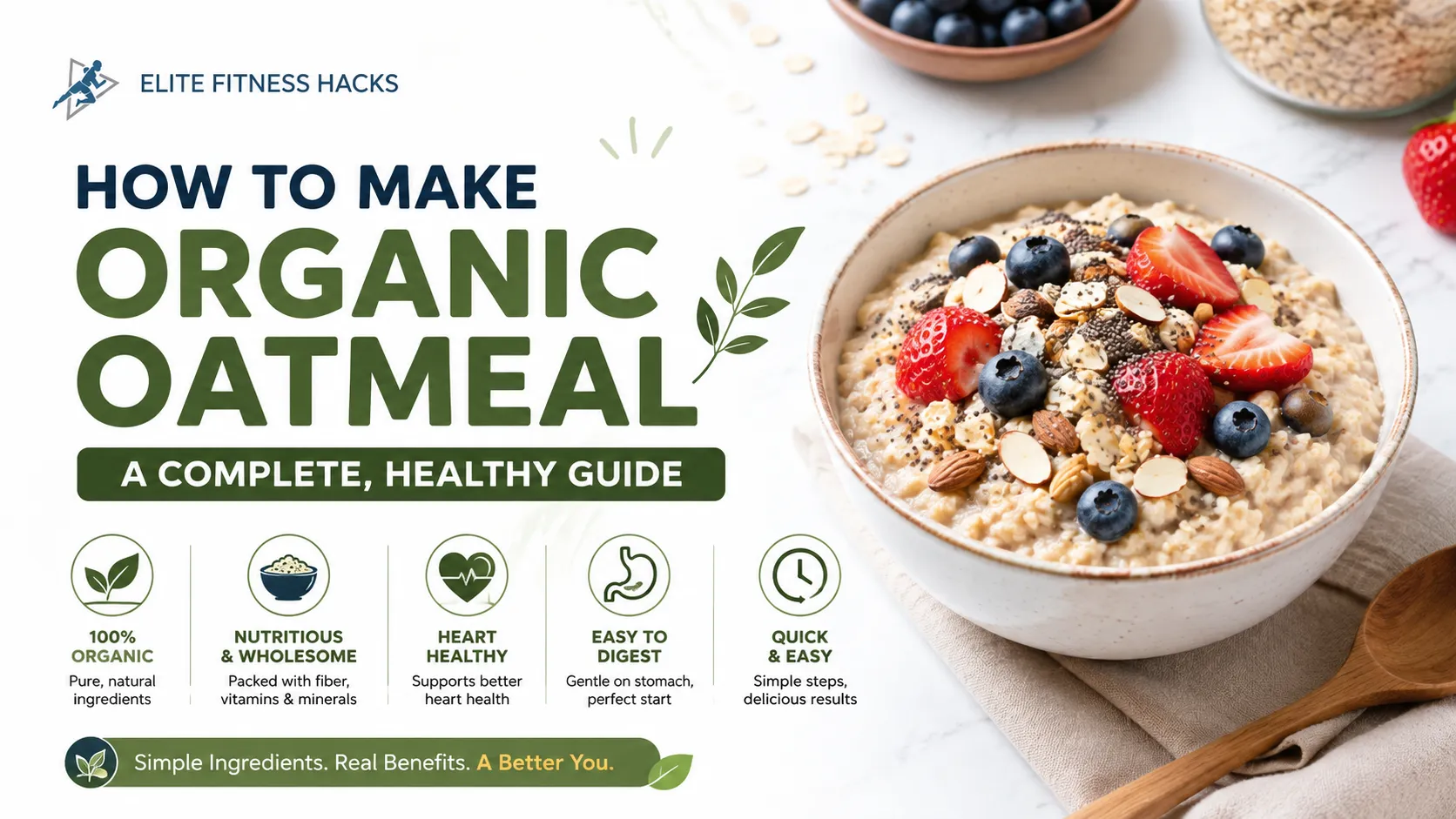
Organic oatmeal is simple to make and easy to get wrong. Get the ratio off, skip the stirring, or rush the cook time. You end up with gluey mush instead of a creamy bowl. This guide covers real technique. It also covers the real research behind oatmeal’s health claims. And an honest look at whether “organic” is worth the extra cost.
Quick Answer, If You’re in a Hurry
- Organic oatmeal is oats grown without synthetic pesticides or fertilizers, certified by the USDA.
- The biggest real reason to choose organic oats: skipping pre-harvest glyphosate spraying. Not extra nutrients.
- Nutrient levels in organic and regular oats are basically the same.
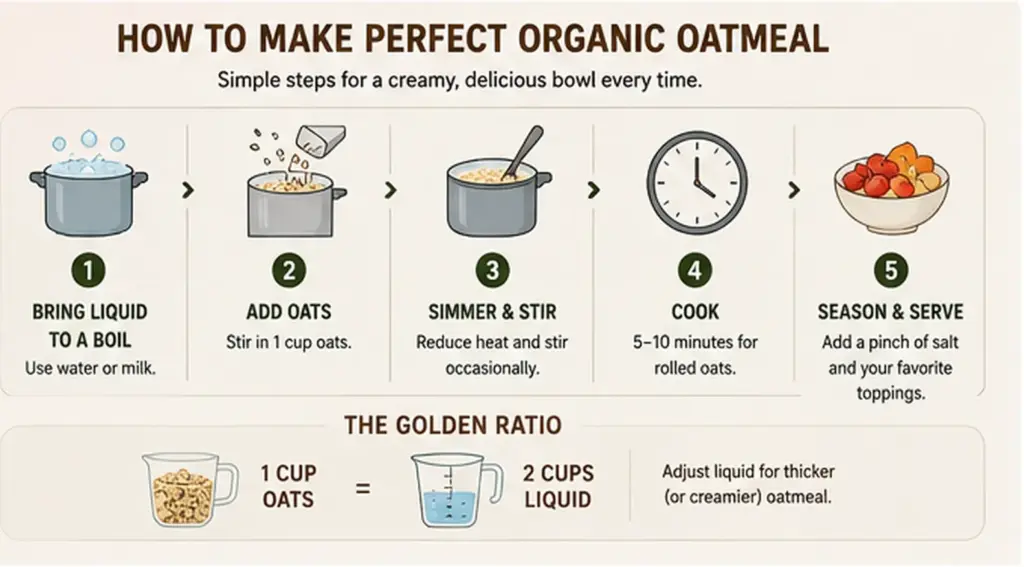
- The base ratio is 1 cup of oats to 2 cups of liquid, cooked 5 to 10 minutes.
- Oat beta-glucan has real, FDA-recognized cholesterol benefits.
- Steel-cut, rolled, and instant oats differ in texture and cook time, not core nutrition.
Table of Contents
What Makes Oatmeal “Organic”?
Organic oatmeal starts with oats grown under USDA organic rules. Farmers can’t use synthetic fertilizers or most synthetic pesticides on the soil. That rule holds for at least three years before harvest. The USDA requires yearly checks to stay certified.
Genetic engineering is also banned in organic farming. So is the use of sewage sludge as fertilizer. A USDA-accredited certifier has to sign off on every step, from the field to the package.
Does Organic Oatmeal Actually Matter? The Honest Answer
Most guides just say “organic means no harmful chemicals” and stop there. That’s vague, and not quite the full picture. Here’s the more specific and more useful answer.
The Nutrient Myth
Organic oats do not have meaningfully more vitamins or minerals than regular oats. Mayo Clinic states plainly that it isn’t clear whether organic food has more nutrients than conventional food. Nutrient levels depend more on soil quality and harvest timing than on organic status alone.
The Real Reason: Pre-Harvest Glyphosate
Here’s the part most oatmeal articles skip. Some regular oat farmers spray glyphosate directly on oat crops just before harvest. It’s the active ingredient in Roundup. This practice is called desiccation. It dries the crop faster and makes harvesting easier.
The Environmental Working Group has tested oat products for years and found glyphosate residue in most regular samples. Their most recent testing round found lower average levels than earlier tests. The group credits pressure on farmers to change spraying practices. Even so, some samples still test above the group’s own health benchmark.
Glyphosate’s health risk is genuinely disputed among regulators. The International Agency for Research on Cancer classifies it as probably carcinogenic. The EPA’s own risk assessment has reached a different conclusion. This is an active, unresolved regulatory debate, not settled science in either direction.
What is settled: organic status bans glyphosate use. The USDA confirms herbicides containing glyphosate are prohibited in organic crop production. If you want to skip pre-harvest glyphosate, organic oats are the safer bet. If you’re mainly after extra nutrition, the research doesn’t back that up.
Types of Organic Oats, Compared
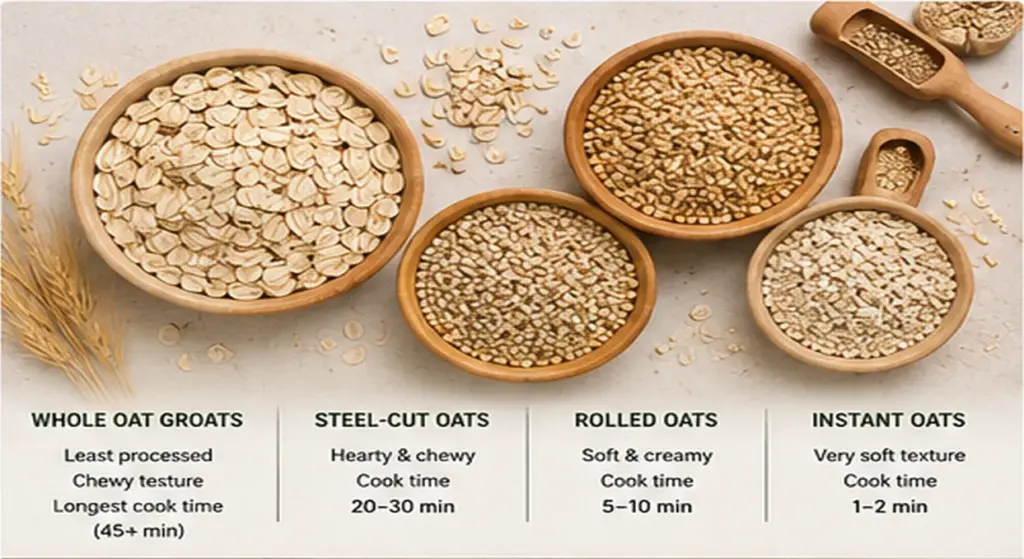
Every type of oat starts as the same grain. Processing is what changes texture and cook time, not core nutrition.
Whole oat groats. The least processed form. Chewy, and the longest to cook, often 45 minutes or more.
Steel-cut oats. Groats chopped into small pieces. Chewy texture, and a 20 to 30 minute cook time.
Rolled oats. Steamed, then flattened with rollers. Cooks in 5 to 10 minutes. This is the standard choice for most home cooks.
Instant oats. Pre-cooked, then dried and rolled thin. Ready in one to two minutes. The trade-off is a softer, sometimes mushy texture, and instant packets often carry added sugar.
The Real Health Benefits of Organic Oatmeal
Oats earned their health reputation the hard way. Through real clinical research, not marketing. Here’s what the evidence actually shows.
Heart Health and Cholesterol
Oats contain a soluble fiber called beta-glucan. In 1997, oats became the first food ever to earn an FDA health claim label. That claim was just about heart health. Mayo Clinic Health System confirms beta-glucan lowers blood cholesterol and reduces heart disease risk.
Already managing your numbers? Take a look at our guide on how high cholesterol affects your body. It pairs well with this one.
Blood Sugar
The same beta-glucan slows how fast sugar enters your bloodstream. This helps smooth out blood sugar spikes after eating. That said, oatmeal isn’t a treatment for diabetes, and portion size and toppings matter. A bowl loaded with syrup and dried fruit acts differently than a plain bowl with a little cinnamon.
Staying Full Longer
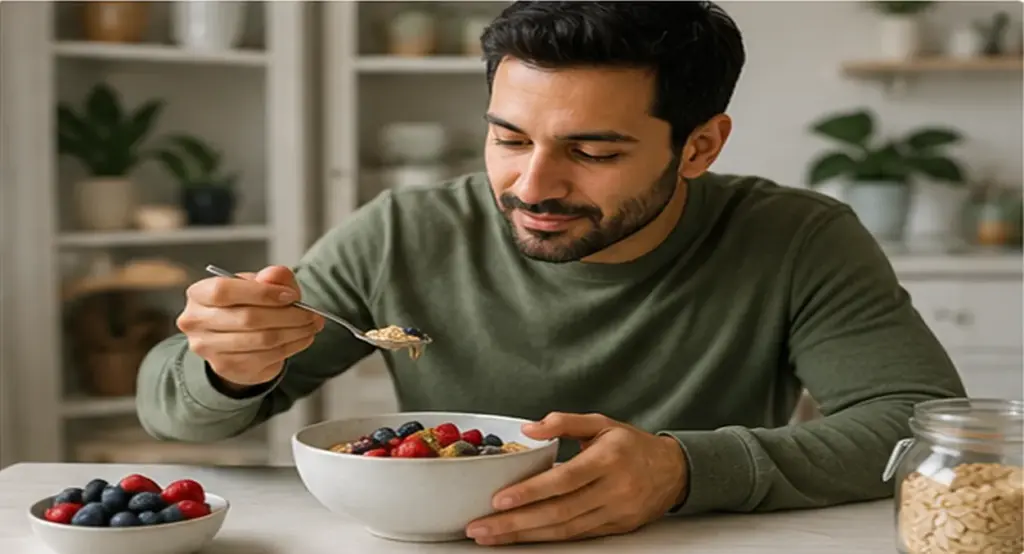
A half cup of dry rolled oats, cooked in water, runs about 165 calories. That’s 4 grams of fiber and 6 grams of protein. That mix of fiber and protein is what keeps you full for hours. It’s not just the water content.

Fiber matters here beyond just oats. Want to round out your fiber intake for the rest of the day? Our high-fiber snacks guide has options that pair well with an oatmeal breakfast.
How to Make Basic Organic Oatmeal
This base method works for rolled oats. Adjust timing for other types.
Want it ready for the whole week? Cook a big batch on Sunday. Split it into small containers. Reheat one each morning with a splash of milk to loosen it back up.
Ingredients:
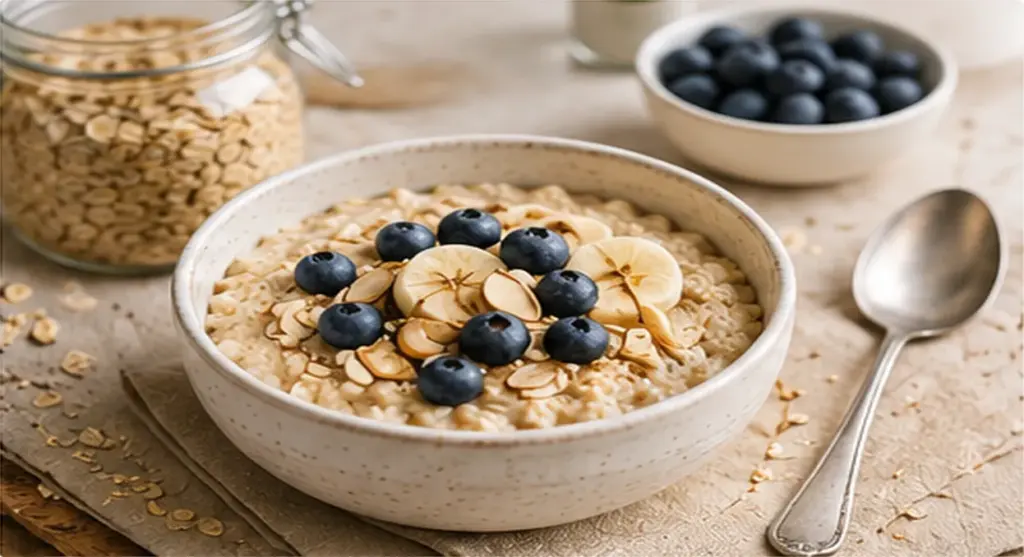
- 1 cup organic rolled oats
- 2 cups water or milk
- A pinch of salt
Steps:
- Bring the water or milk to a boil in a pot.
- Stir in the oats. Lower the heat to a gentle simmer.
- Stir occasionally so the oats don’t stick or scorch.
- Cook 5 to 10 minutes, until the texture matches what you like.
- Stir in the salt.
- Serve warm, with toppings of your choice.
Less liquid gives you a thicker bowl. More liquid gives you a creamier one. Adjust to taste once you’ve made it a few times.
Prefer your oats extra thick, almost like a spoon can stand up in it? Use slightly less liquid, closer to 1.5 cups per cup of oats. Want it more like a warm cereal you can sip? Add an extra splash past the standard 2 cups. Neither way is wrong. It’s just personal taste.
Boosting the Protein
Plain oatmeal is fiber-rich but not especially high in protein on its own. For a fitness-focused breakfast, that’s worth fixing.
Stir in a scoop of protein powder once the oats are off the heat. That way the heat doesn’t clump it. A spoonful of nut butter works too. So does a dollop of Greek yogurt, or a couple of eggs on the side. Our high-protein meal prep ideas guide has more combinations. Handy if you want to batch this for the week.
Overnight Oats for Busy Mornings
No stovetop needed. Combine 1 cup of rolled oats with 1 cup of milk in a jar. Add fruit, nuts, or a little honey. Cover it and refrigerate overnight. Stir and eat straight from the fridge, or warm it briefly if you prefer it hot.
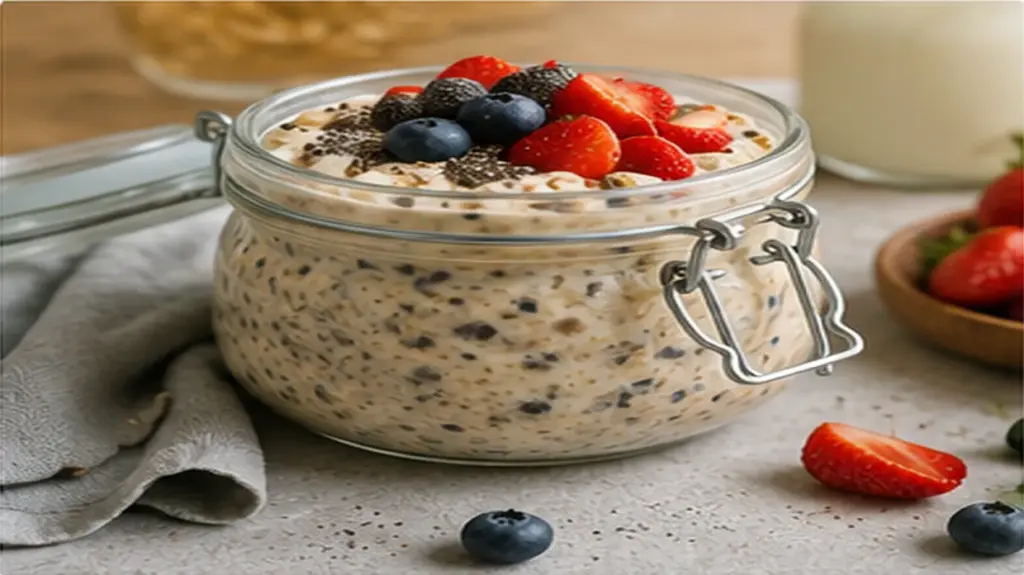
Want a dessert-style version? Our cookie dough overnight oats recipe is a genuinely popular one.
Sweet and Savory Ways to Serve It
Apple cinnamon. Cook oats in milk, stir in diced apple, and finish with cinnamon.
Peanut butter banana. Stir a spoonful of peanut butter into cooked oats, then top with sliced banana.
Pumpkin spice. Stir in a spoonful of pumpkin puree and a dash of cinnamon and nutmeg. Tastes like fall in a bowl, any time of year.
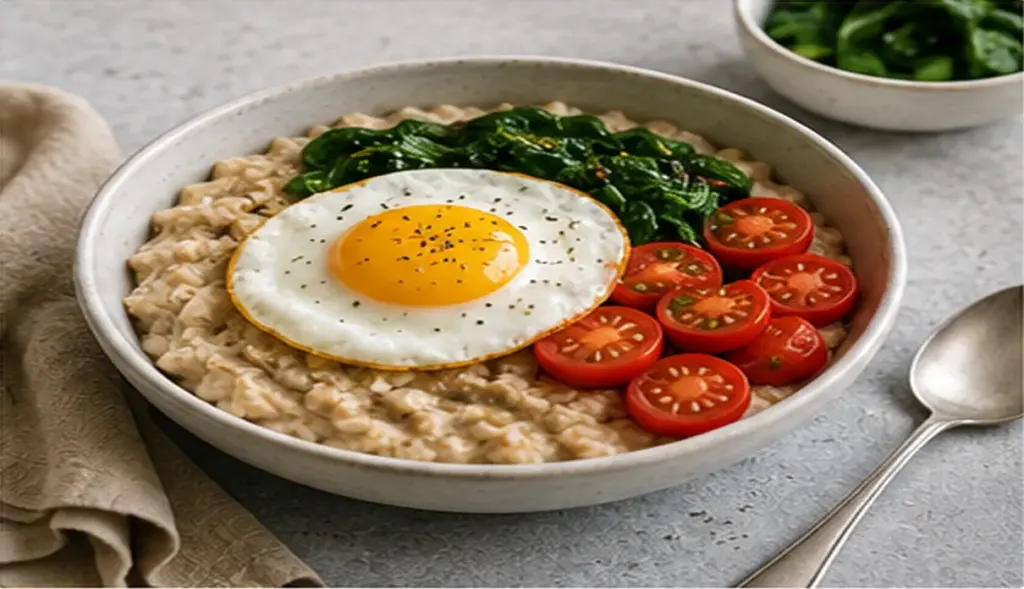
Savory egg oatmeal. Cook oats in water or broth, stir in sautéed spinach, and top with a fried egg. Our hard boiled egg calories breakdown is handy too. Good if a hard-boiled egg fits your morning better than frying one.
Cottage cheese and honey. Stir cottage cheese into warm oats off the heat, then drizzle with honey. Adds a solid protein boost with almost no extra effort.
Avocado and tomato. Cook plain oats, then top with sliced avocado, cherry tomatoes, and a pinch of salt. It’s closer to savory porridge than a sweet breakfast, and it works.
Berry and seed bowl. Mix in chia or flax seeds while the oats cook. Top with mixed berries once served. Simple, quick, and easy to keep on hand for busy weeks.
Oatmeal for Special Diets
Vegan. Swap dairy milk for oat, almond, or soy milk. Everything else in the base recipe stays the same.
Gluten-free. Oats are naturally gluten-free, but cross-contamination during processing is common. Look for oats specifically labeled gluten-free if you have celiac disease or a real sensitivity.
High-protein. Add Greek yogurt, a scoop of protein powder, or a spoonful of nut butter, as covered above.
Kid-friendly. Cut fruit into fun shapes for the topping. Let kids pick their own toppings from a small lineup of options. A little bit of choice goes a long way toward getting a bowl actually eaten, not just made.
Common Mistakes That Ruin Oatmeal
Not stirring enough. Oats release starch as they cook. Skip the stirring, and that starch settles and scorches on the bottom of the pot.
Wrong liquid ratio. Too little liquid leaves you with a dry, clumpy bowl. Too much turns it soupy. Start with the 1-to-2 ratio and adjust from there.
Cooking on too high heat. A hard boil cooks the outside of the oats fast while the inside stays undercooked. A gentle simmer works better every time.
Skipping salt. Even in sweet oatmeal, a small pinch of salt sharpens every other flavor.
A Simple Week of Bowls
Here’s what five easy mornings could look like. Monday: plain rolled oats with banana and a spoonful of peanut butter. Tuesday: overnight oats with berries, made the night before.
Wednesday: savory oats with a fried egg and hot sauce. Thursday: steel-cut oats with cinnamon and apple, started before bed in a slow cooker. Friday: instant oats with protein powder, for a fast morning.
None of these need special skills. Swap any bowl for another based on what’s in your fridge. The base method stays the same each time.
Fixing a Bowl That Went Wrong
Made it too thick? Stir in a splash of hot water or milk. Just a little at a time, until it loosens up.
Too thin or soupy? Let it sit off the heat for a minute or two. Oats keep absorbing liquid even after the pot is off the stove. It often firms up on its own.
Tastes flat? That’s almost always a salt problem, not a recipe problem. One more small pinch usually fixes it.
How to Choose and Store Organic Oats
Look for the USDA Organic seal on the package. The word “natural” isn’t a regulated claim, so don’t rely on it alone. A Non-GMO Verified label is a nice add-on. Organic status already bans genetic engineering on its own, though.
Check the ingredient list on flavored or instant varieties. Plain oats should be the only ingredient. Added sugar is common in flavored packets and can undo a lot of the benefit.
A Quick Budget Tip
Buying oats in bulk bags instead of small boxes usually cuts the cost per serving. Often by a good margin. A five-pound bag of organic rolled oats often costs less per bowl than a small box of instant packets. That’s true even with the higher organic price tag.
Store-brand organic oats are also worth a look. The oats themselves come from the same basic supply chain as name brands. You’re mostly paying less for the same product, just without the fancy box.
Store oats in an airtight container, somewhere cool and dry. Properly stored, dry oats keep well for up to a year without going rancid.
A Simple Way to Compare Two Bags at the Store
Say you’re standing in the cereal aisle. You’re holding two bags of rolled oats. One says “organic.” One doesn’t. Here’s a quick way to think it through.
Flip both bags over. Check the ingredient list first. Plain oats should be the only thing listed on both. If one has added sugar or oil, skip it, organic or not.
Next, check the price gap. Organic often costs a dollar or two more per bag. Ask yourself what you’re paying for: it’s the growing method, not extra nutrition. If you want to skip pre-harvest glyphosate, that price gap is buying you something real. If not, a plain regular bag with a clean ingredient list works just as well.
Common Misconceptions About Organic Oatmeal
Myth: Organic oatmeal has more fiber and protein. The macronutrient profile is essentially identical to regular oats. Organic status affects farming method, not the grain’s basic nutrition.
Myth: Instant oats are unhealthy. Plain instant oats are close to rolled oats in nutrition. They’re just processed thinner for a faster cook. The problem is often added sugar in flavored packets, not the oats themselves.
Myth: Oatmeal is only a breakfast food. Savory versions work fine for lunch or dinner. The base recipe doesn’t care what time it is.
Myth: Steel-cut oats are always the healthiest choice. They have a lower glycemic impact than instant oats for some people. But the difference between rolled and steel-cut is small. Both are whole grains with real fiber and beta-glucan content.
Myth: You need to buy oatmeal, not plain oats. Pre-flavored oatmeal cups often carry more sugar. A plain bag of oats you flavor yourself usually beats them. Buying plain oats and adding your own toppings often costs less and tastes better too.
Frequently Asked Questions
What are the real benefits of organic oatmeal? Beyond skipping pre-harvest glyphosate, the real health benefits come from oats in general. Heart support, blood sugar control, and fullness apply either way. Organic and regular oats deliver those benefits about equally.
How is organic oatmeal different from regular oatmeal? It’s grown without synthetic pesticides or fertilizers and certified by the USDA. Nutritionally, the two are very close.
Can I make organic oatmeal with non-dairy milk? Yes. Almond, oat, soy, or coconut milk all work in the base recipe without changing the method.
How long does organic oatmeal take to cook? Rolled oats take 5 to 10 minutes. Steel-cut oats take 20 to 30 minutes. Instant oats are ready in about a minute.
Is organic oatmeal worth the higher price? That depends on what you value. If you want to skip pre-harvest glyphosate, yes. If you’re mainly chasing extra nutrients, plain oats do the same job. For less money.
What can I add to organic oatmeal for extra flavor? Fresh fruit, nuts, cinnamon, honey, or maple syrup for a sweet bowl. Avocado, eggs, or sautéed greens for a savory one.
Does the brand of oats matter much? Not really, as long as the ingredient list is just oats. Store brands, name brands, and small local mills all work the same way once they hit your pot.
Conclusion: Organic Oatmeal Done Right
Organic oatmeal isn’t a magic health food. It isn’t more nutritious than the regular kind, either. What it offers is a cleaner growing process, most notably skipping pre-harvest glyphosate. Beyond that, you get the same well-documented benefits any oats bring. Real fiber. Real protein. A genuine FDA-recognized cholesterol benefit.
Start with the basic ratio, one part oats to two parts liquid, and build from there. Once you’ve got the base down, the toppings are where it gets fun. That’s where organic oatmeal turns into something you’ll look forward to each morning.
Key takeaways:
- Organic oatmeal mainly means skipping pre-harvest glyphosate, not extra nutrients.
- Beta-glucan fiber is behind oatmeal’s real, FDA-recognized cholesterol benefit.
- Rolled oats are the easiest starting point: 1 cup oats to 2 cups liquid, 5 to 10 minutes.
- Add protein powder, yogurt, or eggs if oatmeal alone isn’t filling enough.
- Store oats airtight, somewhere cool and dry, for up to a year.
- Watch added sugar in instant and flavored packets, that’s the real health trap.
Not medical advice: This content, and any calculator results on this site, are for general informational purposes only and are not a substitute for professional medical advice, diagnosis, or treatment. Always talk to a qualified healthcare provider before starting a new diet, exercise routine, or health program.
Related Articles You May Like