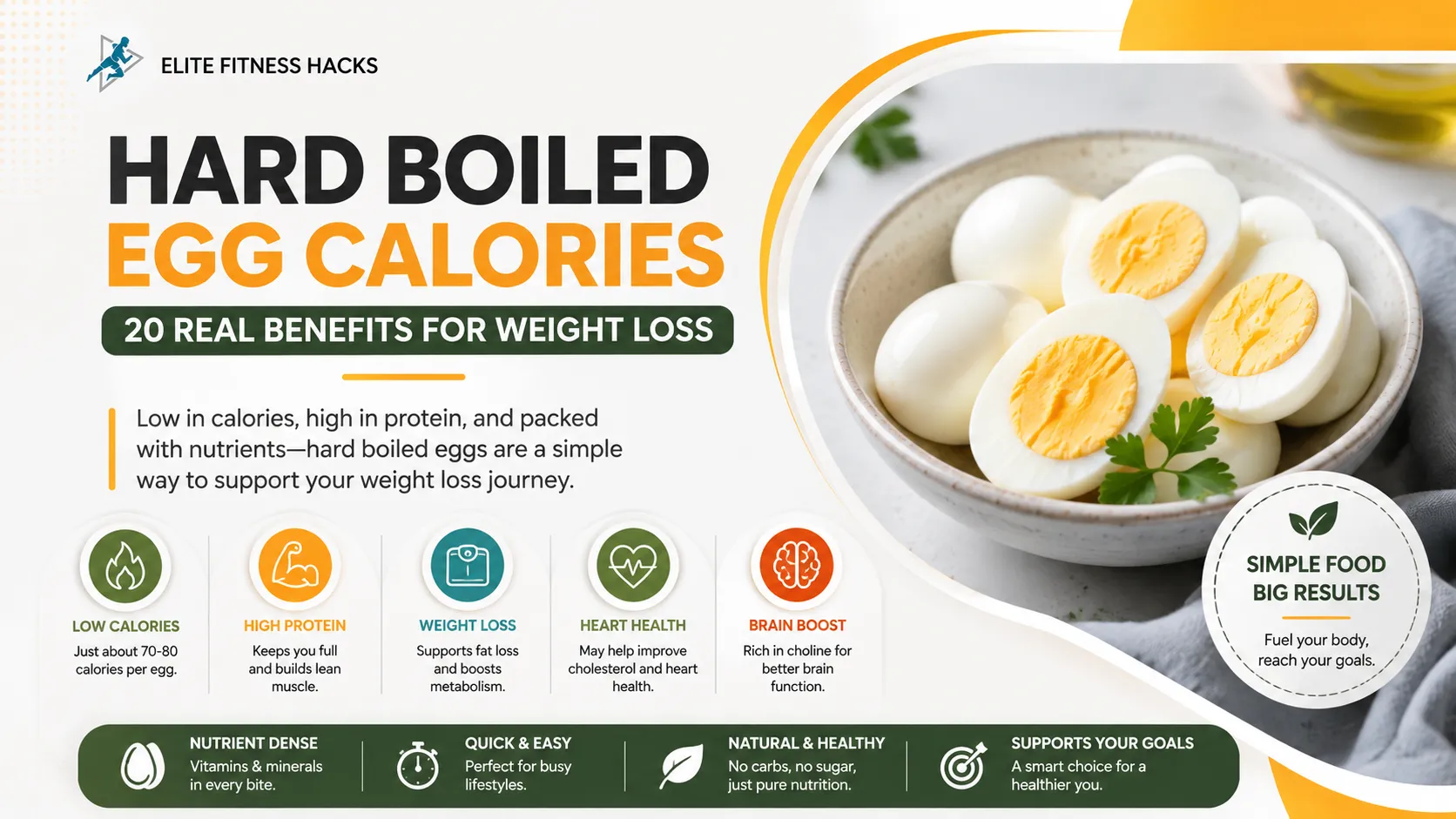
A hard boiled egg earns its reputation. It doesn’t just market its way into one. Low Hard Boiled Egg Calories. Real protein. Almost no prep beyond a pot of water. That combination is why it shows up in nearly every weight loss plan I build for clients.

This guide covers Hard Boiled Egg Calories. It shows what they actually mean for weight loss. It is sorted into honest categories, not a wall of identical bullet points. You get a 7-day meal plan too. Real safety notes. And the myths worth dropping.
Table of Contents
Hard Boiled Egg Calories by Size
Egg size changes Hard Boiled Egg Calories more than people expect. Here is the actual breakdown. It’s based on USDA FoodData Central:
| Egg Size | Weight | Calories | Protein | Fat | Carbs |
|---|---|---|---|---|---|
| Small | 38g | ~54 | 4.5g | 3.7g | 0.3g |
| Medium | 44g | ~63 | 5.5g | 4.2g | 0.4g |
| Large | 50g | ~78 | 6.3g | 5.3g | 0.6g |
| Extra-Large | 56g | ~90 | 7.5g | 6.0g | 0.6g |
| Jumbo | 63g | ~100 | 8.0g | 7.0g | 0.7g |
Hard Boiled Egg Calories for a large egg run about 78. That’s less than a slice of bread. It comes with 6 grams of protein attached. That ratio, protein per calorie, is the real reason eggs earn a spot in a weight loss plan. Calories alone tell you almost nothing without it.
Hard Boiled Egg Calories vs. Other Breakfast Foods
Numbers make more sense side by side. Here is how a large egg compares to common breakfast picks, per USDA data.
- 1 large hard boiled egg: about 78 calories, 6g protein.
- 1 slice of white toast: about 75 calories, 2g protein.
- 1 cup of cereal with milk: about 200 calories, 6g protein.
- 1 plain bagel: about 280 calories, 11g protein.
- 1 cup of Greek yogurt: about 130 calories, 22g protein.
Hard Boiled Egg Calories look almost identical to a slice of toast on paper. The real difference shows up in protein. About three times more per calorie than toast. That’s why eggs keep you full longer for a similar calorie cost.
Quick Calorie Math for Your Goals
Two eggs run about 156 calories with 12 grams of protein. Three eggs run about 234 calories with 18 grams of protein. That’s a useful anchor point once you know your daily target.
Not sure what your daily number should be? Our macro calculator works out your calorie and protein targets in a couple of minutes. Then you can see exactly how Hard Boiled Egg Calories fit into your day instead of guessing. Most people find they fit easily into almost any target once they see the actual math.
Weight Management Basics
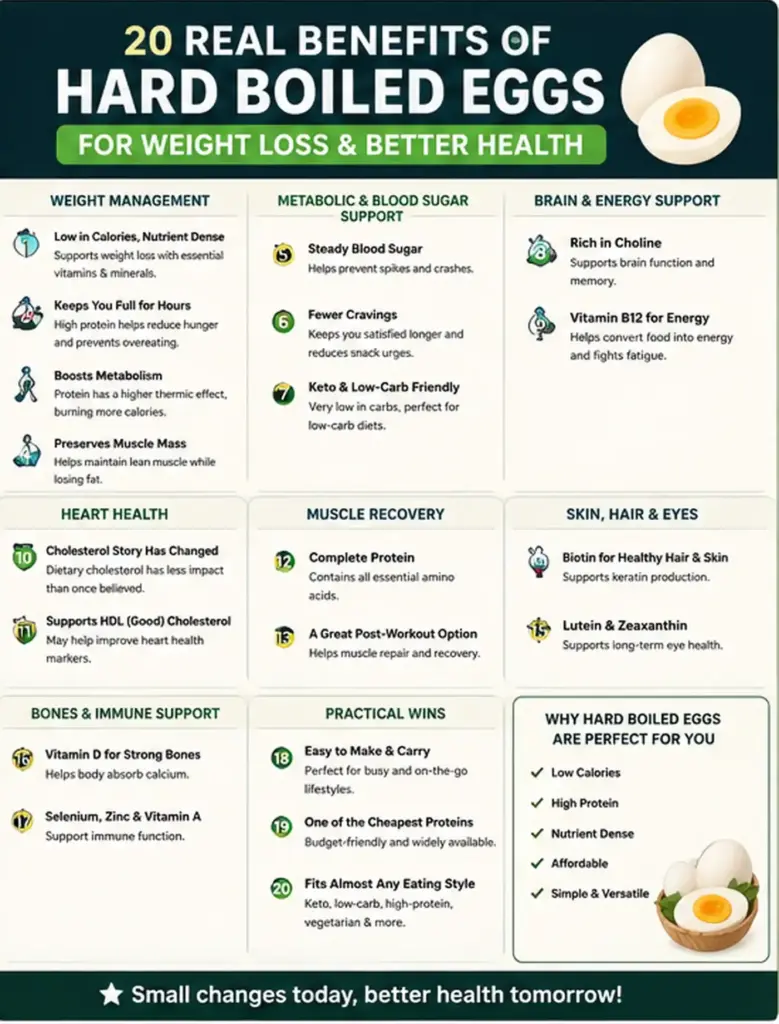
Hard Boiled Egg Calories do most of their work through four mechanisms below. None are dramatic on their own. Stacked together, they explain why eggs show up in nearly every weight loss plan.
1. Low calorie, nutrient dense Hard Boiled Egg Calories run low. The nutrition doesn’t: vitamin A, vitamin B12, iron, and selenium all come along with it. You are not trading nutrition away to keep calories down.
2. Keeps you full for hours Protein is more filling than carbs or fat, gram for gram. Hard Boiled Egg Calories lean heavily toward protein. Eating eggs at breakfast is one of the more reliable ways to avoid the mid-morning hunger crash.
3. A small metabolic edge Your body burns more energy digesting protein than carbs or fat. Researchers call this the thermic effect of food. It is real, though modest. It will not replace a calorie deficit. But it adds up over a week of high-protein meals.
4. Protects muscle during fat loss When you cut calories, you risk losing muscle along with fat. Enough protein helps your body hold onto lean mass while the scale moves down. Eggs are a cheap way to hit that number.

Metabolic and Blood Sugar Support
Hard Boiled Egg Calories come from a mix of protein and fat, with almost no carbs. That combination drives the three benefits below.
5. Steadier blood sugar Protein and fat slow down how fast food raises your blood sugar. An egg at breakfast tends to prevent the sharp spike and crash you get from cereal or toast alone.
6. Fewer cravings later in the day Steadier blood sugar usually means fewer sudden urges for chips or candy in the afternoon. This is not guaranteed for everyone. But it is a common, fair effect of a protein-forward breakfast.
7. Fits keto and low-carb plans An egg carries under a gram of carbs. That makes it one of the easier proteins to build a low-carb or keto day around. No math required.
Brain and Energy Support
8. Choline for brain function Egg yolks are one of the richest common food sources of choline. Your brain and nervous system depend on it, according to the NIH Office of Dietary Supplements. Most adults do not get enough of it from diet alone.
9. B12 for steady energy One large egg covers a real share of your daily B12. That’s a vitamin your body needs to turn food into usable energy. Low B12 is linked to fatigue. So this is not a small detail if energy is an issue for you.
Heart Health, Explained Accurately
10. The cholesterol story has changed A large egg has about 186 milligrams of cholesterol, all in the yolk. Current guidance no longer sets a strict daily limit for most healthy adults. Saturated fat affects blood cholesterol more than dietary cholesterol does, per Harvard Health. An egg a day has not been linked to higher heart attack or stroke risk. That’s true even in the largest long-term studies.
11. Supports HDL, the “good” cholesterol Eggs tend to raise HDL cholesterol. That type is generally considered protective. This does not cancel out a diet heavy in saturated fat and refined carbs though. Context still matters.
Muscle Recovery and Performance
12. Complete protein, no gaps Egg protein contains all nine essential amino acids. Your body uses them efficiently. That is why eggs are often the reference standard for protein quality in other foods.
13. A practical post-workout option Eggs after training give your body amino acids. That starts the muscle repair process. They are not magic. But they are a convenient, affordable way to hit your post-workout protein target.
Skin, Hair, and Eyes
14. Biotin for hair, skin, and nails Eggs carry biotin, a B vitamin involved in keratin production. Keratin is the protein that makes up hair and nails. A true biotin deficiency is rare. But eggs are a solid dietary source regardless.
15. Lutein and zeaxanthin for eye health These two antioxidants concentrate in the retina. They’re linked to better long-term eye health, notes Harvard Health. Eggs are one of the more absorbable sources. The fat in the yolk helps your body take them up.
Bones and Immune Support
16. Vitamin D for bone strength Eggs are one of the few natural food sources of vitamin D. Your body needs it to actually use the calcium in your diet. Many people run low on vitamin D, especially with limited sun exposure.
17. Selenium, zinc, and vitamin A for immune support These three nutrients all play a role in normal immune function. An egg is a convenient way to check that box. No need to plan a whole separate meal around it.
Practical Wins
Low Hard Boiled Egg Calories matter less if the food is expensive or a hassle to make. These last few benefits are about real-world convenience, not the calorie count itself.
18. Genuinely easy to make and carry Boil, cool, peel, done. No other high-protein food travels this well with this little effort involved.
19. One of the cheapest proteins available Eggs remain one of the least expensive ways to get complete protein. That matters if cost is part of why a diet succeeds or fails.
20. Fits almost any eating style Keto, low-carb, high-protein, vegetarian, budget-conscious. A hard boiled egg fits into nearly all of them without modification.
7-Day Hard Boiled Egg Meal Plan
This plan keeps a hard boiled egg or two in most meals. It doesn’t make every meal about eggs though. Pair it with vegetables and a reasonable calorie target for your body. No single food does the work of an entire diet on its own. Our macro calculator can help you set that target before you start.

| Day | Breakfast | Lunch | Dinner |
|---|---|---|---|
| 1 | 2 boiled eggs + whole wheat toast | Grilled chicken salad with boiled eggs | Baked salmon + steamed broccoli |
| 2 | 2 boiled eggs + Greek yogurt | Quinoa bowl with spinach and eggs | Stir-fried tofu and eggs |
| 3 | Egg and avocado toast | Tuna salad with boiled eggs | Grilled fish + sweet potatoes |
| 4 | Egg and oatmeal bowl | Boiled egg + mixed veggie wrap | Chicken stir-fry with eggs |
| 5 | Egg and cottage cheese | Boiled egg + hummus with cucumbers | Grilled shrimp + boiled egg salad |
| 6 | Scrambled eggs with veggies | Egg and lean turkey sandwich | Quinoa bowl + boiled egg |
| 7 | Poached eggs + spinach | Greek salad with eggs | Grilled chicken + hard boiled eggs |
Want more structure around a week like this? Our high protein meal prep ideas guide covers batch-cooking most of these components ahead of time.
Egg Myths, Corrected
Myth: Eggs raise your cholesterol and hurt your heart. Dietary cholesterol matters less than once believed. Saturated fat is the bigger driver of blood cholesterol, per Harvard Health.
Myth: There is a strict daily egg limit everyone should follow. Current guidelines do not set one fixed number for healthy adults. People with diabetes or existing heart disease should still talk to their doctor about what fits their situation.
Myth: Eggs cause weight gain. Hard Boiled Egg Calories run about 78 for a large egg. Real protein comes attached to that. Used in place of lower-protein, higher-calorie options, eggs tend to support weight loss rather than work against it.
5 Easy Hard Boiled Egg Hacks
Peeling and storing a hard boiled egg is where most people lose interest. Not the cooking. Not the Hard Boiled Egg Calories. These fix the annoying parts.
- Peel it fast. Roll the egg gently on the counter to crack the shell all over. Peel it under running water. The shell slides off in large pieces instead of tiny stubborn bits.
- Skip the sulfur smell. Boil for 10 minutes, not 20. Overcooking is what causes that gray ring and sulfur odor.
- Store them smart. Keep peeled or unpeeled eggs in a sealed container in the fridge for up to a week.
- Season before you’re bored of plain. Salt, pepper, everything bagel seasoning, or chili flakes all work in seconds.
- Cook a full dozen at once. Boiling 12 at a time covers most of a week. It takes the same 15 minutes as boiling 2.
Benefits Across Life Stages
For women Choline and healthy fats support hormone production. Eggs are a practical protein source during pregnancy too. Choline plays a documented role in fetal brain growth, per the NIH Office of Dietary Supplements. Vitamin D helps too. It supports strong bones, which matters more with age.
For men Zinc and healthy fats both play a role in normal testosterone production. Eggs alone will not meaningfully move that number on their own though. Where eggs help more directly is muscle repair after training. Also steady energy through B12.
For kids A hard boiled egg is an easy, mess-free source of protein and choline for a growing kid. It travels well in a lunchbox too, with no special storage needed. Building out a wider snack rotation? Our protein snacks for kids list has more ideas that pair naturally with eggs.
8 Ways to Eat Hard Boiled Eggs Without Getting Bored
Hard Boiled Egg Calories stay low no matter how you dress up the egg itself. Boredom is the only real barrier here, not nutrition.
- Egg salad lettuce wraps. Mix chopped eggs with Greek yogurt instead of mayo, then wrap in lettuce instead of bread.
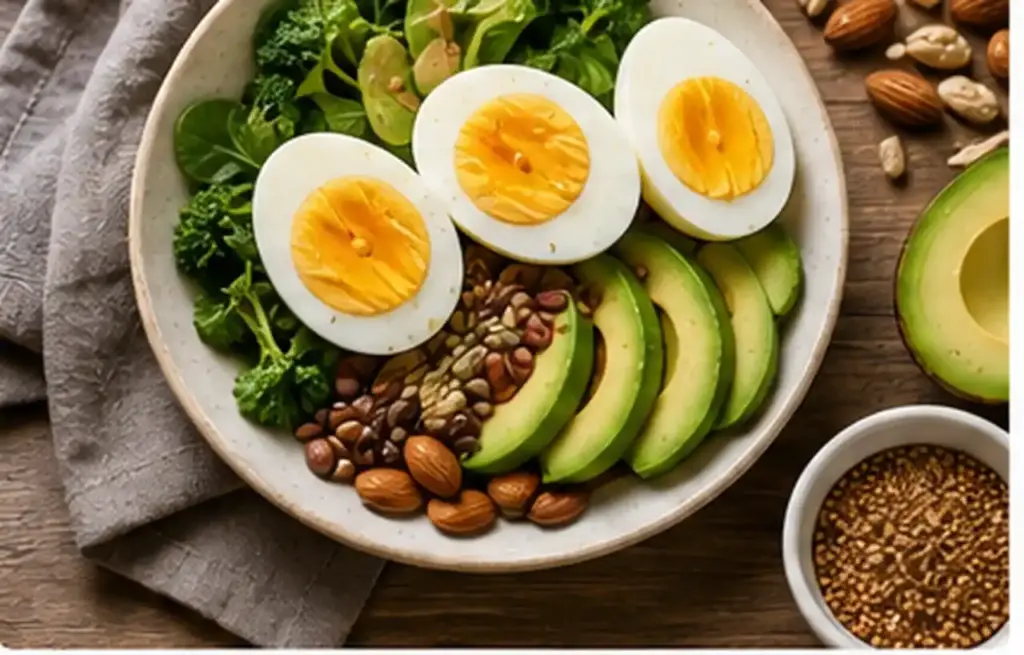
- Avocado egg boats. Halve an avocado, scoop a small well, and set a sliced egg inside.
- Salad topper. Sliced or quartered eggs add protein to almost any green salad in under a minute.
- Deviled eggs with hummus. Swap the usual mayo filling for hummus for a lighter, tangier version.
- Egg over sweet potato toast. Roasted sweet potato slices make a sturdier, higher-fiber base than bread.
- Chopped into soup. Diced egg adds protein and texture to a simple vegetable soup.
- Mixed into tuna or chicken salad. Extra protein without extra cooking.
- Stuffed into a pepper half. Chopped egg with a little seasoning fills a bell pepper half nicely for a quick snack.
Who Should Be Careful With Eggs
Eggs work well for most people, but a few groups should pay closer attention.
People managing heart disease or diabetes. The current science is more forgiving on cholesterol than it used to be. Still, talk to your doctor about how many eggs fit your plan if you already manage heart disease or diabetes. Skip the generic number.
Anyone eating undercooked eggs. A fully cooked hard boiled egg is low risk. Raw or undercooked eggs can carry Salmonella though. Cook until both the white and yolk are fully set, says the FDA.
People with an egg allergy. Egg allergies are real. They can range from mild hives to serious reactions. Skip eggs entirely if you have a diagnosed allergy. No exceptions for “just a little.”
People with existing kidney disease. High protein intake in general can be harder on kidneys that are already compromised. This does not apply to healthy kidneys. But it is worth a conversation with a doctor if you have kidney disease.
Anyone eating eggs and nothing else. Eggs are not a complete diet on their own. Pair them with vegetables, fiber, and other protein sources. Don’t build every meal around eggs alone.
Frequently Asked Questions
How many hard boiled eggs is too many in a day? Hard Boiled Egg Calories add up slower than most people expect. A large egg is only about 78. There is no single fixed number anymore for most healthy adults. Two to three a day fits comfortably into most diets. If you have a heart condition or diabetes, ask your doctor what number makes sense for you.
Can I eat hard boiled eggs every day for weight loss? Yes, for most people. Hard Boiled Egg Calories matter less than your total calories and diet quality as a whole. Eggs work best as part of a varied plan, not the entire plan.
Do hard boiled eggs really help with belly fat? Not in a targeted way. No food burns fat from one specific area of your body. What eggs do offer is protein. That protein supports a calorie deficit. A calorie deficit is what actually reduces fat over time, including around the midsection.
Is it safe to eat the yolk, or should I stick to egg whites? The yolk carries most of the vitamins, choline, and healthy fats. Skipping it means skipping most of the nutrition. Eat the whole egg, unless your doctor has told you otherwise.
What is the healthiest way to cook eggs for weight loss? Boiled or poached. Both skip the added butter or oil that frying and scrambling often include. Hard Boiled Egg Calories stay closest to the numbers in the table above, with nothing extra cooked in.
Final Thoughts
A hard boiled egg is not a miracle food. Nothing on this list works if the rest of your diet is working against it. What eggs do offer is real: low Hard Boiled Egg Calories, complete protein, and a genuinely low grocery bill.
Start with two or three eggs a day. Build them into meals you already eat. Give it a few weeks before judging the results. If cholesterol, kidney health, or an egg allergy applies to you, check with your doctor before making eggs a daily habit. For everyone else, a hard boiled egg is one of the easiest wins in a weight loss plan.
Not medical advice: This content, and any calculator results on this site, are for general informational purposes only and are not a substitute for professional medical advice, diagnosis, or treatment. Always talk to a qualified healthcare provider before starting a new diet, exercise routine, or health program.
Related Articles You May Like