Chia seeds are tiny, but skipping the soak isn’t just a texture mistake. It’s the difference between a smooth pudding and seeds that swell up somewhere you really don’t want them to. How long to soak chia seeds properly matters more than most recipes let on.
In my nutrition coaching work, chia seeds come up constantly as a quick way to add fiber and omega-3s to a meal without much effort. The soaking step, and specifically how long to soak chia seeds, is the part people skip or rush first when they’re in a hurry, which is exactly the part worth understanding.
This guide covers the real soak time, the ratio that actually works, why soaking matters more than most articles admit, and how to use soaked chia seeds without wasting half the jar.
Table of Contents
What Are Chia Seeds?
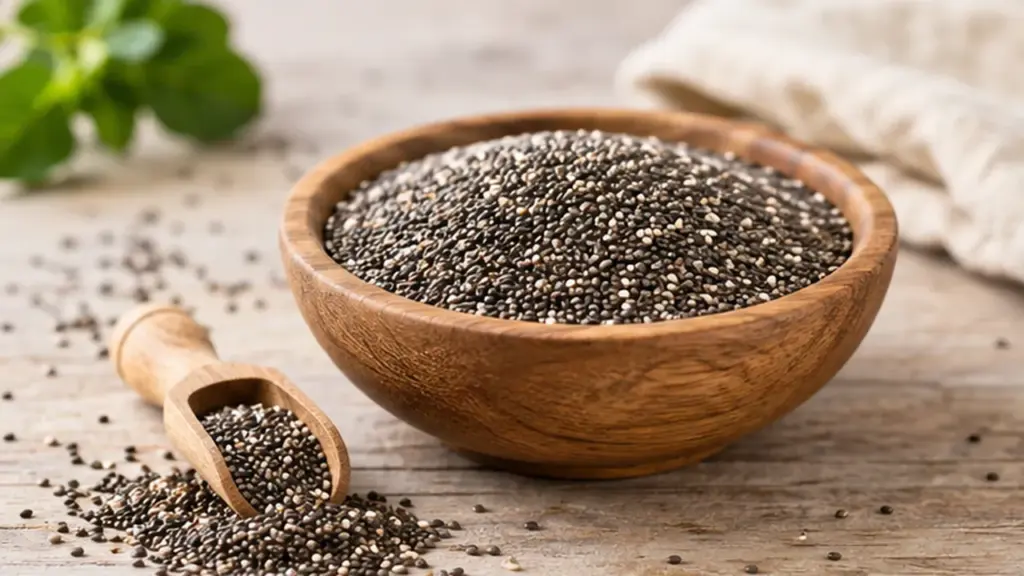
Before getting into how long to soak chia seeds, it helps to know what you’re actually working with. Chia seeds come from the Salvia hispanica plant, native to Mexico and Guatemala, where they were a staple food for the Aztecs and Maya long before “superfood” was a marketing term. They are small, oval, and nearly flavorless, which is exactly why they work in almost anything.
What makes them worth the hype is the actual nutrition: fiber, plant-based omega-3s, complete protein, and a solid list of minerals, all in a seed you can add to a meal without changing how it tastes.
Why Soaking Actually Matters
Understanding how long to soak chia seeds starts with understanding what soaking does. Dry chia seeds are hard, and still very absorbent. Soaking turns them into a soft gel before they reach your digestive system. That is the whole point.
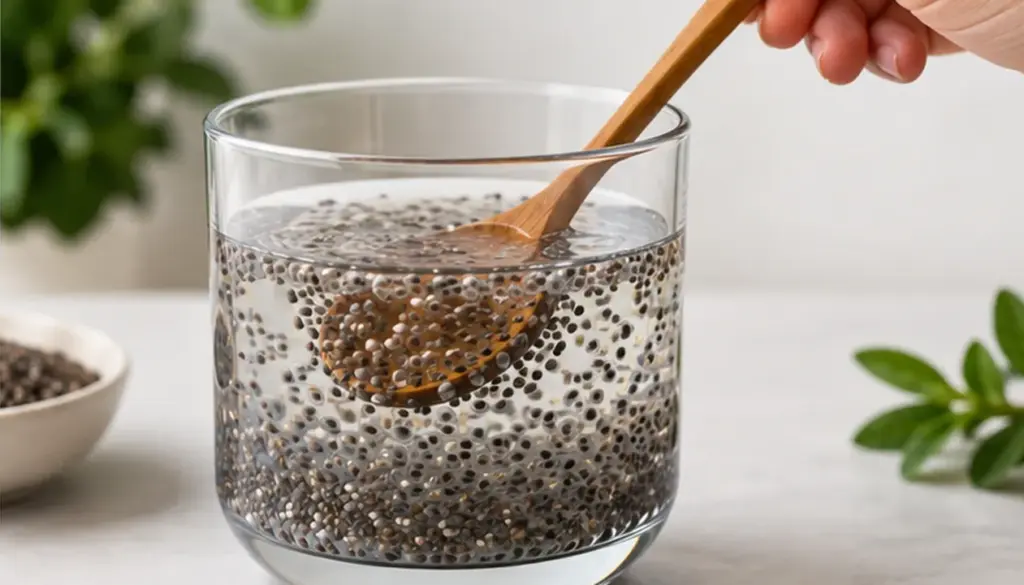
Here is the part most articles skip. Chia seeds can absorb up to 27 times their own weight in liquid. That figure comes from gastroenterology research presented at the American College of Gastroenterology’s annual meeting. In one documented case, a man swallowed a tablespoon of dry chia seeds followed by a glass of water. The seeds expanded in his esophagus before reaching his stomach and formed a blockage that required an emergency procedure to remove, per the ACG case report. He had a prior history of swallowing difficulty, which raised his risk, but the lesson applies to everyone: never eat chia seeds dry, and always give them time to fully expand in liquid first.
Beyond safety, soaked chia seeds are simply easier to digest. The gel slows down digestion and provides a steadier release of energy than the dry seeds would, which is also why soaked chia keeps you fuller for longer than a spoonful straight from the bag.
How Long to Soak Chia Seeds: The Real Answer
Here is the direct answer to how long to soak chia seeds, without circling around it for three paragraphs first.
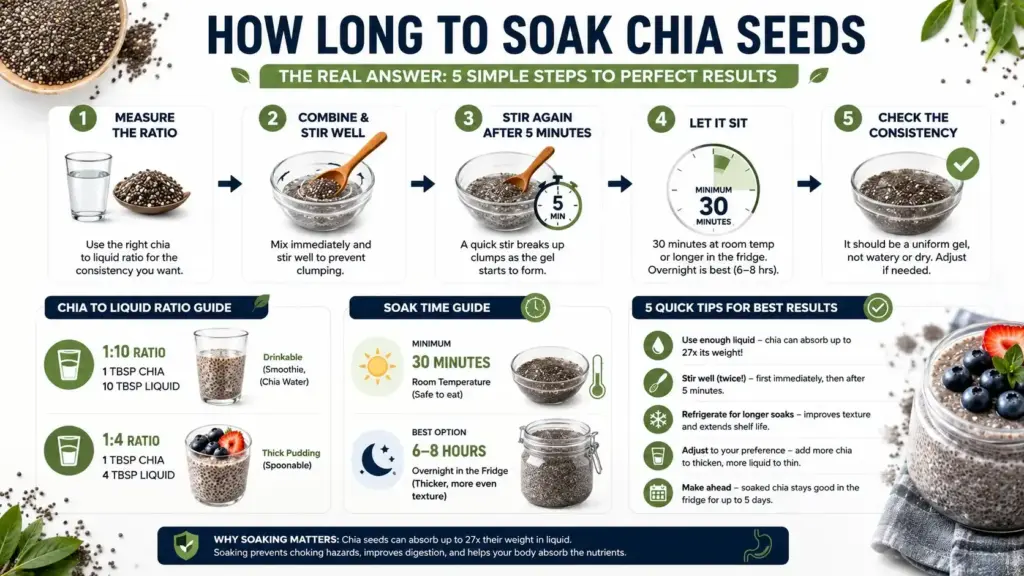
Minimum: 30 minutes. This is enough time for the seeds to fully gel and become safe to eat. Room temperature is fine for a quick soak.
Best: overnight in the fridge, 6 to 8 hours. This gives you a thicker, more even texture, and it means breakfast is ready before you are.
Here is the process, without the padding most guides add to stretch it out.
Measure your ratio. Use 1 tablespoon of chia seeds to about 10 tablespoons of liquid for a drinkable consistency, or closer to 1:4 if you want a thicker pudding you eat with a spoon. Water, almond milk, coconut water, and fruit juice all work.
Combine and stir well. Mix the seeds into your liquid right away and stir immediately. Chia seeds clump fast, and a good stir in the first minute saves you from picking apart dry clusters later.
Stir again after 5 minutes. The seeds start gelling almost immediately, and a second stir breaks up any clumps that formed before the gel fully set.
Let it sit. Thirty minutes on the counter, or longer in the fridge if you have the time. The texture will keep improving up to a few hours in, then hold steady.
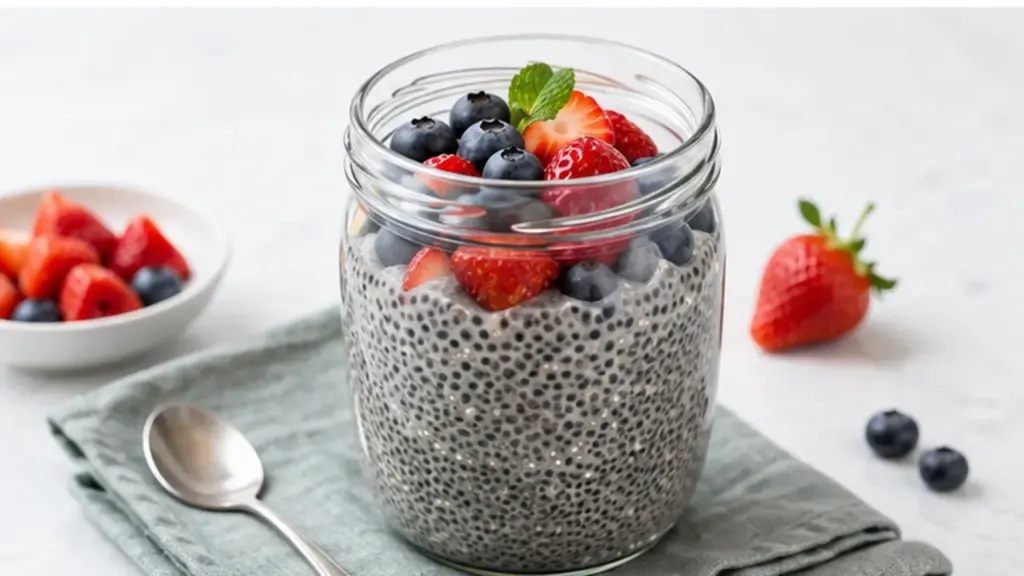
Check the consistency before eating. It should be a uniform gel, not watery and not dry. Too thin? Add a spoonful more chia. Too thick? Add a splash more liquid.
Common Mistakes That Ruin the Texture
Most soaking problems come down to one of five things. Getting how long to soak chia seeds right only solves part of the equation.
Not soaking long enough. This is the most common mistake with how long to soak chia seeds. Even 15 minutes leaves seeds partly hard in the center. Give it the full 30 minutes minimum, or overnight if you can.
Using too little liquid. Skimping on liquid is the fastest way to end up with a clumpy, uneven gel instead of a smooth one, no matter how long you let it soak. Stick close to the ratios above rather than eyeballing it the first few times.
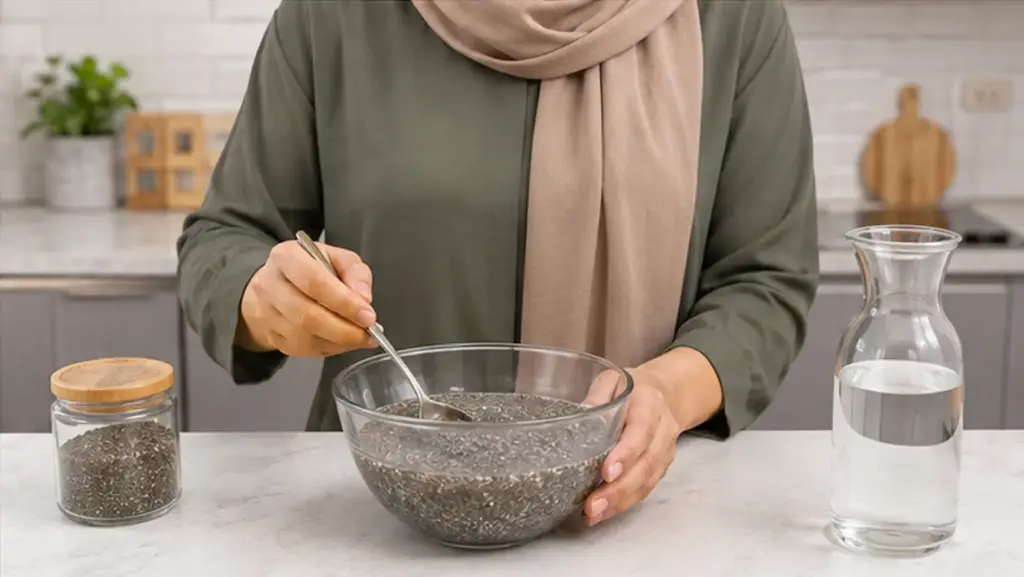
Skipping the second stir. Chia seeds sink and clump within the first few minutes. One stir at the start and a second stir five minutes later prevents the dense little balls that never fully gel.
Ignoring your own tolerance. Fiber this concentrated can hit differently person to person. Start with a smaller amount and build up rather than assuming a full serving on day one is fine.
Using old seeds. Chia does not spoil quickly, but seeds well past their expiration date can smell faintly rancid and soak up liquid less evenly. Check the date before you buy in bulk.
5 Tips for Better Results
Once you have how long to soak chia seeds down, these five habits make the results noticeably better.
Flavor the soak, not just the topping. Add vanilla extract, cinnamon, cocoa powder, or a spoonful of honey directly into the soaking liquid. The flavor has time to actually absorb into the gel instead of just sitting on top.
Store it properly. Soaked chia seeds keep in an airtight container in the fridge for up to five days, which makes a big batch on Sunday a real time-saver for the whole week.
Start small if you’re new to chia. One to two tablespoons a day is a reasonable starting point. Chia is very high in fiber, and adding too much too fast is the most common reason people get put off by digestive discomfort that has nothing to do with the seeds themselves being a problem.
Drink water alongside them. Since chia absorbs liquid so aggressively, staying hydrated through the day helps everything move the way it should. Eight to ten glasses of water is a reasonable daily target if chia is a regular part of your diet.
Don’t limit yourself to pudding. Soaked chia blends into smoothies without changing the flavor, stirs into oatmeal for extra staying power, and adds moisture to muffin or pancake batter. If you want more ideas for working protein-dense ingredients like this into a full week of eating, our high protein meal prep ideas guide covers exactly that.
Chia Seed Nutrition, By the Numbers
Whatever you decide about how long to soak chia seeds, the nutrition underneath stays the same. One ounce of chia seeds, about two tablespoons, contains roughly 140 calories, 5 grams of protein, 9 to 10 grams of fiber, and around 5 grams of omega-3 fatty acids, per USDA FoodData Central.
The fiber is the real headline. Nearly 10 grams per ounce puts chia ahead of most whole foods, and it supports digestion and steady blood sugar. Our high fiber snacks list has more options if you’re building a fiber-forward day around foods like this one.
The protein is complete. Chia contains all nine essential amino acids. That is unusual for a plant food, and it makes chia genuinely useful for anyone eating mostly or entirely plant-based.
The omega-3s come with a caveat worth knowing. Chia provides ALA, a plant-based omega-3 your body has to convert into the more usable forms found in fish, EPA and DHA. That conversion rate is fairly low, according to the NIH Office of Dietary Supplements. Chia is a solid addition if you avoid fish. It is not a full replacement for it though.
Minerals round out the picture. Calcium, magnesium, phosphorus, and iron are all present in meaningful amounts, which matters if any of those are gaps in your regular diet. None of this changes based on how long to soak chia seeds, only the texture and safety do.
Ways to Use Soaked Chia Seeds
Once how long to soak chia seeds stops being a question you have to look up, using them becomes the easy part. Soaked chia works anywhere you want extra fiber and staying power without changing the flavor of what you’re already eating.
For breakfast, stir it into oatmeal or Greek yogurt, or blend it straight into a smoothie. For lunch, a spoonful on top of a salad or grain bowl adds texture without overpowering anything. For snacks, blend soaked chia into homemade energy bites or protein balls for extra binding and fiber.
It also pairs naturally with other whole foods. Berries add antioxidants. Nuts add healthy fat. Leafy greens blended into a smoothie round out a genuinely nutrient-dense combination. If you’re building out a broader rotation of high-fiber, plant-forward foods, our nutrition strategy guide covers how to structure that without it feeling like a diet overhaul.
One caution worth a direct mention: because of the swallowing risk with dry or under-soaked seeds, supervise young children closely if you’re introducing chia into their food, and always make sure it’s fully gelled first, not just lightly dampened.
Buying and Storing Chia Seeds
Getting how long to soak chia seeds right matters less if the seeds themselves are stale or poor quality to begin with.
Choosing seeds. Organic and non-GMO are worth seeking out when your budget allows. Conventional chia is nutritionally similar though. Skip anything discolored or with an off smell, both signs of seeds past their prime.
Whole versus ground. Whole seeds hold their texture better in pudding and toppings. Ground chia blends more smoothly into batters and smoothies, and some people find it easier to digest since the shell is already broken down. Keeping both on hand covers most use cases.
Storage before soaking. Dry, unsoaked chia seeds keep for up to two years in a cool, dark pantry thanks to their natural antioxidant content. Once soaked, that shelf life drops to about five days in the fridge, so only soak what you’ll realistically use.
Frequently Asked Questions
Do I really need to soak chia seeds, or can I just eat them dry? Soak them. Beyond the texture and digestion benefits, there is a real, documented risk. Dry chia seeds can swell and block your throat if swallowed without enough liquid, especially if you have a history of swallowing trouble. Knowing how long to soak chia seeds is a small extra step for a real safety reason, not just a preference.
What’s the right chia-to-liquid ratio, once I know how long to soak chia seeds? It depends on what you’re making. Closer to 1:10 gives you a thin, drinkable texture. Closer to 1:4 gives you a thick, spoonable pudding. Start thicker and thin it out, since adding liquid is easier than fixing a too-watery batch.
Can I use milk, juice, or plant milk instead of water? Yes, and it’s often better. Almond milk, coconut water, and fruit juice all work well and add flavor the seeds soak up as they gel.
I forgot to soak them overnight. Is 30 minutes actually enough? Yes. Thirty minutes at room temperature is enough for the seeds to fully gel and be safe to eat. Overnight just gives you a smoother, more consistent texture, not a safety difference.
How long do soaked chia seeds last in the fridge? Up to five days in a sealed, airtight container. After that, texture and freshness start to decline even if they’re not spoiled outright.
How much chia seed is too much in a day? Most people do fine with 1 to 2 tablespoons daily. Going well beyond that, especially without enough water, is the most common cause of the bloating or digestive discomfort people sometimes blame on chia itself.
Does soaking chia seeds change their nutrition? No. Soaking changes the texture and how easily your body handles the seeds, not the fiber, protein, or omega-3 content. You get the same nutrition either way, soaking just makes it safer and easier to digest.
Can I speed up how long to soak chia seeds if I’m in a hurry? Not really, and it’s not worth trying. Warm liquid gels slightly faster than cold, but the seeds still need real time to fully expand. If you’re truly short on time, a 30-minute room-temperature soak is the fastest safe option, not a shortcut around it.
Conclusion
If you remember one thing about how long to soak chia seeds, make it this: at least 30 minutes, ideally overnight, in roughly 4 to 10 parts liquid depending on the texture you want. That single step is what turns a genuinely nutrient-dense seed into something both safe and easy to actually enjoy.
Start with a small batch this week. Once how long to soak chia seeds and the right ratio feel automatic, working soaked chia into breakfast or a snack stops being a recipe you follow and just becomes something you do.
Not medical advice: This content, and any calculator results on this site, are for general informational purposes only and are not a substitute for professional medical advice, diagnosis, or treatment. Always talk to a qualified healthcare provider before starting a new diet, exercise routine, or health program.
Related Articles You May Like