
Every new runner hits the same wall. Week one feels exciting. By week three, the alarm wins and the shoes stay in the closet.
That drop-off is not your fault. It happens when motivation is treated as a feeling, not a system. Running motivation for beginners rarely comes from willpower alone. It comes from structure. Clear goals. A realistic schedule. The right gear. Small rewards that keep the habit alive once the excitement fades.
This guide covers ten tips new runners can use today. Each one explains why it works, not just what to do.

Table of Contents
Why Running Motivation Fades So Fast for New Runners
The first few runs feel new and fun. Your brain gets a little reward each time you finish. That is why so many beginners feel great in week one.
But that new-runner buzz fades fast, often within two or three weeks. That is right when running starts to feel like work.
This is also when daily choices get harder. Should I run today? That question gets tiring fast. Runners who stick with it are not always more disciplined. They just remove the daily choice. Strong running motivation for beginners usually comes from routine, not willpower. A good routine makes running the default choice, not a daily debate.
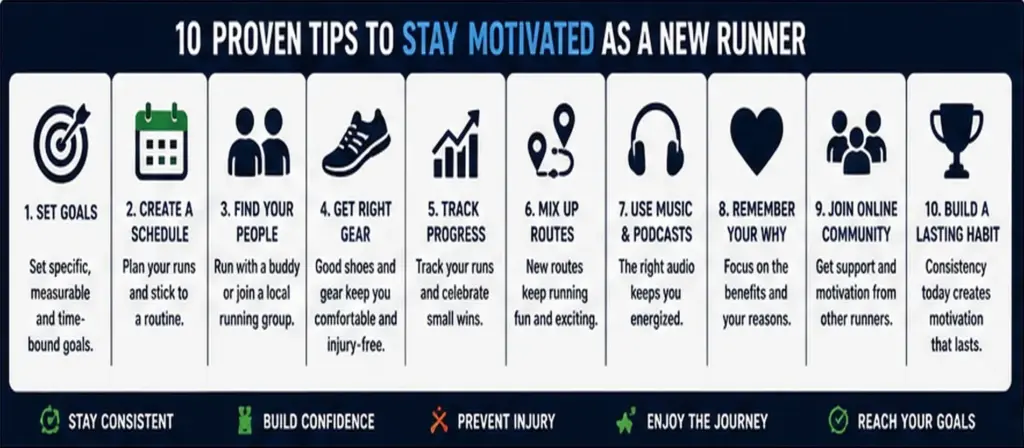
1. Set Specific, Measurable Goals
A vague goal like “run more” gives your brain nothing to grab onto. A clear goal gives it a target. Clear targets are the fastest route to real running motivation for beginners.
Be specific. Skip “run more.” Try “run 2 miles, three times this week.” That tells you exactly what success looks like today.
Make it measurable. Log your runs in an app or a notebook. Track distance, pace, and how many days you actually ran. Watching those numbers grow, even slowly, is one of the best motivators a new runner has.
Add a deadline. A goal with no timeline tends to drift. Aim to finish a 5K in ten to twelve weeks. That gives your training real urgency, but stays realistic for a true beginner.
Mix short-term and long-term goals. Weekly targets, like three runs totaling six miles, keep you focused day to day. Bigger targets, like a first half marathon next year, give the weekly grind more meaning. A simple framework like the SMART fitness goals method helps you set both at once.

2. Build a Realistic Running Schedule
A schedule turns running from “maybe today” into “already decided.” That shift matters more than most beginners expect. It is one of the simplest boosts to running motivation for beginners you can build in a single week.
Pick fixed days and times. Run on the same three or four days each week. A set time helps the habit stick faster than random sessions ever will. Doing it often builds the habit in the first two months. Speed comes later.
Add mileage slowly. New runners often get hurt by doing too much, too soon. Mayo Clinic Health System advises runners to avoid increasing weekly mileage by more than 10 percent. If you ran 6 miles last week, add no more than half a mile this week. It feels slow. It is also how you dodge the shin splints that stop so many beginners in month two.
Mix up your training. Easy runs, one faster effort, and a longer weekend run each train your body in a different way. This also fights the boredom of running the exact same workout every day.
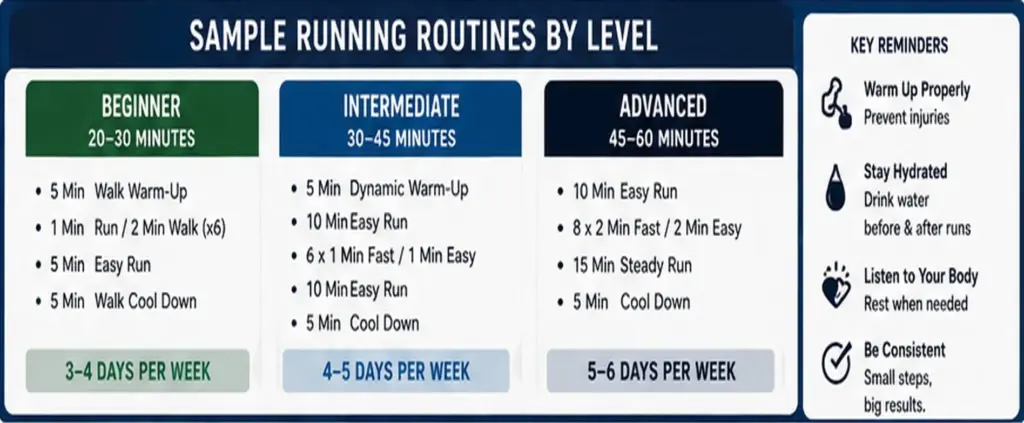
Here is a sample week for a beginner who already walks or does light cardio.
| Day | Activity |
|---|---|
| Monday | 2 to 3 mile easy run |
| Tuesday | Rest or cross-training |
| Wednesday | 3 mile run with a few faster bursts |
| Thursday | Rest |
| Friday | Strength training at home |
| Saturday | 3 to 4 mile long run, easy pace |
| Sunday | Rest or a short walk |

Strength work matters more than beginners think. Strong hips and a strong core take pressure off your knees and ankles. A simple home gym setup for cross-training days makes those extra sessions easy to fit in.

If you have a heart condition or joint pain, talk to your doctor first. The same goes if you have not been active in a while. This matters most before you try any fast, hard effort.
3. Find a Running Buddy or Local Group
Solo running works for some people. But many beginners quit faster without any social pull keeping them on the calendar. A training partner is one of the most reliable sources of running motivation for beginners.
It keeps you honest. It is easy to skip a solo run. It is much harder to leave a friend waiting at the trailhead. That small bit of pressure can get you out the door on low-energy days.
It offers real support. A running partner knows the struggles of early training. The side stitches. The pace worries. The days when 2 miles feels like 10. Sharing that with someone in the same boat makes it easier to push through.
It adds fun competition. A little friendly rivalry can turn a chore into a game. Something as small as who finishes their weekly mileage first is enough.
To find a partner, check local running clubs. Many host beginner nights. You can also search running groups on social apps or fitness apps built around your city.
4. Get the Right Gear Before You Need It
Gear will not make you love running. But the wrong gear can make you quit before you find out if you love it.
Shoes come first. A proper running shoe, fitted to your foot and stride, cuts down on blisters and joint pain. Many running stores offer a free fit check before you buy. It is worth doing.
Clothing should move sweat away, not trap it. Moisture-wicking fabrics pull sweat off your skin. Cotton does the opposite. It soaks up sweat, gets heavy, and rubs your skin raw on longer runs.
A few extras help. A basic GPS watch or phone app tracks pace and distance for you. This supports the goal-tracking tip above. A water belt helps once your runs pass 40 minutes. Before that, water before and after your run is usually enough.
You do not need fancy gear on day one. Good shoes and one or two moisture-wicking shirts cover most of what a beginner needs for the first months. Comfortable gear quietly protects your running motivation for beginners more than any app or gadget.

5. Track Progress and Celebrate Small Wins
People stick with habits they can actually see progress in. Running works the same way. Visible progress is a direct, reliable driver of running motivation for beginners.
Keep a simple log. Use an app, a spreadsheet, or a paper notebook. Write down your distance and how the run felt. Look back after a month. Your “hard” pace from week one is often your warm-up pace by week four. That is real, visible proof that the work is paying off.
Reward your milestones. New shoes after your first full month of running. A favorite meal after your first 5K. The reward does not need to cost much. It just needs to mark the win, so your brain files it as worth doing again.
Say the win out loud. Tell yourself, or a friend, “I ran three times this week like I planned.” That sounds small. But naming the win makes it stick more than letting it pass by unnoticed.
Wins worth celebrating: your first 5K. Four straight weeks on schedule. Your slowest mile ever run without a walk break. That last one is often the hardest milestone of all.
6. Change Your Routes Often
Running the same block on repeat is one of the fastest ways to turn a habit into a chore. Boredom quietly kills more running motivation for beginners than injuries do.
Change your scenery. A new park, a different neighborhood, or a path by the water can turn a routine run into an adventure.
Vary your terrain. Hills build strength that flat routes cannot. Trail running works small stabilizing muscles that pavement never touches. Add new terrain slowly, since it puts extra stress on joints and tendons at first.
Use a route app. Running apps can suggest new loops near you based on distance and hills. No more guessing where to go.
Switching routes also spreads the impact across different surfaces. Many coaches believe this lowers the risk of overuse injuries from pounding the same hard pavement every day.
7. Use Music and Podcasts With Purpose
Sound can change how a run feels. It works best when you choose it on purpose, not just hit shuffle and hope.
Build a real playlist. Upbeat songs with a steady beat can make an easy run feel lighter. Many runners find that matching the beat to their stride makes their pace feel more natural.
Save audiobooks for long, slow runs. A story you actually want to keep hearing gives you a reason to stay out longer. This helps most on the long weekend run, where boredom, not fitness, is the real enemy.
Podcasts fit easy days well. Shows built for runners, such as The Runner’s World Show or Another Mother Runner, mix training tips with real support. They make 30 minutes fly by.
On workouts where pace and breathing matter most, like tempo runs, many runners prefer silence. It helps them stay tuned in to their own effort.
8. Remember Why Running Motivation for Beginners Really Matters
When the schedule feels hard to keep, it helps to remember the actual payoff. The benefits are real and worth a quick reminder.
Your body benefits. Running strengthens your heart and builds fitness over time. It also supports healthy weight management. The CDC recommends at least 150 minutes of moderate aerobic activity each week for adults. Three or four beginner-friendly runs a week can hit that goal on their own.
Your mind benefits too. Running does more than pass the time. Harvard Health notes that exercise lowers stress hormones and triggers feel-good brain chemicals called endorphins. Together, they help calm your mood. A large 2023 review also found that regular activity eased depression, anxiety, and stress more than sitting still did. Pairing your runs with simple relaxation practices for a calmer mind can stretch that relief well past your run.
Your confidence grows. Every goal you hit, even a small one, proves you can set a target and reach it. That confidence tends to spread into other parts of your life too.
Fueling your runs the right way also matters. A basic nutrition strategy built around your training speeds up recovery. It also makes long runs feel much easier.
9. Join an Online Running Community
An online group stretches the support of a local running club to any time zone or schedule you keep. It is a solid backup source of running motivation for beginners if there is no club nearby.
Share your progress. Posting your weekly mileage, even to a small group, adds light social pressure. Many beginners find this surprisingly effective.
Join a challenge. Virtual races and monthly mileage challenges give you a clear target. You also get a group of strangers chasing the same goal. That can push you further than a solo goal would.
Use the shared resources. Active communities often share training plans and gear advice. They also share honest fixes for common problems, like side stitches or knee pain.
Reddit’s running community, Strava’s activity feed, and location-based Facebook groups are some of the busiest spaces for new runners.
10. Build Running Motivation for Beginners That Lasts
Running is a long game. Lasting running motivation for beginners depends on how you handle the rough patches, not on avoiding them.
Expect setbacks. A missed week, a slow run, or a small ache is not proof that you are failing. It is a normal part of building any new habit.
Show up anyway, even on low-energy days. You do not need to run far or fast on those days. A short, easy jog keeps the habit alive when you feel like skipping it. Often, just showing up was the hard part.
Adjust your goals instead of dropping them. If a 5K in eight weeks feels too fast, stretch the timeline. Do not quit outright. Flexibility keeps you in the game long enough to actually improve.
Focus on how running makes you feel. Notice your mood after a run, apart from your pace or distance. That shift in focus is often what carries beginners past the point where most people quit.
Common Mistakes That Kill Running Motivation for Beginners
A few habits quietly drain motivation faster than almost anything else. Most beginners fall into at least one of them.
Doing too much, too soon. Eager beginners often run every day in week one, get sore or hurt, and quit by week three. Rest days are not wasted time. They are when your body actually gets stronger.
Comparing your pace to seasoned runners. Social feeds are full of fast times from people with years of training behind them. Comparing your first-month pace to their current pace is not a fair fight.
Skipping recovery. Sore, tight muscles make every run feel harder than it should. That drains motivation fast. Small habits, like an occasional massage for muscle recovery, can stop soreness from piling up.
Chasing perfection instead of consistency. Missing one planned run is not a failure. Treating that miss as a reason to quit the whole plan is what actually derails your progress.
Frequently Asked Questions
What is the fastest way to build running motivation for beginners? Start with one clear, doable goal, like running 1 mile without stopping, and build from there. Early, visible progress is the strongest motivator a new runner has.
How often should a beginner run each week? Three to four runs a week is enough. Add rest or cross-training days in between. This builds fitness safely without wearing down your joints.
Does running motivation for beginners get easier with a routine? Yes. Motivation matters less once running sits on fixed days and times. You already made the choice to run in advance.
Is it normal to lose motivation after a few weeks? Very normal. The early buzz fades for almost everyone. What separates long-term runners from quitters is having a schedule and goals ready before that drop happens.
Do I need a running buddy to stay motivated? No, but it helps a lot. If you cannot find a steady partner, try an online community or a coached plan instead.
How much does gear affect running motivation for beginners? Good shoes and moisture-wicking clothes prevent blisters, chafing, and joint pain. Those small injuries push many beginners to quit in month one. Past that, gear matters less than showing up.
What should I do if I miss several runs in a row? Restart at a slightly lower mileage than where you left off. Do not jump straight back to your old volume. This protects your body and rebuilds confidence step by step.
Can music or podcasts really help? For many runners, yes. They pull your focus away from early fatigue and make easy runs pass faster. Some runners still prefer silence for effort-focused workouts like tempo runs.
What kills running motivation for beginners the fastest? Doing too much too soon. Comparing your pace to experienced runners. Skipping rest days. All three lead to soreness, frustration, or injury. Any one of them can end a beginner’s routine within a month.
Final Thoughts: Keep Your Running Motivation for Beginners Alive
Running motivation for beginners is not a trait some people have and others lack. It grows out of the systems you build. Clear goals. A realistic schedule. Real support. A habit of noticing your own progress.
Some weeks will go exactly as planned. Others will not, and that is fine. What matters is going back to the schedule instead of dropping it after one rough run.
Start with just one or two tips from this list, not all ten at once. Build the habit slowly, the same way you build mileage. Real running motivation for beginners follows consistency. It grows out of showing up, not the other way around.
Not medical advice: This content, and any calculator results on this site, are for general informational purposes only and are not a substitute for professional medical advice, diagnosis, or treatment. Always talk to a qualified healthcare provider before starting a new diet, exercise routine, or health program.
Related Articles You May Like