Buying gear is the easy part of getting fit. Knowing which fitness essentials really change your results is the harder part. Some items earn their price tag. Others just sit in a drawer.
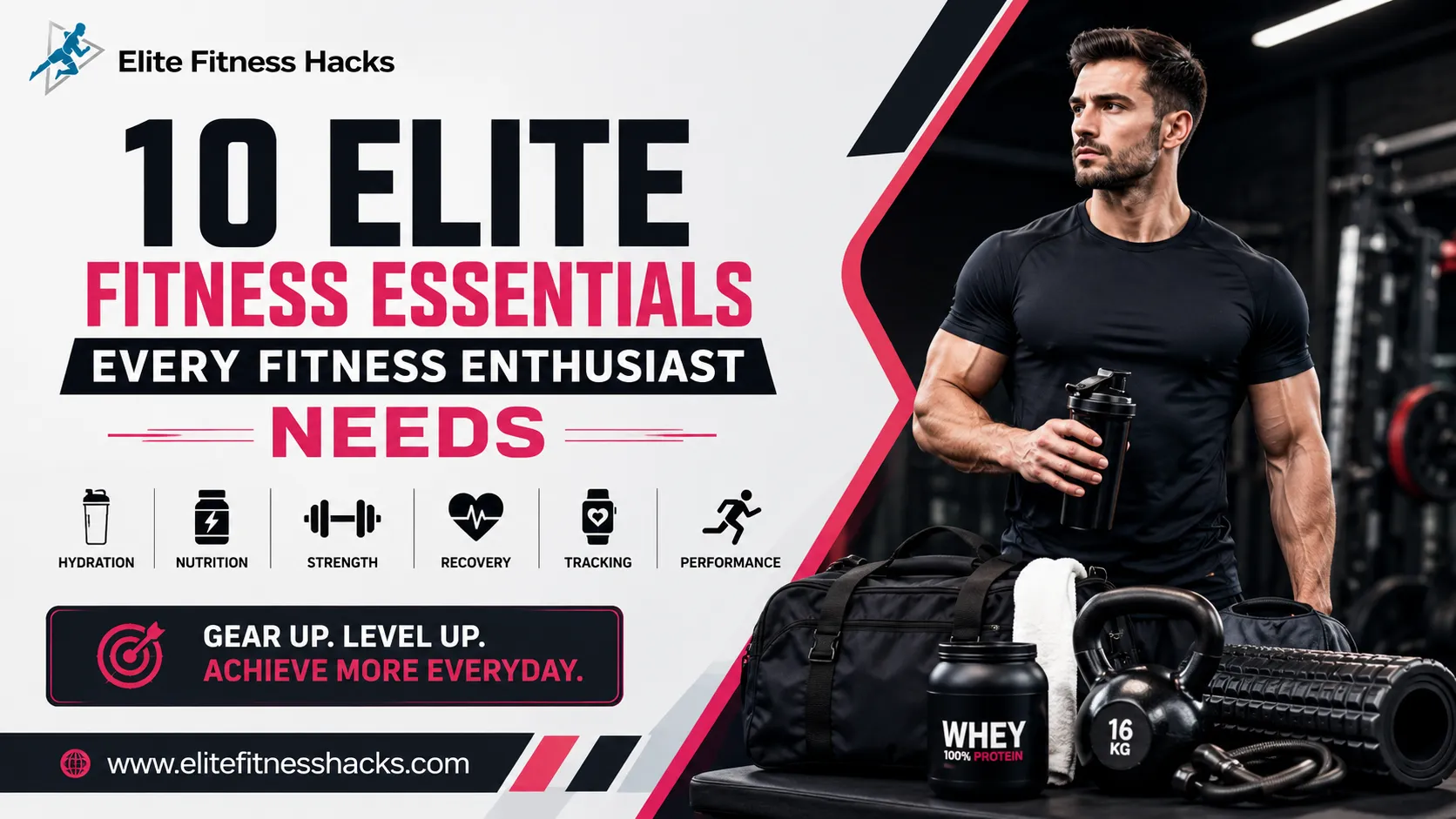
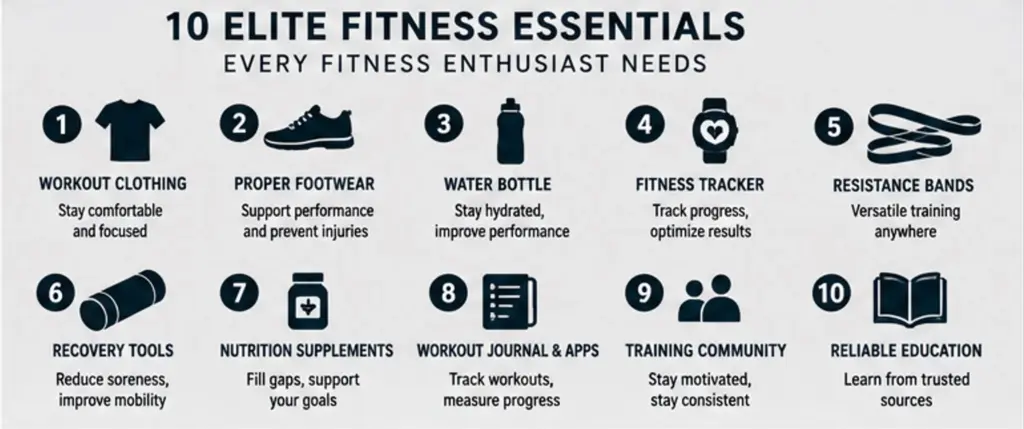
This guide covers 10 fitness essentials that hold up under real training, not just marketing copy. Each one solves a clear problem: comfort, safety, recovery, motivation, or knowledge. You will not need all 10 on day one. A smart fitness enthusiast builds this kit slowly, adding pieces as training grows.
Some fitness essentials are gear. Others are habits, like logging your workouts or finding people who keep you on track. Together, these fitness essentials form a solid base for anyone who trains often. That includes a beginner doing bodyweight squats and a lifter chasing a new personal best.
Table of Contents
1. Workout Clothing: The Foundation of Your Fitness Essentials Kit
Clothing is not just about looking the part. Fabric affects your skin temperature. It affects chafing too. It can even affect how long you push through a hard set.
Polyester and nylon blends pull sweat away from your skin. The moisture spreads across the fabric and dries fast. Cotton does the opposite. It soaks up sweat and holds it. That adds weight, causes chafing, and leaves you cold once you stop moving. For workouts past 20 minutes, or hot weather, a synthetic fabric is worth the extra cost.
Compression gear gets marketed hard. The real proof behind it is modest at best. Some studies show a small drop in soreness after tough sessions. Clear gains during the workout itself are less clear. Treat compression gear as a comfort choice, not a proven strength boost.
You do not need a full closet to start. Two or three well-fitted, sweat-wicking outfits cover most training styles. Building a home setup from scratch? Our home workout equipment guide breaks down what is worth buying first.
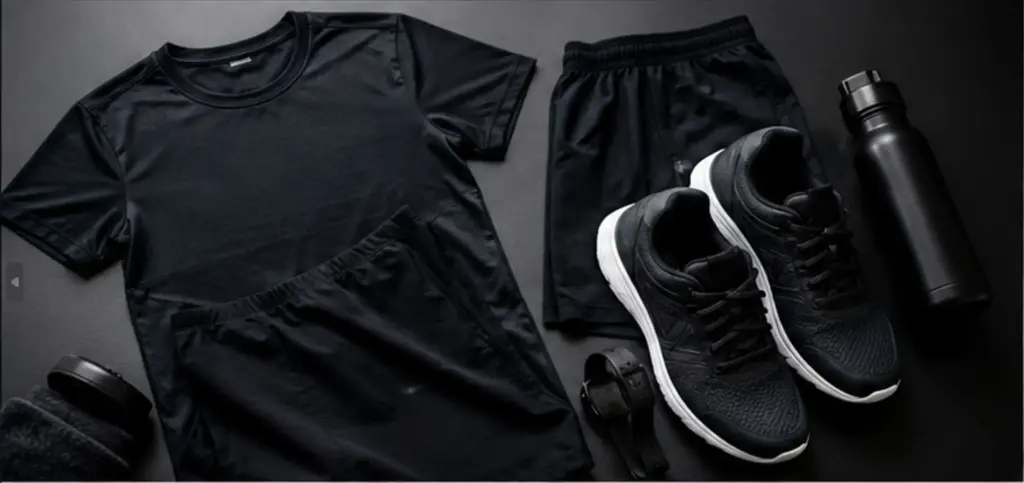
This is one of the more flexible fitness essentials on this list. The right budget depends on how, where, and how often you train.
2. Footwear Built for the Way You Train
Good shoes do more than cushion your feet. They change how force moves through your body. Mismatched shoes are a common, avoidable cause of training injuries. Of all the fitness essentials on this list, footwear is tied most closely to injury risk. That is why it deserves real attention.
Running shoes soak up hard, repeated impact. Their soft midsoles cushion thousands of foot strikes over a run. That same softness works against you in the weight room. Lifting shoes use a flat, dense sole instead. This lets the force you build transfer straight into the floor, not into foam. Cross-training shoes split the difference. They add side-to-side support for group classes that running shoes cannot handle well.
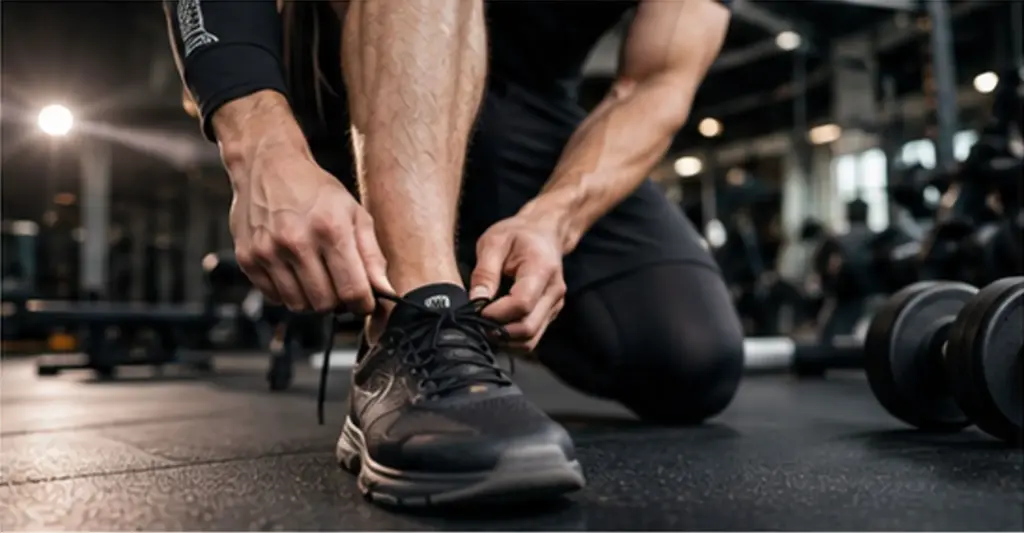
Replacement timing matters more than most people think. A common rule is 300 to 500 miles, or about four to six months of steady use. The cushioning wears out inside the shoe before the outsole shows any wear. “It still looks fine” is not a good test.
Get a fitting at a specialty store if you have knee, shin, or foot pain that keeps coming back. A staff member can check your stride and foot shape. Small gaps in arch support matter more for injury than any brand name.
3. A Water Bottle Matched to Your Sweat Rate
Hydration is one of the fitness essentials that is easiest to overlook. Thirst is a late warning sign. By the time you feel thirsty, you are often already a little dry. That alone can slow you down and dull your focus.
There is no single fluid number that fits everyone. The CDC notes that daily water needs vary by age, sex, activity level, and climate. A flat “eight glasses a day” rule is a rough starting point, not a real target for someone who trains hard.
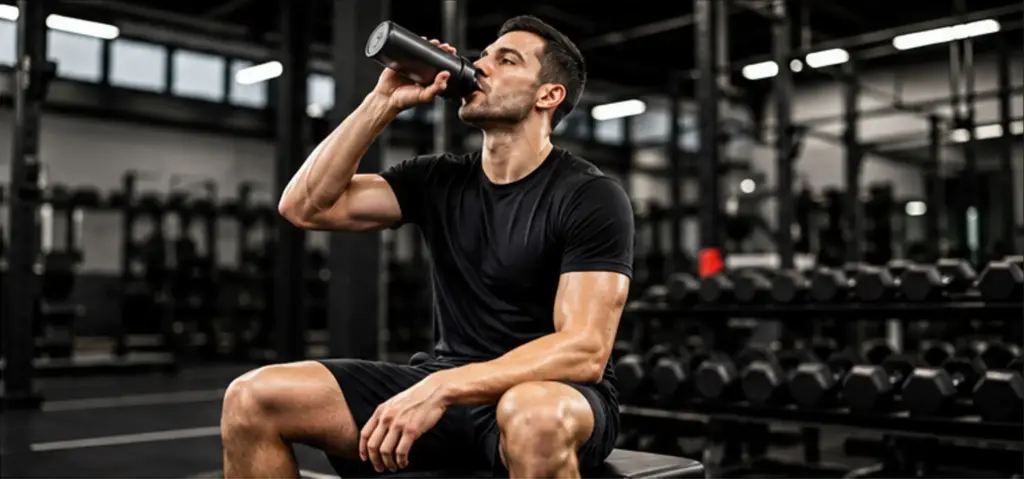
Try a simple test instead. Weigh yourself before and after a long or hot workout. Each pound you lose is roughly 16 ounces of sweat. Use that number to fine-tune how much you drink next time.
One warning is worth repeating: more water is not always better. Drinking large amounts of plain water with no salt during long, sweaty efforts can dilute the sodium in your blood. This can cause nausea, confusion, or worse, so it is not a small risk. For most gym sessions under an hour, plain water in a reusable bottle is enough. For longer or hotter sessions, add a sports drink or salt tablet rather than just more plain water.
4. Fitness Trackers and Smartwatches: Useful Data, Not Perfect Data
A fitness tracker turns hidden effort into numbers you can act on. Resting heart rate, sleep, and weekly training load all become easy to see at a glance.
These devices do have real limits. Wrist sensors read heart rate through light and blood flow in the skin. That signal gets noisy during fast, choppy moves like sprints or heavy lifts. A chest strap stays more precise in those moments. Calorie-burn numbers come from averages and your profile, not a true reading of your body. Treat that number as a rough guess, not an exact count.
A tracker is one of the more optional fitness essentials on this list, not the most important one. The real value shows up in trends, not single days. A resting heart rate that drops over eight weeks tells you something real about recovery. So does steadier sleep. Comparing raw calorie numbers between two watch brands, though, is just comparing two different guesses.
Want harder numbers? Pair your tracker with our free fitness calculators, which use set formulas instead of one brand’s hidden math.
5. Resistance Bands: An Underrated Way to Meet Strength Guidelines
Resistance bands solve a real gap in home training: bands give you flexible load without a full weight rack. The CDC recommends muscle-strengthening work at least twice a week for adults. Bands are one listed way to hit that target, right beside free weights and bodyweight moves.
What makes bands useful is simple. Tension builds the more you stretch the band. That means the hardest part of the pull lines up with your strongest point. Think of the top of a squat, or the end of a row. Free weights do not work this way. Their load stays the same through the whole move.
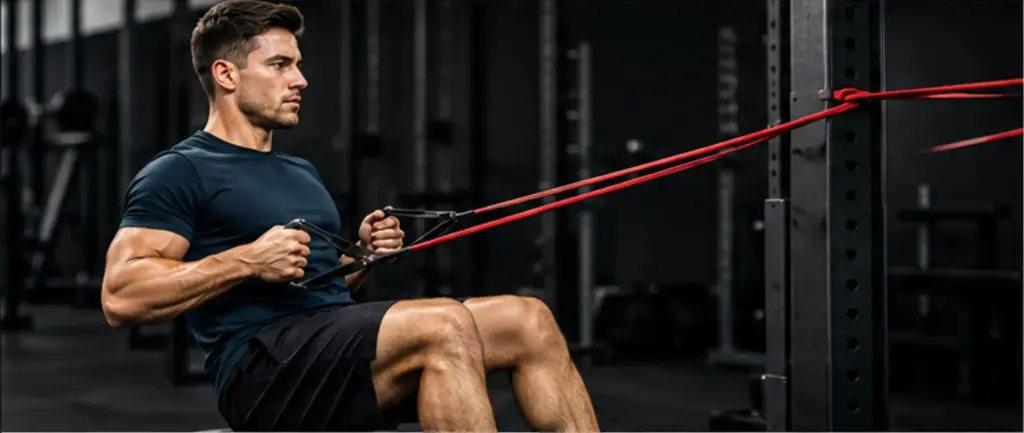
The trade-off is precision. Band tension varies by brand. Bands also stretch and wear with age. They do not give you a clean, repeat number the way a labeled dumbbell does. Bands work best next to your main strength work. Use them as backup, not a replacement, once you start chasing real strength gains.
Already train with dumbbells? Try pairing bands with a session from our dumbbell back exercises guide for extra tension at the top of each pull. For a fuller plan, see our strength training and conditioning essentials.
6. Foam Rollers and Recovery Tools
Foam rolling is a form of self-massage. You press your body weight against the roller. This eases tension in the fascia, the tissue layer that wraps around your muscles.
One common myth needs a correction here. Rolling does not physically “break up” scar tissue. A foam roller is not strong enough to do that. What it does do is still useful, though. Harvard Health notes that foam rolling helps in real ways. It can reduce muscle and tissue soreness, boost flexibility, and improve blood flow to the area you roll.
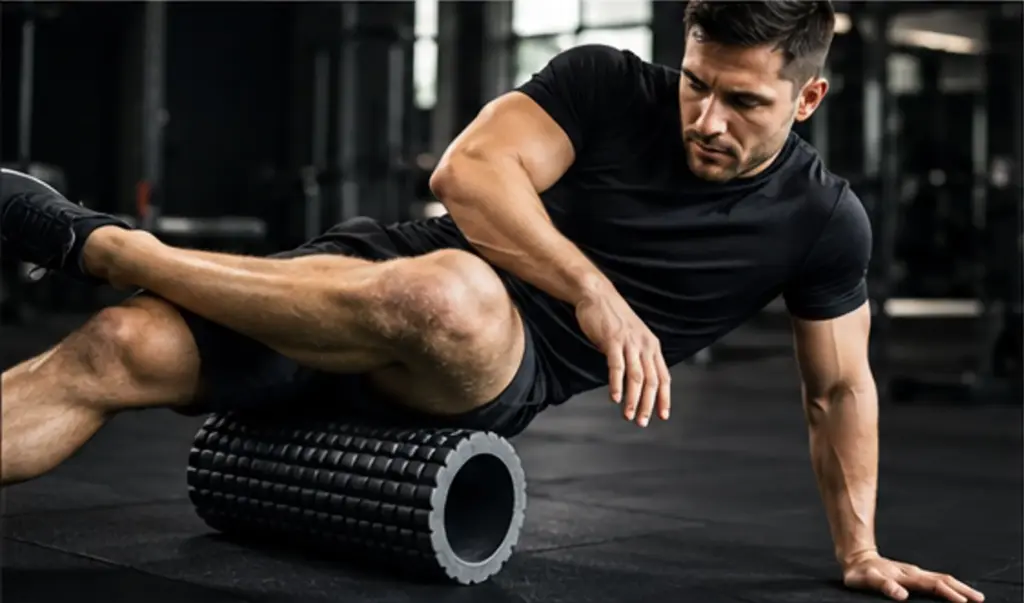
Timing shapes the benefit. Light rolling before a workout can help. About 20 to 30 seconds per muscle group can wake up your tissue and slightly boost your range of motion. Firmer rolling after training targets soreness and tight spots more directly.
A standard roller works well for big muscle groups like the quads and calves. A trigger-point or bumpy roller reaches small, stubborn spots like the glutes. Skip rolling right over joints, your lower spine, or any bruised area.
7. Nutrition Supplements: What They Can and Cannot Replace
Supplements often get credit for results that really come from training and diet. That gap matters before you spend money on a shelf full of powders. These are fitness essentials where less is often more.
Take protein as an example. Mayo Clinic guidance on protein needs shows that most people, including many athletes, can meet their needs through whole foods. Chicken, fish, eggs, dairy, beans, and lentils all count. Store-bought protein powders build lean muscle no better than whole food does, as long as your total intake is enough. Muscle growth mainly comes from lifting work. Extra protein alone will not build muscle without that training push.
Multivitamins follow a similar path. They make sense in some cases. A restrictive diet is one good reason to use one. So is a vegan or vegetarian pattern with little variety, or a proven gap shown in blood work. A blanket daily pill for everyone is not.
Play a sport with drug testing? Look for a third-party checked supplement, such as NSF Certified for Sport. Labels are not always honest about what is truly inside. For more on building meals around whole food first, see our nutrition strategy tips.
8. Workout Journals and Apps: Turning Effort Into Progress
Showing up counts. It is not the same as knowing whether your training is working, though. Without a record, you cannot really tell if you are getting stronger or just getting tired.
This is one of the fitness essentials that costs nothing beyond a notebook or a free app, yet many lifters skip it. Clear notes make a log worth keeping. “Did legs today” tells you nothing three months from now. Weight, reps, sets, and a quick effort score from 1 to 10 tell you something real. They show whether you are adding load over time, or quietly stuck at the same weight.
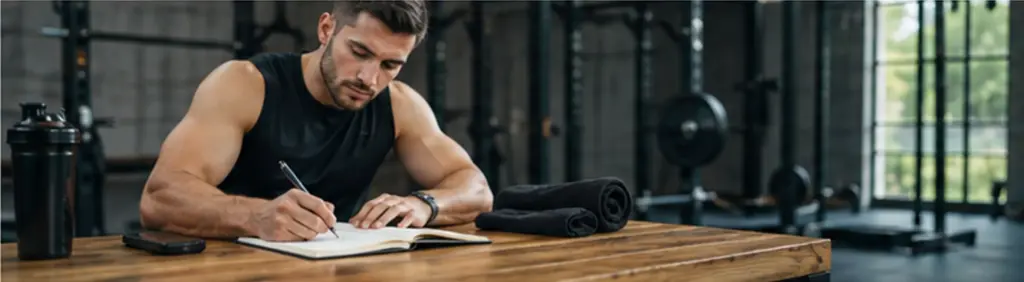
Apps do the math for you. They track total volume and flag trends across weeks on their own. A paper journal has no battery and zero friction, but you do the math yourself. Neither format wins by default. The one you keep using every week wins.
Pair your log with a clear target. Our guide to setting SMART fitness goals shows how to turn “get stronger” into something you can measure week by week.
9. A Supportive Training Community
Motivation runs out at some point. Structure and other people are what carry you through the weeks it does.
NIH research on social support and activity found that people help each other stay active even without training side by side. They swap tips about good classes, safe routes, or trainers worth booking. Support does not need to come from close friends. A walking group, an online forum, or a paid class full of strangers all count.
One warning is worth naming here. Social media fitness content can work against you just as easily as it helps. Staged transformation photos invite comparison more than they build real community. Comparison is a poor stand-in for accountability. The support that truly changes behavior tends to be smaller and steadier. Think of a workout partner who texts when you skip, or a class you already paid for. Of all the fitness essentials here, community is the one people underrate most, right up until a rough patch hits.
10. Reliable Fitness Education: Learning From the Right Sources
Fitness advice online is everywhere, and its quality swings widely. Good information is what makes every other one of these fitness essentials work well. Learning to sort good advice from bad protects your time and your joints.
Check credentials before you trust a claim. For food advice, look for a registered dietitian, listed as RD or RDN. For training plans, look for a badge like CSCS, NASM-CPT, or ACE. For anything medical, a doctor’s word beats a fitness influencer’s opinion every time. Government and school sources, like the CDC and NIH, are useful for checking if a popular claim holds up.
Watch for red flags. Guaranteed results, wild before-and-after photos with no context, and advice with zero backing are all warning signs. One well-checked article beats a week of unverified short video clips.
Treat fitness learning as an ongoing habit, not a one-time buy. The people who keep improving are often still asking questions in year three, not just year one.
Frequently Asked Questions About Fitness Essentials
What are the most important fitness essentials for beginners? Good footwear and steady water intake matter from day one. These two fitness essentials come first. Tracking tools, resistance bands, and a support system add more value once a routine starts to stick.
How often should I replace running shoes? A common rule is every 300 to 500 miles, or about four to six months of steady use. The cushioning wears out inside the shoe before it looks worn on the outside.
Do I need protein powder to build muscle? Not usually. Most people can meet protein needs through whole food. Lifting weights, not extra protein, is what truly drives muscle growth.
How accurate are fitness trackers for calories burned? They are estimates, not exact readings. They work best for spotting trends over weeks, not for treating one single number as fact.
Are resistance bands as good as free weights? Bands meet the same strength guidelines and offer a useful stretch of tension. They are harder to track with precision, though. Most people get the best results by pairing bands with weights instead of picking just one.
How long should I use a foam roller? About 20 to 30 seconds per muscle group works for most people. Use light pressure as a warm-up and firmer pressure after training for soreness. Skip rolling right over joints or the spine.
How much water should I drink during a workout? There is no single right number. Plain water is often enough for sessions under an hour. For longer or hotter sessions, weigh yourself before and after to guess your true sweat loss.
What makes a fitness community helpful? Steady contact matters more than group size. One trusted workout partner or one paid class tends to build more real accountability than a large, quiet social media following.
Conclusion: Building Your Own Fitness Essentials Over Time
None of these fitness essentials work alone, and none of them replace steady training. What they do is remove friction. Better shoes lower your injury risk. A journal shows whether your training is truly working. A community keeps you showing up on the weeks your motivation runs low.
Start small with just a few fitness essentials. A beginner fitness enthusiast gets more value from good shoes and a water bottle. That beats a drawer full of unused supplements. Add resistance bands, a foam roller, and tracking tools as your training grows. Bring them in once you notice where recovery or data are the missing piece.
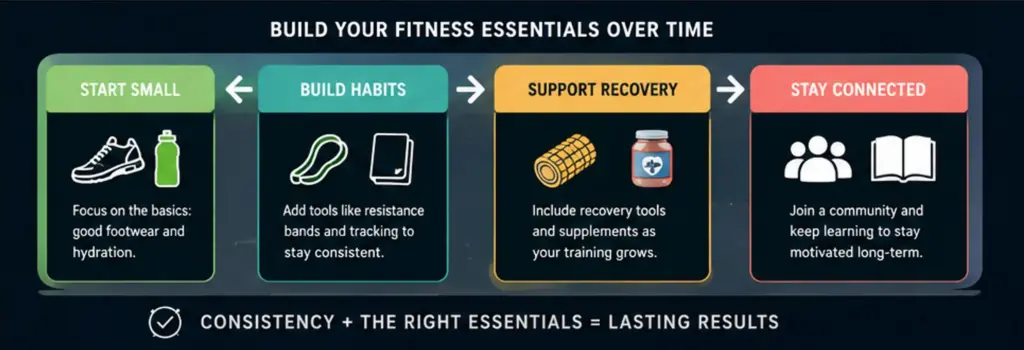
The right fitness essentials for you depend on your goals, your training setup, and how your body handles load and rest. They do not depend on whatever is trending in this week’s gym video. Build your own set of fitness essentials around problems you truly have, one piece at a time.
Not medical advice: This content, and any calculator results on this site, are for general informational purposes only and are not a substitute for professional medical advice, diagnosis, or treatment. Always talk to a qualified healthcare provider before starting a new diet, exercise routine, or health program.

Related Articles You May Like